
Typhlopidae
Brahminy Blindsnake
HarmlessIndotyphlops braminus
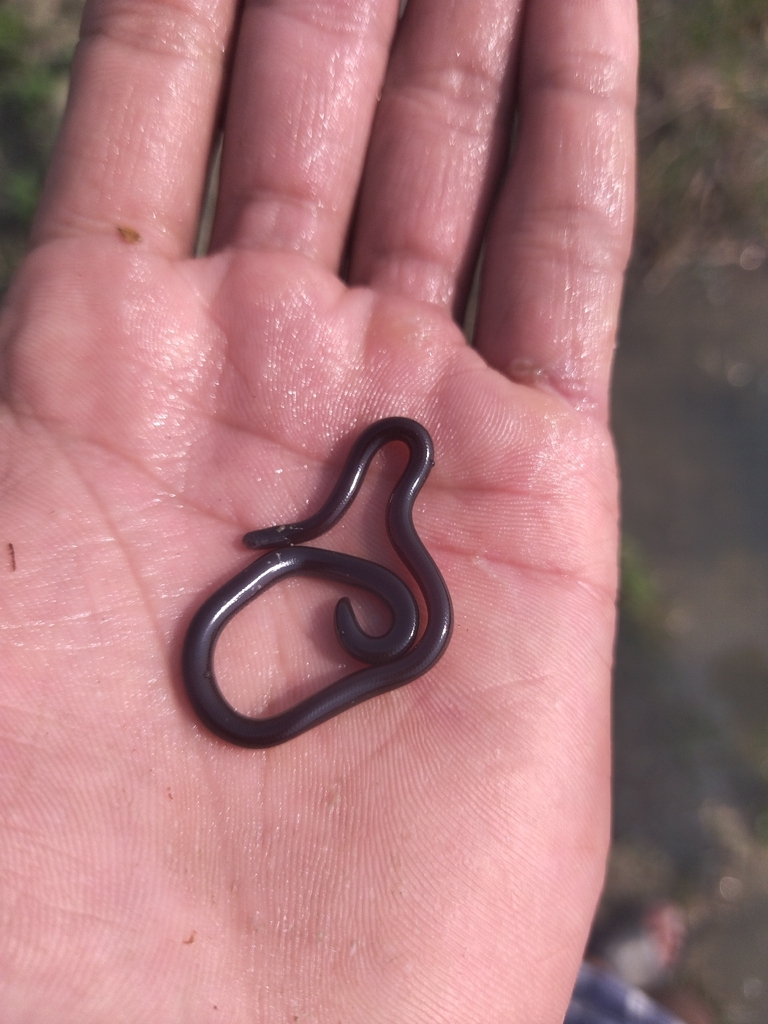
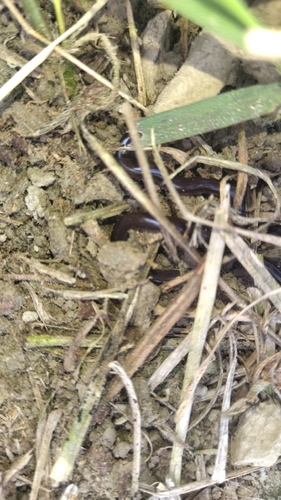
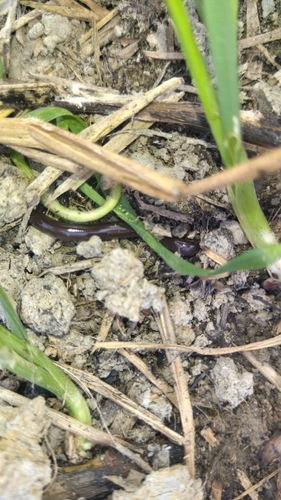
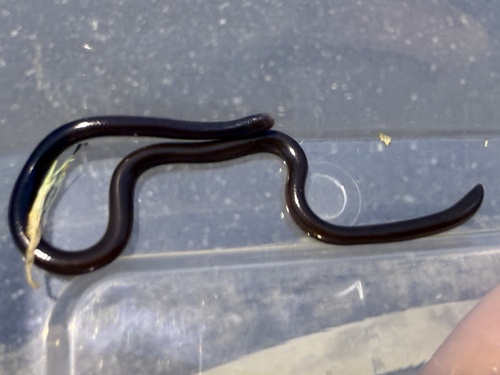
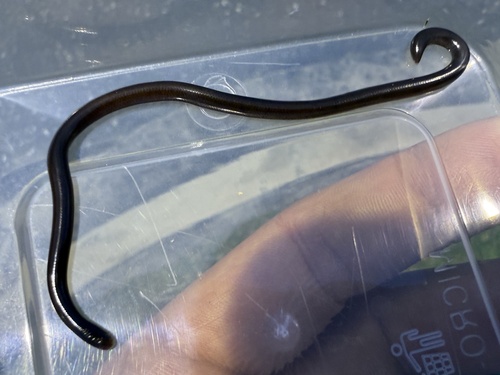
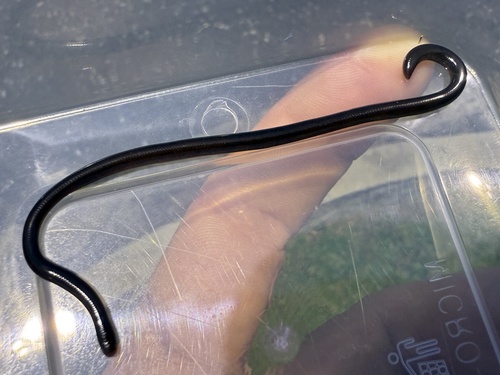
6 photographs of the Brahminy Blindsnake. © Aditya Khawas.
The Brahminy Blindsnake (Indotyphlops braminus) is a non-venomous snake in the Typhlopidae family, recorded in 118 countries.
- Family
- Typhlopidae
About the Brahminy Blindsnake
Indotyphlops braminus, commonly known as the brahminy blind snake (), is a non-venomous blind snake species, found mostly in Africa and Asia, and has been introduced in many other parts of the world. It is a completely fossorial (i.e., burrowing) reptile, with habits and appearance similar to an earthworm, for which it is often mistaken and shares convergent evolution with, although close examination reveals tiny scales and eyes rather than the annular segments characteristic of a true earthworm. The species is parthenogenetic and all known specimens have been female. The specific name is a Latinized form of the word Brahmin. No subspecies are currently recognized as being valid.
Description
Adults of I. braminus measure 2–4 inches (5.1–10.2 cm) long, uncommonly to 6 inches (15 cm), making it the smallest known snake species. The head and tail are superficially similar as the head and neck are indistinct. Unlike other snakes, the head scales resemble the body scales. The eyes are barely discernible as small dots under the head scales. The tip of the tail has a small, pointed spur. Along the body are fourteen rows of dorsal scales. Coloration ranges from charcoal gray, silver-gray, light yellow-beige, purplish, or infrequently albino, the ventral surface more pale. Coloration of the juvenile form is similar to that of the adult. Behavior ranges from lethargic in appropriate habitat to energetic, quickly seeking the cover of soil or leaf litter to avoid light.
The tiny eyes are covered with translucent scales, rendering this snake almost entirely blind. The eyes cannot form images, but are still capable of registering light intensity.
Common names
I. braminus is variously known as the brahminy blind snake, flowerpot snake, common blind snake, island blind snake, teliya snake, and Hawaiian blind snake. The moniker "flowerpot snake" derives from the snake's incidental introduction to various parts of the world through the plant trade. "Kurudi" is the common Malayalam term which refers to I. braminus. "Sirupaambu" is the common Tamil term which refers to I. braminus.
Distribution
Most likely originally native to Africa and Asia, I. braminus is an introduced species in many parts of the world, including Australia, the Americas, and Oceania.
The vertical distribution is from sea level to 1,200 metres (3,900 ft) in Sri Lanka and up to 1,500 metres (4,900 ft) in Guatemala. The type locality given is "Vishakhapatam" [India].
Native range
In Africa, I. braminus has been reported in Uganda, DRC, Egypt, Kenya, Senegal, Benin, Togo, Nigeria, Ivory Coast, Cameroon, Zambia, Zimbabwe, Somalia, Zanzibar, Tanzania, Mozambique, South Africa (an isolated colony in Cape Town and Natal Midlands; about eight have been found in Lephalale, Limpopo Province at the Medupi Power Station during construction), Madagascar (Nossi Be), the Comoro Islands, Mauritius, the Mascarene Islands and the Seychelles. It has also been found in Libya.
Adapted from Wikipedia, available under CC BY-SA.
Frequently asked: Brahminy Blindsnake
- Is the Brahminy Blindsnake venomous?
- No. The Brahminy Blindsnake (Indotyphlops braminus) is non-venomous and is not considered dangerous to humans. Like most snakes, it will retreat rather than bite when given the chance.
- Is the Brahminy Blindsnake poisonous?
- Snakes are venomous, not poisonous. "Poisonous" means harmful to eat or touch; "venomous" means injecting toxins through a bite. The Brahminy Blindsnake is neither poisonous nor venomous.
- Is the Brahminy Blindsnake dangerous?
- The Brahminy Blindsnake is not dangerous to humans. It has no medically significant venom and bites only defensively if cornered or handled.
- Where does the Brahminy Blindsnake live?
- The Brahminy Blindsnake has verified records in 118 countries, including United States of America, Mexico, India. See the distribution section below for its full range.
- What does the Brahminy Blindsnake eat?
- The diet of I. braminus consists of the larvae, eggs, and pupae of ants and termites.
- Why is it called the Brahminy Blindsnake?
- I. braminus is variously known as the brahminy blind snake, flowerpot snake, common blind snake, island blind snake, teliya snake, and Hawaiian blind snake. The moniker "flowerpot snake" derives from the snake's incidental introduction to various parts of the world through the plant trade. "Kurudi" is the common Malayalam term which refers to I. braminus. "Sirupaambu" is the common Tamil term which refers to I. braminus.
Where it is found
More Typhlopidae snakes
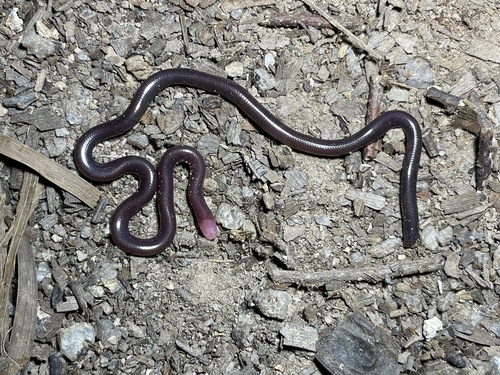 White-headed Blind SnakeIndotyphlops albiceps
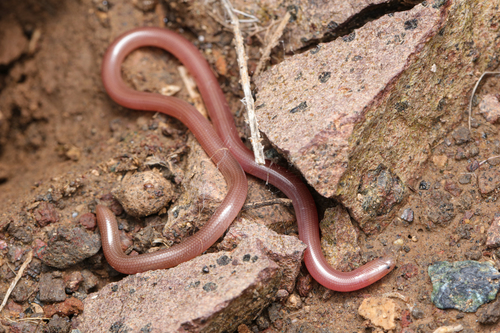 Eurasian Blind SnakeXerotyphlops vermicularis
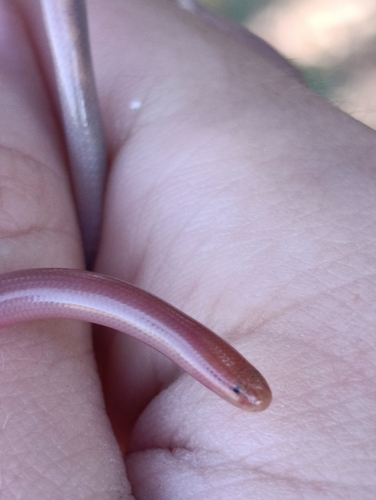 Syrian Blind SnakeXerotyphlops syriacus
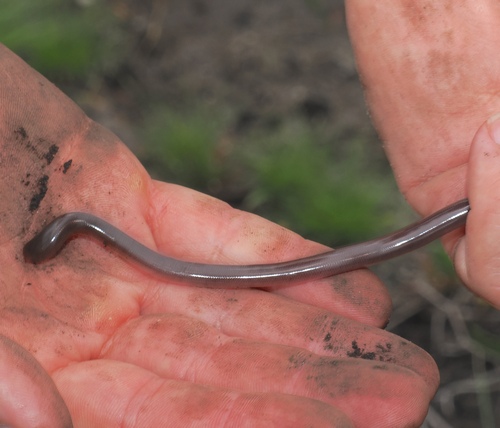 Bibron's Blind SnakeAfrotyphlops bibronii
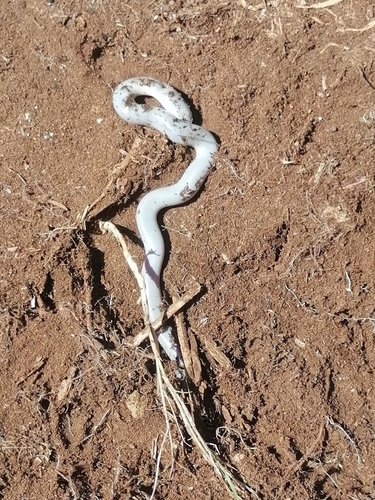 Delalande's Beaked Blind SnakeRhinotyphlops lalandei
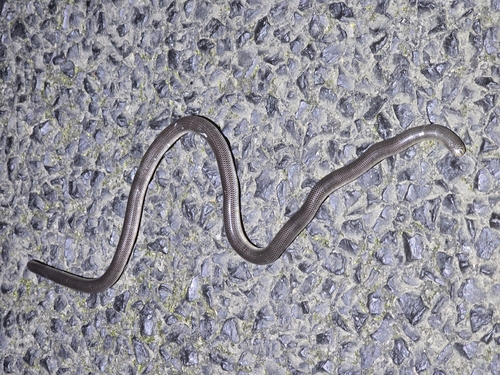 Blackish Blind SnakeAnilios nigrescens
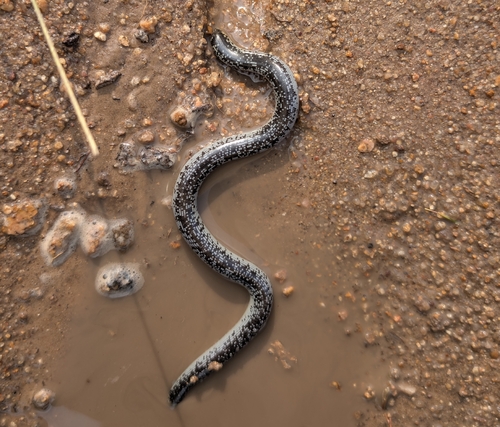 Schlegel’s Beaked blind snakeAfrotyphlops schlegelii
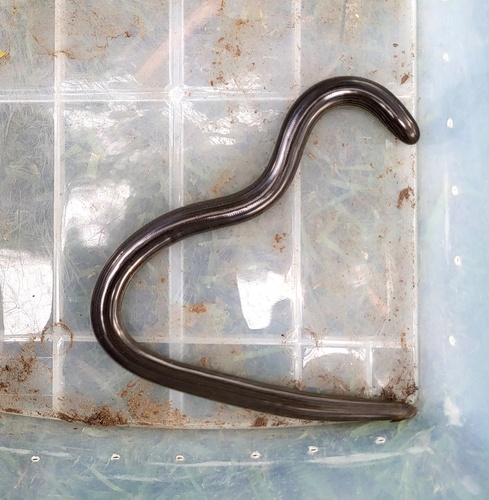 Zambezi Blind SnakeAfrotyphlops dinga
Classification
How scientists group this snake, from the broadest category down to the exact species. Each step narrows to its closest relatives.
- OrderThe broad group of scaled reptiles: all snakes and lizards
- Squamata
- FamilyA group of related snakes that share key traits
- Typhlopidae
- GenusA close-knit group of very similar species
- Indotyphlops
- SpeciesThis exact snake, named in the two-part scientific name
- Indotyphlops braminus
Keep learning
- What to Do If You Find a SnakeFound a snake at home or on a trail? Here is how to stay calm, give it space, identify it safely, and know when to call a professional.
- Venomous vs Nonvenomous: How to Tell the DifferenceThe folk rules for telling venomous snakes apart, where each one fails, and why location-based identification beats guessing by sight.
- What Is a Snake? Anatomy and the BasicsA clear overview of what makes a snake a snake: limbless body plan, anatomy, evolution from lizards, species diversity, and why they are ectothermic.
- How to Keep Snakes Out of Your Yard and HomeA practical guide to keeping snakes out of your yard and home using habitat changes that work, plus what to skip and what to do if one shows up.
Distribution from GBIF & iNaturalist. Venom status per CDC. Background: Wikipedia. Informational only. Never handle a snake to identify it.