
Vanuatu
Snakes in Vanuatu
9 snake species have been recorded in Vanuatu, 4 venomous.
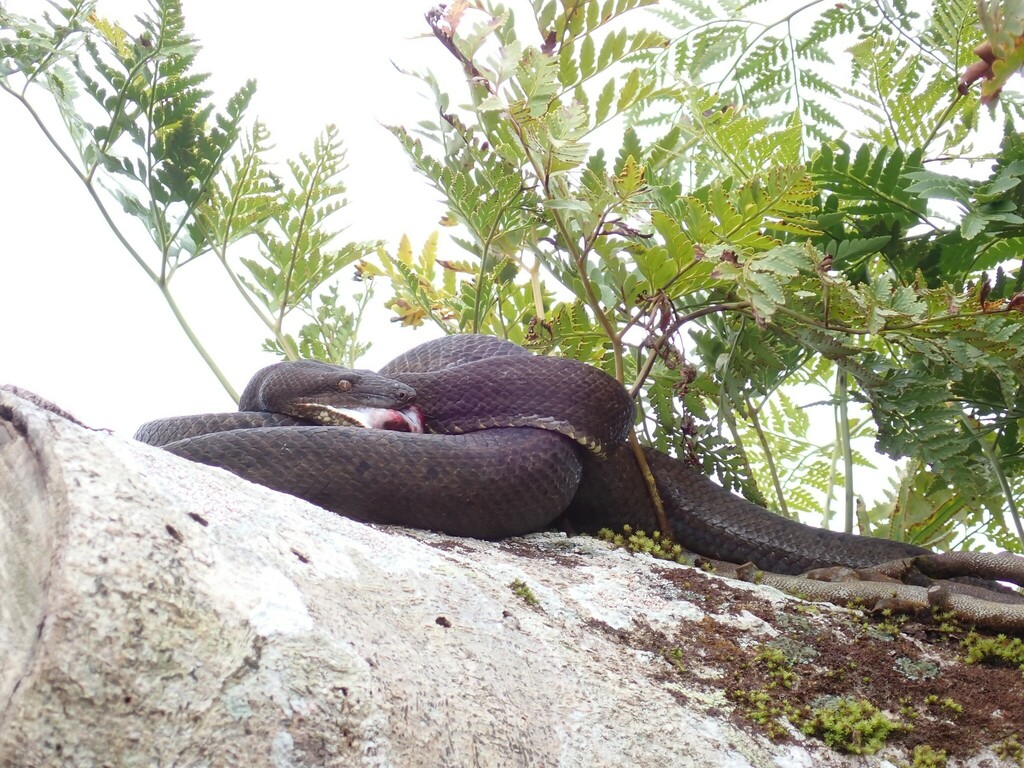
Snakes of Vanuatu
Vanuatu is a Y-shaped chain of roughly 80 islands in the South Pacific, formed by volcanic activity along an active subduction zone. Its terrain runs from coastal mangroves and coral shorelines up through lowland rainforest to rugged volcanic interiors. This isolation by open ocean is the single most important fact about its snakes. Oceanic islands are hard for terrestrial reptiles to reach, so the land snake fauna is naturally small and dominated by species that either swim, raft on debris, or arrived with human movement across the Pacific. Our database records 9 snake species for the country, of which 4 are venomous, and the great majority of all species here are non-venomous.
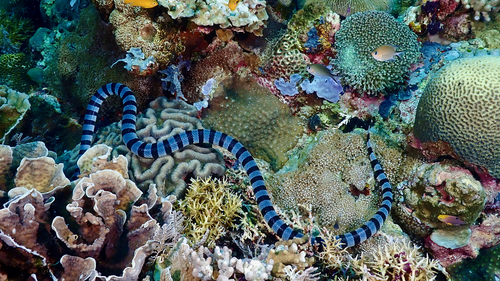
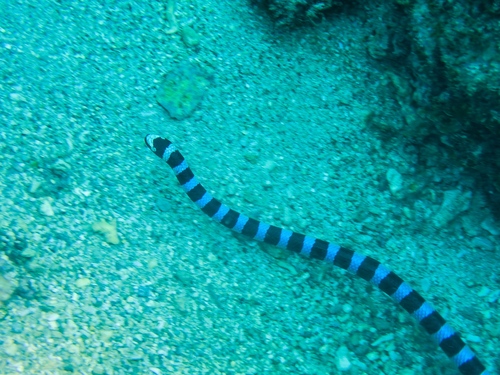
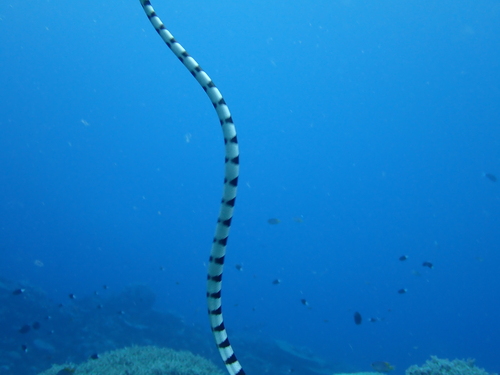
The venomous species present in Vanuatu are overwhelmingly marine. The surrounding warm reef and lagoon waters host sea snakes and sea kraits, which are true front-fanged venomous reptiles even though they live in and around the ocean rather than on land. Sea kraits come ashore to rest and lay eggs and are sometimes encountered on beaches and rocks, while fully aquatic sea snakes stay in the water. These animals are not aggressive toward people and bites are rare, but they are genuinely venomous and should never be touched or handled. Vanuatu does not have the dense population of dangerous land snakes found on the nearby Australian or New Guinean mainland.
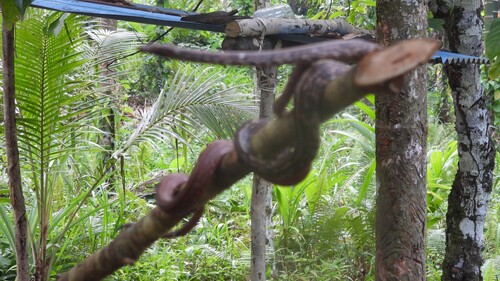
The harmless majority is what a visitor is most likely to see on land. The best known is the Pacific boa, a non-venomous constrictor found across Vanuatu and neighboring island groups that kills small prey by constriction and poses no venom threat to humans. Small burrowing blind snakes, which look more like earthworms than serpents, are also part of the regional fauna and are completely harmless. These non-venomous land snakes make up the bulk of what people actually encounter away from the water.
Snakes fill useful ecological roles in this island system. Constrictors such as the Pacific boa help control populations of rodents, lizards, and other small animals, and on islands where introduced rats damage native birds and plants that pressure has real value. Blind snakes feed on ants and termites and their larvae, working through soil and leaf litter. In the marine zone, sea snakes are specialist predators on fish and eels and are themselves prey for sharks and large fish, linking them into the reef food web.
On safety, the practical picture is reassuring but not casual. The large majority of snakes you may meet in Vanuatu are harmless, and serious snakebite is uncommon here. The real medical concern is the marine venomous species, the sea snakes and sea kraits, whose bites can be dangerous even though they are infrequent. The correct response to any venomous bite is professional medical care: get to a hospital or emergency services immediately, as antivenom and supportive hospital treatment are the proven treatments. Never assume a wild snake, on land or in the water, is safe to pick up or handle, and never rely on improvised remedies in place of emergency care. In the United States you can reach Poison Control at 1-800-222-1222; elsewhere contact local emergency services.
Snakes in Vanuatu: FAQ
- Are there venomous snakes in Vanuatu?
- Yes. 4 venomous snake species have verified records in Vanuatu, including Yellow-lipped Sea Krait, Blue-lipped Sea Krait, Dwarf Sea Krait, Yellow-bellied Sea Snake. Most snakes in Vanuatu, however, are harmless.
- How many snake species live in Vanuatu?
- 9 snake species have verified records in Vanuatu, of which 4 are venomous.
- What is the most commonly seen snake in Vanuatu?
- The Bibron's Bevel-nosed Boa is the most frequently reported snake in Vanuatu, based on verified wildlife observations.
- What should I do if I see a venomous snake in Vanuatu?
- Keep your distance and do not try to catch or kill it. Most bites happen when people handle or corner a snake. If someone is bitten, contact local emergency services or poison control immediately.
Venomous snakes in Vanuatu
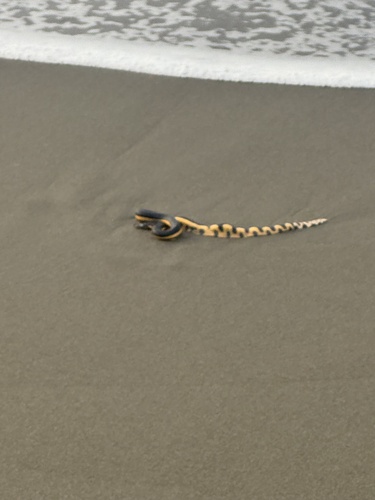
Every snake recorded in Vanuatu
9 species across 4 families, grouped by family. Venomous flagged.
Elapidae (4)
Boidae (3)
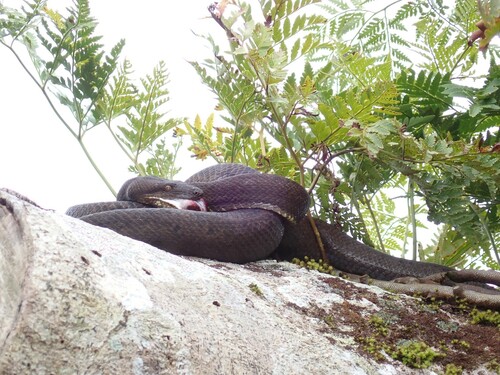
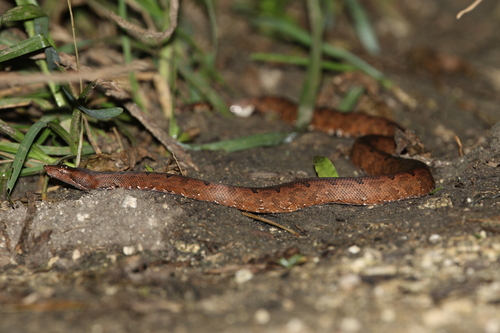
Typhlopidae (1)
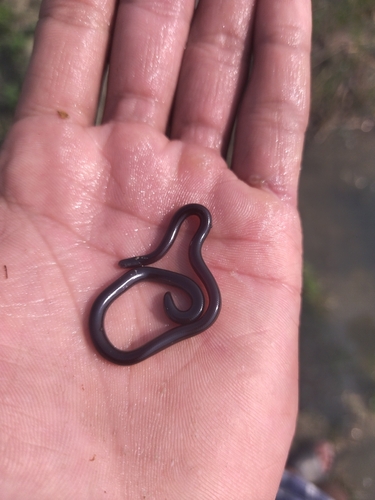
Pythonidae (1)
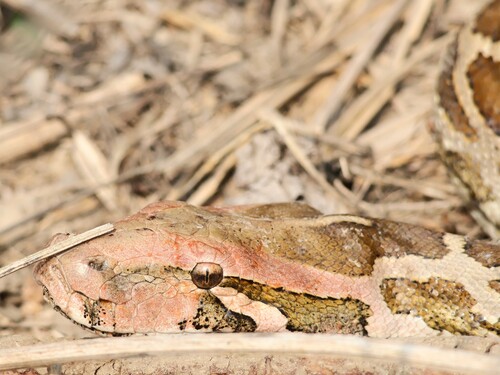
Compiled from verified GBIF & iNaturalist observations. "How often seen" reflects how frequently a snake is reported here, not how dangerous it is. Informational only.
Keep learning
- Are Snakes Dangerous? The Real Risk, in PerspectiveMost snakes are harmless and avoid people. Here is the honest picture of snakebite risk worldwide and how to lower your own.
- Snakebite First Aid: What to Do (and What Never to Do)A clear, CDC-based guide to snakebite first aid: the steps that help, the popular myths that hurt, and how to tell a serious bite from a minor one.
- Venomous vs Nonvenomous: How to Tell the DifferenceThe folk rules for telling venomous snakes apart, where each one fails, and why location-based identification beats guessing by sight.
- What to Do If You Find a SnakeFound a snake at home or on a trail? Here is how to stay calm, give it space, identify it safely, and know when to call a professional.