
Malta
Snakes in Malta
8 snake species have been recorded in Malta, and none are venomous.
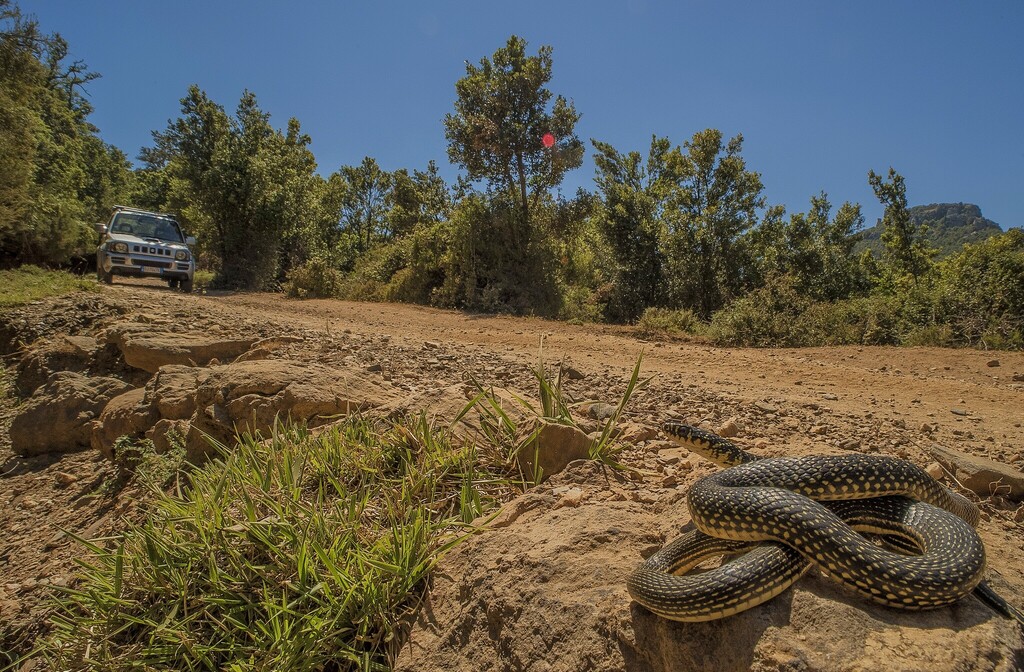
Snakes of Malta
Malta is a small Mediterranean archipelago of low limestone islands south of Sicily, and its snake fauna reflects that compact, sun-baked geography. The terrain is dry and rocky, with terraced fields edged by rubble walls, garrigue scrub, coastal cliffs, and a scatter of valleys and gardens that hold moisture longer. These warm, stony habitats with abundant lizards and rodents suit snakes well, and the rubble walls in particular give them cover and basking sites. Our database records 9 snake species for Malta, a modest diversity that fits a set of small islands rather than a large mainland.
Of those 9 species, only 1 is venomous, and even that one poses little danger to people. Malta has no front-fanged vipers of medical concern. The single venomous species present belongs to the rear-fanged colubrid group, snakes that deliver mild venom through grooved teeth set well back in the mouth and that use it on small prey such as lizards. Their venom is not adapted to harm humans, and bites to people are rare and generally minor. In practical terms, Malta is a place with effectively no dangerous snakes, which is typical of small Mediterranean islands.
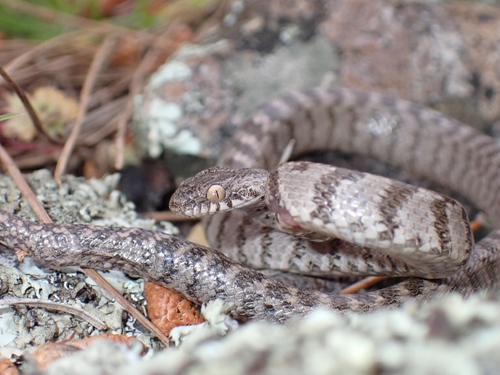
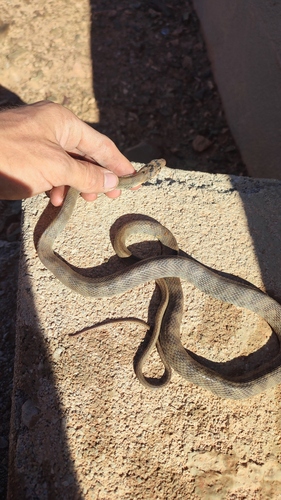
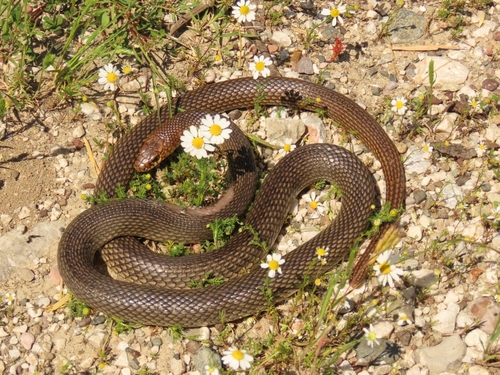
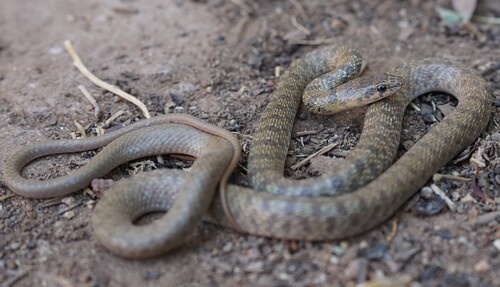
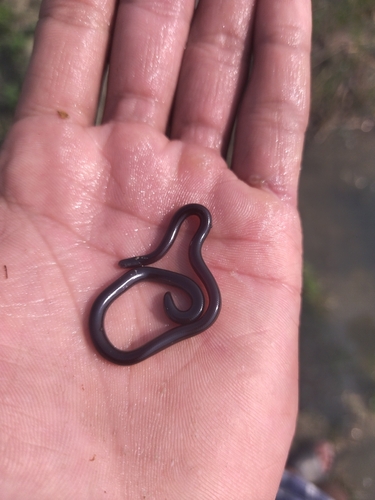
The great majority of Malta's snakes are entirely harmless. The best known is the large western whip snake, a fast, alert, dark-bodied colubrid that is the island's most commonly seen serpent and a familiar sight along walls and field edges. The fauna also includes other non-venomous colubrids such as slender, secretive burrowing and ground-dwelling species and a cat snake, the rear-fanged species noted above. Several of these snakes were likely carried to the islands by human movement across the Mediterranean over the centuries, which is common for island reptile communities.
Ecologically, snakes are valuable to Malta's limited and pressured natural environment. They are efficient predators of rodents, lizards, and large insects, helping keep those populations in balance, and in turn they feed birds of prey and other larger animals. On islands where habitat is fragmented by development and farming, these reptiles are an important part of what remains of the wild food web, and the whip snake in particular is a visible indicator of healthy rough-ground and garrigue habitat.
For safety, the honest summary is reassuring. Almost every snake you might encounter in Malta is harmless, and the one rear-fanged species is not a meaningful medical threat. Even so, no wild snake should ever be handled, because handling is the main way bites happen and a frightened snake will defend itself. If a bite does occur, the correct response is professional medical care: contact local emergency services, or in the United States call Poison Control at 1-800-222-1222. Hospital evaluation and, where ever needed, antivenom administered by clinicians are the appropriate treatment. Do not attempt field first aid or try to capture the snake.
Snakes in Malta: FAQ
- Are there venomous snakes in Malta?
- No venomous snakes have verified records in Malta. Every snake recorded here is harmless to humans, though any snake may bite defensively if handled.
- How many snake species live in Malta?
- 8 snake species have verified records in Malta.
- What is the most commonly seen snake in Malta?
- The Green Whip Snake is the most frequently reported snake in Malta, based on verified wildlife observations.
Every snake recorded in Malta
8 species across 3 families, grouped by family. Venomous flagged.
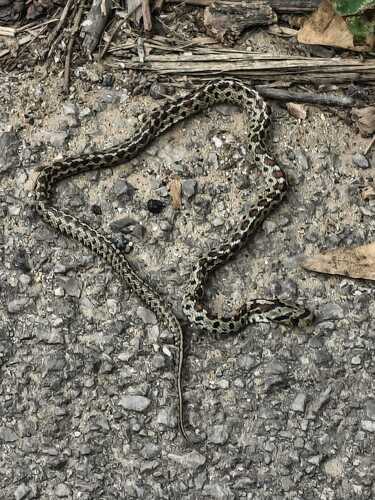
Colubridae (6)
Typhlopidae (1)
Psammophiidae (1)
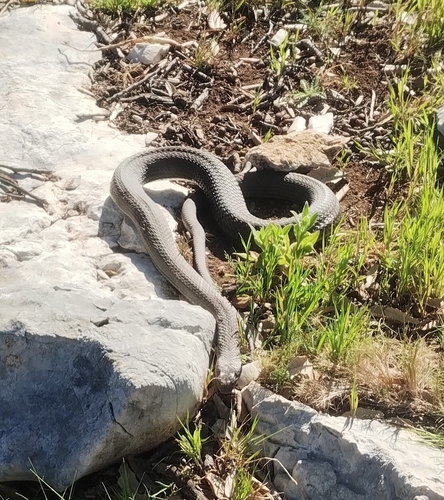
Compiled from verified GBIF & iNaturalist observations. "How often seen" reflects how frequently a snake is reported here, not how dangerous it is. Informational only.
Keep learning
- What Is a Snake? Anatomy and the BasicsA clear overview of what makes a snake a snake: limbless body plan, anatomy, evolution from lizards, species diversity, and why they are ectothermic.
- What to Do If You Find a SnakeFound a snake at home or on a trail? Here is how to stay calm, give it space, identify it safely, and know when to call a professional.
- How to Keep Snakes Out of Your Yard and HomeA practical guide to keeping snakes out of your yard and home using habitat changes that work, plus what to skip and what to do if one shows up.
- Are Snakes Dangerous? The Real Risk, in PerspectiveMost snakes are harmless and avoid people. Here is the honest picture of snakebite risk worldwide and how to lower your own.