
United Arab Emirates
Snakes in United Arab Emirates
20+ snake species have been recorded in United Arab Emirates, 14 venomous.
Snakes of United Arab Emirates
The United Arab Emirates has 20+ snake species recorded in our database, of which 14 are venomous. While that venomous count is high in proportion, the practical picture on the ground is that most snakes a person actually encounters are harmless. The country sits at the junction of the Arabian desert and the warm coastal waters of the Persian Gulf and Gulf of Oman, and that geography shapes a snake fauna built for heat, aridity, and a long marine coastline.
Habitat drives the diversity here. The UAE is dominated by sand desert, gravel plains, and dune systems where small, well camouflaged species thrive, but it also holds the Hajar Mountains in the east, oasis and wadi systems, sabkha salt flats, and irrigated farmland and urban gardens. Each of these holds different snakes. Burrowing and sand specialists move below the surface to escape the daytime heat and hunt at night, mountain and wadi species shelter among rocks, and a separate community of true sea snakes lives entirely in the surrounding warm seas. This spread of land and marine habitats is why a relatively small, dry country supports as many species as it does.
The medically important venomous snakes of the UAE fall into a few well established groups. Vipers are the most significant land threat: saw-scaled vipers and other regional vipers are small but capable of serious envenomation, and saw-scaled vipers in particular are responsible for many serious bites across the wider Arabian and Middle Eastern region. Burrowing asps, sometimes called mole vipers or stiletto snakes, occur here and can deliver venom through fanged side strikes even when handled carefully. The cobra group is represented in the broader region, and there is a distinct community of front-fanged sea snakes in UAE coastal waters whose venom is potent. There are no mambas, no pit vipers, no coral snakes, and no rattlesnakes in this part of the world; those groups belong to other continents.
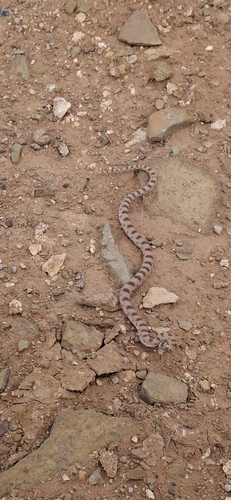
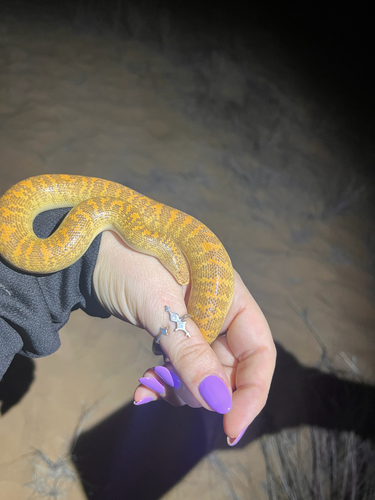
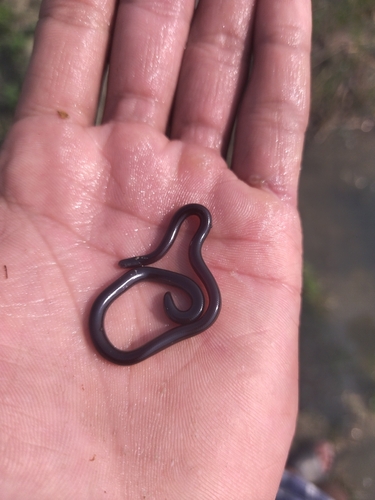
The large non-venomous and harmless majority is the bulk of what lives in the UAE. This includes sand boas, which are thick-bodied constrictors that spend much of their lives buried in loose sand, along with various racers, sand snakes, and the small burrowing species sometimes mistaken for worms. These snakes kill by constriction or by simply seizing small prey, and they pose no real danger to people. Many are secretive, fast, and rarely seen, which is part of why the desert can feel empty of snakes even where several species are present.
Snakes earn their place in this environment. As predators they control populations of rodents, lizards, insects, and other small animals, and rodent control in particular has direct value around farms, date palm plantations, and settlements where rats and mice damage stored food and crops. Removing snakes from an area tends to let those pest populations grow. In the marine environment, sea snakes help regulate fish and eel numbers. A balanced snake population is a sign of a functioning ecosystem rather than something to be feared.
On safety, the honest framing is straightforward. Most snakes in the UAE are harmless, and the main medical concern is bites from vipers, with sea snakes and burrowing asps as additional serious but less common threats. The correct response to any venomous snakebite is professional medical care: antivenom and hospital treatment are what work, and the priority is reaching a hospital or calling emergency services quickly. No wild snake should be handled, picked up, or cornered, because even a snake that looks calm or harmless can bite, and identification mistakes are easy to make. This overview is educational and is not first aid guidance. If a bite happens, contact local emergency services immediately, or in the United States reach Poison Control at 1-800-222-1222.
Snakes in United Arab Emirates: FAQ
- Are there venomous snakes in United Arab Emirates?
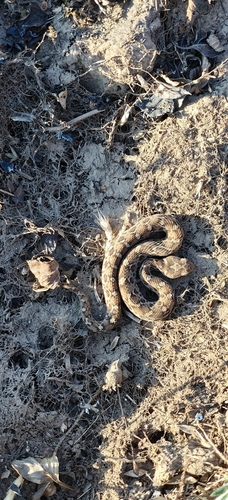
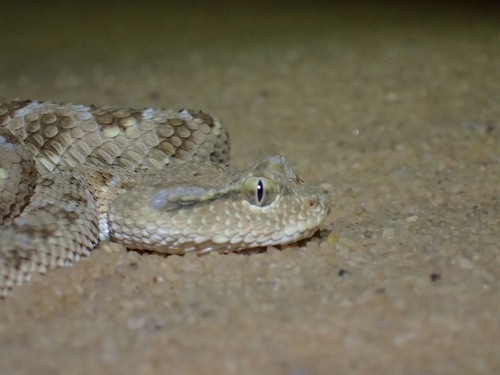
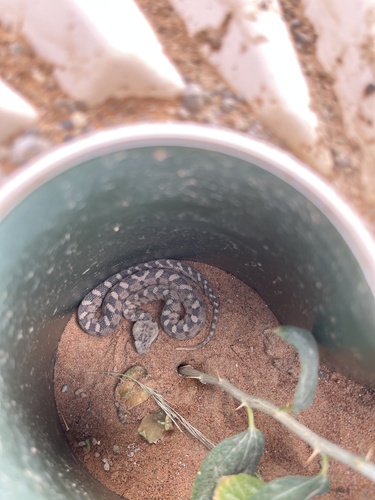
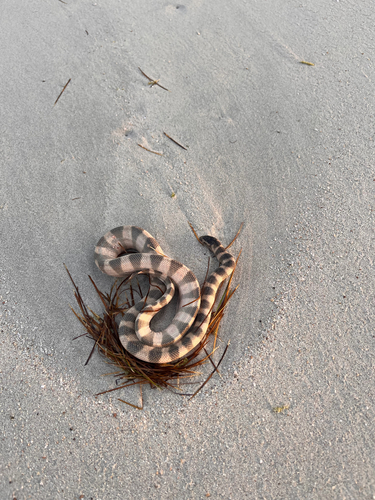
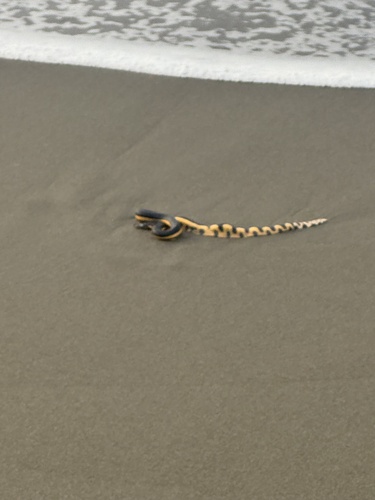
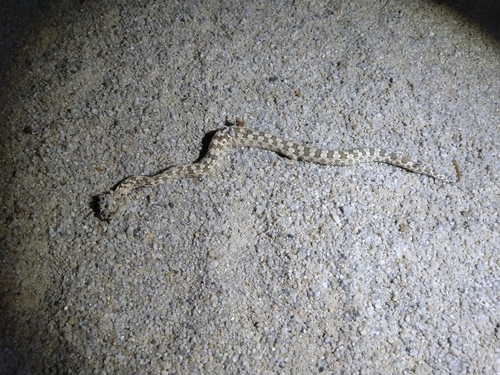
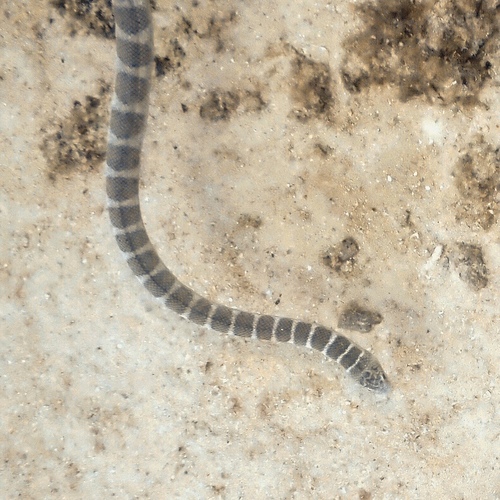
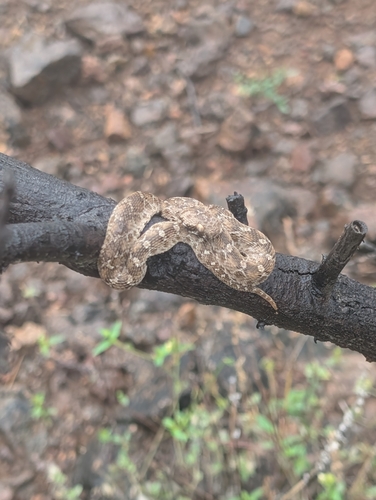
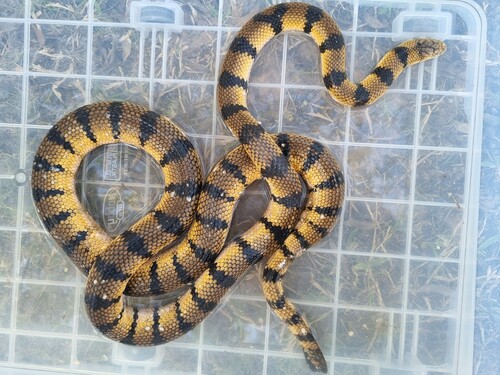
- Yes. 14 venomous snake species have verified records in United Arab Emirates, including Saw-scaled Viper, Arabian Horned Viper, Oman Saw-scaled Viper, Persian Gulf Sea Snake. Most snakes in United Arab Emirates, however, are harmless.
- How many snake species live in United Arab Emirates?
- 20+ snake species have verified records in United Arab Emirates, of which 14 are venomous.
- What is the most commonly seen snake in United Arab Emirates?
- The Saw-scaled Viper is the most frequently reported snake in United Arab Emirates, based on verified wildlife observations.
- What should I do if I see a venomous snake in United Arab Emirates?
- Keep your distance and do not try to catch or kill it. Most bites happen when people handle or corner a snake. If someone is bitten, contact local emergency services or poison control immediately.
Venomous snakes in United Arab Emirates
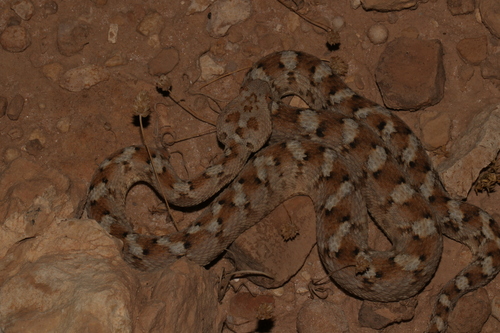
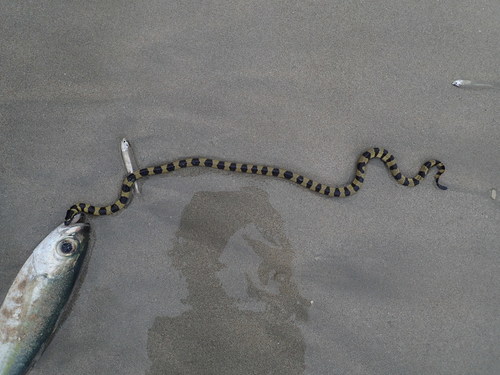
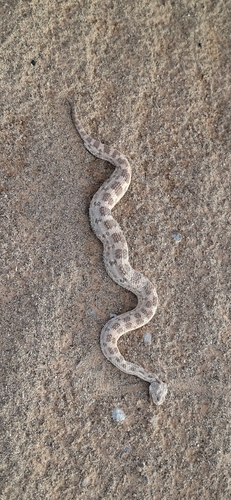
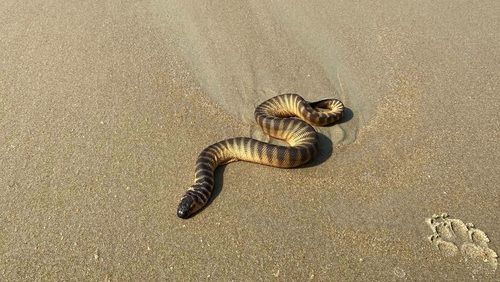
- No photo
Every snake recorded in United Arab Emirates
20+ species across 7 families, grouped by family. Venomous flagged.
Viperidae (7)
Elapidae (7)
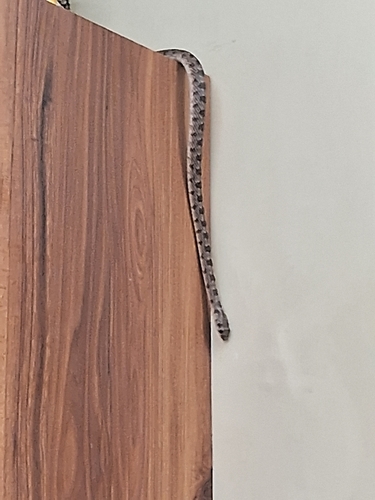
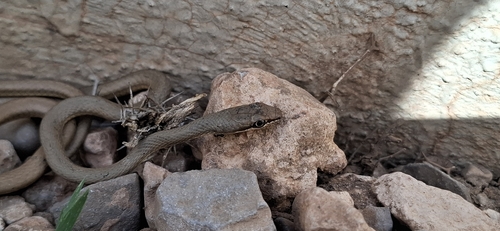
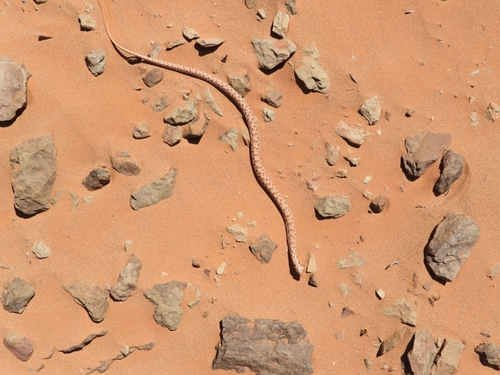
Colubridae (3)
Boidae (1)
Leptotyphlopidae (1)
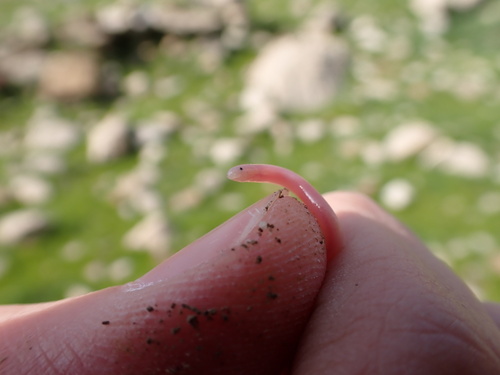
Typhlopidae (1)
Compiled from verified GBIF & iNaturalist observations. "How often seen" reflects how frequently a snake is reported here, not how dangerous it is. Informational only.
Keep learning
- Are Snakes Dangerous? The Real Risk, in PerspectiveMost snakes are harmless and avoid people. Here is the honest picture of snakebite risk worldwide and how to lower your own.
- Snakebite First Aid: What to Do (and What Never to Do)A clear, CDC-based guide to snakebite first aid: the steps that help, the popular myths that hurt, and how to tell a serious bite from a minor one.
- Venomous vs Nonvenomous: How to Tell the DifferenceThe folk rules for telling venomous snakes apart, where each one fails, and why location-based identification beats guessing by sight.
- What to Do If You Find a SnakeFound a snake at home or on a trail? Here is how to stay calm, give it space, identify it safely, and know when to call a professional.