
Aruba
Snakes in Aruba
9 snake species have been recorded in Aruba, 2 venomous.
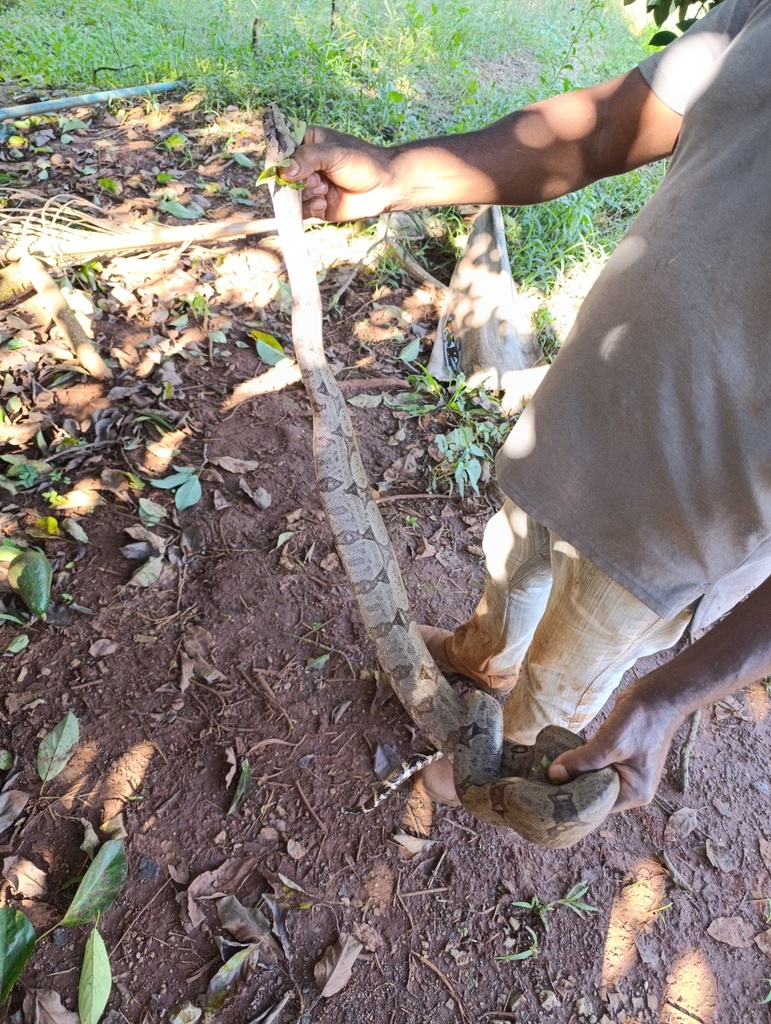
Snakes of Aruba
Aruba is a small, dry island in the southern Caribbean, lying just off the coast of Venezuela. Its arid climate, low scrub, cactus stands, rocky hills, and limestone terrain shape a modest but distinctive snake fauna. Our database records 9 snake species for Aruba, of which 2 are venomous. As on most small islands, diversity is limited, so the picture here is precise rather than sprawling: a short list of species adapted to heat, sparse cover, and seasonal dryness.
The venomous side of Aruba's fauna is small and well defined. The island is best known for the Aruba rattlesnake, a pit viper found nowhere else in the world and now critically endangered, restricted to the island's dry interior. Pit vipers of this group can deliver a medically serious bite, which is the main concern among Aruba's snakes. Beyond this, the venomous count in our database is low, in keeping with the island's size and isolation. Bites are uncommon, but any rattlesnake should be treated as a genuine medical risk and given a wide berth.
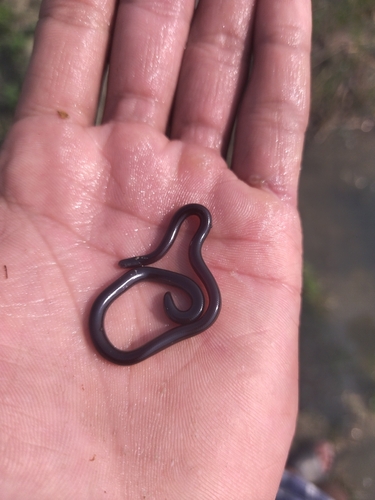
The clear majority of Aruba's snakes are harmless to people. These are the non-venomous species that make up most of the list: slender, secretive snakes that hunt lizards, small mammals, and insects across the scrubland and rocky ground. The Aruba whiptail-eating racers and similar colubrids, along with tiny burrowing blind snakes that live in the soil, pose no danger and tend to avoid contact. Most people who live on or visit the island will never see a snake at all, and the ones they do encounter are almost always non-venomous.
Snakes are a working part of Aruba's dry ecosystem. They control populations of rodents, lizards, and insects, and in turn feed birds of prey and other predators. On a small island with limited habitat, each species occupies a narrow niche, which is part of why the endemic rattlesnake matters so much for conservation: it cannot be replaced from anywhere else. Protecting the island's remaining natural scrub and rocky terrain is what keeps this small fauna intact.
For safety, the honest summary is straightforward. Most snakes on Aruba are harmless, and the main medical threat is the venomous pit viper present on the island. The correct response to a venomous snakebite is professional emergency care: antivenom and hospital treatment are the real treatment, not anything done in the field. Never handle a wild snake, venomous or not, since even a calm-looking animal can bite. If a bite occurs, contact local emergency services immediately, or in the United States reach Poison Control at 1-800-222-1222.
Snakes in Aruba: FAQ
- Are there venomous snakes in Aruba?
- Yes. 2 venomous snake species have verified records in Aruba, including Aruba Island Rattlesnake, Neotropical Rattlesnake. Most snakes in Aruba, however, are harmless.
- How many snake species live in Aruba?
- 9 snake species have verified records in Aruba, of which 2 are venomous.
- What is the most commonly seen snake in Aruba?
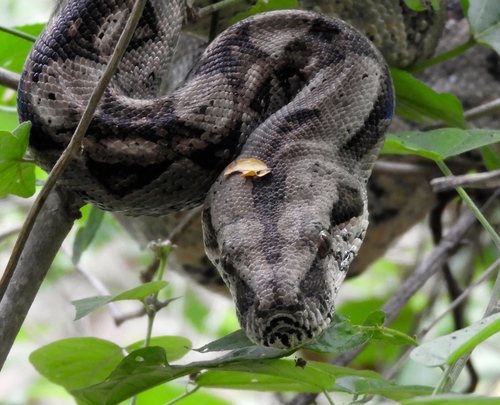
- The Boa Constrictor is the most frequently reported snake in Aruba, based on verified wildlife observations.
- What should I do if I see a venomous snake in Aruba?
- Keep your distance and do not try to catch or kill it. Most bites happen when people handle or corner a snake. If someone is bitten, contact local emergency services or poison control immediately.
Venomous snakes in Aruba
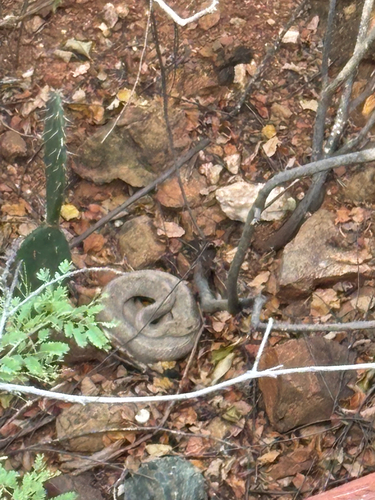 Aruba Island RattlesnakeCrotalus unicolorVenomous
Heavy body, broad triangular head, vertical (cat-like) pupils, and a segmented keratin rattle at the tail tip.
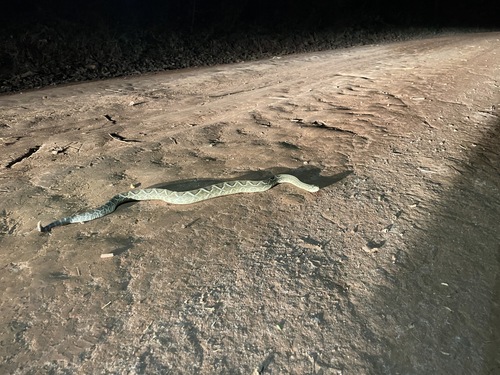 Neotropical RattlesnakeCrotalus durissusVenomous
Heavy body, broad triangular head, vertical (cat-like) pupils, and a segmented keratin rattle at the tail tip.
Every snake recorded in Aruba
9 species across 4 families, grouped by family. Venomous flagged.
Colubridae (4)
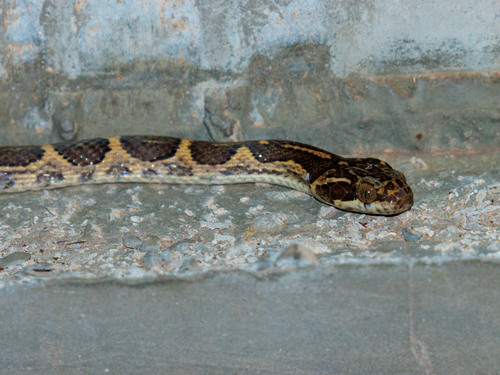
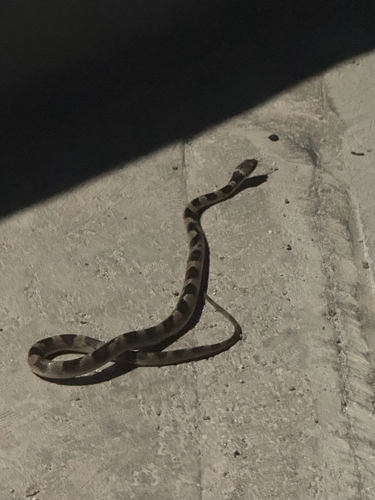
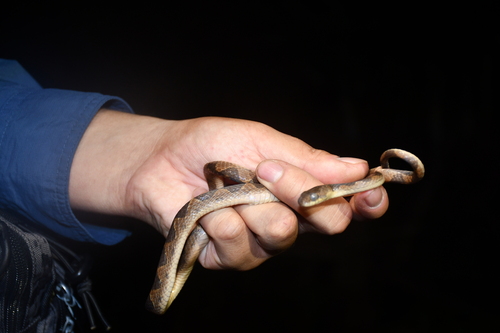
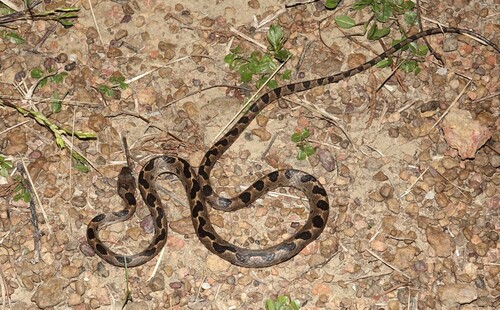
Viperidae (2)
Typhlopidae (1)
Compiled from verified GBIF & iNaturalist observations. "How often seen" reflects how frequently a snake is reported here, not how dangerous it is. Informational only.
Keep learning
- Are Snakes Dangerous? The Real Risk, in PerspectiveMost snakes are harmless and avoid people. Here is the honest picture of snakebite risk worldwide and how to lower your own.
- Snakebite First Aid: What to Do (and What Never to Do)A clear, CDC-based guide to snakebite first aid: the steps that help, the popular myths that hurt, and how to tell a serious bite from a minor one.
- Venomous vs Nonvenomous: How to Tell the DifferenceThe folk rules for telling venomous snakes apart, where each one fails, and why location-based identification beats guessing by sight.
- What to Do If You Find a SnakeFound a snake at home or on a trail? Here is how to stay calm, give it space, identify it safely, and know when to call a professional.