
Snake basics
What Is a Snake? Anatomy and the Basics
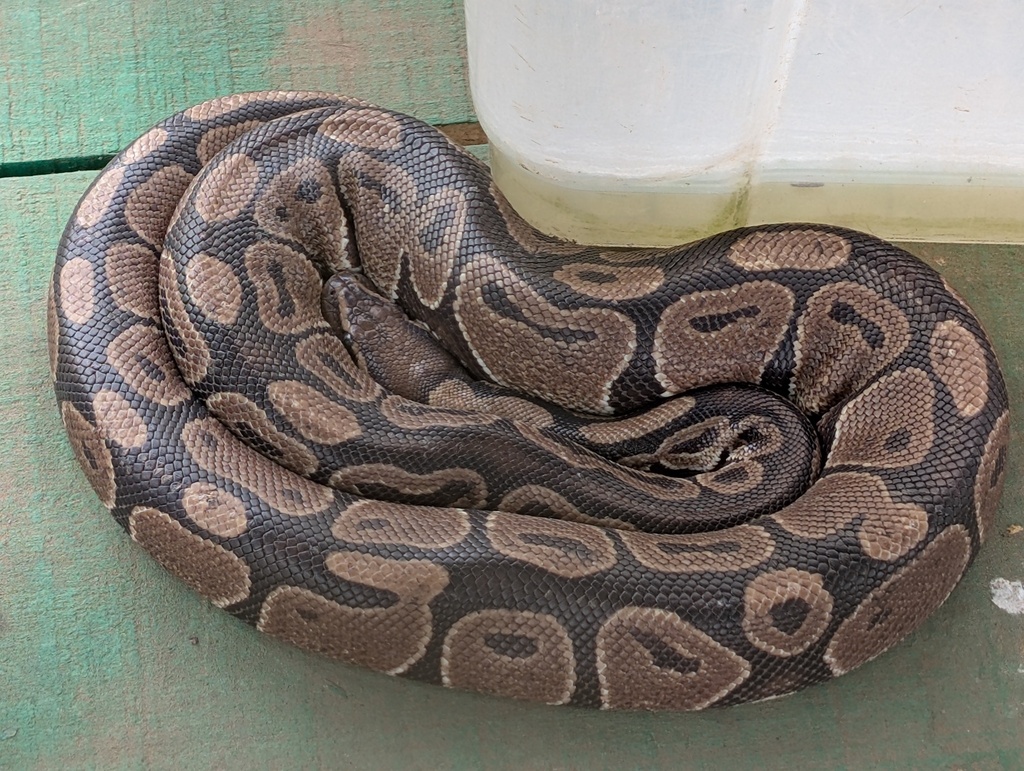
A snake is a limbless reptile with a long body, scaly skin, and a flexible jaw that lets it swallow prey whole. Snakes are one of the most successful groups of land animals, with more than 4,000 described species living on every continent except Antarctica. This guide explains the core anatomy and biology that define them and sets up the rest of the basics.
What makes a snake a snake
Snakes are reptiles in the suborder Serpentes. The features that set them apart are a long, narrow body with no legs, no eyelids, and no external ear openings. A snake cannot blink because each eye is covered by a single clear scale called a spectacle, which is why a snake's stare looks fixed and unblinking.
The forked tongue is another signature trait. A snake flicks its tongue to collect scent particles from the air and ground, then draws them to the vomeronasal organ on the roof of the mouth. The two tips let it sense which direction a smell is coming from, giving the snake a kind of directional chemical map of its surroundings.
Snakes also lack the external limbs, movable eyelids, and visible ear holes that most other reptiles have. These absences, taken together, are what separate a true snake from animals that merely look snake-like.
How snakes differ from legless lizards
Several lizard groups have lost their legs over time and look much like snakes at a glance. Glass lizards and slow worms are common examples. People often mistake them for snakes, but a few reliable differences set them apart.
Legless lizards usually have movable eyelids and can blink, while snakes cannot. Most legless lizards also keep external ear openings, which snakes never have. Many have a long tail that can break off and regrow, and their jaws are rigid, so they cannot open their mouths nearly as wide as a snake can.
When you are unsure what you are looking at, the eyes are the quickest tell. If the animal blinks, it is a lizard, not a snake.
Where snakes came from
Snakes evolved from lizards. Over millions of years their ancestors gradually lost their limbs and lengthened their bodies, an adaptation that suited burrowing, swimming, or moving through dense cover. Today snakes and lizards are grouped together as squamates, the scaled reptiles.
The clearest evidence of this lizard ancestry is found in the most primitive living snakes. Boas and pythons still carry tiny remnants of a hip and hind limbs buried under their skin. These show up on the outside as small claw-like structures called anal spurs, located on either side of the vent near the tail.
The spurs no longer help the snake move. In many species the males use them during courtship to stroke or grip the female. They are vestigial, meaning they are leftover parts whose original function has mostly disappeared, and they are a direct physical link to the limbed ancestors of all snakes.
The snake body plan
A snake's skeleton is built almost entirely of a skull, a backbone, and ribs. The spine can hold hundreds of vertebrae, far more than a mammal, and most of those vertebrae carry a pair of ribs. This long, repeating structure is what gives the body its flexibility and its ability to bend into tight curves and coils.
The skull is loosely connected, with jaw bones that can spread apart and move independently. Snakes do not unhinge their jaws, as the common saying goes, but a stretchy ligament between the two halves of the lower jaw lets the mouth open wide enough to swallow prey larger than the snake's own head.
Because the body is so narrow, the internal organs are stretched out and staggered front to back rather than sitting side by side. This long arrangement is a defining feature of snake anatomy.
Organs, lungs, and scales
To fit inside a tube-shaped body, snake organs are elongated and offset. In most species only one lung is fully functional, usually the right one, while the left lung is reduced or absent. The kidneys sit one behind the other instead of side by side, and the liver, stomach, and intestines are all stretched into long, narrow shapes.
The skin is covered in overlapping scales made of keratin, the same material as human fingernails. Scales protect the body, reduce water loss, and help the snake grip surfaces. As a snake grows, it sheds this outer layer, often in one piece, in a process called ecdysis.
Along the underside runs a single row of wide scales called ventral scales, or scutes. The snake catches the edges of these scutes against the ground and uses muscle waves to pull itself forward. This is the main reason a limbless animal can climb, swim, and cross open ground so effectively.
How many snakes there are and the main groups
Scientists have described more than 4,000 species of snake worldwide, and new ones are still being identified. They live on every continent except Antarctica and occupy deserts, forests, grasslands, freshwater, and the open ocean. Only a few large islands, such as Ireland and New Zealand, have no native snakes at all.
The largest family by far is Colubridae, which contains most of the familiar nonvenomous and mildly venomous snakes people encounter, such as rat snakes and garter snakes. Elapids include cobras, mambas, coral snakes, and sea snakes, all front-fanged and venomous. Vipers, including rattlesnakes and adders, have long hinged fangs.
Boas and pythons make up the constrictor groups that kill prey by squeezing. Smaller and more primitive groups, such as blind snakes, spend much of their lives underground. Together these groups show how widely a single body plan has been adapted.
Why snakes are cold-blooded
Snakes are ectothermic, often called cold-blooded. This means they do not generate their own steady body heat the way mammals and birds do. Instead they take on the temperature of their surroundings and regulate it through behavior.
To warm up, a snake will bask in the sun or rest on a sun-warmed rock or road. To cool down, it retreats into shade, a burrow, or water. This behavioral control is why you often see snakes out in the morning sun and hidden away during the hottest or coldest parts of the day.
In cold climates snakes cannot stay active through winter, so they enter a state called brumation. Brumation is a reptile form of dormancy, similar to hibernation, in which the snake slows its metabolism and shelters underground or in a den until temperatures rise again. Ectothermy also makes snakes very efficient, since they need far less food than a warm-blooded animal of the same size.
Most snakes are harmless
Although venomous snakes get the most attention, they are the minority. The large majority of snake species are not dangerous to people, and even many that can bite pose little real threat.
Snakes generally avoid humans and will flee or hide rather than confront something much larger than themselves. Most bites happen when a snake is cornered, stepped on, or handled. Giving a snake space and a clear path to leave resolves the vast majority of encounters without harm to either side.
Knowing the basics of snake anatomy and behavior is the best foundation for telling a harmless snake from a dangerous one, which is covered in the identification and safety guides.
Frequently asked
- Do snakes have any bones besides the spine?
- Yes. A snake's skeleton is mostly skull, backbone, and ribs, with hundreds of vertebrae each carrying a pair of ribs. Boas and pythons also keep tiny vestigial hip and hind-limb bones, which appear on the outside as small anal spurs.
- Why can't snakes blink?
- Snakes have no movable eyelids. Each eye is protected by a single clear scale called a spectacle, which is shed along with the rest of the skin. This is one of the easiest ways to tell a snake from a legless lizard, since lizards can blink.
- How do snakes move without legs?
- Snakes move using their muscles together with the wide belly scales called scutes. By catching the scute edges against the ground and sending muscle waves down the body, a snake can slide forward, climb, swim, and even cross loose surfaces.
- How many species of snake are there?
- More than 4,000 species have been described, and new ones are still found. They live on every continent except Antarctica, in habitats ranging from deserts and forests to freshwater and the open ocean.
- What does it mean that snakes are cold-blooded?
- It means snakes are ectothermic and do not produce their own steady body heat. They control their temperature by behavior, basking in the sun to warm up and retreating to shade or burrows to cool down. In winter they brumate, a reptile form of dormancy.
- Are most snakes dangerous?
- No. The majority of snake species are not dangerous to people. Most snakes avoid humans and bite only when cornered or handled, so giving a snake space to escape resolves nearly all encounters safely.
Last reviewed June 22, 2026. Informational only, and not a substitute for professional medical or wildlife advice.