
Typhlopidae
Blackish Blind Snake
HarmlessAnilios nigrescens
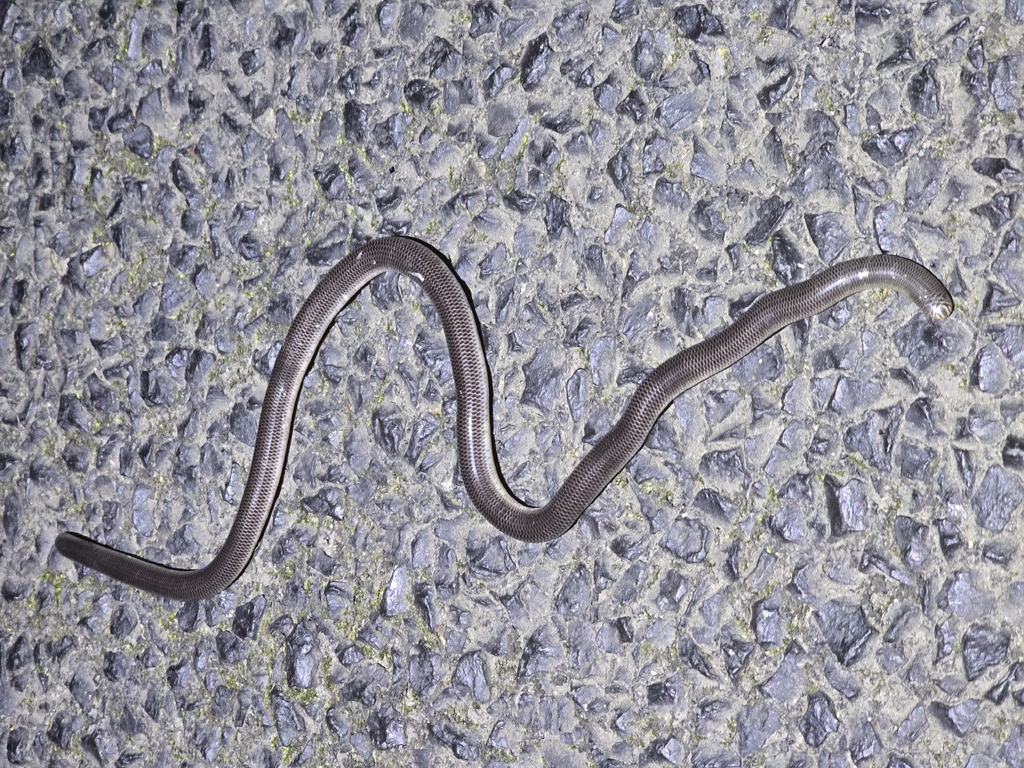
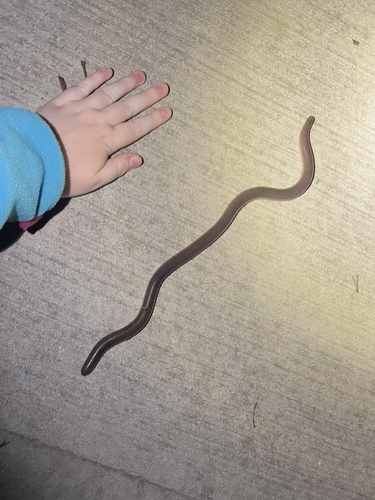
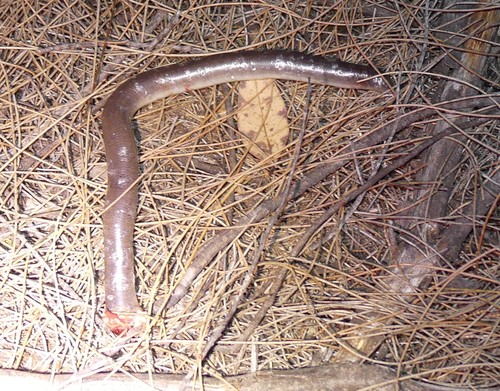
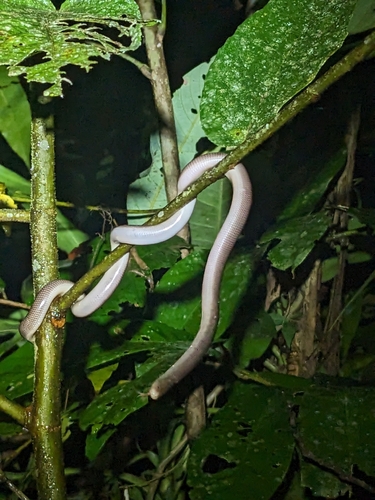
2 photographs of the Blackish Blind Snake. © Max Tibby.
The Blackish Blind Snake (Anilios nigrescens) is a non-venomous snake in the Typhlopidae family, recorded in 1 country.
- Family
- Typhlopidae
About the Blackish Blind Snake
The blackish blind snake (Anilios nigrescens) is a species of snake in the Typhlopidae family native to south-eastern Australia.
Description
It is a small burrowing snake with small dark eyes, a forked tongue and smooth scale around its body which permits them to travel through soil. They can grow to a size of 23 inches, with the largest recorded at 32 inches. Colour is brown/purplish on top, with a light shade of pink on the belly. The tail features a pointed tip which is a harmless spur. They can be mistaken for earthworms. Blind snakes move in a side-to-side motion on the ground, but underground they slither with tunnels made by insects.
Diet
The species lives most of its life underground feeding on ants, termites and their larvae. To find their food they flick their tongue to pick up the scent of an ant or termite trail and follow it back to the nest, where they rake the ants into their mouth using their upper jaw and swallow the food whole.
Adapted from Wikipedia, available under CC BY-SA.
Frequently asked: Blackish Blind Snake
- Is the Blackish Blind Snake venomous?
- No. The Blackish Blind Snake (Anilios nigrescens) is non-venomous and is not considered dangerous to humans. Like most snakes, it will retreat rather than bite when given the chance.
- Is the Blackish Blind Snake poisonous?
- Snakes are venomous, not poisonous. "Poisonous" means harmful to eat or touch; "venomous" means injecting toxins through a bite. The Blackish Blind Snake is neither poisonous nor venomous.
- Is the Blackish Blind Snake dangerous?
- The Blackish Blind Snake is not dangerous to humans. It has no medically significant venom and bites only defensively if cornered or handled.
- Where does the Blackish Blind Snake live?
- The Blackish Blind Snake has verified records in 1 country, including Australia. See the distribution section below for its full range.
- What does the Blackish Blind Snake eat?
- The species lives most of its life underground feeding on ants, termites and their larvae. To find their food they flick their tongue to pick up the scent of an ant or termite trail and follow it back to the nest, where they rake the ants into their mouth using their upper jaw and swallow the food whole.
Where it is found
More Typhlopidae snakes
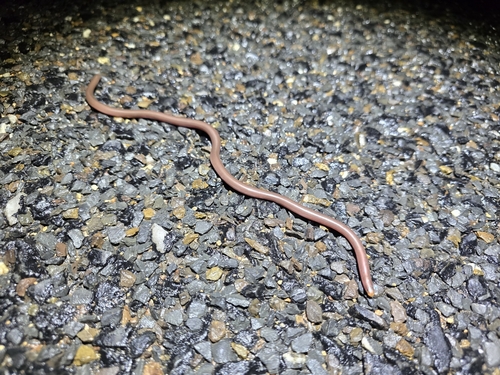 Prong-snouted Blind SnakeAnilios bituberculatus
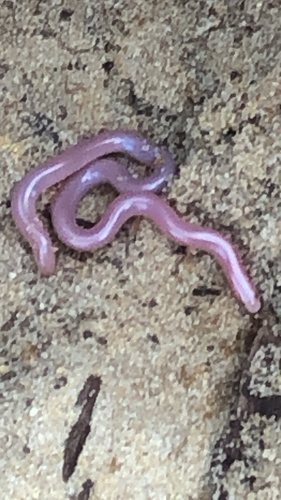 Southern Blind SnakeAnilios australis
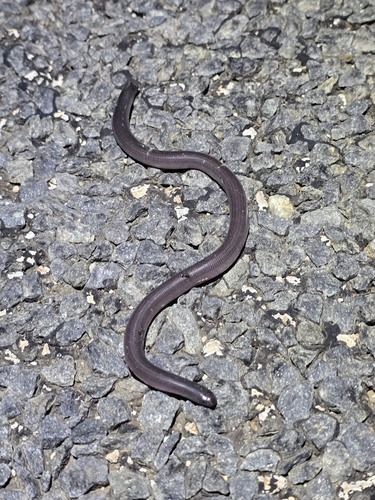 Dark-spined Blind SnakeAnilios bicolor
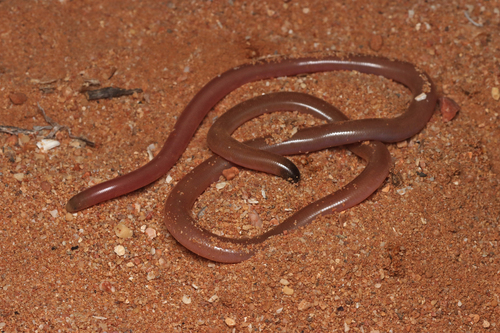 Long-beaked Blind SnakeAnilios grypus
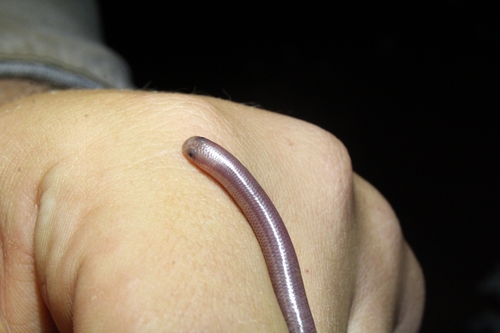 Interior Blind SnakeAnilios endoterus
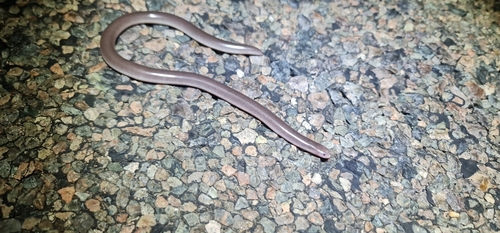 Robust Blind SnakeAnilios ligatus
 Rotund Blind SnakeAnilios pinguis
 North-eastern Blind SnakeAnilios torresianus
Classification
How scientists group this snake, from the broadest category down to the exact species. Each step narrows to its closest relatives.
- OrderThe broad group of scaled reptiles: all snakes and lizards
- Squamata
- FamilyA group of related snakes that share key traits
- Typhlopidae
- GenusA close-knit group of very similar species
- Anilios
- SpeciesThis exact snake, named in the two-part scientific name
- Anilios nigrescens
Keep learning
- What to Do If You Find a SnakeFound a snake at home or on a trail? Here is how to stay calm, give it space, identify it safely, and know when to call a professional.
- Venomous vs Nonvenomous: How to Tell the DifferenceThe folk rules for telling venomous snakes apart, where each one fails, and why location-based identification beats guessing by sight.
- What Is a Snake? Anatomy and the BasicsA clear overview of what makes a snake a snake: limbless body plan, anatomy, evolution from lizards, species diversity, and why they are ectothermic.
- How to Keep Snakes Out of Your Yard and HomeA practical guide to keeping snakes out of your yard and home using habitat changes that work, plus what to skip and what to do if one shows up.
Distribution from GBIF & iNaturalist. Venom status per CDC. Background: Wikipedia. Informational only. Never handle a snake to identify it.