
Identification
Venomous vs Nonvenomous: How to Tell the Difference
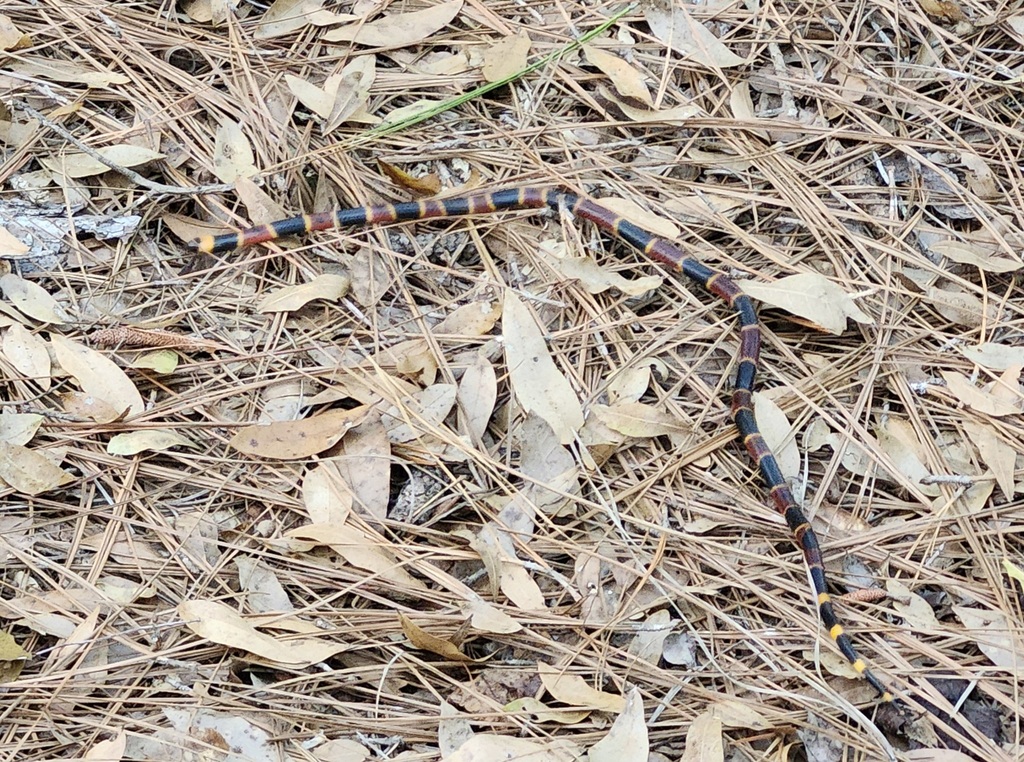
There is no single trait that reliably separates venomous snakes from harmless ones across the world. Every popular shortcut, head shape, pupils, color, has real exceptions that have put people in the hospital. The clues below are worth knowing so you understand why a snake catches your eye, but they exist to build awareness, not to give you permission to approach. The only safe assumption with an unidentified snake is that it could be dangerous.
Start here: no single trait is reliable, and you should never get close to check
People want one rule that settles it. That rule does not exist. The visual clues most often repeated, triangular head, slit pupils, bright colors, all have well-documented exceptions, and several venomous species break them outright. Treating any one of them as proof is how people get bitten.
Just as important: most of these traits can only be seen up close. Pupil shape, the heat-sensing pit, and fine scale detail require you to be within striking range of a live snake, which is exactly where you must never be. A snake can strike a distance of roughly one third to one half of its body length, faster than you can react. Use these clues to recognize that a snake is present and to describe it later from a safe distance, not to inspect it.
The goal of this guide is awareness, not a field test for safety. If you cannot positively identify a snake from a safe distance, you treat it as potentially venomous and you leave it alone.
Head shape: the triangular-head rule and why it fails
The common claim is that venomous snakes have a broad, triangular, arrow-shaped head while harmless snakes have a narrow head. There is a kernel of truth: many vipers, including rattlesnakes, copperheads, and cottonmouths, do have wide heads because of their venom glands.
The rule fails in both directions. Many harmless snakes flatten and widen their heads into a triangular shape when threatened, deliberately mimicking vipers to scare off predators. Common watersnakes, hognose snakes, and gopher snakes all do this convincingly. At the same time, some of the most dangerous snakes in the world have narrow heads that look nothing like a triangle, including coral snakes, cobras, mambas, and most sea snakes. Head shape tells you almost nothing on its own.
Pupil shape: vertical slits vs round, and the coral snake exception
Another widespread rule says venomous snakes have vertical, cat-like slit pupils and harmless snakes have round pupils. Many vipers do have vertical pupils, but this clue is both unreliable and dangerous to use.
Coral snakes, which are highly venomous, have round pupils. So do cobras, mambas, and sea snakes. Meanwhile pupil shape changes with light: a snake's pupils dilate to round in dim conditions regardless of species. Worst of all, seeing a snake's pupils means you are close enough to its face to be bitten. This is not a clue you should ever try to use on a live snake.
The heat-sensing pit: a real marker, but only for one family
Pit vipers, the group that includes rattlesnakes, copperheads, and cottonmouths in North America, have a heat-sensing pit, a small opening on each side of the head between the eye and the nostril. When present, it is a genuine indicator of a pit viper.
The problem is what it does not cover. The pit only identifies pit vipers. Coral snakes, cobras, mambas, kraits, and sea snakes are all dangerously venomous and have no pit at all, so the absence of a pit proves nothing. And like pupils, the pit is a tiny feature you can only see from inches away. It is useful for understanding what a snake is after the fact, never as a live inspection.
The rattle: helpful when present, useless when absent
A buzzing rattle is one of the few clues that is genuinely useful from a distance, and it is a clear warning to back away. If you hear or see a rattle, you are near a rattlesnake. Take it seriously.
But the absence of a rattle means nothing. Most venomous snakes worldwide have no rattle at all. Rattlesnakes are limited mainly to the Americas, and even they do not always rattle before striking, especially if they feel cornered or are young. Some rattlesnakes lose their rattles to injury, and a few populations rattle less than others. Never interpret silence as safety.
Color and pattern: the 'red touches yellow' rhyme and its narrow limits
The best-known color rule is the rhyme for coral snakes: 'red touches yellow, kills a fellow; red touches black, venom lack.' This describes the order of the colored bands and is meant to separate venomous coral snakes from harmless mimics like the scarlet kingsnake.
This rhyme is reliable only for coral snakes native to the United States, and even then it is not absolute. It does not work for coral snake species in Central and South America and elsewhere, where the band patterns differ, so a snake that the rhyme would call harmless can be deadly outside the US. Banded patterns also vary, fade, or appear in atypical individuals. Bright coloring in general is not a dependable signal either: plenty of venomous snakes are drab brown or gray, and many harmless snakes are vividly colored. Do not bet your safety on a rhyme or on color alone.
Behavior: defensive displays look alarming and prove nothing
Behavior is tempting to read but easy to misjudge. Harmless snakes put on dramatic defensive shows: hognose snakes hiss, flatten their necks into a cobra-like hood, strike with closed mouths, and even play dead. Watersnakes flatten and lunge. These displays are bluffs from non-venomous species.
Conversely, a venomous snake may stay completely still and silent, relying on camouflage, until it strikes. Coiling, gaping the mouth open, vibrating the tail against leaves, and hissing all occur in both venomous and harmless snakes. Aggression or calm tells you about the snake's mood, not its venom. Whatever the snake is doing, the correct response is the same: give it room and let it leave.
Why location-based identification is the most reliable approach
The single most dependable way to identify a snake is to know which species actually live in your area and what they look like. The number of venomous species in any given region is usually small and well documented. Learning those few species, their colors, patterns, sizes, and typical habitats, gives you a real frame of reference instead of a one-size-fits-all rule that breaks down.
Local and regional wildlife agencies, university extension programs, herpetology societies, and reputable field guides publish identification resources specific to your state or country. Many areas also have local snake-identification groups where experts confirm species from photos taken at a safe distance. Learning the handful of dangerous species near you, and the harmless look-alikes they are confused with, is far more useful than memorizing folk traits. If you travel, the relevant species change, so the local knowledge has to change with you.
The bottom line
No visual trait reliably proves a snake is safe. Head shape, pupils, the pit, color, and behavior each fail in ways that have real consequences. The clues are worth understanding so you can describe a snake accurately and appreciate why identification is hard, but they are not a license to get close.
Treat any snake you cannot positively identify as potentially venomous and keep your distance. Do not handle it, do not try to move it, and do not approach to check details. Most bites happen when people try to catch, kill, or handle a snake. Give it space, let it move on, and if you need an identification, use a photo taken from well back or contact local wildlife professionals.
Frequently asked
- Is the triangular-head rule a safe way to identify venomous snakes?
- No. Many harmless snakes flatten their heads into a triangle to mimic vipers when threatened, and several deadly snakes such as coral snakes, cobras, and mambas have narrow, non-triangular heads. Head shape alone is not a reliable indicator.
- Does the 'red touches yellow' rhyme work everywhere?
- No. It applies only to coral snakes native to the United States, and even there it is not foolproof. Coral snakes in Central and South America and other regions have different band patterns, so the rhyme can wrongly label a deadly snake as harmless outside the US.
- If a snake does not have a rattle, is it safe?
- No. Most venomous snakes worldwide have no rattle at all, and even rattlesnakes do not always rattle before striking. The absence of a rattle tells you nothing about whether a snake is venomous.
- Can I check a snake's pupils or heat-sensing pit to identify it?
- You should not try. Seeing pupils or a pit requires being within striking distance of a live snake, which is unsafe. Those features are also unreliable on their own, since coral snakes and cobras have round pupils and no pit yet are highly venomous.
- What is the most reliable way to identify a snake?
- Learn which snake species actually live in your area using local wildlife agencies, university extension resources, or reputable regional field guides. Knowing the small number of venomous species near you, and their harmless look-alikes, is far more dependable than any single physical trait.
- What should I do if I cannot identify a snake?
- Treat it as potentially venomous, keep your distance, and do not handle or try to move it. Most bites occur when people attempt to catch or kill a snake. Take a photo from well back if you need an identification, and contact local wildlife professionals.
Last reviewed June 22, 2026. Informational only, and not a substitute for professional medical or wildlife advice.