
Elapidae
Brown Banded Cobra
VenomousNaja fuxi
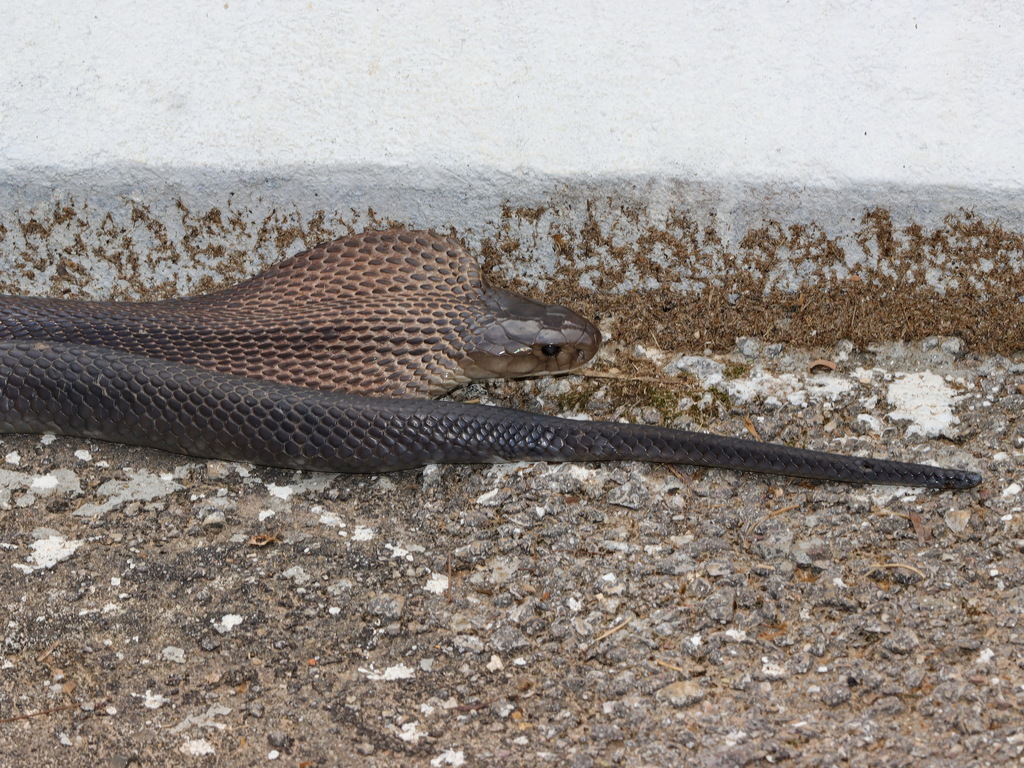
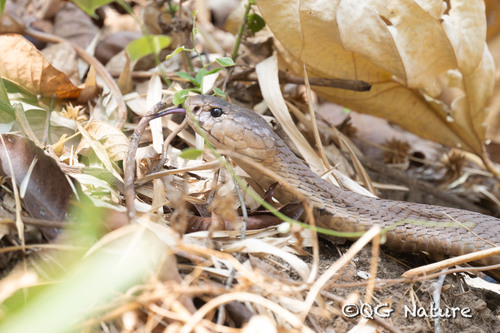
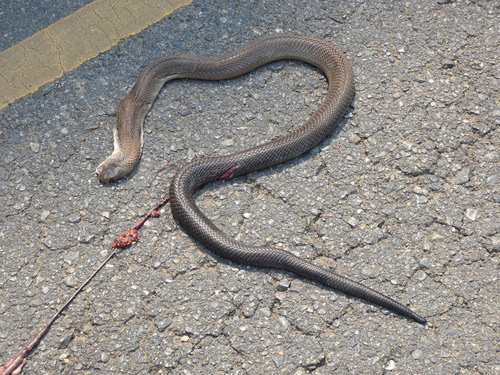
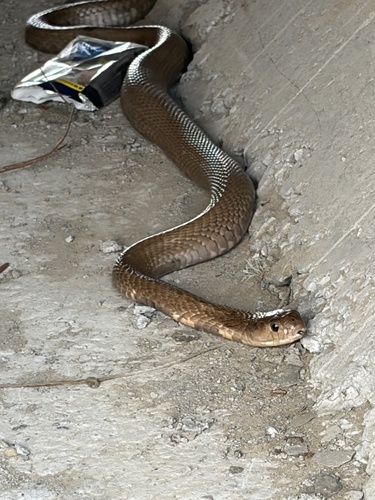
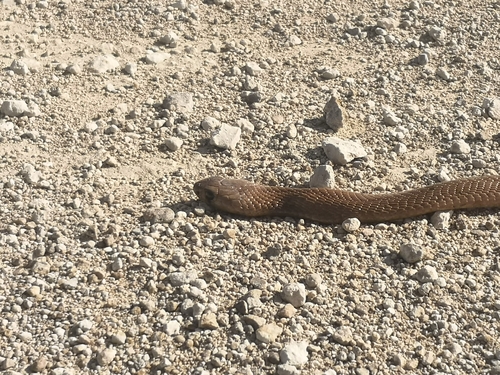
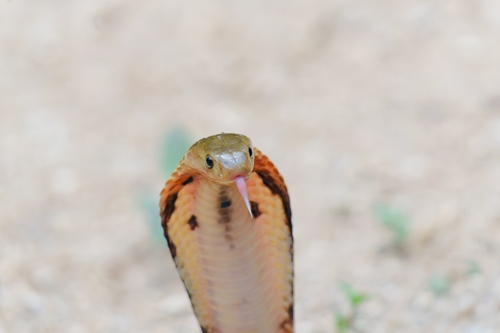
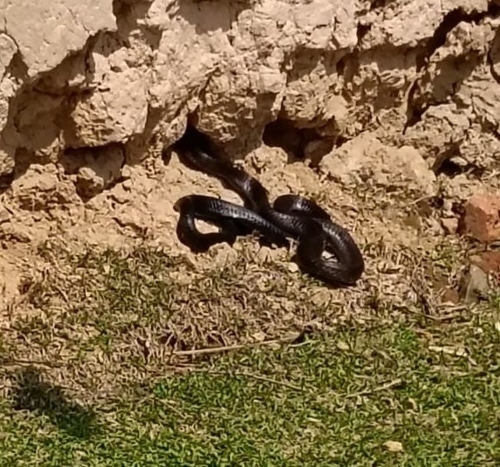
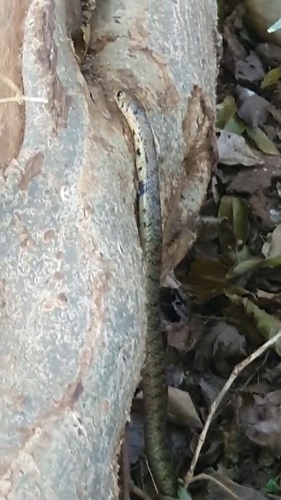
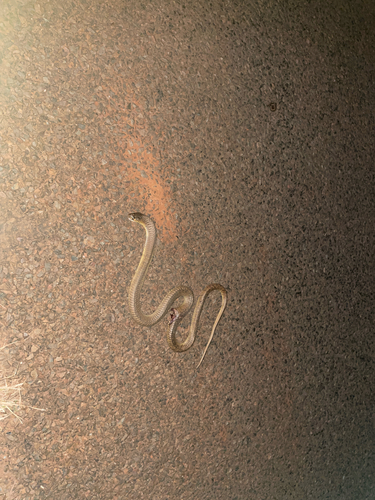
3 photographs of the Brown Banded Cobra. (c) Ian Dugdale, some rights reserved (CC BY).
The Brown Banded Cobra (Naja fuxi) is a venomous snake in the Elapidae family, recorded in 75 countries.
If you are bitten
This is a venomous snake. Treat any bite as a medical emergency: stay calm, keep the bitten limb still and roughly level with the heart, remove rings and tight clothing, and get to emergency care immediately. Do not apply a tourniquet, cut the wound, apply ice, or try to suck out venom. Call your local emergency number or poison center.
- Family
- Elapidae
- Danger
- high
About the Brown Banded Cobra
The brown banded cobra (Naja fuxi) is a species of venomous cobra, endemic to Southeast Asia. It was considered to be a part of Naja kaouthia until genetic studies conducted in 2022 rendered it a separate species.
Taxonomy
N. fuxi falls under the genus Naja in the family Elapidae. It was first accepted as a species of its own in a 2022 paper detailing the differences between the Asian cobras, wherein it was identified as a distinct taxon by some variations in patterning and scalation. The name fuxi is derived from Fuxi (伏羲), one of the ancestors of the human race in ancient Chinese mythology, often pictured as half-man, half-snake.
Description
The brown banded cobra is a medium-sized species, with an adult body length of 69–137 cm (27–54 in). It resembles the monocled cobra, Naja kaouthia, due to the predominantly monocellate marking on its hood. The dominant colouration is brown, with varying shades across the length of the body. Juveniles and smaller specimens tend to have darker dorsal and ventral colouration than large adults. It may be differentiated from N. kaouthia by the regular narrow crossbands on the middle to hind regions of the dorsal scales, and by the dorsal surface of the tail which is buff with dark fringes.
Scalation
The brown banded cobra has 190 ventral scales, 2 pre-ventrals and 50 paired subcaudals tapering into a spine. Like its former conspecific, it has a smooth dorsum, with 20 neck and midbody rows and 15 one head-length ahead of the vent.
Behaviour
This species has a wide range of prey, including amphibians, snakes, birds, and small mammals, and has been reported to enter human habitation in Yunnan Province to feed on chicks. Several individuals were found inhabiting abandoned termite nests during winter in Menglian County.
Distribution and habitat
N. fuxi has been collected from tropical and subtropical regions of southwestern China, between 1,000–1,400 m (3,300–4,600 ft), and is likely found in neighbouring areas including the northern reaches of Myanmar, Laos, Thailand and Vietnam. It appears to prefer gentle slopes of open bush and forest edges.
Venom
Not much is known about this species' venom. Its fangs are short and firm, as in other cobra species, but are not altered in a functional capacity to spew venom. It is an aggressive species, and was one of the most significant causes of snakebite in Xishuangbanna, Yunnan Province from 2007 to 2014.
Adapted from Wikipedia, available under CC BY-SA.
Local and regional names
The Brown Banded Cobra is known by these names across the regions where it lives:
- Afrikaans
- Bakkoppe, Kobras, Spoegslange
- Chinese
- 眼鏡蛇屬
- English
- Cobras, cobra
- Finnish
- Kobrat
- German
- Echte Cobras, Echte Kobras
- Hungarian
- valódi kobrák
- Italian
- Cobra
- Japanese
- フードコブラ属
- Russian
- Кобры, Настоящие кобры, Очковые змеи
- Sinhala
- නයි
- Thai
- งูเห่า
Frequently asked: Brown Banded Cobra
- Is the Brown Banded Cobra venomous?
- Yes. The Brown Banded Cobra (Naja fuxi) is venomous and belongs to the Elapidae family (cobra, mamba, coral or sea snake). Its bite is considered high risk to people. Treat any bite as a medical emergency.
- Is the Brown Banded Cobra poisonous?
- Snakes are venomous, not poisonous. "Poisonous" means harmful to eat or touch; "venomous" means injecting toxins through a bite. The Brown Banded Cobra is venomous, delivering venom through a bite.
- Is the Brown Banded Cobra dangerous?
- This is a venomous snake. Treat any bite as a medical emergency: stay calm, keep the bitten limb still and roughly level with the heart, remove rings and tight clothing, and get to emergency care immediately. Do not apply a tourniquet, cut the wound, apply ice, or try to suck out venom. Call your local emergency number or poison center.
- Where does the Brown Banded Cobra live?
- The Brown Banded Cobra has verified records in 75 countries, including South Africa, India, Zambia. See the distribution section below for its full range.
If you are bitten by the Brown Banded Cobra
Do
- Get away from the snake and stay calm. Most bites worsen when people panic or try again to handle the snake.
- Call 911 or Poison Control (1-800-222-1222) right away. Antivenom works best when given early.
- Note the time of the bite and, from a safe distance, the snake's color and pattern, a phone photo is enough. Do not chase it.
- Keep the bitten limb still and at roughly heart level. Sit or lie down and limit movement.
- Remove rings, watches, and tight clothing near the bite before swelling starts.
- Gently wash the bite with soap and water and cover it with a clean, dry dressing.
Do not
- Do not cut the wound or try to suck out the venom.
- Do not apply a tourniquet or ice.
- Do not drink alcohol or caffeine.
- Do not take aspirin or ibuprofen, they can worsen bleeding. Acetaminophen is safer for pain.
- Do not try to catch or kill the snake. A dead snake can still bite by reflex.
First-aid guidance adapted from the U.S. Centers for Disease Control and Prevention (CDC NIOSH), Venomous Snakes. Educational only; always follow the instructions of emergency responders.
Where it is found
More Elapidae snakes
Classification
How scientists group this snake, from the broadest category down to the exact species. Each step narrows to its closest relatives.
Keep learning
- Are Snakes Dangerous? The Real Risk, in PerspectiveMost snakes are harmless and avoid people. Here is the honest picture of snakebite risk worldwide and how to lower your own.
- Snakebite First Aid: What to Do (and What Never to Do)A clear, CDC-based guide to snakebite first aid: the steps that help, the popular myths that hurt, and how to tell a serious bite from a minor one.
- Venomous vs Nonvenomous: How to Tell the DifferenceThe folk rules for telling venomous snakes apart, where each one fails, and why location-based identification beats guessing by sight.
- What to Do If You Find a SnakeFound a snake at home or on a trail? Here is how to stay calm, give it space, identify it safely, and know when to call a professional.
Distribution from GBIF & iNaturalist. Venom status per CDC. Background: Wikipedia. Informational only. Never handle a snake to identify it.