
Elapidae
Equatorial Spitting Cobra
VenomousNaja sumatrana
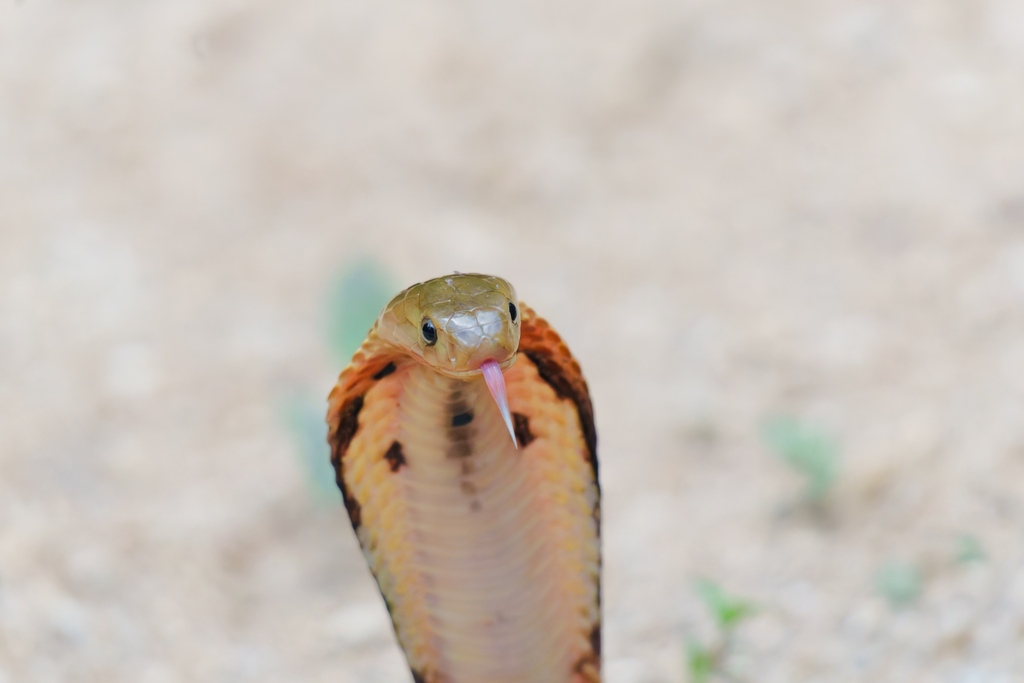
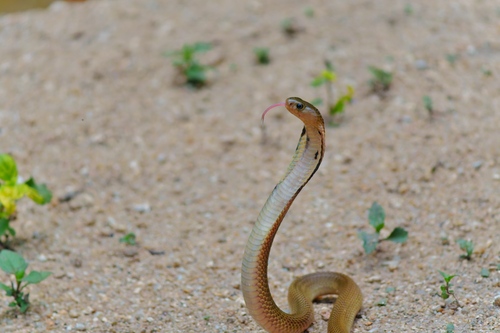
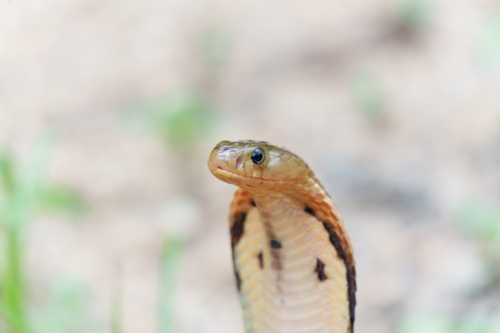
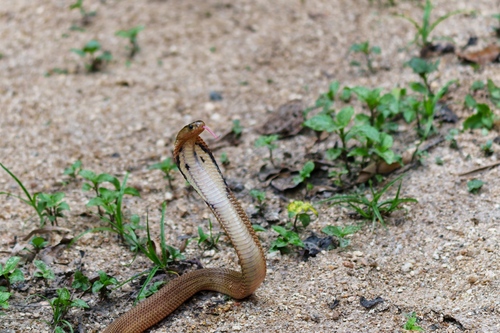
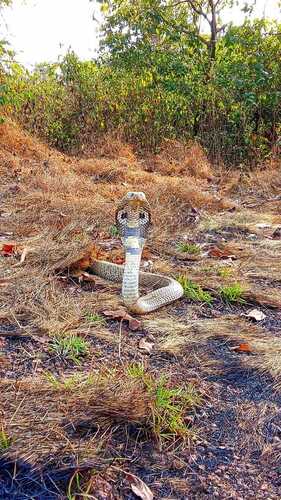
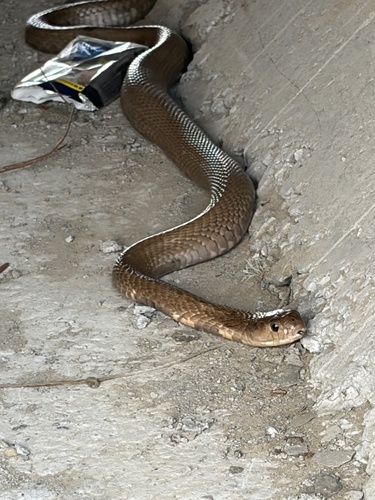
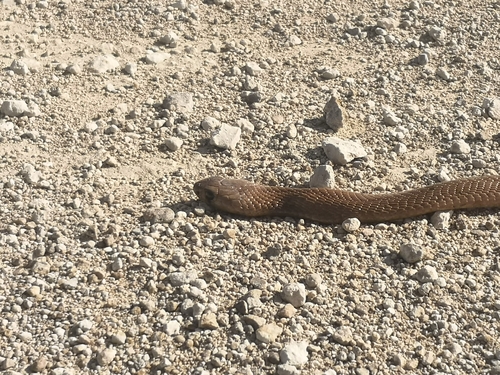
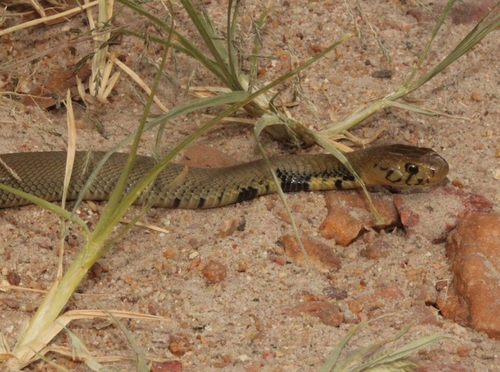
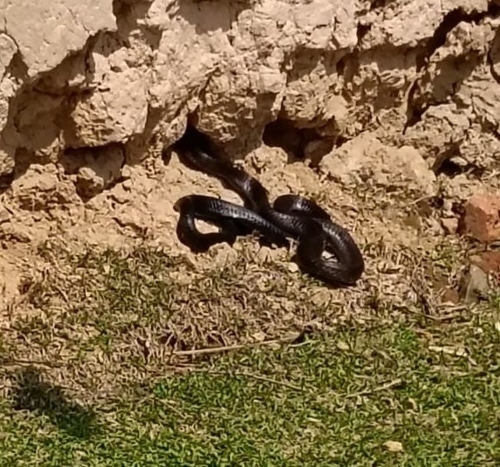
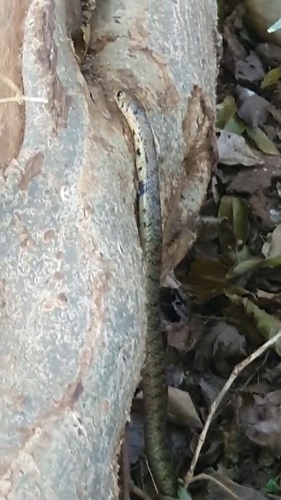
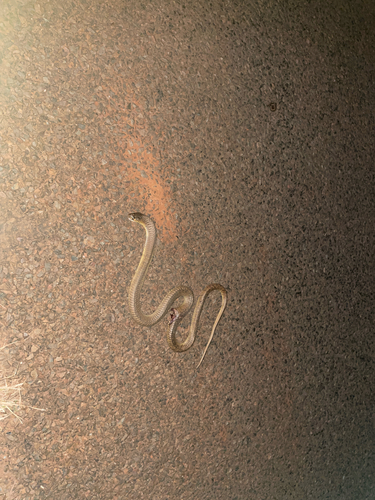
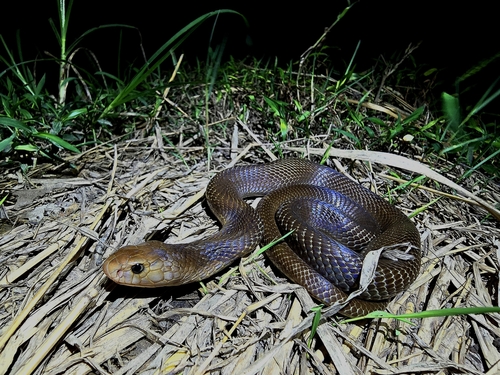
4 photographs of the Equatorial Spitting Cobra. © Jay Paroline.
The Equatorial Spitting Cobra (Naja sumatrana) is a venomous snake in the Elapidae family, recorded in 8 countries.
If you are bitten
This is a venomous snake. Treat any bite as a medical emergency: stay calm, keep the bitten limb still and roughly level with the heart, remove rings and tight clothing, and get to emergency care immediately. Do not apply a tourniquet, cut the wound, apply ice, or try to suck out venom. Call your local emergency number or poison center.
- Family
- Elapidae
- Danger
- high
About the Equatorial Spitting Cobra
The Equatorial spitting cobra (Naja sumatrana) also called the Malayan spitting cobra, golden spitting cobra, Sumatran spitting cobra, or Palawan spitting cobra, is a species of spitting cobra found in Southeast Asia.
Description
This species is medium in length, averaging between 0.9 to 1.2 metres (3.0 to 3.9 ft) in length, though they can grow up to 1.5 metres (4.9 ft). The body is compressed dorsoventrally and sub-cylindrical posteriorly. The head of this species is elliptical, depressed, and slightly distinct from the neck with a short, rounded snout and large nostrils. Eyes are medium in size with round pupils. Dorsal scales are smooth and strongly oblique. This species of cobra has no hood marks and colouration varies based upon geographical location. There are two colour phases: a yellow form commonly found in Thailand and Northern Peninsular Malaysia, and a black form found in Peninsular Malaysia, Singapore, and the islands where it occurs in Indonesia and the Philippines. Juveniles and adults also tend to be of different colour.
Scalation
19-27 rows around the hood (normally 21–25), 15-19 just ahead of the mid-body; 179-201 ventrals, 40-57 subcaudals; basal subcaudals are often undivided.
Taxonomy
The population currently included in Naja sumatrana have a confusing history. The species was first defined as currently understood in 1989. Previously, the populations of this species were assigned to several different subspecies of Naja naja (Indian cobra), in particular N. n. sumatrana (Sumatra), N.n. sputatrix (Peninsular Malaysia) and N.n. miolepis (Borneo, Palawan). Some confusion over names has persisted into the more recent toxinological literature, in particular the misapplication of the name sputatrix to venoms of Naja sumatrana from Peninsular Malaysia.
Distribution
This species of cobra is found in the equatorial Southeast Asian nations of Brunei, Indonesia, Malaysia, Singapore, Thailand, and in the Philippines. In Indonesia it occurs on the islands of Sumatra, Borneo, Bangka, Belitung, and the Riau Archipelago. It may occur on neighboring islands in Indonesia, and it is possible that remnant populations still occur in western Java. In the Philippines, it only occurs in the Palawan group of islands (including the Calamian Islands).
Habitat and ecology
This species can be found in elevations up to about 1,500 metres (4,900 ft) above sea level in mainly primary and secondary tropical forests (including dense jungle terrain); however, it has also been found in gardens, parks, and in urban areas where it may come in contact with humans. It is a terrestrial and mainly diurnal snake that feeds mainly on rodents and frogs, but will also feed on other snakes, lizards and small mammals. Though not too aggressive in nature (unlike the yellow specimens reported from Thailand being highly aggressive and more prone to spitting in copious amounts without running out of venom), these snakes can and will readily spit venom, even from up in the trees, when they are cornered or threatened. They will also strike and bite.
Venom
Adapted from Wikipedia, available under CC BY-SA.
Local and regional names
The Equatorial Spitting Cobra is known by these names across the regions where it lives:
- Arabic
- الناشر السومطري البصَّاق
- Chinese
- 蘇門答臘眼鏡蛇
- Czech
- kobra sumaterská
- Danish
- Sunda-spyttekobra
- English
- Black Spitting Cobra, Equitorial Spitting Cobra, Golden Spitting Cobra, Sumatran Spitting Cobra
- French
- Cobra cracheur équatorial
- German
- Sumatra-Kobra, Äquatoriale Speikobra
- Hungarian
- szumátrai köpködőkobra
- Indonesian
- Ular Sendok Sumatra
- Italian
- Cobra sputatore della Malesia, Cobra sputatore di Sumatra, Cobra sputatore equatoriale, Cobra sputatore malese
- Polish
- kobra malajska
- Russian
- Суматранская Кобра
- Spanish
- Cobra de Sonda
- Thai
- งูเห่าพ่นพิษสีทอง, งูเห่าพ่นพิษสุมาตรา
Frequently asked: Equatorial Spitting Cobra
- Is the Equatorial Spitting Cobra venomous?
- Yes. The Equatorial Spitting Cobra (Naja sumatrana) is venomous and belongs to the Elapidae family (cobra, mamba, coral or sea snake). Its bite is considered high risk to people. Treat any bite as a medical emergency.
- Is the Equatorial Spitting Cobra poisonous?
- Snakes are venomous, not poisonous. "Poisonous" means harmful to eat or touch; "venomous" means injecting toxins through a bite. The Equatorial Spitting Cobra is venomous, delivering venom through a bite.
- Is the Equatorial Spitting Cobra dangerous?
- This is a venomous snake. Treat any bite as a medical emergency: stay calm, keep the bitten limb still and roughly level with the heart, remove rings and tight clothing, and get to emergency care immediately. Do not apply a tourniquet, cut the wound, apply ice, or try to suck out venom. Call your local emergency number or poison center.
- Where does the Equatorial Spitting Cobra live?
- The Equatorial Spitting Cobra has verified records in 8 countries, including Singapore, Malaysia, Indonesia. See the distribution section below for its full range.
If you are bitten by the Equatorial Spitting Cobra
Do
- Get away from the snake and stay calm. Most bites worsen when people panic or try again to handle the snake.
- Call 911 or Poison Control (1-800-222-1222) right away. Antivenom works best when given early.
- Note the time of the bite and, from a safe distance, the snake's color and pattern, a phone photo is enough. Do not chase it.
- Keep the bitten limb still and at roughly heart level. Sit or lie down and limit movement.
- Remove rings, watches, and tight clothing near the bite before swelling starts.
- Gently wash the bite with soap and water and cover it with a clean, dry dressing.
Do not
- Do not cut the wound or try to suck out the venom.
- Do not apply a tourniquet or ice.
- Do not drink alcohol or caffeine.
- Do not take aspirin or ibuprofen, they can worsen bleeding. Acetaminophen is safer for pain.
- Do not try to catch or kill the snake. A dead snake can still bite by reflex.
First-aid guidance adapted from the U.S. Centers for Disease Control and Prevention (CDC NIOSH), Venomous Snakes. Educational only; always follow the instructions of emergency responders.
Where it is found
More Elapidae snakes
Classification
How scientists group this snake, from the broadest category down to the exact species. Each step narrows to its closest relatives.
Keep learning
- Are Snakes Dangerous? The Real Risk, in PerspectiveMost snakes are harmless and avoid people. Here is the honest picture of snakebite risk worldwide and how to lower your own.
- Snakebite First Aid: What to Do (and What Never to Do)A clear, CDC-based guide to snakebite first aid: the steps that help, the popular myths that hurt, and how to tell a serious bite from a minor one.
- Venomous vs Nonvenomous: How to Tell the DifferenceThe folk rules for telling venomous snakes apart, where each one fails, and why location-based identification beats guessing by sight.
- What to Do If You Find a SnakeFound a snake at home or on a trail? Here is how to stay calm, give it space, identify it safely, and know when to call a professional.
Distribution from GBIF & iNaturalist. Venom status per CDC. Background: Wikipedia. Informational only. Never handle a snake to identify it.