
Sao Tome and Principe
Snakes in Sao Tome and Principe
10+ snake species have been recorded in Sao Tome and Principe, 3 venomous.
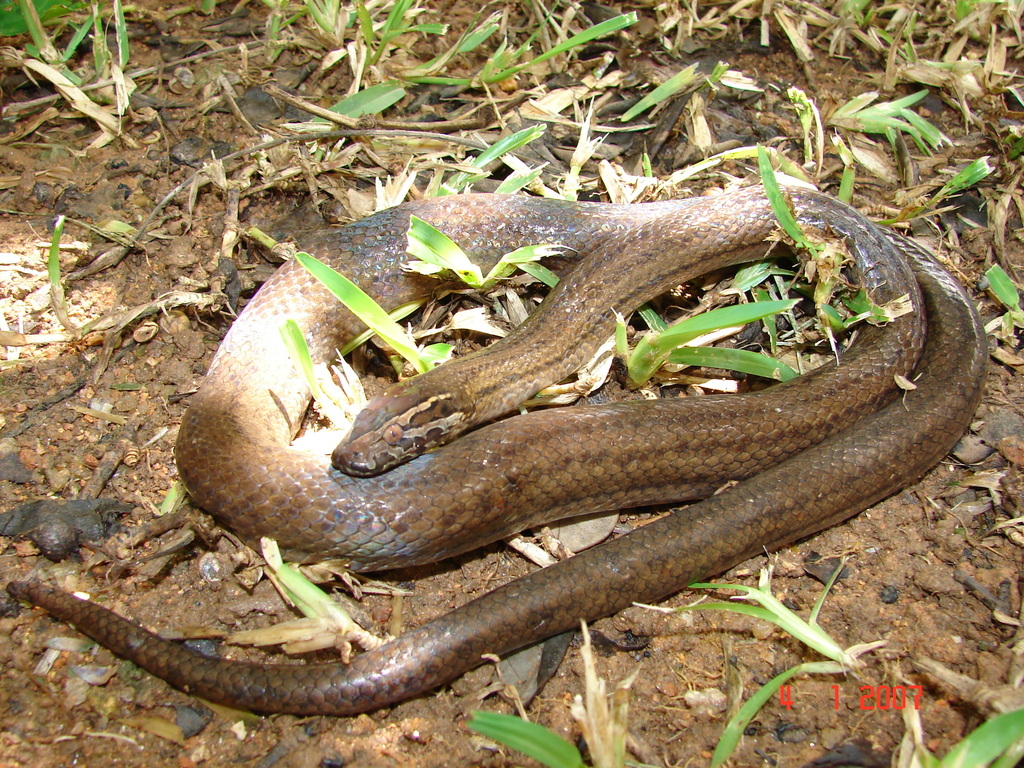
Snakes of Sao Tome and Principe
Sao Tome and Principe is a small two-island nation in the Gulf of Guinea, off the west coast of Central Africa. Its snakes live on oceanic islands that were never connected to the mainland, so the fauna is small, shaped by what could reach the islands and survive in their wet tropical forest. Our database records 10+ snake species for the country, 3 of them venomous. Most of the islands are covered in dense rainforest, with lowland plantations, stream margins, leaf litter, and rocky volcanic ground. These warm, humid, heavily vegetated habitats favor secretive, ground-dwelling and burrowing snakes more than open-country species.
The venomous snakes present here are not the large vipers or cobras people associate with mainland Africa. The genuine medical concern on these islands comes from forest and water snakes whose venom is delivered by rear fangs and is weak in humans, alongside small burrowing forms. Sao Tome in particular is known for the Sao Tome cobra, a forest snake found only here, which is the one species worth treating with real caution. Because the islands are isolated, dangerous front-fanged species common on the African mainland did not naturally colonize them, so the overall venom risk is much lower than in continental Africa.
The harmless majority is what defines the country's snake life. Several of the species are small blind snakes and similar burrowing forms that spend their lives underground or in leaf litter, feeding on ants, termites, and soft-bodied invertebrates. They have tiny mouths, cannot meaningfully bite a person, and are easy to mistake for worms. Island endemism is the striking feature: a number of these snakes occur nowhere else on Earth, making the archipelago a notable spot for island evolution despite its modest species count.
Ecologically, these snakes are part of a tightly knit island food web. The burrowers help regulate insect and invertebrate populations in the forest soil, while the larger forest and stream snakes prey on amphibians, lizards, and small vertebrates and in turn feed birds of prey and other predators. On small islands where every species matters, native snakes are an important link in keeping that system in balance, and several are of conservation interest because their entire global range is these few square kilometers of forest.
On safety, the practical picture is reassuring: the great majority of snakes here are harmless, and serious bites are uncommon. The main species worth respect is the endemic Sao Tome cobra, but no wild snake should ever be handled, picked up, or cornered, regardless of how harmless it looks. If a bite occurs, the correct response is to get to a hospital immediately, because medical evaluation and appropriate antivenom or supportive care are the treatment. Do not rely on field remedies. For any suspected venomous bite or for guidance, contact local emergency services, or in the United States reach Poison Control at 1-800-222-1222.
Snakes in Sao Tome and Principe: FAQ
- Are there venomous snakes in Sao Tome and Principe?
- Yes. 3 venomous snake species have verified records in Sao Tome and Principe, including Brown Banded Cobra, São Tomé Cobra, Forest Cobra. Most snakes in Sao Tome and Principe, however, are harmless.
- How many snake species live in Sao Tome and Principe?
- 10+ snake species have verified records in Sao Tome and Principe, of which 3 are venomous.
- What is the most commonly seen snake in Sao Tome and Principe?
- The Seychelles House Snake is the most frequently reported snake in Sao Tome and Principe, based on verified wildlife observations.
- What should I do if I see a venomous snake in Sao Tome and Principe?
- Keep your distance and do not try to catch or kill it. Most bites happen when people handle or corner a snake. If someone is bitten, contact local emergency services or poison control immediately.
Venomous snakes in Sao Tome and Principe
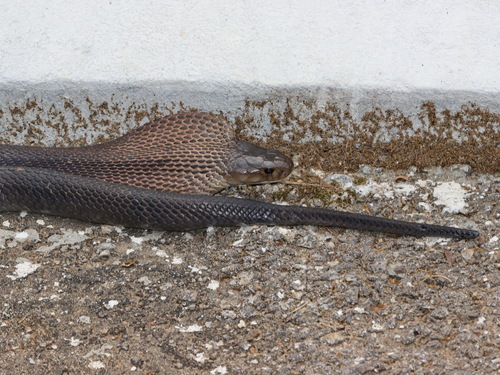
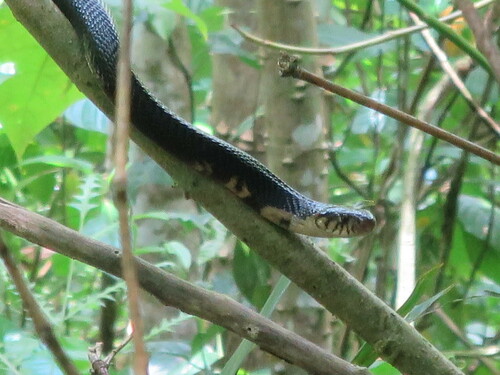
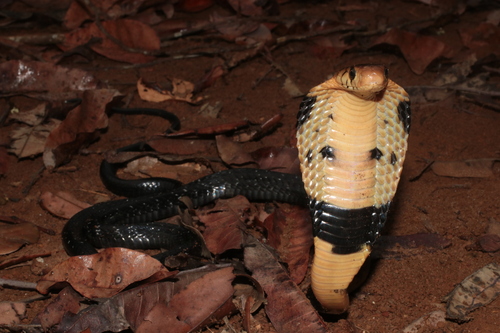
Every snake recorded in Sao Tome and Principe
10+ species across 4 families, grouped by family. Venomous flagged.
Lamprophiidae (5)
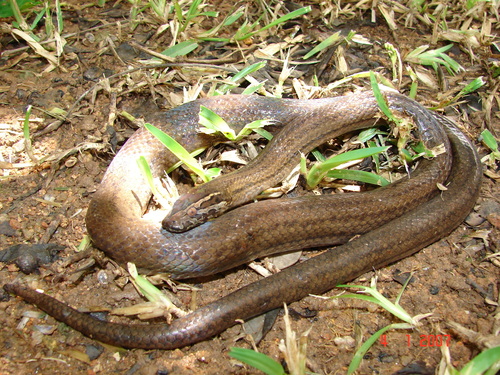
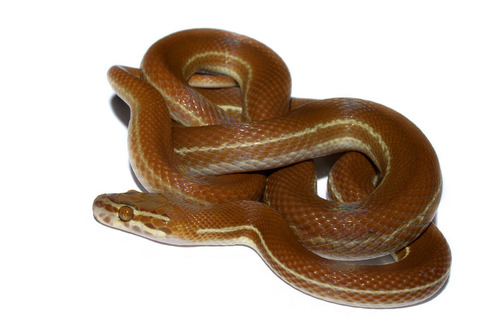
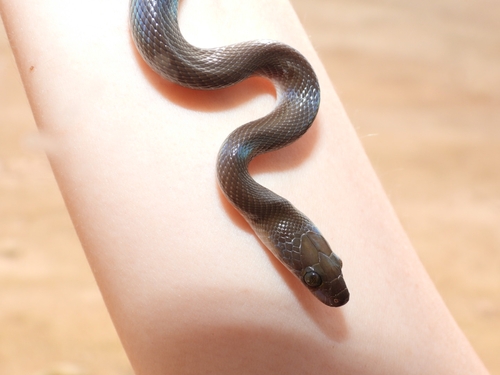
Colubridae (5)
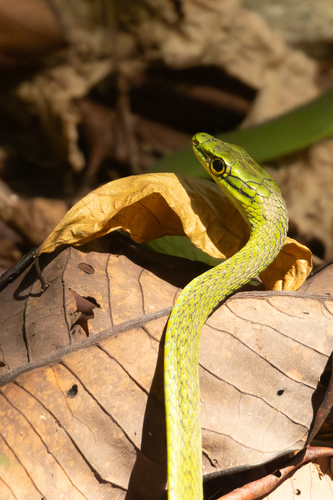
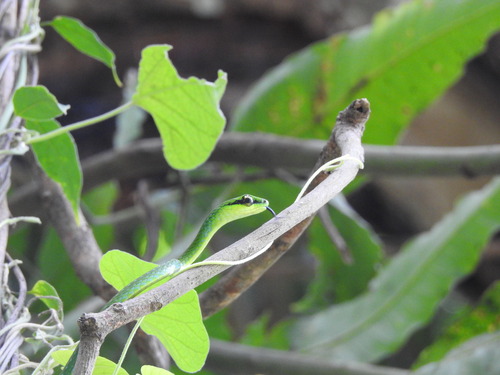
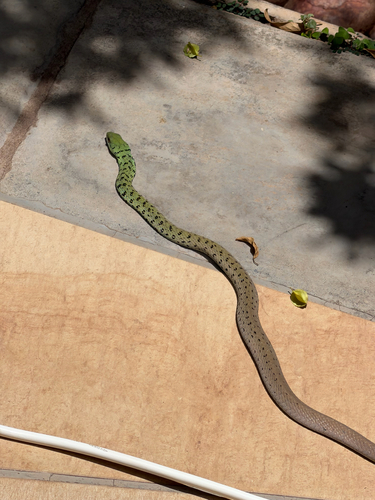

Elapidae (3)
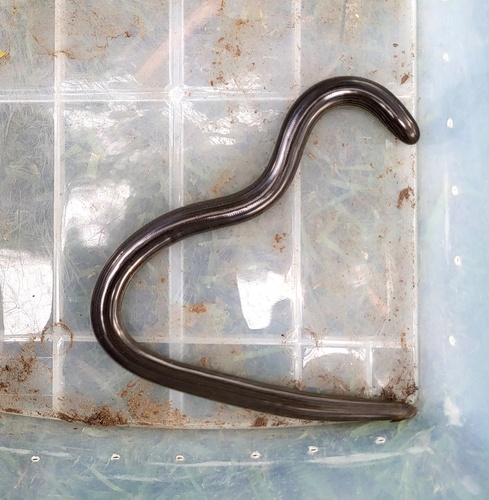
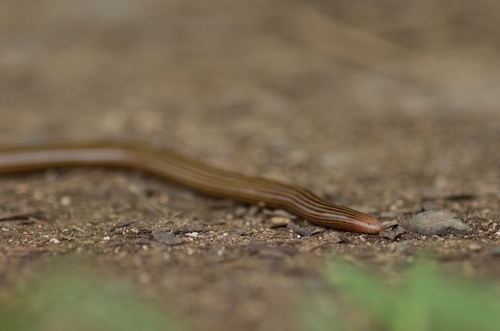
Compiled from verified GBIF & iNaturalist observations. "How often seen" reflects how frequently a snake is reported here, not how dangerous it is. Informational only.
Keep learning
- Are Snakes Dangerous? The Real Risk, in PerspectiveMost snakes are harmless and avoid people. Here is the honest picture of snakebite risk worldwide and how to lower your own.
- Snakebite First Aid: What to Do (and What Never to Do)A clear, CDC-based guide to snakebite first aid: the steps that help, the popular myths that hurt, and how to tell a serious bite from a minor one.
- Venomous vs Nonvenomous: How to Tell the DifferenceThe folk rules for telling venomous snakes apart, where each one fails, and why location-based identification beats guessing by sight.
- What to Do If You Find a SnakeFound a snake at home or on a trail? Here is how to stay calm, give it space, identify it safely, and know when to call a professional.