
Elapidae
Indian Cobra
VenomousNaja naja
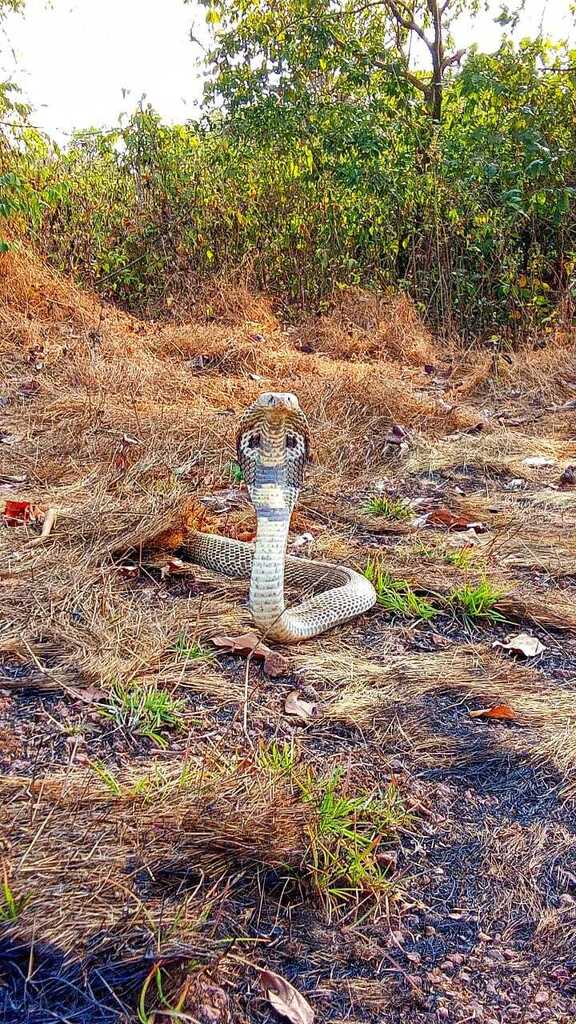
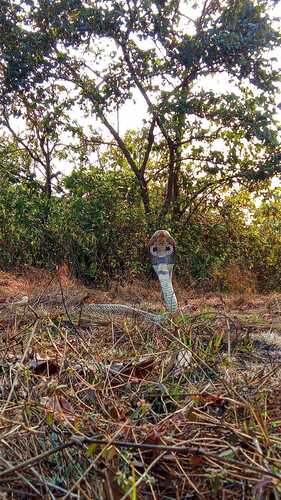
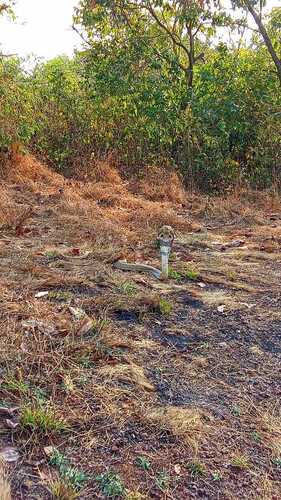
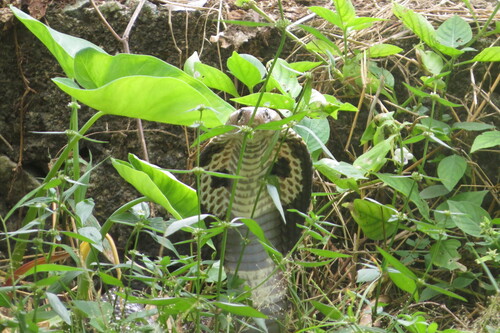
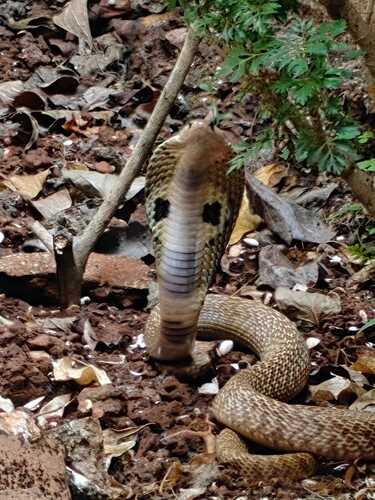
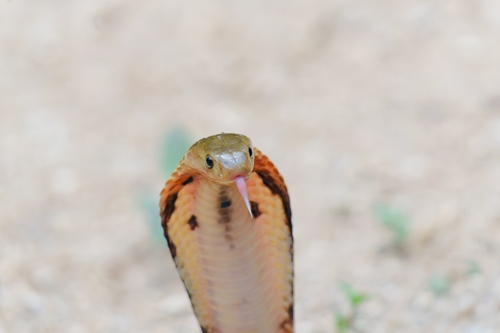
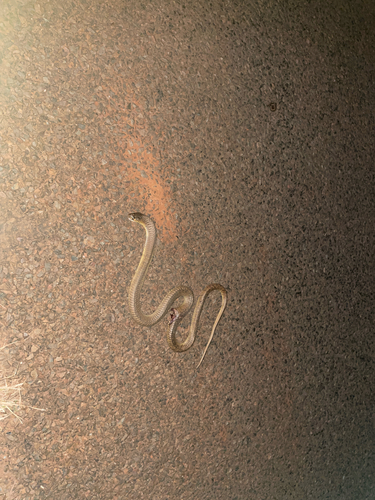
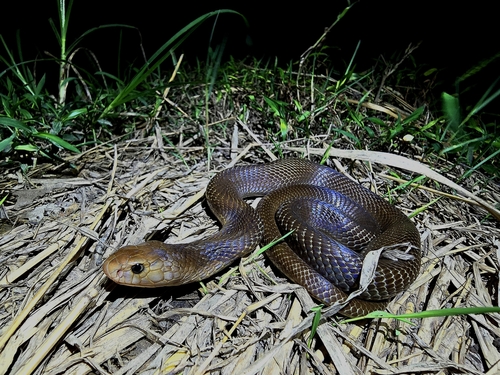
6 photographs of the Indian Cobra. © Nickson De lira.
The Indian Cobra (Naja naja) is a venomous snake in the Elapidae family, recorded in 18 countries.
If you are bitten
This is a venomous snake. Treat any bite as a medical emergency: stay calm, keep the bitten limb still and roughly level with the heart, remove rings and tight clothing, and get to emergency care immediately. Do not apply a tourniquet, cut the wound, apply ice, or try to suck out venom. Call your local emergency number or poison center.
- Family
- Elapidae
- Danger
- high
About the Indian Cobra
The Indian cobra (Naja naja /nadʒa nadʒa/), also known commonly as the spectacled cobra, Asian cobra, or binocellate cobra, is a species of cobra, a venomous snake in the family Elapidae. The species is native to the Indian subcontinent, and is a member of the "Big Four" species that are responsible for the most snakebite cases in Sri Lanka and India.
The Indian cobra is revered in Hindu mythology and culture, and is often seen with snake charmers. It is a protected species under the Indian Wildlife Protection Act (1972).
Taxonomy
The generic name and the specific epithet naja is a Latinisation of the Sanskrit word nāga (नाग) meaning "cobra".
The Indian cobra is classified under the genus Naja of the family Elapidae. The genus was first described by Josephus Nicolaus Laurenti in 1768. The species Naja naja was first described by the Swedish physician, zoologist, and botanist Carl Linnaeus in 1758. The genus Naja was split into several subgenera based on various factors, including morphology, diet, and habitat. Naja naja is part of the subgenus Naja, along with all the other species of Asiatic cobras, including Naja kaouthia, Naja siamensis, Naja sputatrix, and the rest.
Naja naja is considered to be the prototypical cobra species within the subgenus Naja, and within the entire genus Naja. All Asiatic species of Naja were considered conspecific with Naja naja until the 1990s, often as subspecies thereof. Many of the subspecies were later found to be artificial or composites. This causes much potential confusion when interpreting older literature.
Description
The Indian cobra is a moderately sized, heavy-bodied species. This cobra species can easily be identified by its relatively large hood, which it expands when threatened.
Many specimens exhibit a hood mark. This hood mark is located at the rear (dorsal surface) of the Indian cobra's hood. When the hood mark is present, it consists of two circular ocelli patterns connected by a curved line, evoking the image of spectacles.
This species has a head that is elliptical, depressed, and very slightly distinct from the neck. The snout is short and rounded with large nostrils. The eyes are medium in size and the pupils are round. The majority of adult specimens range from 1 to 1.5 metres (3.3 to 4.9 ft) in length. Some specimens, particularly those from Sri Lanka, may grow to lengths of 2.1 to 2.2 metres (6.9 to 7.2 ft), but this is relatively uncommon.
The Indian cobra varies tremendously in colour and pattern throughout its range. The ventral scales or the underside colouration of this species can be grey, yellow, tan, brown, reddish or black. Dorsal scales of the Indian cobra may have a hood mark or colour patterns. The most common visible pattern is a posteriorly convex light band at the level of the 20th to 25th ventrals. Salt-and-pepper speckles, especially in adult specimens, are seen on the dorsal scales.
Adapted from Wikipedia, available under CC BY-SA.
Local and regional names
The Indian Cobra is known by these names across the regions where it lives:
- Afrikaans
- Brilkobra
- Arabic
- الناشر الهندي, كوبرا هندية
- Bengali
- খৈয়া গোখরা
- Bulgarian
- Индийска кобра
- Catalan
- Cobra d'ulleres
- Chinese
- 印度眼鏡蛇
- Croatian
- Kobre
- Czech
- kobra indická
- Dutch
- Indiase brilcobra
- English
- Central Asian Cobra, Common cobra, Indian Spectacled Cobra, Oxus Cobra, Spectacled cobra
- Finnish
- Silmälasikäärme
- French
- Cobra indien, Cobra à lunettes
- German
- Brillenschlange, Kobra
- Gujarati
- નાગ
- Hebrew
- קוברה הודית
- Hungarian
- pápaszemes kobra
- Indonesian
- Kobra India
- Italian
- Cobra dagli occhiali, Cobra indiano
- Japanese
- インドコブラ
- Kannada
- ಚೀನೀ ನಾಗರ
- Malayalam
- ഇന്ത്യൻ മൂർഖൻ
- Marathi
- नाग
- Nepali
- Kopre, गोमन
- Odia
- ନାଗ
- Polish
- kobra indyjska
- Portuguese
- Cobra-indiana, Cobra-naja, Naja
- Punjabi
- ਨਾਗ
- Russian
- Индийская кобра, Очковая змея
- Sinhala
- නයා, නාගයා
- Spanish
- Cobra India, Cobra de Anteojos
- Swedish
- Glasögonorm
- Tamil
- இந்திய நாகம், நாகம்
- Telugu
- నాగుపాము
- Turkish
- Adi kobra
- Ukrainian
- Індійська кобра, Кобра індійська
Frequently asked: Indian Cobra
- Is the Indian Cobra venomous?
- Yes. The Indian Cobra (Naja naja) is venomous and belongs to the Elapidae family (cobra, mamba, coral or sea snake). Its bite is considered high risk to people. Treat any bite as a medical emergency.
- Is the Indian Cobra poisonous?
- Snakes are venomous, not poisonous. "Poisonous" means harmful to eat or touch; "venomous" means injecting toxins through a bite. The Indian Cobra is venomous, delivering venom through a bite.
- Is the Indian Cobra dangerous?
- This is a venomous snake. Treat any bite as a medical emergency: stay calm, keep the bitten limb still and roughly level with the heart, remove rings and tight clothing, and get to emergency care immediately. Do not apply a tourniquet, cut the wound, apply ice, or try to suck out venom. Call your local emergency number or poison center.
- Where does the Indian Cobra live?
- The Indian Cobra has verified records in 18 countries, including India, Sri Lanka, Pakistan. See the distribution section below for its full range.
- What does the Indian Cobra eat?
- The Indian cobra feeds on rodents, lizards and frogs. It bites quickly, and then waits while its venom damages the nervous system of the prey, paralyzing and often killing it. Like all snakes, N. naja swallows its prey whole. This species sometimes enters buildings in search of rodent prey.
If you are bitten by the Indian Cobra
Do
- Get away from the snake and stay calm. Most bites worsen when people panic or try again to handle the snake.
- Call 911 or Poison Control (1-800-222-1222) right away. Antivenom works best when given early.
- Note the time of the bite and, from a safe distance, the snake's color and pattern, a phone photo is enough. Do not chase it.
- Keep the bitten limb still and at roughly heart level. Sit or lie down and limit movement.
- Remove rings, watches, and tight clothing near the bite before swelling starts.
- Gently wash the bite with soap and water and cover it with a clean, dry dressing.
Do not
- Do not cut the wound or try to suck out the venom.
- Do not apply a tourniquet or ice.
- Do not drink alcohol or caffeine.
- Do not take aspirin or ibuprofen, they can worsen bleeding. Acetaminophen is safer for pain.
- Do not try to catch or kill the snake. A dead snake can still bite by reflex.
First-aid guidance adapted from the U.S. Centers for Disease Control and Prevention (CDC NIOSH), Venomous Snakes. Educational only; always follow the instructions of emergency responders.
Where it is found
More Elapidae snakes
Classification
How scientists group this snake, from the broadest category down to the exact species. Each step narrows to its closest relatives.
Keep learning
- Are Snakes Dangerous? The Real Risk, in PerspectiveMost snakes are harmless and avoid people. Here is the honest picture of snakebite risk worldwide and how to lower your own.
- Snakebite First Aid: What to Do (and What Never to Do)A clear, CDC-based guide to snakebite first aid: the steps that help, the popular myths that hurt, and how to tell a serious bite from a minor one.
- Venomous vs Nonvenomous: How to Tell the DifferenceThe folk rules for telling venomous snakes apart, where each one fails, and why location-based identification beats guessing by sight.
- What to Do If You Find a SnakeFound a snake at home or on a trail? Here is how to stay calm, give it space, identify it safely, and know when to call a professional.
Distribution from GBIF & iNaturalist. Venom status per CDC. Background: Wikipedia. Informational only. Never handle a snake to identify it.