
Elapidae
Cape Cobra
VenomousNaja nivea
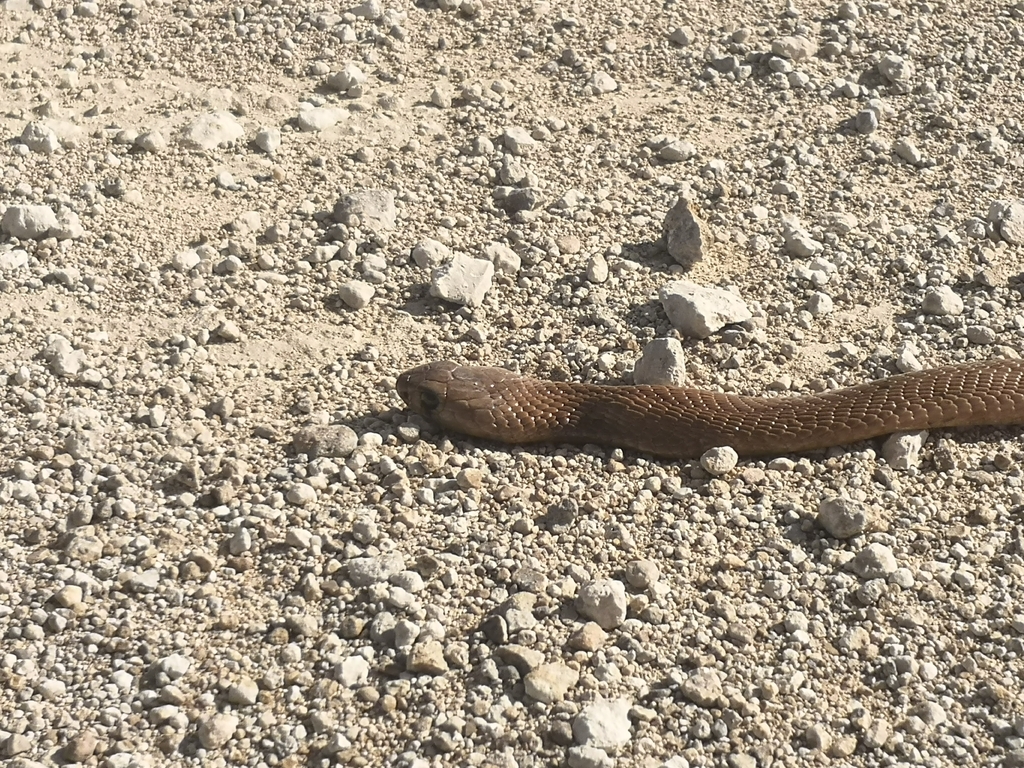
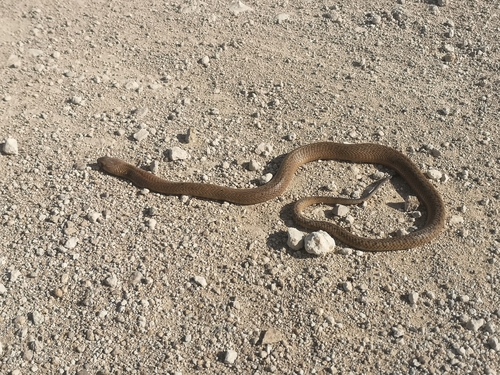
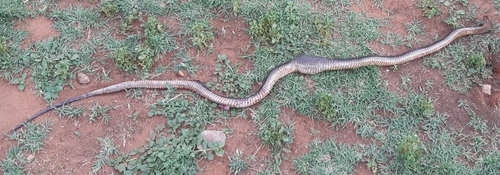
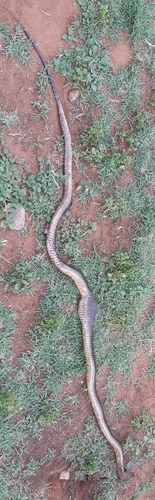
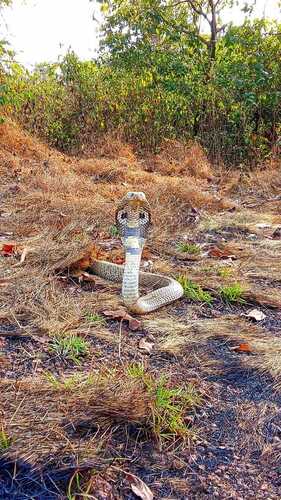
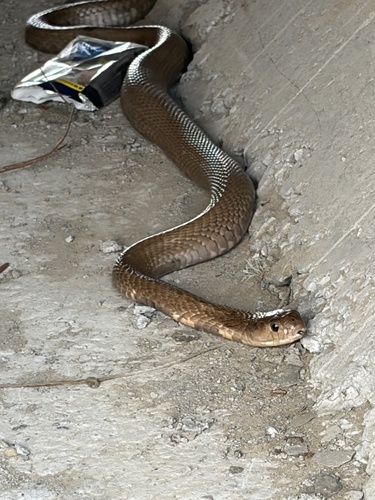
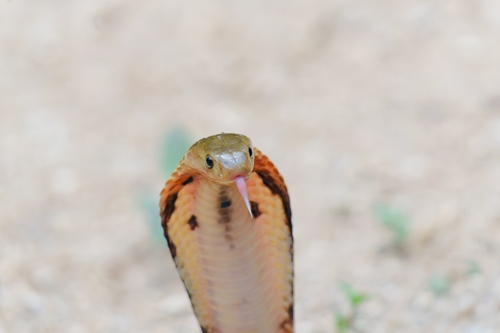
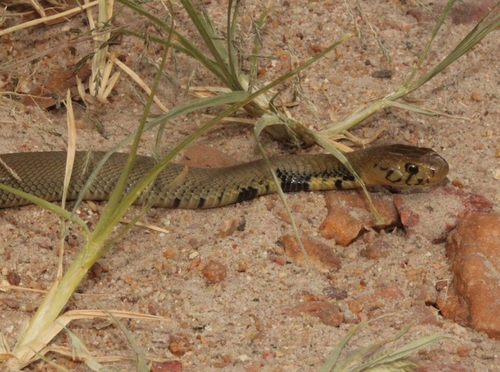
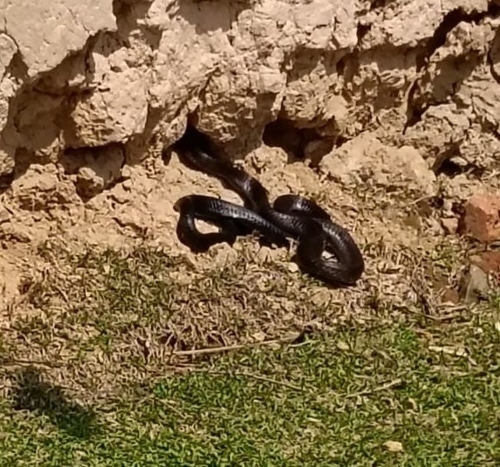
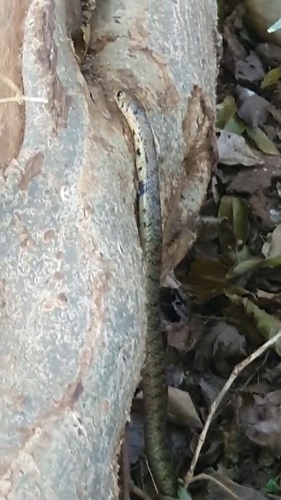
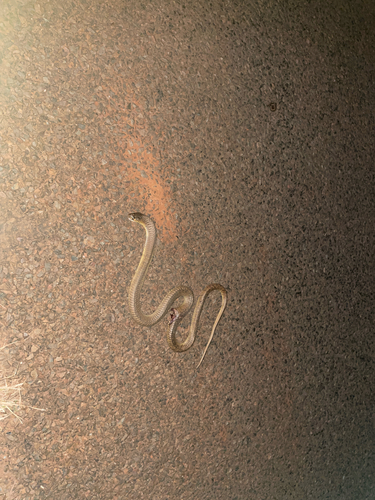
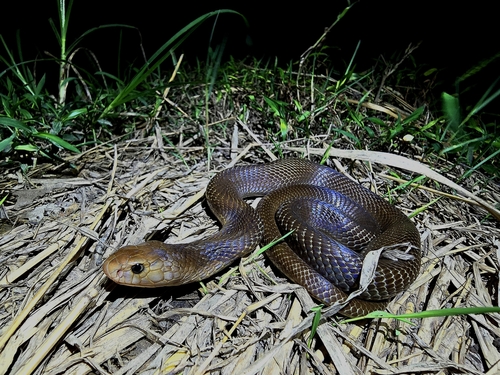
4 photographs of the Cape Cobra. © Chao Shi.
The Cape Cobra (Naja nivea) is a venomous snake in the Elapidae family, recorded in 5 countries.
If you are bitten
This is a venomous snake. Treat any bite as a medical emergency: stay calm, keep the bitten limb still and roughly level with the heart, remove rings and tight clothing, and get to emergency care immediately. Do not apply a tourniquet, cut the wound, apply ice, or try to suck out venom. Call your local emergency number or poison center.
- Family
- Elapidae
- Danger
- high
About the Cape Cobra
The Cape cobra (Naja nivea), also called the yellow cobra, is a moderate-sized, highly venomous species of cobra inhabiting a wide variety of biomes across southern Africa, including arid savanna, fynbos, bushveld, desert, and semidesert regions.
The species is diurnal and is a feeding generalist, preying on a number of different species and carrion. Predators of this species include birds of prey, honey badgers, and various species of mongooses. The Cape cobra is also known as the geelslang (yellow snake) and bruinkapel (brown cobra) in South Africa. Afrikaans-speaking South Africans also refer to the Cape cobra as koperkapel (copper cobra), mainly because of a rich yellow colour variation. This species has no known subspecies.
Etymology
Naja nivea was first described by Swedish zoologist Carl Linnaeus in 1758. The generic name naja is a Latinisation of the Sanskrit word nāgá (नाग) meaning "cobra". The specific epithet nivea is derived from the Latin words either nix or nivis meaning "snow" or niveus meaning "snowy" or "snow-white". The connection with snow is obscure, but might have been suggested by discolouration of the first preserved specimens received by taxonomists in Europe.
Taxonomy
Naja is a genus in the family Elapidae. Linnaeus first described Naja nivea in 1758. He originally assigned the binomial name Coluber niveus, but some 10 years afterwards, Josephus Nicolaus Laurenti described the genus of true cobras under the name Naja. In 2007, Wüster et al. partitioned the genus Naja into four separate subgenera on the basis of various factors such as lineage, morphology, and diet. They placed Naja nivea in the subgenus Uraeus, the African nonspitting cobras - Cape cobra (N. nivea), Egyptian cobra (N. haje), snouted cobra (N. annulifera), Anchieta's cobra (N. anchietae), Arabian cobra (N. arabica), and Senegalese cobra (N. senegalensis).
Description
The Cape cobra is a medium-sized species of cobra. Mature specimens are typically about 1.2 to 1.4 m (3.9 to 4.6 ft) long, but may grow up to 1.6 m (5.2 ft) in length. Males are slightly larger than females. The longest specimen on record is a male from Aus, Namibia, measured 1.88 m (6.2 ft) long. Another very large specimen was also a male found in De Hoop Nature Reserve with a total length of 1.86 metres (6.1 ft).
Cape cobras vary widely in colouration, from yellow through golden brown to dark brown and even black. In addition, individuals show a varying degree of black or pale stippling and blotches, and although colour and marking are geographically related, observing virtually all colour varieties is possible at one location. For example, the Kalahari Desert specimens in Botswana and Namibia are usually more consistently yellow than the more southerly populations, but at De Hoop, and other specific locations in the Western Cape, all colour variations have been recorded. Juvenile specimens generally have conspicuously dark throats extending down the belly for the width of a dozen or so ventral scales. The colour fades during the first year or two of life, but while it lasts, it commonly leads laymen to confuse the juvenile Cape cobra with the Rinkhals spitting cobra.
Distribution and habitat
Adapted from Wikipedia, available under CC BY-SA.
Local and regional names
The Cape Cobra is known by these names across the regions where it lives:
- Afrikaans
- Geelslang, Kaapse Kobra, Koperkapel
- Arabic
- ناشر رأس الرجاء الصالح
- Chinese
- 黃金眼鏡蛇
- Czech
- kobra kapská
- Danish
- Gul Kobra
- Dutch
- Kaapse cobra
- Finnish
- Viherkobra
- French
- Cobra du Cap
- German
- Kap-Kobra, Kapkobra
- Hungarian
- fokföldi kobra
- Italian
- Cobra del Sudafrica
- Japanese
- ケープコブラ
- Russian
- Капская кобра
- Spanish
- Cobra del Cabo
Frequently asked: Cape Cobra
- Is the Cape Cobra venomous?
- Yes. The Cape Cobra (Naja nivea) is venomous and belongs to the Elapidae family (cobra, mamba, coral or sea snake). Its bite is considered high risk to people. Treat any bite as a medical emergency.
- Is the Cape Cobra poisonous?
- Snakes are venomous, not poisonous. "Poisonous" means harmful to eat or touch; "venomous" means injecting toxins through a bite. The Cape Cobra is venomous, delivering venom through a bite.
- Is the Cape Cobra dangerous?
- This is a venomous snake. Treat any bite as a medical emergency: stay calm, keep the bitten limb still and roughly level with the heart, remove rings and tight clothing, and get to emergency care immediately. Do not apply a tourniquet, cut the wound, apply ice, or try to suck out venom. Call your local emergency number or poison center.
- Where does the Cape Cobra live?
- The Cape Cobra has verified records in 5 countries, including South Africa, Namibia, Botswana. See the distribution section below for its full range.
- What does the Cape Cobra eat?
- This species of cobra is a feeding generalist. It feeds on a wide spectrum of prey, including other snakes, rodents, lizards, birds, and carrion. Recorded prey items for this species at De Hoop from October 2004 to March 2006 showed that 31% of the species' diet consisted of rodents, 20% was other snakes, 11% lizards, 11% birds, 16% carrion, and 11% "conspecifics". In the same study period conducted at De Hoop, Cape cobras were seen scavenging and feeding on carrion on two occasions.
- Why is it called the Cape Cobra?
- Naja nivea was first described by Swedish zoologist Carl Linnaeus in 1758. The generic name naja is a Latinisation of the Sanskrit word nāgá (नाग) meaning "cobra". The specific epithet nivea is derived from the Latin words either nix or nivis meaning "snow" or niveus meaning "snowy" or "snow-white". The connection with snow is obscure, but might have been suggested by discolouration of the first preserved specimens received by taxonomists in Europe.
If you are bitten by the Cape Cobra
Do
- Get away from the snake and stay calm. Most bites worsen when people panic or try again to handle the snake.
- Call 911 or Poison Control (1-800-222-1222) right away. Antivenom works best when given early.
- Note the time of the bite and, from a safe distance, the snake's color and pattern, a phone photo is enough. Do not chase it.
- Keep the bitten limb still and at roughly heart level. Sit or lie down and limit movement.
- Remove rings, watches, and tight clothing near the bite before swelling starts.
- Gently wash the bite with soap and water and cover it with a clean, dry dressing.
Do not
- Do not cut the wound or try to suck out the venom.
- Do not apply a tourniquet or ice.
- Do not drink alcohol or caffeine.
- Do not take aspirin or ibuprofen, they can worsen bleeding. Acetaminophen is safer for pain.
- Do not try to catch or kill the snake. A dead snake can still bite by reflex.
First-aid guidance adapted from the U.S. Centers for Disease Control and Prevention (CDC NIOSH), Venomous Snakes. Educational only; always follow the instructions of emergency responders.
Where it is found
More Elapidae snakes
Classification
How scientists group this snake, from the broadest category down to the exact species. Each step narrows to its closest relatives.
Keep learning
- Are Snakes Dangerous? The Real Risk, in PerspectiveMost snakes are harmless and avoid people. Here is the honest picture of snakebite risk worldwide and how to lower your own.
- Snakebite First Aid: What to Do (and What Never to Do)A clear, CDC-based guide to snakebite first aid: the steps that help, the popular myths that hurt, and how to tell a serious bite from a minor one.
- Venomous vs Nonvenomous: How to Tell the DifferenceThe folk rules for telling venomous snakes apart, where each one fails, and why location-based identification beats guessing by sight.
- What to Do If You Find a SnakeFound a snake at home or on a trail? Here is how to stay calm, give it space, identify it safely, and know when to call a professional.
Distribution from GBIF & iNaturalist. Venom status per CDC. Background: Wikipedia. Informational only. Never handle a snake to identify it.