
Tunisia
Snakes in Tunisia
20+ snake species have been recorded in Tunisia, 8 venomous.
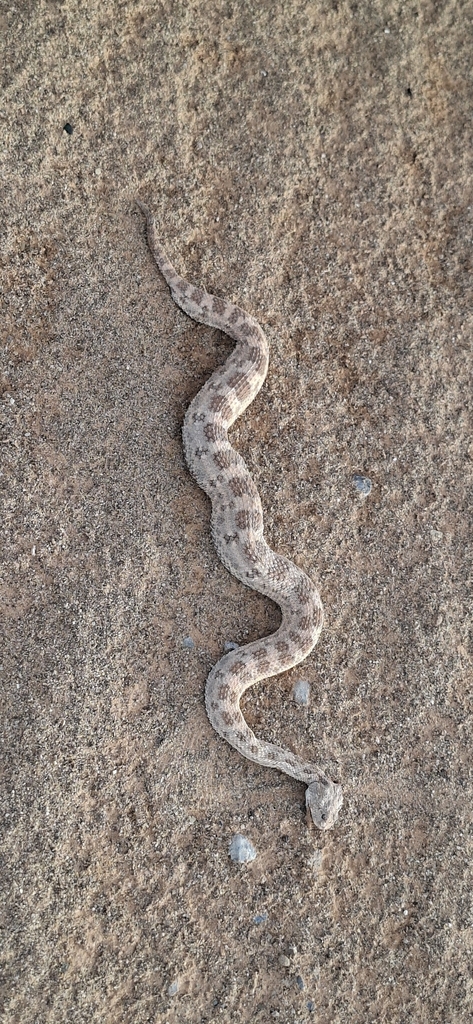
Snakes of Tunisia
Tunisia has 30+ snake species recorded in our database, 9 of them venomous. The great majority of species are non-venomous, a pattern that holds across North Africa. Most snakes a person encounters here pose no medical threat, though the country does host a handful of species capable of dangerous bites.
The country's snake diversity is shaped by a strong north to south gradient in climate and terrain. The Mediterranean coast and the northern Tell Atlas bring cooler, wetter conditions with forest, scrub, and farmland, while the center gives way to semi-arid steppe and salt flats. The south is true Sahara, with sand seas, rocky hamada, and scattered oases. This range of habitats, from coastal woodland to open desert, supports both temperate species at the northern edge and desert specialists adapted to extreme heat and aridity. Snakes shift their activity to dawn, dusk, and night through the hottest months to manage water and temperature.
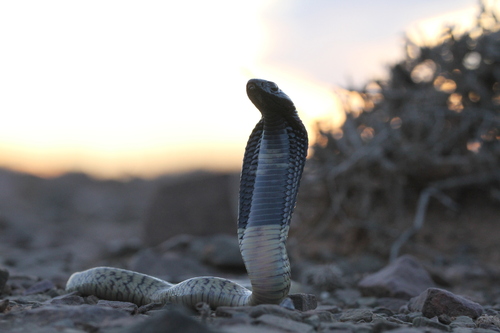
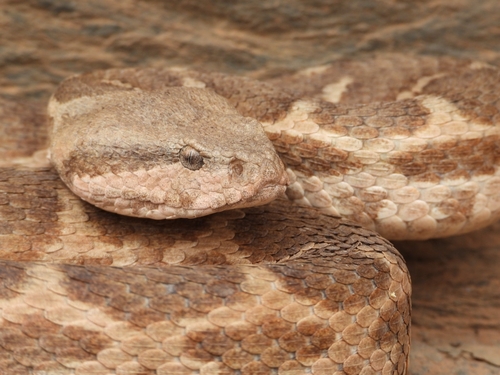
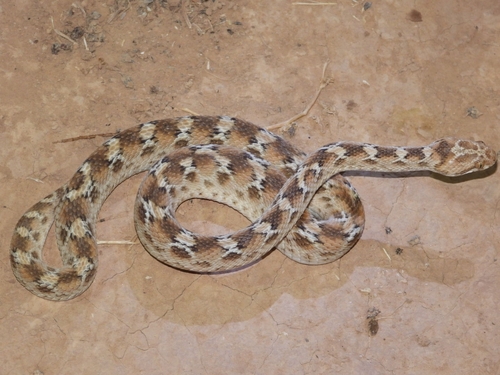
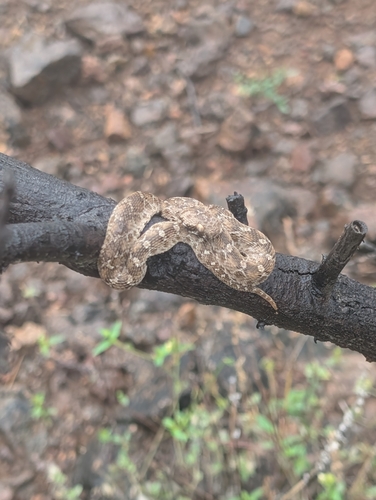
The medically important venomous snakes in Tunisia belong to two main groups: vipers and elapids. The vipers are the primary concern and include true vipers such as the genus Vipera in the north along with desert-adapted vipers, and the carpet or saw-scaled vipers (genus Echis) of the arid and Saharan zones. Saw-scaled vipers in particular are responsible for serious envenomations across their range and are among the more dangerous snakes in the region. Horned vipers (genus Cerastes), including the desert horned viper and the sand viper, occur in the sandy south and deliver potent bites. The elapid group is represented by desert cobras and related species in the Sahara. Tunisia has no mambas, no New World coral snakes, no pit vipers, and no rattlesnakes; those groups do not occur here.
The large non-venomous majority covers most of what people see day to day. Colubrid snakes dominate, including fast-moving whip snakes and racers, the Montpellier snake (a rear-fanged species whose mild venom is not considered a serious threat to humans), sand snakes, and the diadem snake. Constrictors are represented in the south by sand boas, small burrowing snakes well suited to loose desert soils. These species are generally shy, retreat when given the chance, and play no role in serious snakebite.
Snakes are valuable to Tunisia's ecology and to people living alongside them. As predators they control rodents and other small animals, including the rats and mice that damage stored grain, raid crops, and spread disease around farms and settlements. A healthy snake population is part of a functioning landscape, and even the venomous species earn their place through the pest control they provide. Killing snakes on sight removes that benefit and often leads to more bites, not fewer, since most incidents happen when people try to handle or attack the animal.
Safety framing should stay honest and simple. Most snakes in Tunisia are harmless, and the main medical threat comes from the vipers, especially the saw-scaled and horned vipers, with the desert cobras a further concern in the south. A venomous snakebite is a medical emergency. The correct treatment is professional hospital care and antivenom administered by trained staff, not any home remedy. No wild venomous snake is safe to handle, and a snake that looks calm or appears dead can still bite. If a bite happens, keep the person calm and still and get them to emergency medical care without delay. In the United States contact Poison Control at 1-800-222-1222; in Tunisia or elsewhere call local emergency services.
Snakes in Tunisia: FAQ
- Are there venomous snakes in Tunisia?
- Yes. 8 venomous snake species have verified records in Tunisia, including Desert Horned Viper, Sahara Sand Viper, Brown Banded Cobra, Egyptian Cobra. Most snakes in Tunisia, however, are harmless.
- How many snake species live in Tunisia?
- 20+ snake species have verified records in Tunisia, of which 8 are venomous.
- What is the most commonly seen snake in Tunisia?
- The Desert Horned Viper is the most frequently reported snake in Tunisia, based on verified wildlife observations.
- What should I do if I see a venomous snake in Tunisia?
- Keep your distance and do not try to catch or kill it. Most bites happen when people handle or corner a snake. If someone is bitten, contact local emergency services or poison control immediately.
Venomous snakes in Tunisia
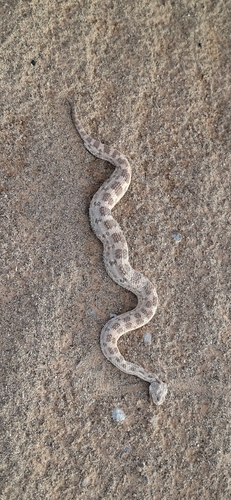
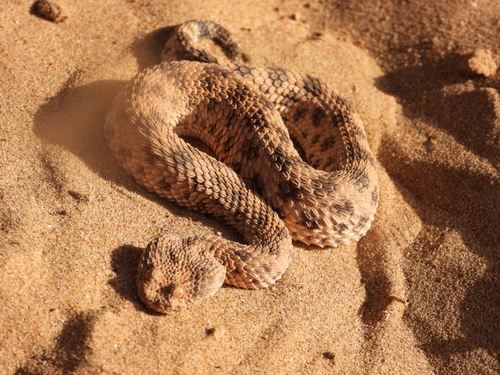
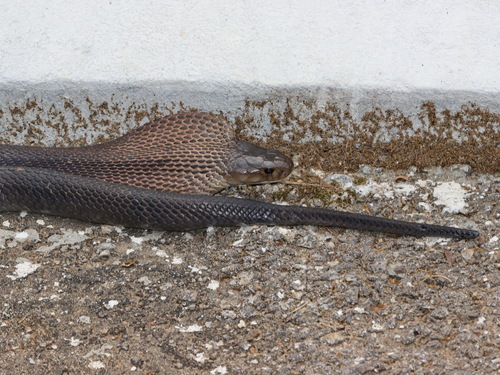
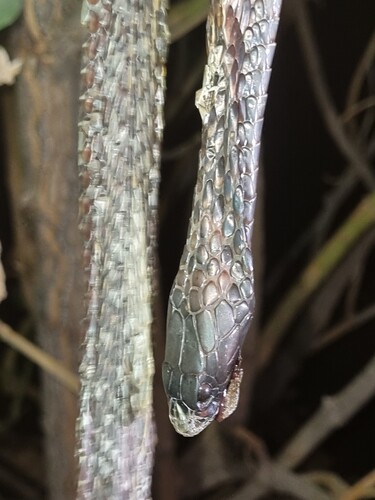
Every snake recorded in Tunisia
20+ species across 5 families, grouped by family. Venomous flagged.
Colubridae (14)
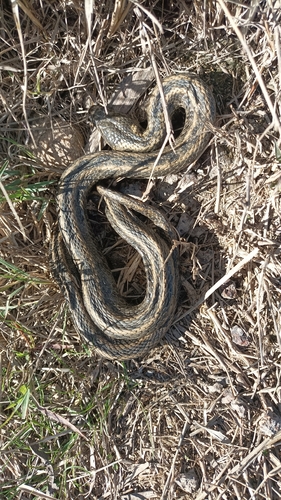
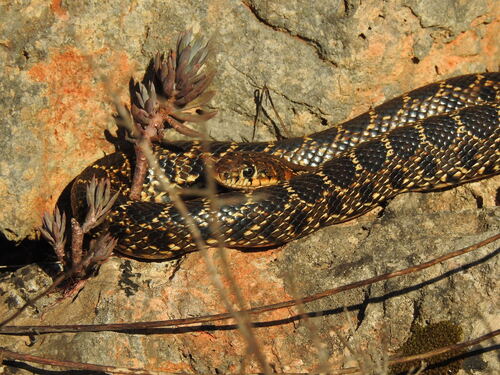
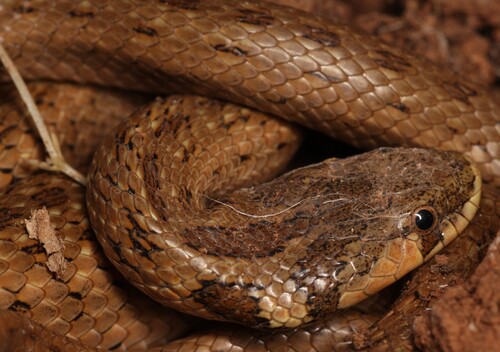
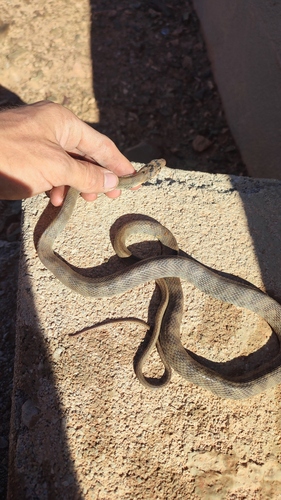
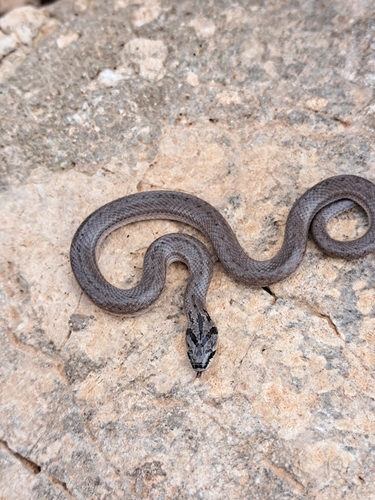
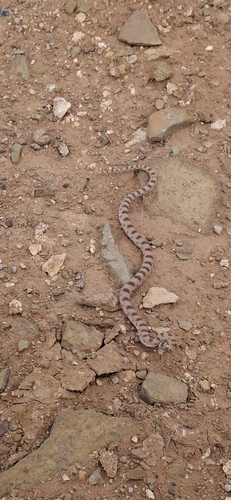
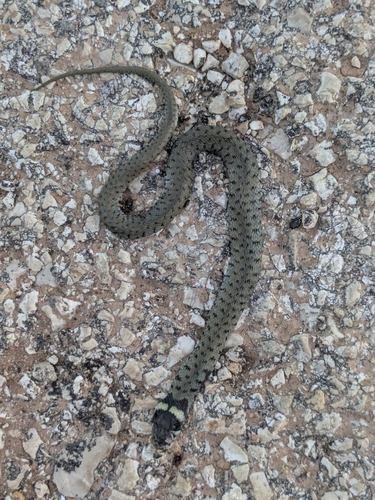
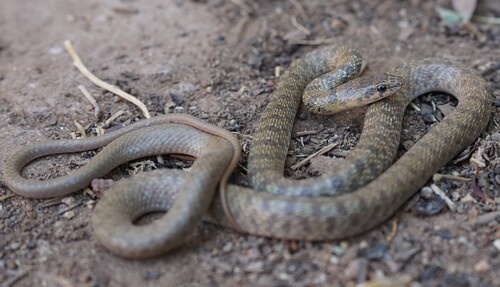
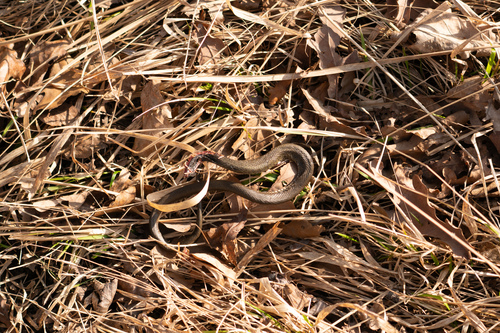
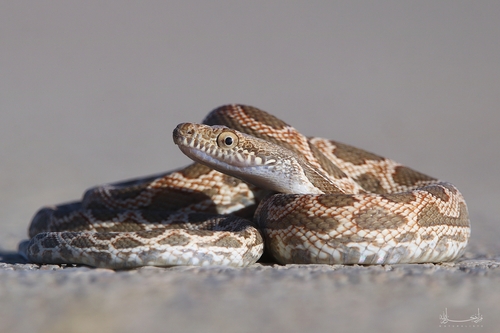
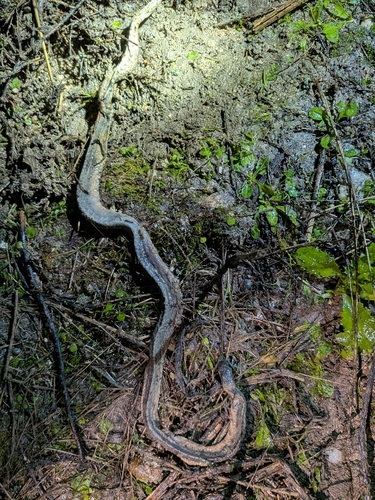
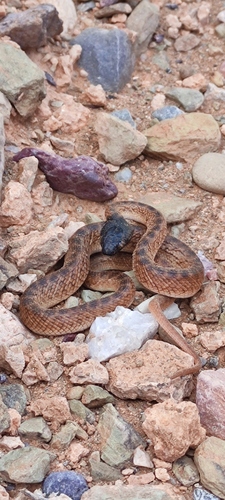
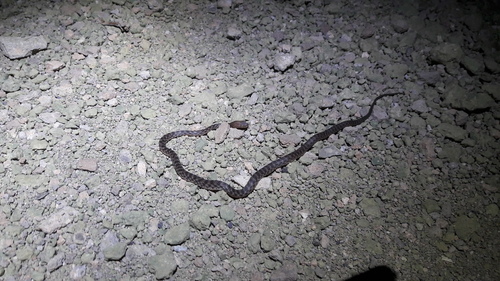
Psammophiidae (6)
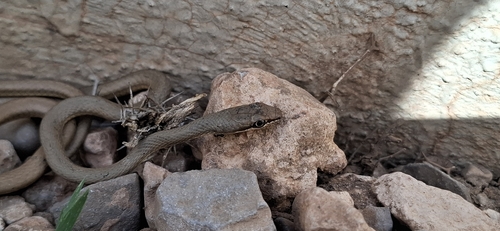
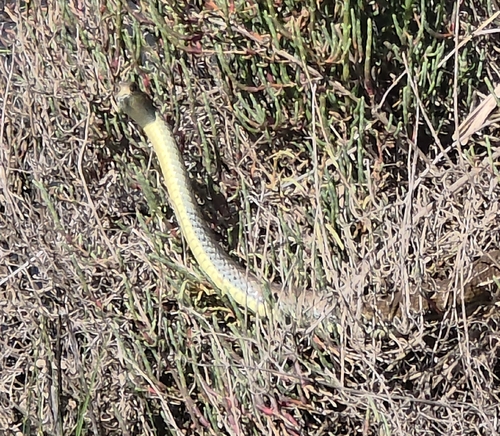
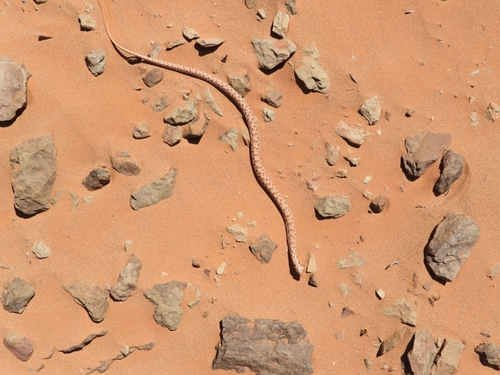
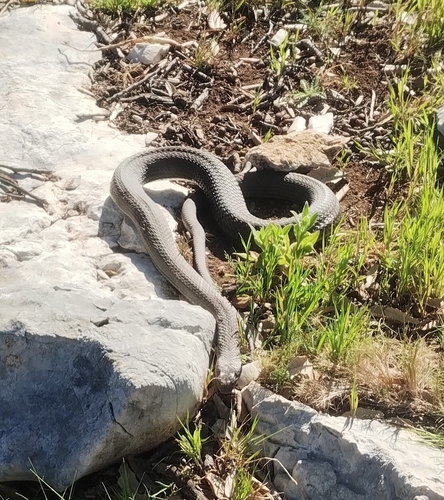
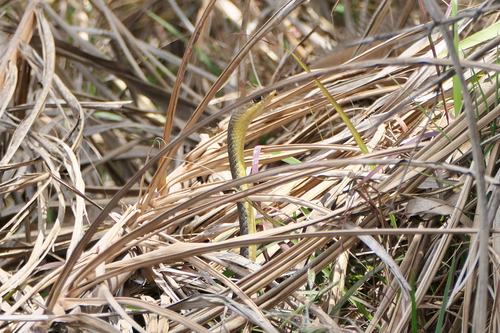
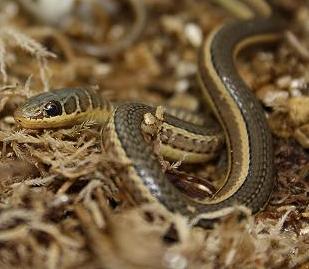
Viperidae (5)
Elapidae (3)
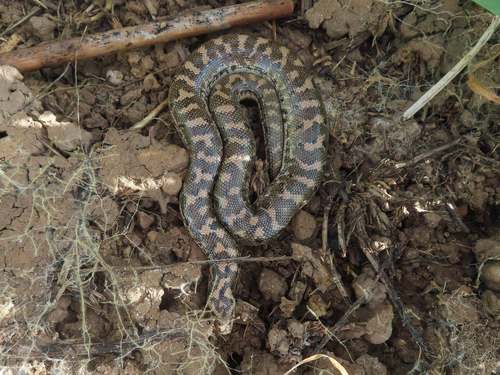
Boidae (1)
Compiled from verified GBIF & iNaturalist observations. "How often seen" reflects how frequently a snake is reported here, not how dangerous it is. Informational only.
Keep learning
- Are Snakes Dangerous? The Real Risk, in PerspectiveMost snakes are harmless and avoid people. Here is the honest picture of snakebite risk worldwide and how to lower your own.
- Snakebite First Aid: What to Do (and What Never to Do)A clear, CDC-based guide to snakebite first aid: the steps that help, the popular myths that hurt, and how to tell a serious bite from a minor one.
- Venomous vs Nonvenomous: How to Tell the DifferenceThe folk rules for telling venomous snakes apart, where each one fails, and why location-based identification beats guessing by sight.
- What to Do If You Find a SnakeFound a snake at home or on a trail? Here is how to stay calm, give it space, identify it safely, and know when to call a professional.