
Colubridae
Levant Rat Snake
HarmlessElaphe druzei
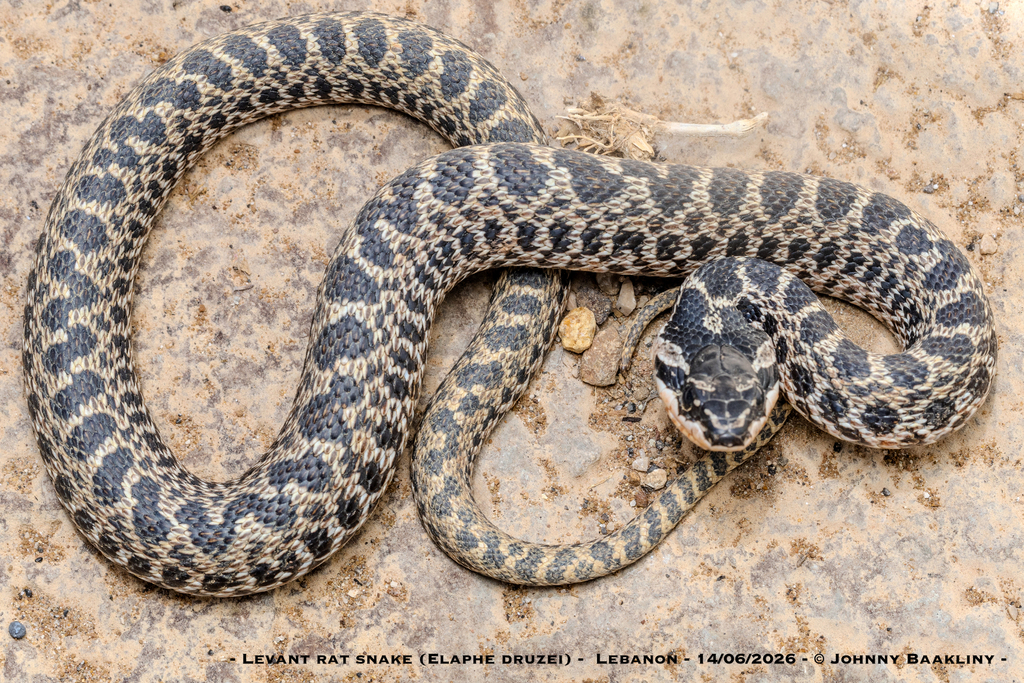
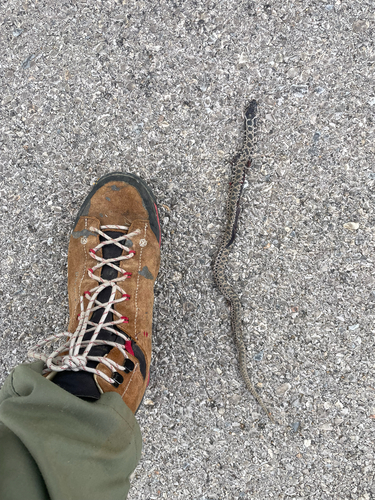
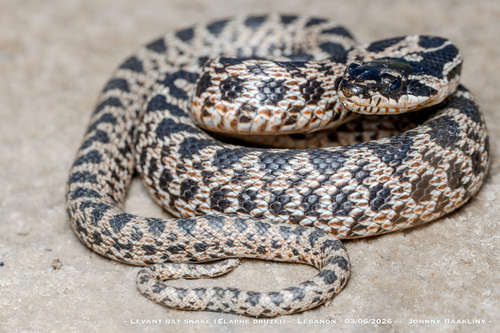
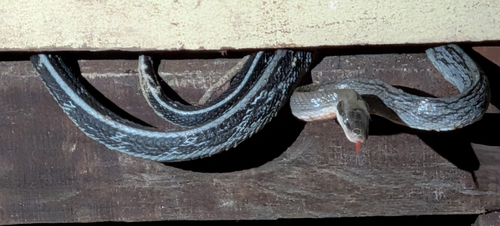
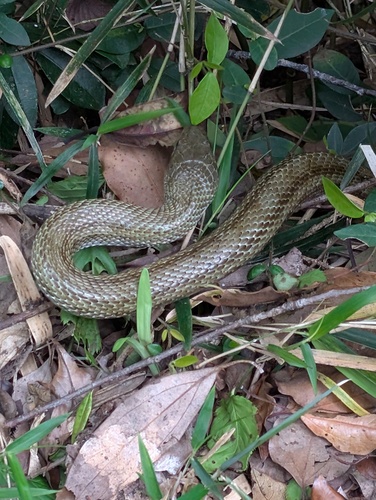
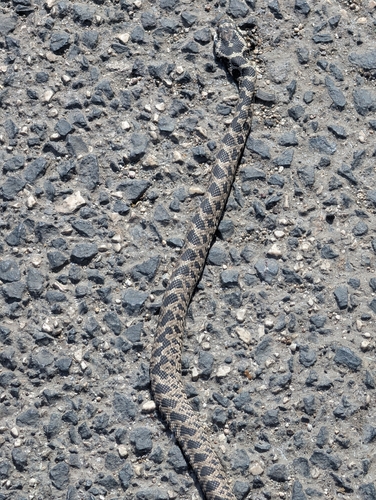
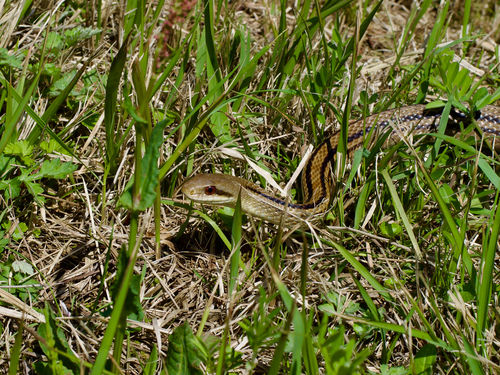
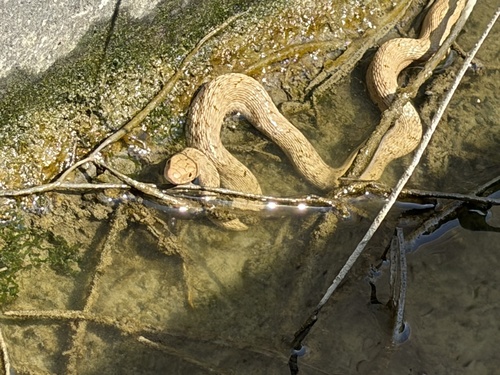
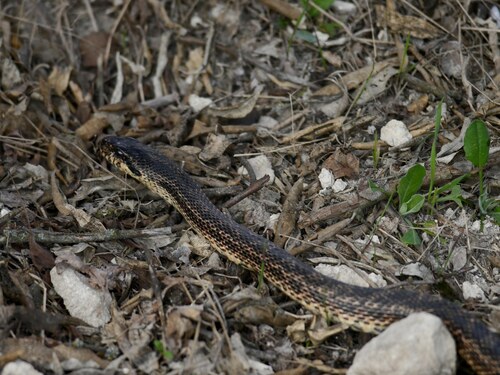
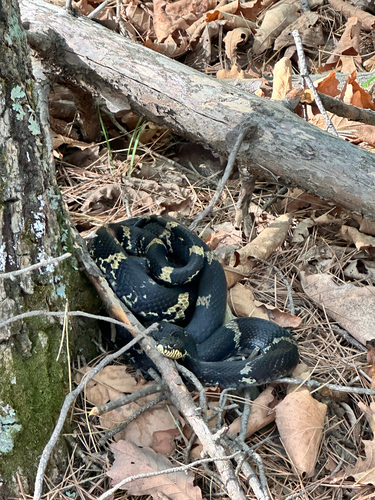
3 photographs of the Levant Rat Snake. (c) Johnny Baakliny, some rights reserved (CC BY-NC).
The Levant Rat Snake (Elaphe druzei) is a non-venomous snake in the Colubridae family, recorded in 73 countries.
- Family
- Colubridae
About the Levant Rat Snake
Elaphe druzei, commonly known as the Levant rat snake, is a species of non-venomous snake in the subfamily Colubrinae of the family Colubridae. The species is native to northern Israel, Lebanon, and western Syria.
Taxonomy
The species Elaphe druzei was formally described in a 2023 article published in Scientific Reports by Jablonski et al., following an integrative taxonomic study of Levantine rat snakes. The study combined morphological data with extensive molecular analyses, including mitochondrial DNA, nuclear DNA, and complete mitogenomes, to clarify the taxonomy of the Elaphe quatuorlineata group. The findings revealed that the population inhabiting Mt. Hermon and adjacent areas represents a deeply divergent lineage distinct from the other recognized species in the group: Elaphe quatuorlineata, Elaphe sauromates and Elaphe urartica. Based on both genetic and morphological distinctiveness, the authors described it as a new species, Elaphe druzei. Molecular clock dating places its divergence from other clade members at approximately 5.1–3.9 million years ago, during the Late Miocene to Pliocene, a period of major geological and climatic shifts in the region.
Description
The newly described snake, Elaphe druzei, is a large, non-venomous colubrid, reaching a maximum total length (tail included) of approximately 1.5 m (4.9 ft), and an averaging total length of approximately 1 m (3.3 ft). It features very dark coloration and strongly keeled dorsal scales, traits that distinguish it from its closest relatives in the Elaphe (rat snake) group. The holotype is a female collected near Majdal Shams on Mt. Hermon at approximately 1,300 m (4,300 ft) elevation, currently preserved at the Steinhardt Museum of Natural History (TAU-R 19438).
Geographic distribution
Elaphe druzei is endemic to the high-elevation mountains of the Southern Levant, including Mt. Hermon, with an estimated extent of occurrence of approximately 3,000 km² (1,158 sq mi). Its known geographic range spans regions within Israel, Lebanon, and Syria, isolated from other Elaphe populations by a gap of over 400 km (250 mi). Fossil and subfossil remains in the Hula Valley and Mt. Carmel indicate prior presence during the Pleistocene and Natufian (~12,000 years ago) periods.
Ecology
Elaphe druzei is non-venomous, non-aggressive, and generally cryptic. It is considered extremely rare and one of the Western Palearctic’s rarest snakes. Threats include land-use change, tourism development (e.g., ski resort on Mt. Hermon), habitat degradation due to military activity, climate change, and persecution. It likely qualifies as Endangered (IUCN criteria B1 & B2), based on limited range, fragmented habitat, and ongoing decline. In Israel, it is legally protected and largely confined to a nature reserve; no formal protection exists within Lebanon or Syria.
Adapted from Wikipedia, available under CC BY-SA.
Frequently asked: Levant Rat Snake
- Is the Levant Rat Snake venomous?
- No. The Levant Rat Snake (Elaphe druzei) is non-venomous and is not considered dangerous to humans. Like most snakes, it will retreat rather than bite when given the chance.
- Is the Levant Rat Snake poisonous?
- Snakes are venomous, not poisonous. "Poisonous" means harmful to eat or touch; "venomous" means injecting toxins through a bite. The Levant Rat Snake is neither poisonous nor venomous.
- Is the Levant Rat Snake dangerous?
- The Levant Rat Snake is not dangerous to humans. It has no medically significant venom and bites only defensively if cornered or handled.
- Where does the Levant Rat Snake live?
- The Levant Rat Snake has verified records in 73 countries, including Japan, Korea, Republic of, Chinese Taipei. See the distribution section below for its full range.
Where it is found
More Colubridae snakes
Classification
How scientists group this snake, from the broadest category down to the exact species. Each step narrows to its closest relatives.
- OrderThe broad group of scaled reptiles: all snakes and lizards
- Squamata
- FamilyA group of related snakes that share key traits
- Colubridae
- GenusA close-knit group of very similar species
- Elaphe
- SpeciesThis exact snake, named in the two-part scientific name
- Elaphe druzei
Keep learning
- What to Do If You Find a SnakeFound a snake at home or on a trail? Here is how to stay calm, give it space, identify it safely, and know when to call a professional.
- Venomous vs Nonvenomous: How to Tell the DifferenceThe folk rules for telling venomous snakes apart, where each one fails, and why location-based identification beats guessing by sight.
- What Is a Snake? Anatomy and the BasicsA clear overview of what makes a snake a snake: limbless body plan, anatomy, evolution from lizards, species diversity, and why they are ectothermic.
- How to Keep Snakes Out of Your Yard and HomeA practical guide to keeping snakes out of your yard and home using habitat changes that work, plus what to skip and what to do if one shows up.
Distribution from GBIF & iNaturalist. Venom status per CDC. Background: Wikipedia. Informational only. Never handle a snake to identify it.