
Colubridae
Manchurian Black Ratsnake
HarmlessElaphe schrenckii
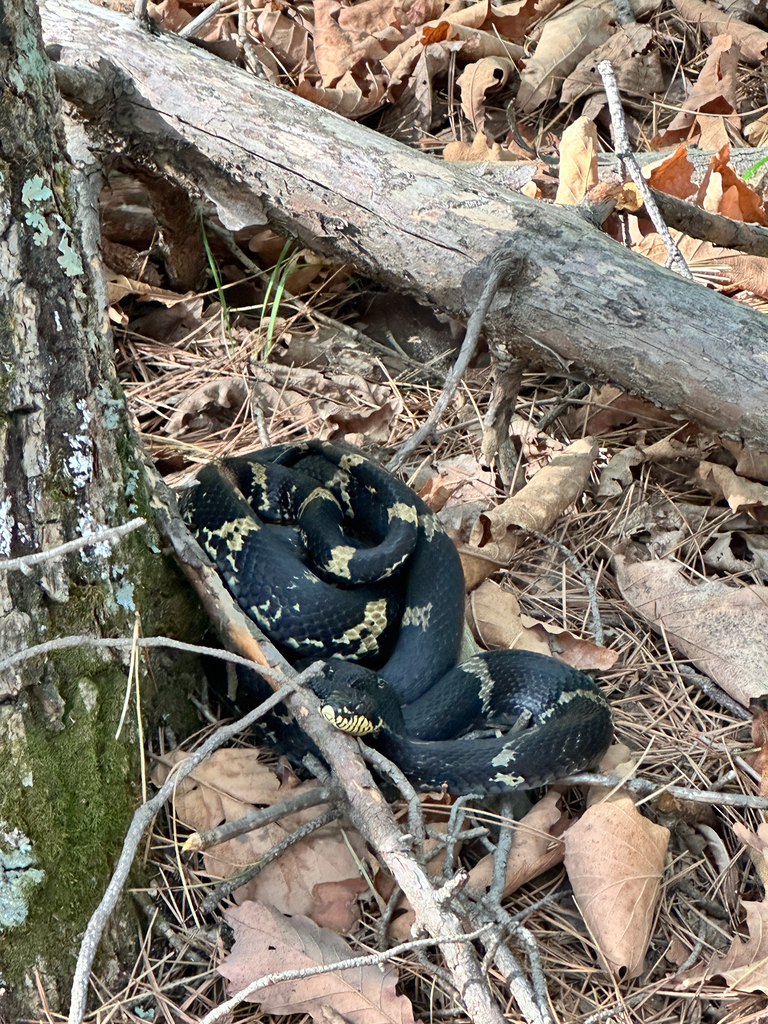
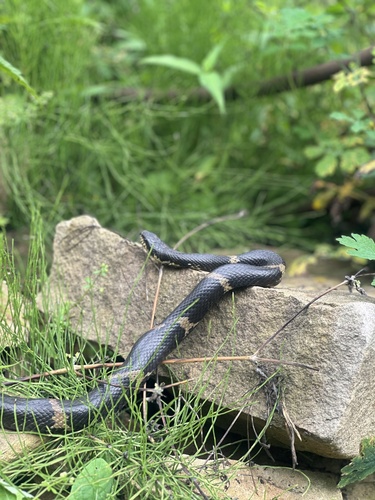
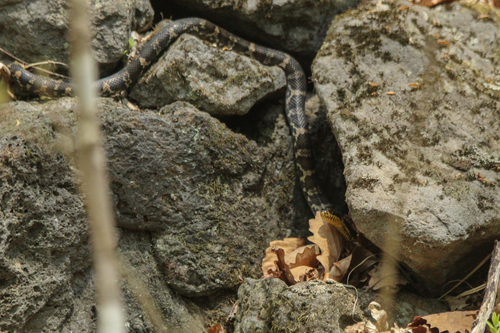
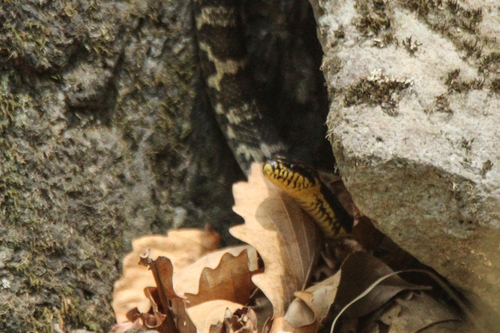
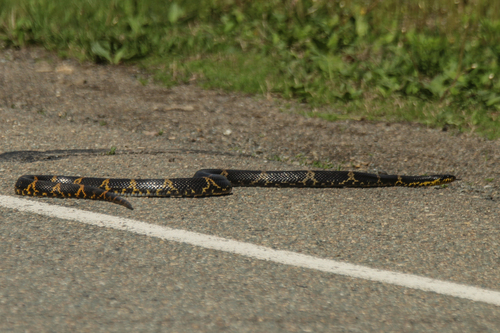
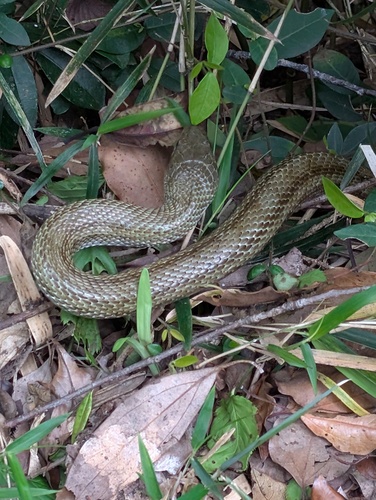
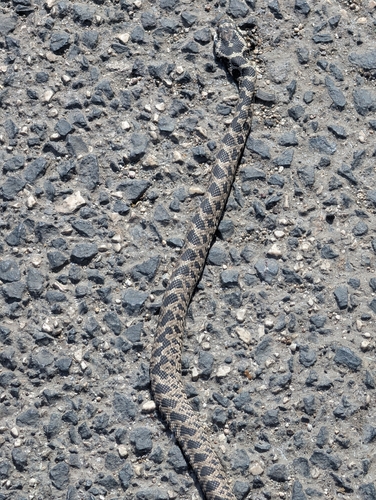
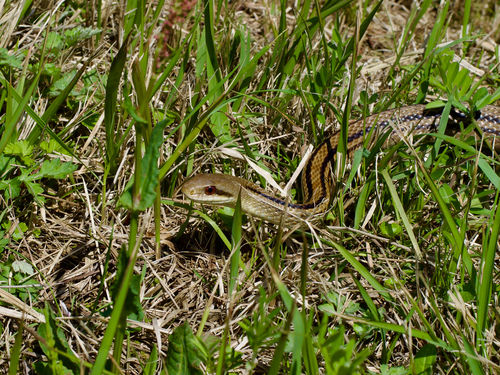
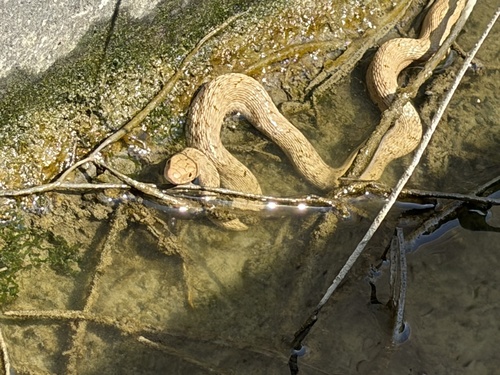
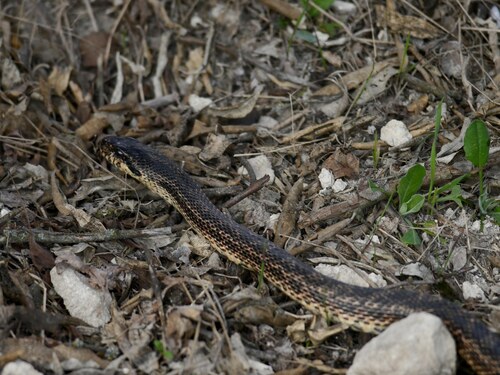
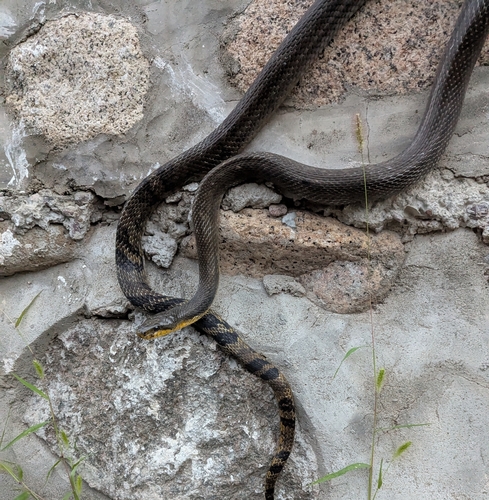
6 photographs of the Manchurian Black Ratsnake. © Tatyana Petrenko.
The Manchurian Black Ratsnake (Elaphe schrenckii) is a non-venomous snake in the Colubridae family, recorded in 7 countries.
- Family
- Colubridae
About the Manchurian Black Ratsnake
Elaphe schrenckii is a species of nonvenomous snake in the family Colubridae. The species is indigenous to Northeast Asia.
Common names
Common names for E. schrenckii include Amur rat snake, Manchurian black racer, Manchurian black water snake, Russian rat snake, Schrenck's rat snake, and Siberian rat snake.
Taxonomy
Elaphe schrenckii, formerly E. schrenckii schrenckii, is similar to the Korean rat snake E. anomala, which was once thought to be a subspecies of E. schrenckii and was classified as E. schrenckii anomala.
However, under the current taxonomic arrangement of Elaphe they are no longer considered as members of the same species.
The Korean Ratsnake is currently classified as E. anomala while the Amur Ratsnake remains as E. schrenckii.
Etymology
The specific name, schrenckii, is in honor of zoologist Leopold von Schrenck.
Conservation
The species E. schrenckii is on the China Species Red List with a classification of "Vulnerable VU". It is an officially protected species in Russia and South Korea. Globally it is considered to be of "least concern" by the International Union for Conservation of Nature.
Geographic range
Endemic to Northeast Asia, E. schrenckii is found in China, Korea, Mongolia, and Russia. It occurs in Russia and China, to the east to Khabarovsk in the Amur region, west to the Chingan mountains, and north to Manchuria (Northeastern China). The common name, Russian rat snake, is misleading as only a small portion of the geographic range of E. schrenckii is in Russia. It has been reported from Chinese provinces of Jilin, Heilongjian, and the Quingyuan area of Liaoning. (Ji Daming e.a., 1985).
In the Netherlands the species occurs as an introduced exotic around Groningen airport near Eelde, where it was first seen in the mid nineteen nineties. Reportedly, pet snakes were released into the wild by someone who did not expect that they would survive the winter. However, the snakes which were hardier than expected bred, and the species is now gradually increasing its range.
Habitat
As one common name, Manchurian black water snake, suggests, this species inhabits fairly moist biotopes such as forest clearings, scrub, farmland, hiding amongst cavities in trees, piles of stone or wood, and when threatened can flee up a tree or into the water. E. schrencki has been noted up to 6 m (20 ft) high in trees. This species occurs up to 2,000 m (6,600 ft) altitude and can live in cooler areas than many other snakes.
Description
E. schrenckii can reach average lengths (including tail) of 1.2–1.6 m (3.9–5.2 ft). It is among the most robust of all the rat snake species. It varies greatly in colouration, from creme saddles to dark brown saddles. Many captive bred specimens have been line bred to produce clean yellow saddles. The northern, darker, is the most common variety. This species has 200-236 ventral scales, 55-78 subcaudal scales, and 21-23 rows of dorsal scales.
Behavior
Adapted from Wikipedia, available under CC BY-SA.
Frequently asked: Manchurian Black Ratsnake
- Is the Manchurian Black Ratsnake venomous?
- No. The Manchurian Black Ratsnake (Elaphe schrenckii) is non-venomous and is not considered dangerous to humans. Like most snakes, it will retreat rather than bite when given the chance.
- Is the Manchurian Black Ratsnake poisonous?
- Snakes are venomous, not poisonous. "Poisonous" means harmful to eat or touch; "venomous" means injecting toxins through a bite. The Manchurian Black Ratsnake is neither poisonous nor venomous.
- Is the Manchurian Black Ratsnake dangerous?
- The Manchurian Black Ratsnake is not dangerous to humans. It has no medically significant venom and bites only defensively if cornered or handled.
- Where does the Manchurian Black Ratsnake live?
- The Manchurian Black Ratsnake has verified records in 7 countries, including Russian Federation, Korea, Republic of, Netherlands. See the distribution section below for its full range.
- Why is it called the Manchurian Black Ratsnake?
- Common names for E. schrenckii include Amur rat snake, Manchurian black racer, Manchurian black water snake, Russian rat snake, Schrenck's rat snake, and Siberian rat snake.
Where it is found
More Colubridae snakes
Classification
How scientists group this snake, from the broadest category down to the exact species. Each step narrows to its closest relatives.
- OrderThe broad group of scaled reptiles: all snakes and lizards
- Squamata
- FamilyA group of related snakes that share key traits
- Colubridae
- GenusA close-knit group of very similar species
- Elaphe
- SpeciesThis exact snake, named in the two-part scientific name
- Elaphe schrenckii
Keep learning
- What to Do If You Find a SnakeFound a snake at home or on a trail? Here is how to stay calm, give it space, identify it safely, and know when to call a professional.
- Venomous vs Nonvenomous: How to Tell the DifferenceThe folk rules for telling venomous snakes apart, where each one fails, and why location-based identification beats guessing by sight.
- What Is a Snake? Anatomy and the BasicsA clear overview of what makes a snake a snake: limbless body plan, anatomy, evolution from lizards, species diversity, and why they are ectothermic.
- How to Keep Snakes Out of Your Yard and HomeA practical guide to keeping snakes out of your yard and home using habitat changes that work, plus what to skip and what to do if one shows up.
Distribution from GBIF & iNaturalist. Venom status per CDC. Background: Wikipedia. Informational only. Never handle a snake to identify it.