
Colubridae
Beauty Ratsnake
HarmlessElaphe taeniura
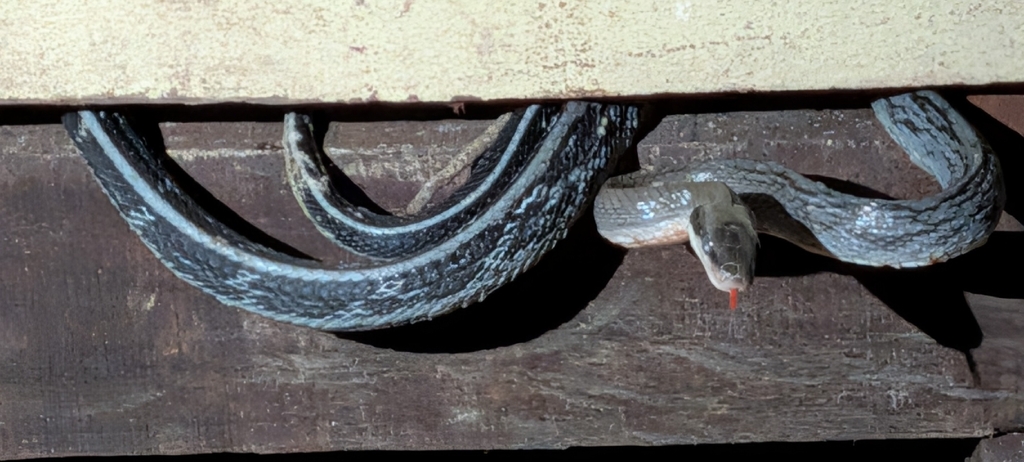
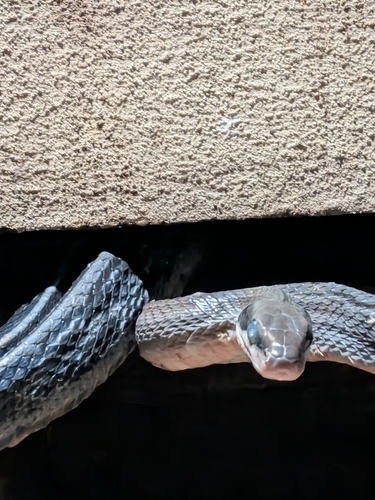
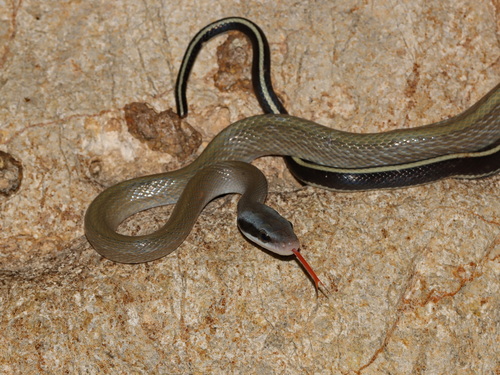
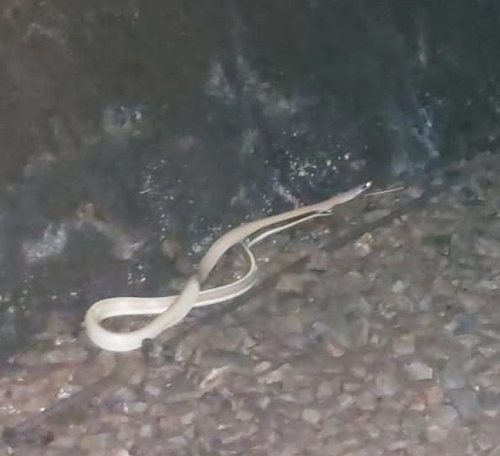
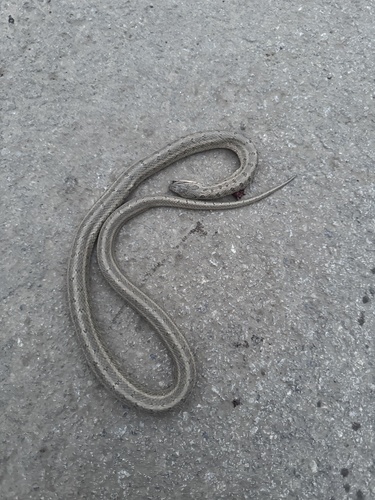
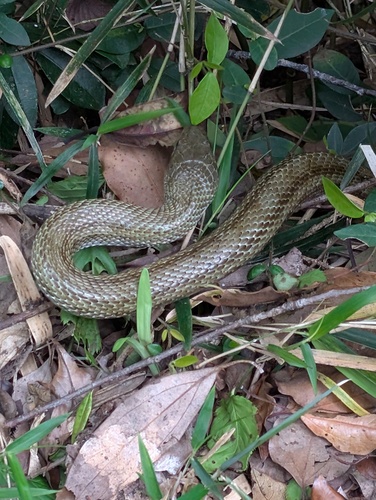
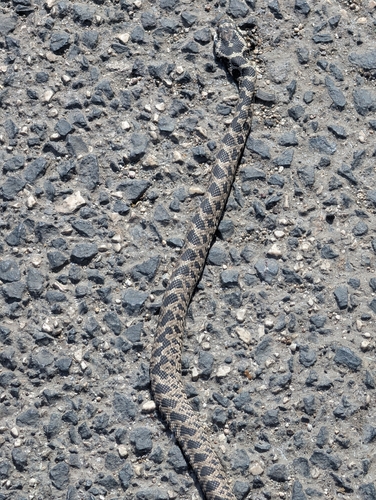
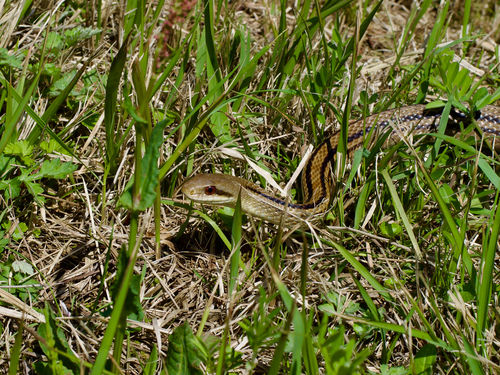
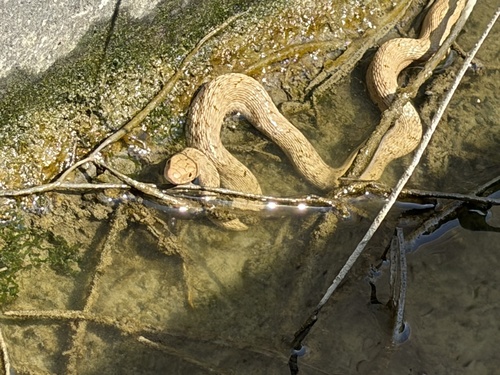
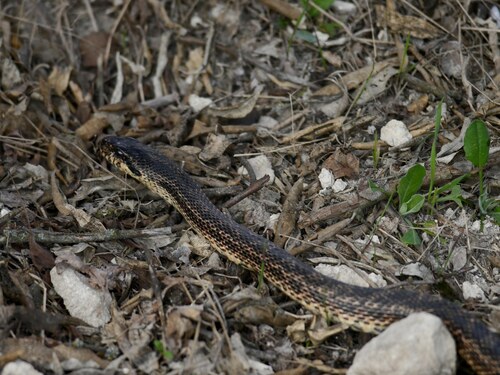
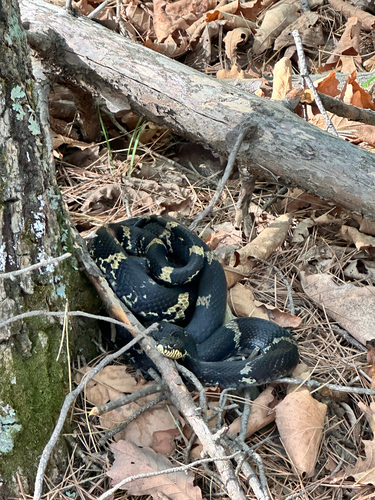
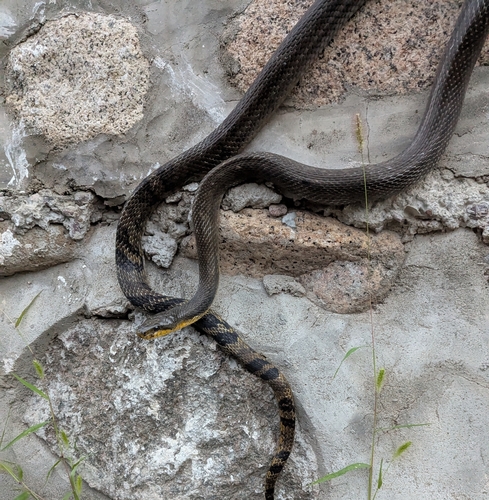
4 photographs of the Beauty Ratsnake. © drtimk.
The Beauty Ratsnake (Elaphe taeniura) is a non-venomous snake in the Colubridae family, recorded in 21 countries.
- Family
- Colubridae
About the Beauty Ratsnake
The beauty rat snake (Elaphe taeniura), also called the beauty ratsnake, the beauty snake, or the cave racer, is a species of snake in the family Colubridae. The species is native to the eastern and southeastern regions of Asia. It is a long, thin, semi-arboreal species of snake with several recognized subspecies. This constrictor feeds on rodents, and though it is favored in some locations as a natural pest control or pet, it is also considered an invasive species in other locations.
Description
Living about 15–25 years, the average length of the beauty rat snake (including the tail) is about 4–6 feet (1.2–1.8 m).
Coloration
The overall ground color is yellowish-brown to olive, becoming darker at the end of the tail. The skin on the back of the neck and head are uniform in color and the back is typically marked with two pairs of round black spots that meld together. Starting at the back corner of each eye, a black stripe reaches back to each corner of the mouth which is pale cream around the upper labial area.
Subspecies and distribution
Subspecies
Subspecies of this species include:
Chinese beauty snake (Elaphe taeniura taeniura) – Native to China. This subspecies has 11 different morphs.
Ridley's beauty snake, cave dwelling ratsnake, cave racer (Elaphe taeniura ridleyi) – Native to Thailand and Peninsular Malaysia. Bred in captivity in Cameron Highlands. Is listed as Vulnerable on the China Species Red List. (As the name implies, often lives deep within caves where its diet consists mainly of bats. They have a yellow to beige background color that darkens to a grey-black towards the tail. A white to cream mid-dorsal stripe starts about half of the way down the body and continues to the tip of tail. Both sides of the head are marked just behind the eye with a black stripe surrounded by blue.)
Mocquard's beauty rat snake (Elaphe taeniura mocquardi) – Native to southeastern China and northern Vietnam, as well as the island of Hainan.
Taiwan/Taiwanese beauty snake, stripe tail ratsnake (Elaphe taeniura friesei, previously Elaphe taeniura friesi) – Native to Taiwan.
Vietnamese blue beauty/blue beauty snake (Elaphe taeniura callicyanous) – Native to Vietnam, Cambodia and Thailand.
Helfenberger's beauty snake (Elaphe taeniura helfenbergeri) – Native to Myanmar and Thailand.
Elaphe taeniura grabowskyi – Native to Sumatra and the provinces of East Malaysia and Kalimantan on the island of Borneo.
Elaphe taeniura schmackeri – Native to the Ryukyu Islands of Japan.
Elaphe taeniura yunnanensis – Native to China, India, Laos, Myanmar, eastern Thailand and Vietnam.
Elaphe taeniura ssp. – Native to Burma, Thailand and Vietnam.
Etymology
The subspecific name, grabowskyi, is in honor of biologist Friedrich J. Grabowsky.
Adapted from Wikipedia, available under CC BY-SA.
Frequently asked: Beauty Ratsnake
- Is the Beauty Ratsnake venomous?
- No. The Beauty Ratsnake (Elaphe taeniura) is non-venomous and is not considered dangerous to humans. Like most snakes, it will retreat rather than bite when given the chance.
- Is the Beauty Ratsnake poisonous?
- Snakes are venomous, not poisonous. "Poisonous" means harmful to eat or touch; "venomous" means injecting toxins through a bite. The Beauty Ratsnake is neither poisonous nor venomous.
- Is the Beauty Ratsnake dangerous?
- The Beauty Ratsnake is not dangerous to humans. It has no medically significant venom and bites only defensively if cornered or handled.
- Where does the Beauty Ratsnake live?
- The Beauty Ratsnake has verified records in 21 countries, including Chinese Taipei, China, Belgium. See the distribution section below for its full range.
- What does the Beauty Ratsnake eat?
- The beauty rat snake typically feeds on ground rodents such as mice and, due to the snake's climbing abilities, even bats that are roosting within the caves they share. In addition to small mammals, beauty rat snakes have also been known to eat birds and bird eggs occasionally.
- Why is it called the Beauty Ratsnake?
- The subspecific name, grabowskyi, is in honor of biologist Friedrich J. Grabowsky. The subspecific name, mocquardi, is in honor of French herpetologist François Mocquard.
Where it is found
More Colubridae snakes
Classification
How scientists group this snake, from the broadest category down to the exact species. Each step narrows to its closest relatives.
- OrderThe broad group of scaled reptiles: all snakes and lizards
- Squamata
- FamilyA group of related snakes that share key traits
- Colubridae
- GenusA close-knit group of very similar species
- Elaphe
- SpeciesThis exact snake, named in the two-part scientific name
- Elaphe taeniura
Keep learning
- What to Do If You Find a SnakeFound a snake at home or on a trail? Here is how to stay calm, give it space, identify it safely, and know when to call a professional.
- Venomous vs Nonvenomous: How to Tell the DifferenceThe folk rules for telling venomous snakes apart, where each one fails, and why location-based identification beats guessing by sight.
- What Is a Snake? Anatomy and the BasicsA clear overview of what makes a snake a snake: limbless body plan, anatomy, evolution from lizards, species diversity, and why they are ectothermic.
- How to Keep Snakes Out of Your Yard and HomeA practical guide to keeping snakes out of your yard and home using habitat changes that work, plus what to skip and what to do if one shows up.
Distribution from GBIF & iNaturalist. Venom status per CDC. Background: Wikipedia. Informational only. Never handle a snake to identify it.