
Albania
Snakes in Albania
10+ snake species have been recorded in Albania, 4 venomous.
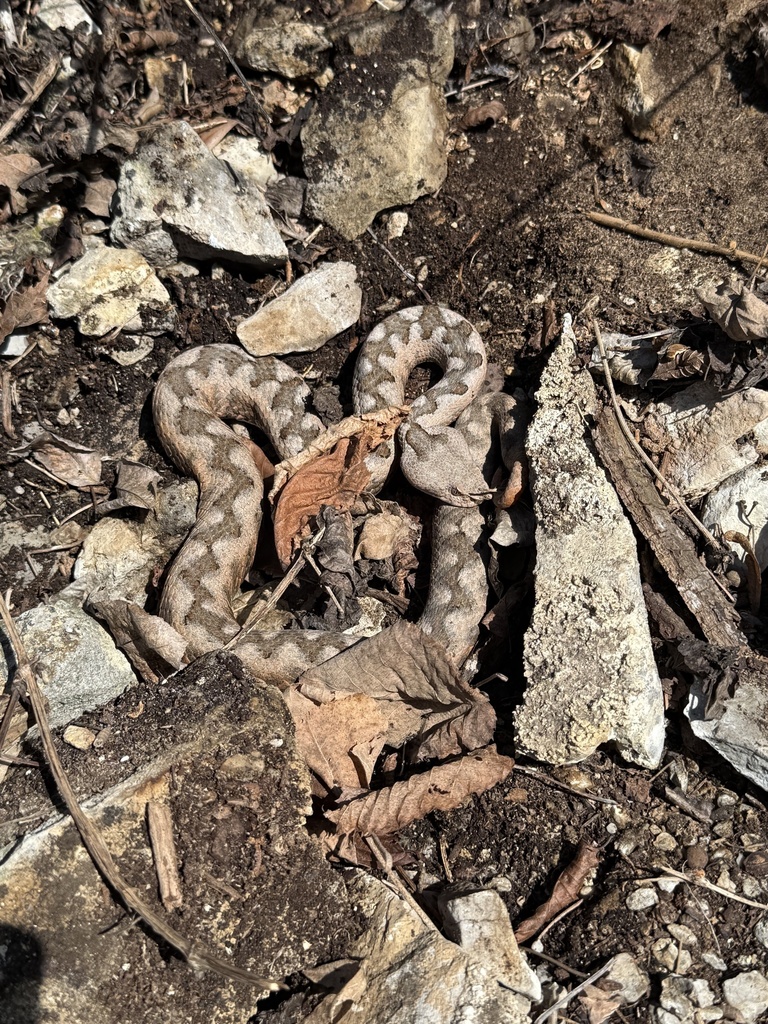
Snakes of Albania
Albania has 10+ snake species recorded in our database, of which 4 are venomous. The great majority of its snakes are harmless. Although it is a small country, Albania packs a lot of variation into its terrain, and that variety is what shapes its snake fauna. The coastal plains along the Adriatic and Ionian seas are warm and Mediterranean, the interior rises quickly into rugged limestone mountains, and there are wetlands, river valleys, oak and pine forests, dry rocky slopes, and farmland in between. Snakes track these habitats closely, so where you are in the country largely determines which species you are likely to encounter.
The lowland and Mediterranean zones favor heat-loving species and tend to hold the highest diversity, while the cooler, higher mountains support fewer but hardier species. Stone walls, scrub, rocky outcrops, and the edges of streams and lakes are all productive snake habitat. This Balkan position, at the meeting point of Mediterranean and mountain climates, is why a relatively small territory still records nearly two dozen species.
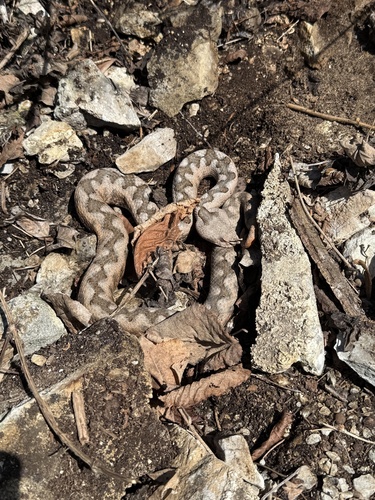
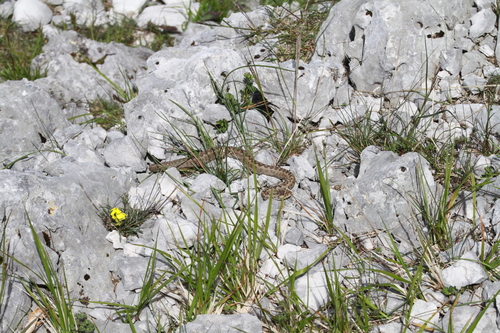
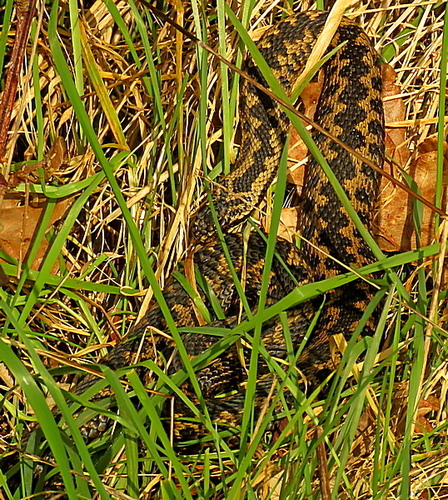
The venomous snakes of Albania are vipers (family Viperidae). These are the only snakes in the country whose bite is a real medical concern, and they account for the 4 venomous species in the record. European vipers are typically stout-bodied with a triangular head and a zigzag or blotched pattern along the back, and they are found across a range of habitats from rocky mountain slopes to scrubland and forest edges. They are not aggressive and rely first on camouflage and stillness, biting defensively only when stepped on, cornered, or handled. The remaining 15 species are non-venomous.
That harmless majority is the bulk of what lives in Albania. It includes colubrids such as grass snakes and dice snakes, which are strong swimmers found near lakes, rivers, and wetlands, along with various whip snakes and rat snakes that hunt over open and rocky ground. Larger non-venomous species can be impressive in size but pose no venom threat; they subdue prey by constriction or simply by seizing it. These snakes are a normal and beneficial part of the Albanian countryside.
Snakes earn their place in these ecosystems. They are efficient predators of rodents, helping keep populations of mice and rats in check around fields and rural buildings, and several species prey heavily on frogs, fish, lizards, and insects. They are also prey themselves for birds of prey and larger mammals, linking different levels of the food web. On safety, the honest summary is that most Albanian snakes are harmless, and the main medical threat is a viper bite. The correct response to any venomous snakebite is professional medical care: get to a hospital, where antivenom and supportive treatment can be given. Never attempt to handle a wild venomous snake, and do not rely on field first-aid measures. If a bite occurs, contact local emergency services immediately, or in the United States call Poison Control at 1-800-222-1222.
Snakes in Albania: FAQ
- Are there venomous snakes in Albania?
- Yes. 4 venomous snake species have verified records in Albania, including Nose-horned Viper, Meadow Viper, Greek Viper, Adder. Most snakes in Albania, however, are harmless.
- How many snake species live in Albania?
- 10+ snake species have verified records in Albania, of which 4 are venomous.
- What is the most commonly seen snake in Albania?
- The Nose-horned Viper is the most frequently reported snake in Albania, based on verified wildlife observations.
- What should I do if I see a venomous snake in Albania?
- Keep your distance and do not try to catch or kill it. Most bites happen when people handle or corner a snake. If someone is bitten, contact local emergency services or poison control immediately.
Venomous snakes in Albania

Every snake recorded in Albania
10+ species across 5 families, grouped by family. Venomous flagged.
Colubridae (12)
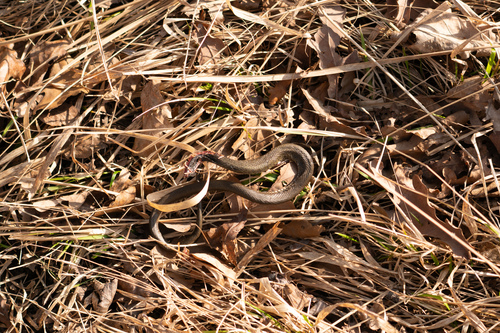
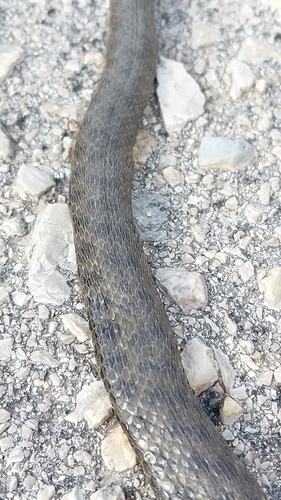
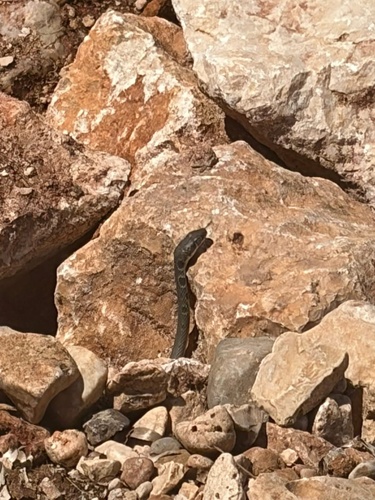
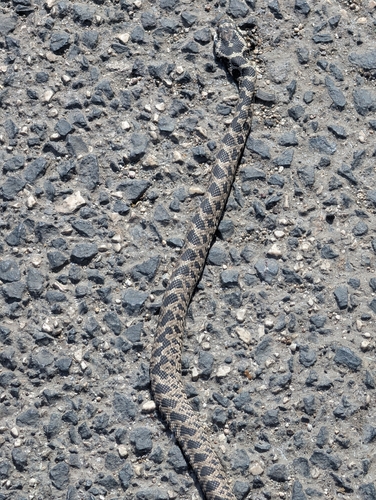
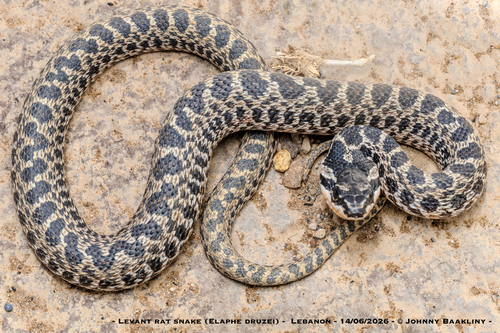
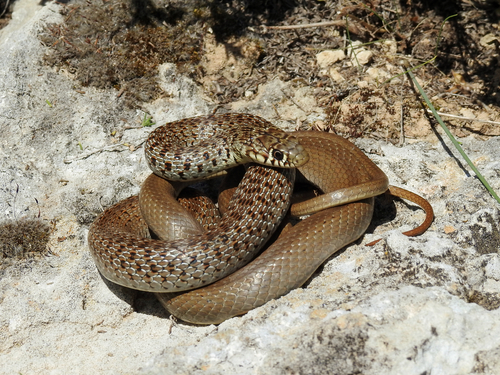
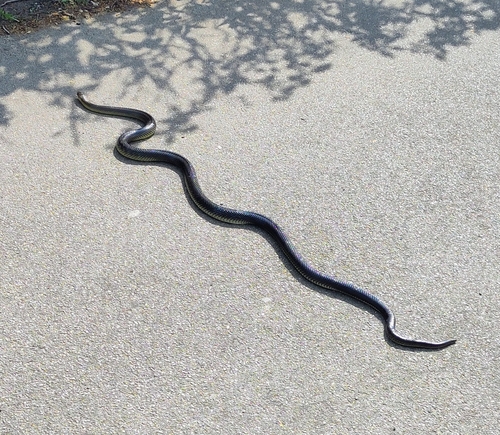
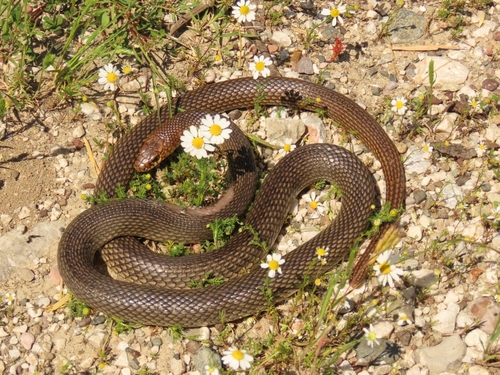
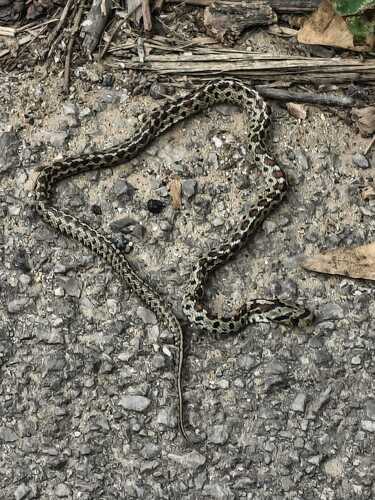
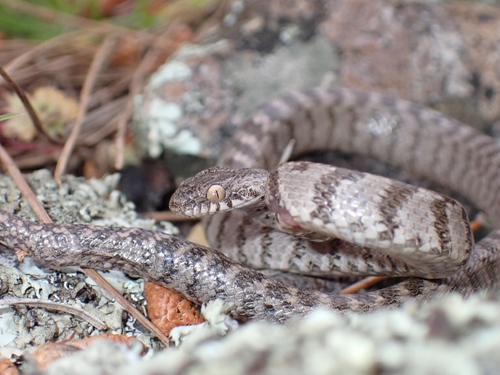
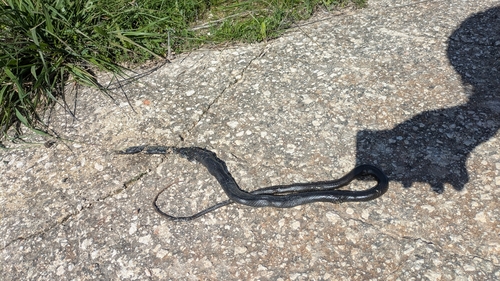
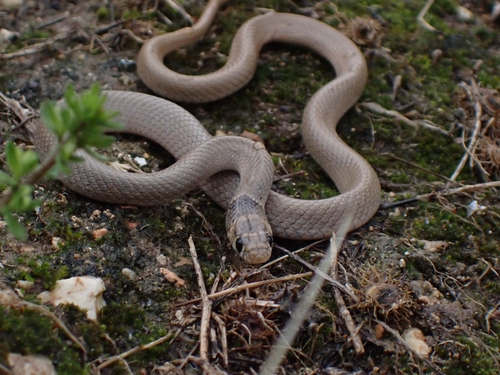
Viperidae (4)
Psammophiidae (1)
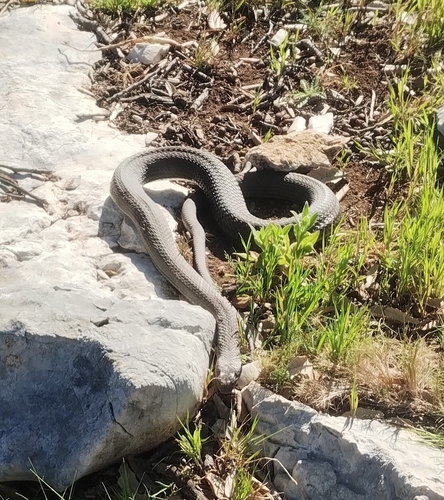
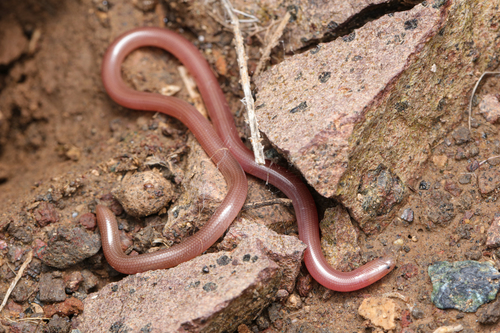
Typhlopidae (1)
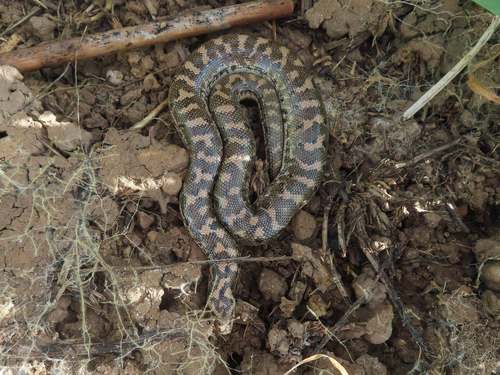
Boidae (1)
Compiled from verified GBIF & iNaturalist observations. "How often seen" reflects how frequently a snake is reported here, not how dangerous it is. Informational only.
Keep learning
- Are Snakes Dangerous? The Real Risk, in PerspectiveMost snakes are harmless and avoid people. Here is the honest picture of snakebite risk worldwide and how to lower your own.
- Snakebite First Aid: What to Do (and What Never to Do)A clear, CDC-based guide to snakebite first aid: the steps that help, the popular myths that hurt, and how to tell a serious bite from a minor one.
- Venomous vs Nonvenomous: How to Tell the DifferenceThe folk rules for telling venomous snakes apart, where each one fails, and why location-based identification beats guessing by sight.
- What to Do If You Find a SnakeFound a snake at home or on a trail? Here is how to stay calm, give it space, identify it safely, and know when to call a professional.