
Colubridae
Japanese Ratsnake
HarmlessElaphe climacophora
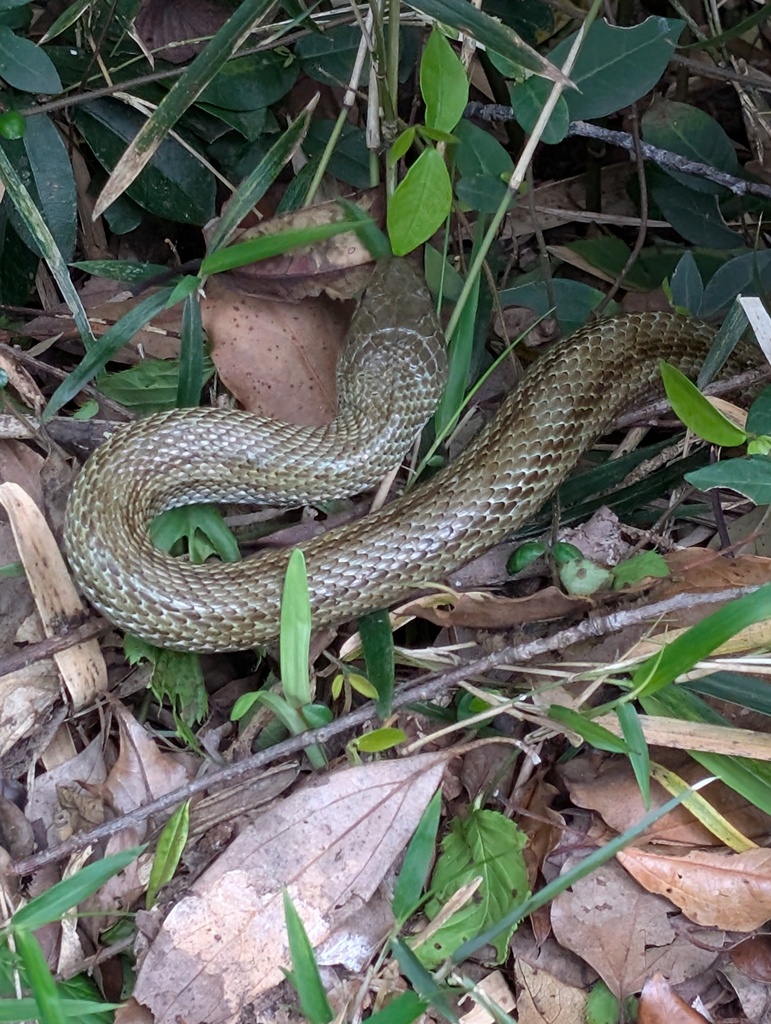
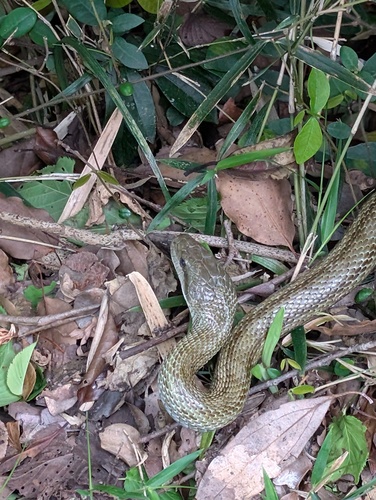
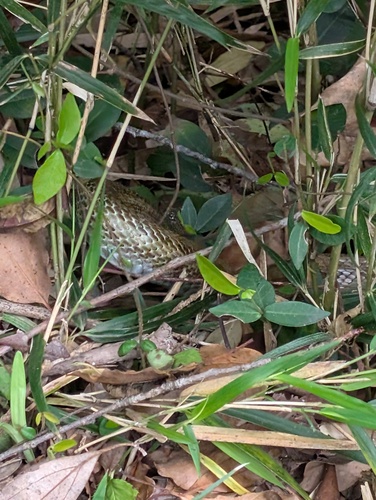
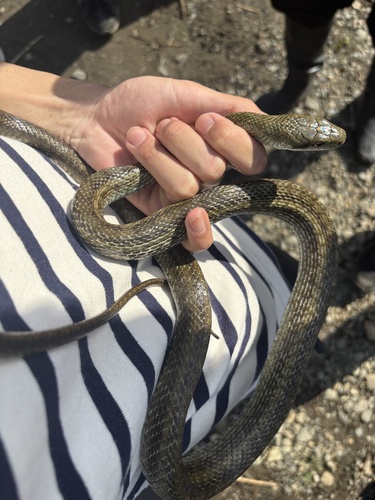
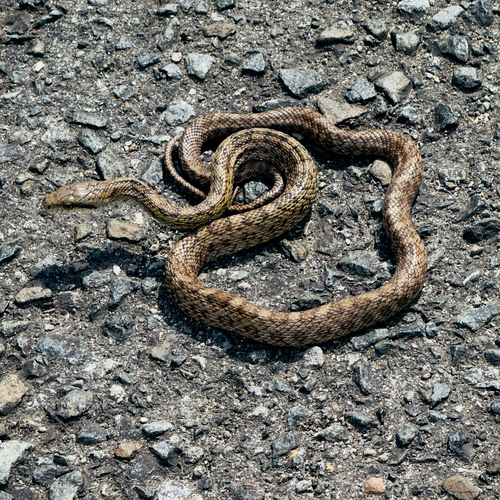
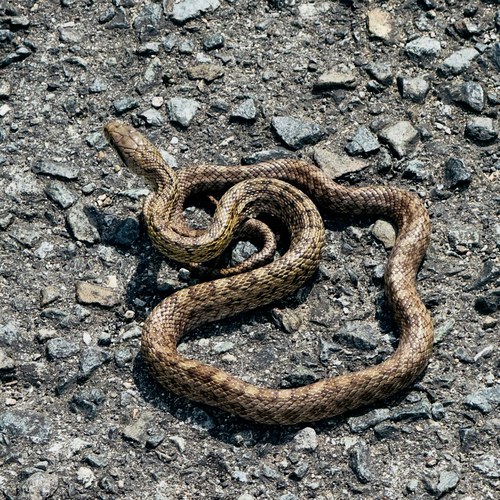
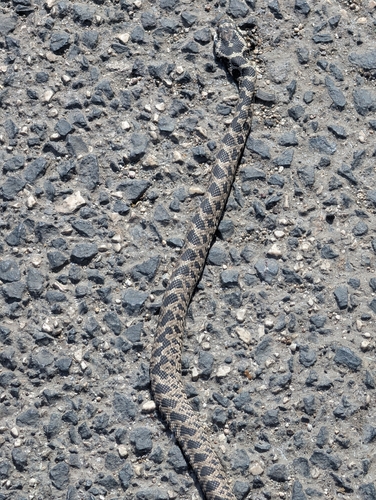
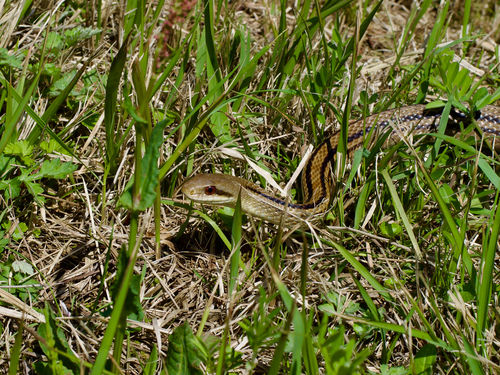
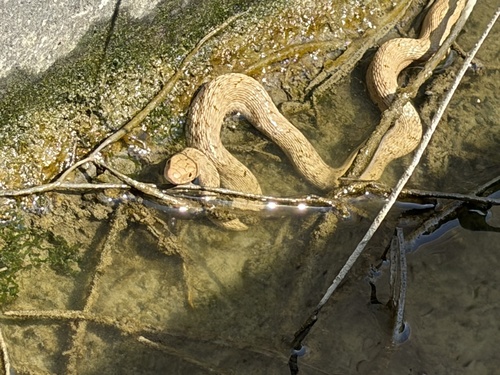
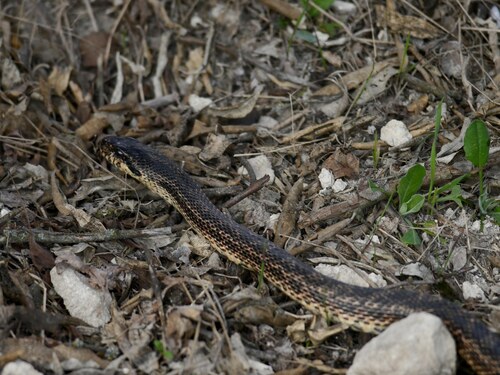
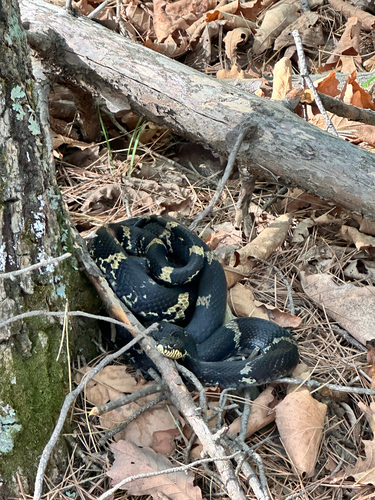
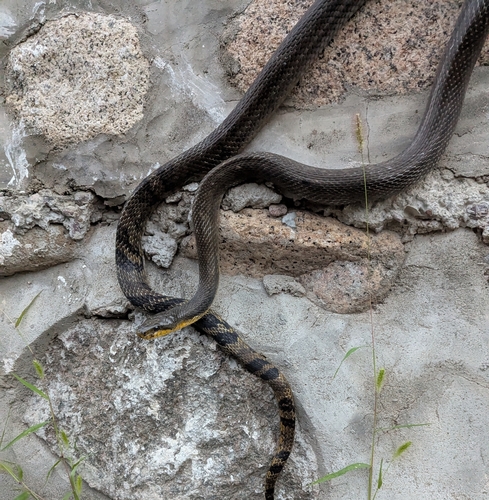
6 photographs of the Japanese Ratsnake. © Atsushi Nakajima.
The Japanese Ratsnake (Elaphe climacophora) is a non-venomous snake in the Colubridae family, recorded in 5 countries.
- Family
- Colubridae
About the Japanese Ratsnake
The Japanese rat snake (Elaphe climacophora) is a medium-sized colubrid snake found throughout the Japanese archipelago (except the far South West) as well as on the Russian-administered Kunashir Island. In Japanese it is known as the aodaishō or "blue general". It is non-venomous and is hunted by eagles and tanukis.
The snakes brumate for three to four months, mate in spring and lay 7–20 eggs in early summer.
Description
Adults reach one to two meters in length and about five centimeters in girth. E. climacophora is the largest Japanese snake outside Okinawa. They are variable in color, ranging from pale yellow-green to dark blue-green. They can be identified as Asian rat snakes due to the dark streak behind each of their eyes.
Juveniles have brown-stripe pattern that may be mimesis of the venomous mamushi. There is an established, albino population in the wild, with specimens especially numerous near Iwakuni, where they are called "Iwakuni white snakes" and revered as messengers of deities and deity-guardians of mountains and rivers. The albino population was protected in 1924 as a "national monument."
Feeding
Japanese rat snakes eat a variety of small animals: rodents, frogs, lizards, shrews, or flies. They are also among the species of snake to have the ability to eat raw eggs. As semi-arboreal snakes, they often raid bird nests in the wild. They were favoured by farmers as effective rat control, though unpopular with chicken rearers.
Hybrids
In the German reptile zoo Exotarium Oberhof Elaphe climacophora mated with Elaphe schrenckii to produce fertile hybrids. Offspring look very much like Elaphe taeniura.
Adapted from Wikipedia, available under CC BY-SA.
Frequently asked: Japanese Ratsnake
- Is the Japanese Ratsnake venomous?
- No. The Japanese Ratsnake (Elaphe climacophora) is non-venomous and is not considered dangerous to humans. Like most snakes, it will retreat rather than bite when given the chance.
- Is the Japanese Ratsnake poisonous?
- Snakes are venomous, not poisonous. "Poisonous" means harmful to eat or touch; "venomous" means injecting toxins through a bite. The Japanese Ratsnake is neither poisonous nor venomous.
- Is the Japanese Ratsnake dangerous?
- The Japanese Ratsnake is not dangerous to humans. It has no medically significant venom and bites only defensively if cornered or handled.
- Where does the Japanese Ratsnake live?
- The Japanese Ratsnake has verified records in 5 countries, including Japan, Russian Federation, Belgium. See the distribution section below for its full range.
- What does the Japanese Ratsnake eat?
- Japanese rat snakes eat a variety of small animals: rodents, frogs, lizards, shrews, or flies. They are also among the species of snake to have the ability to eat raw eggs. As semi-arboreal snakes, they often raid bird nests in the wild. They were favoured by farmers as effective rat control, though unpopular with chicken rearers.
Where it is found
More Colubridae snakes
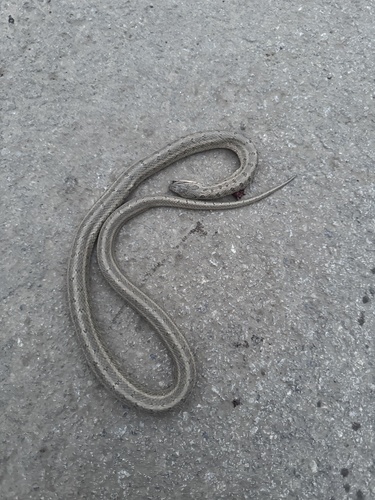
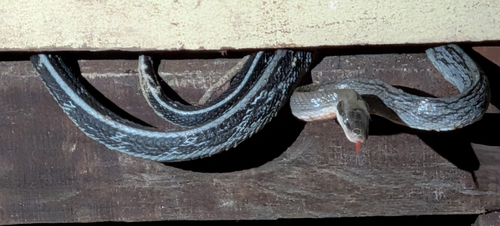
Classification
How scientists group this snake, from the broadest category down to the exact species. Each step narrows to its closest relatives.
- OrderThe broad group of scaled reptiles: all snakes and lizards
- Squamata
- FamilyA group of related snakes that share key traits
- Colubridae
- GenusA close-knit group of very similar species
- Elaphe
- SpeciesThis exact snake, named in the two-part scientific name
- Elaphe climacophora
Keep learning
- What to Do If You Find a SnakeFound a snake at home or on a trail? Here is how to stay calm, give it space, identify it safely, and know when to call a professional.
- Venomous vs Nonvenomous: How to Tell the DifferenceThe folk rules for telling venomous snakes apart, where each one fails, and why location-based identification beats guessing by sight.
- What Is a Snake? Anatomy and the BasicsA clear overview of what makes a snake a snake: limbless body plan, anatomy, evolution from lizards, species diversity, and why they are ectothermic.
- How to Keep Snakes Out of Your Yard and HomeA practical guide to keeping snakes out of your yard and home using habitat changes that work, plus what to skip and what to do if one shows up.
Distribution from GBIF & iNaturalist. Venom status per CDC. Background: Wikipedia. Informational only. Never handle a snake to identify it.