
Colubridae
Four-lined Snake
HarmlessElaphe quatuorlineata
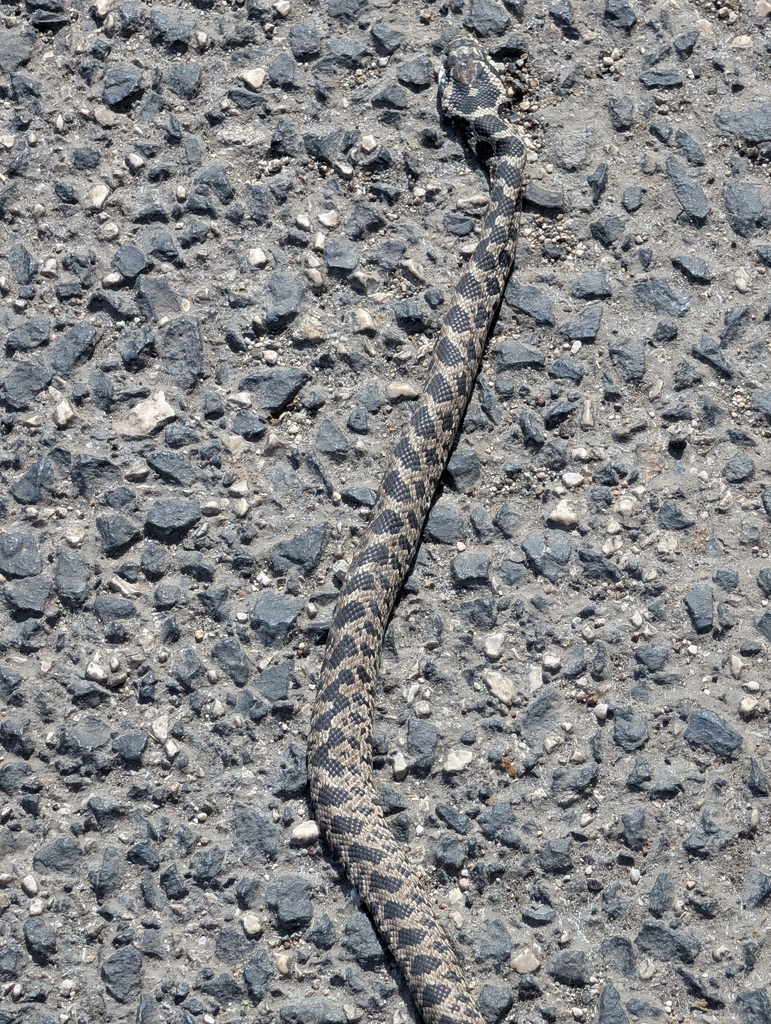
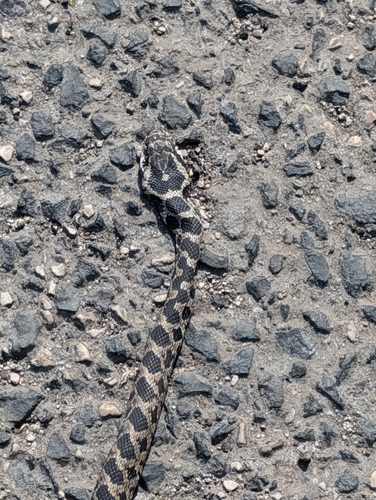
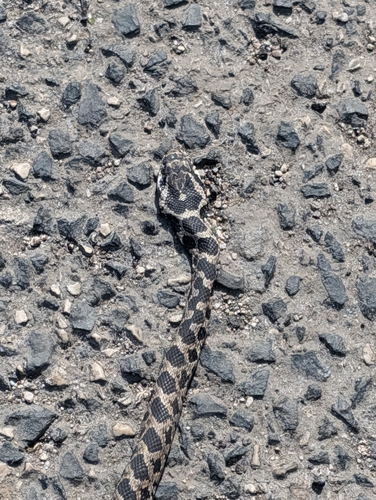
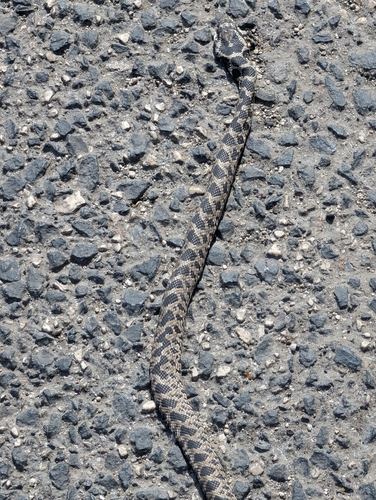
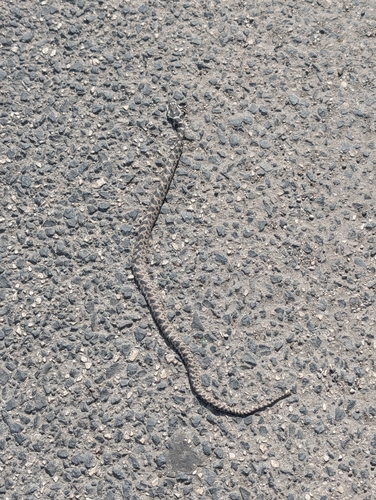
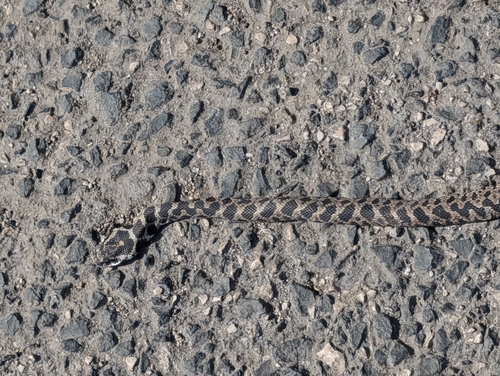
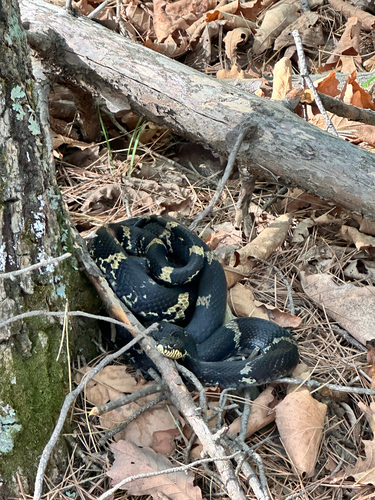
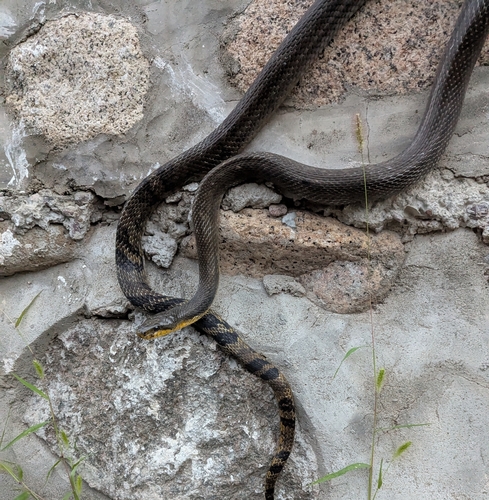
6 photographs of the Four-lined Snake. © Piermario Maculan.
The Four-lined Snake (Elaphe quatuorlineata) is a non-venomous snake in the Colubridae family, recorded in 31 countries.
- Family
- Colubridae
About the Four-lined Snake
Elaphe quatuorlineata (common names: four-lined snake, Bulgarian ratsnake) is a member of the family Colubridae. The four-lined snake is a non-venomous species and one of the largest of the European snakes.
Description
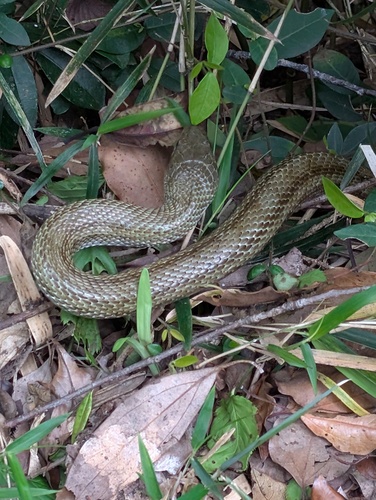
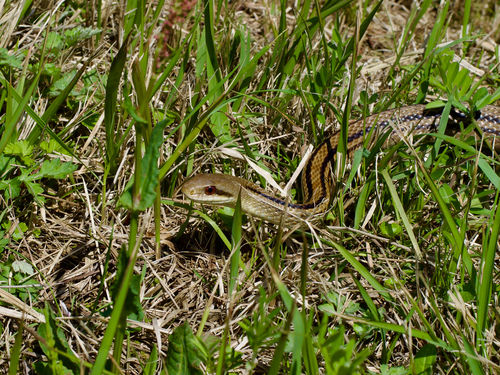
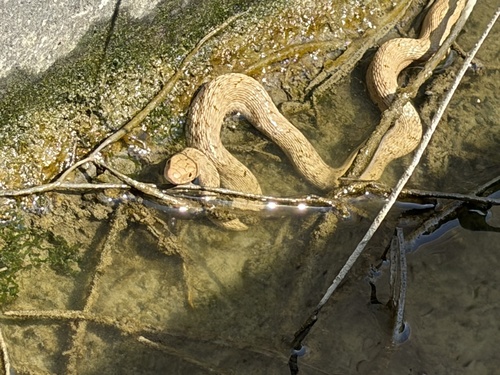
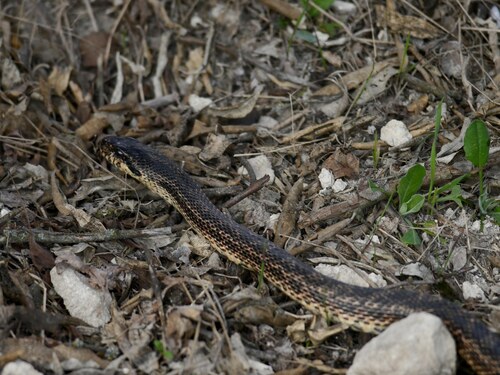
The species' common name refers to the markings seen on the body of adult snakes: four dark stripes running along a yellowish brown body. Juveniles, by contrast, have a dorsal series of dark brown blotches with alternating dark brown spots on the sides, all on a pale brown background. A black line runs from the corner of the eye and the belly is cream to white with darker markings. Adults can reach a length of 180 cm (5 ft 11 in), rarely 200 cm (6 ft 7 in). Adults are among the heaviest European snakes but are greatly variably in size, with males potentially weighing from 250 to 1,000 g (0.6 to 2.2 lb) and females potentially weighing from 400 to 1,400 g (0.9 to 3.1 lb) within the Aegean Islands.
Distribution
Four-lined snakes are found in Italy, along the whole western coast of the Balkan peninsula, in the western half of Greece and many of the Greek islands, the region of Macedonia, the southwestern corner of Bulgaria, coastal Slovenia, coastal Croatia, Bosnia and Herzegovina, Montenegro, North Macedonia and Albania. The number of snakes and the density of the populations are unknown.
Habitat and behavior
The four-lined snake favours areas with a Mediterranean climate and is found in habitats featuring vegetation, stone walls, sparse woodland, forest margins and deserted buildings. In the winter, individuals spend their time in deserted rodent burrows in groups of four to seven. Their behaviour is generally calmer than that of other snakes (seldom hissing or striking) and they are usually active in the morning and late afternoon. Excellent climbers, they can often be found in the tops of trees.
Diet
A large proportion of the snakes' diet consists of small mammals, such as rabbits, weasels, squirrels, and mice. They also feed on birds, lizards, newly hatched tortoises and eggs. Females of the species have been shown to feed more often upon birds than do males.
Reproduction
The mating season lasts from April to May. Females have a gestation period that lasts about two months, the eggs being laid in summer. Females typically lay around 6–18 eggs and incubate them for about 40–60 days.
Conservation
The four-lined snake has been considered endangered in Bulgaria due to poachers and agriculture. It appears on the IUCN Red List of Threatened Species as "Near Threatened" because of probable significant decline in its abundance and widespread habitat loss.
Adapted from Wikipedia, available under CC BY-SA.
Frequently asked: Four-lined Snake
- Is the Four-lined Snake venomous?
- No. The Four-lined Snake (Elaphe quatuorlineata) is non-venomous and is not considered dangerous to humans. Like most snakes, it will retreat rather than bite when given the chance.
- Is the Four-lined Snake poisonous?
- Snakes are venomous, not poisonous. "Poisonous" means harmful to eat or touch; "venomous" means injecting toxins through a bite. The Four-lined Snake is neither poisonous nor venomous.
- Is the Four-lined Snake dangerous?
- The Four-lined Snake is not dangerous to humans. It has no medically significant venom and bites only defensively if cornered or handled.
- Where does the Four-lined Snake live?
- The Four-lined Snake has verified records in 31 countries, including Croatia, Greece, Italy. See the distribution section below for its full range.
- What does the Four-lined Snake eat?
- A large proportion of the snakes' diet consists of small mammals, such as rabbits, weasels, squirrels, and mice. They also feed on birds, lizards, newly hatched tortoises and eggs. Females of the species have been shown to feed more often upon birds than do males.
Where it is found
More Colubridae snakes
Classification
How scientists group this snake, from the broadest category down to the exact species. Each step narrows to its closest relatives.
- OrderThe broad group of scaled reptiles: all snakes and lizards
- Squamata
- FamilyA group of related snakes that share key traits
- Colubridae
- GenusA close-knit group of very similar species
- Elaphe
- SpeciesThis exact snake, named in the two-part scientific name
- Elaphe quatuorlineata
Keep learning
- What to Do If You Find a SnakeFound a snake at home or on a trail? Here is how to stay calm, give it space, identify it safely, and know when to call a professional.
- Venomous vs Nonvenomous: How to Tell the DifferenceThe folk rules for telling venomous snakes apart, where each one fails, and why location-based identification beats guessing by sight.
- What Is a Snake? Anatomy and the BasicsA clear overview of what makes a snake a snake: limbless body plan, anatomy, evolution from lizards, species diversity, and why they are ectothermic.
- How to Keep Snakes Out of Your Yard and HomeA practical guide to keeping snakes out of your yard and home using habitat changes that work, plus what to skip and what to do if one shows up.
Distribution from GBIF & iNaturalist. Venom status per CDC. Background: Wikipedia. Informational only. Never handle a snake to identify it.