
Genus · Colubridae
Types of ratsnakes
10+ species make up the genus Elaphe, the snakes commonly called ratsnakes. None are considered dangerous to humans.
About Old World ratsnakes
Elaphe is the classic genus of Old World ratsnakes, large, harmless constrictors of Europe and Asia.
Elaphe is a genus in the family Colubridae, the largest snake family on Earth and the group that holds most of the world's familiar nonvenomous snakes. Once a sprawling catch-all for ratsnakes worldwide, the genus was split apart by later research, and the New World ratsnakes were moved to other genera such as Pantherophis. Today Elaphe refers to the Old World ratsnakes, a tighter group of medium to large colubrids centered on Europe and Asia. Our database holds 10+ species in this genus.
These snakes range across temperate and subtropical Eurasia, from Europe through the Caucasus and Central Asia into eastern Asia and the Russian Far East. They occupy a wide spread of habitats: forests and woodland edges, rocky hillsides, grassland and steppe, farmland, and the margins of human settlement. Many are strong climbers found in trees, shrubs, and old buildings, while others spend more time on the ground among rocks and leaf litter. This adaptability is part of why ratsnakes are among the most commonly encountered larger snakes across their range.
In general terms, Elaphe ratsnakes are recognized as fairly long, sturdy snakes, often well over a meter as adults, with smooth or weakly keeled scales and a body that can look somewhat squared off in cross section rather than perfectly round. Patterns vary widely by species, from the longitudinal stripes of the Four-lined Snake to the bold blotches and bands of the Beauty Ratsnake, but the genus as a whole leans toward muted browns, grays, yellows, and olives broken by darker markings. Reliable identification to species depends on local range and detailed scale features, so the genus name is the honest level for a general field call.
Elaphe snakes are nonvenomous. They are not rear-fanged and they pose no medical venom risk to people. Like nearly all snakes a cornered ratsnake may hiss, vibrate its tail, musk, or bite in defense, and a bite from a large individual can break skin and should simply be cleaned like any minor wound. The genus is not dangerous, but no wild snake should be picked up or handled, both for the animal's sake and to avoid a defensive bite. If you are ever unsure whether a snake is venomous, keep your distance and do not attempt to handle or kill it. For any bite that causes concerning symptoms, contact US Poison Control at 1-800-222-1222 or your local emergency services.
Ecologically, Elaphe ratsnakes earn their name as effective predators of rodents and other small vertebrates. They are powerful constrictors, seizing prey and using body coils to subdue it, with diets that center on mice, rats, and other small mammals but also include birds, eggs, lizards, and frogs depending on species and habitat. This makes them valuable controllers of agricultural and household rodent pests. They are egg-laying snakes, with females depositing clutches that hatch into independent young, and species in colder climates spend the winter in dormancy before emerging to breed in spring.
Elaphe belongs to the Colubridae family (Colubrids). The largest snake family, and the one most snakes you meet belong to. Typically round pupils, a head only slightly wider than the neck, and no heat-sensing facial pit or rattle. Scales may be smooth and glossy or keeled and matte depending on the species.
Danger: Almost all colubrids are harmless. A small number are rear-fanged with medically significant venom, the boomslang and the twig (vine) snakes of Africa being the dangerous exceptions. Most colubrids will flee or bluff rather than bite.
All species (17)
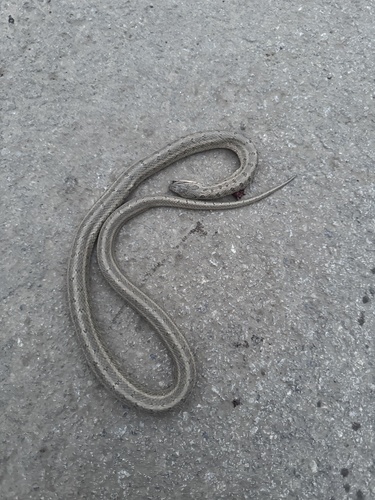 Steppe RatsnakeElaphe dioneHarmless
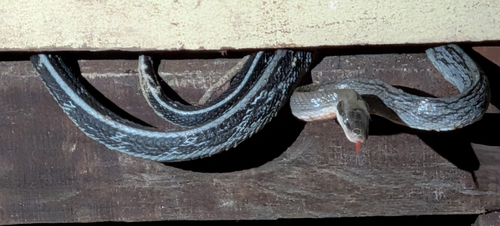 Beauty RatsnakeElaphe taeniuraHarmless
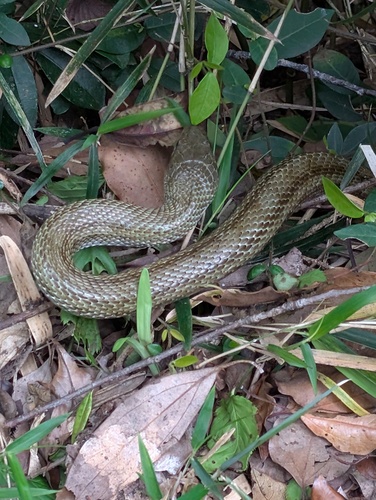 Japanese RatsnakeElaphe climacophoraHarmless
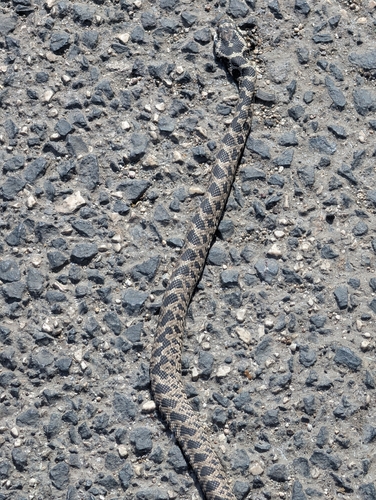 Four-lined SnakeElaphe quatuorlineataHarmless
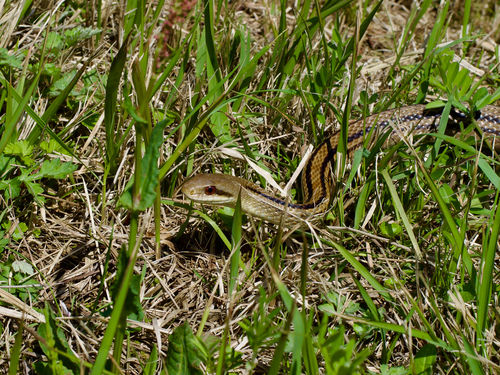 Japanese Four-lined RatsnakeElaphe quadrivirgataHarmless
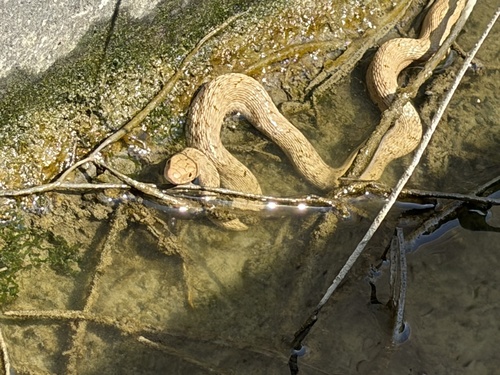 King RatsnakeElaphe carinataHarmless
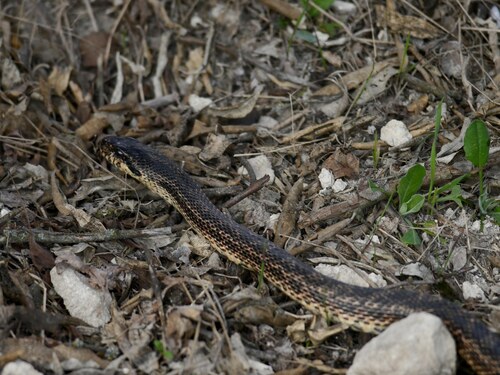 East-Four-lined RatsnakeElaphe sauromatesHarmless
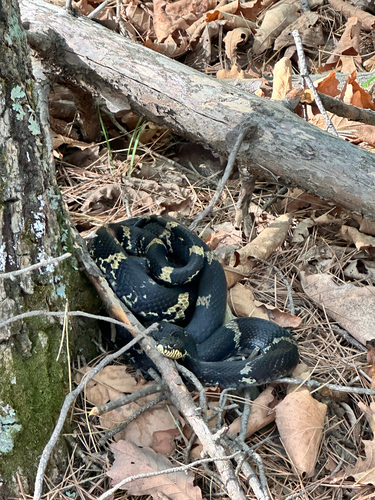 Manchurian Black RatsnakeElaphe schrenckiiHarmless
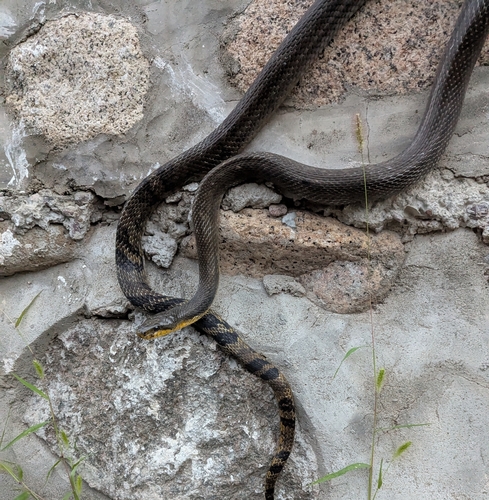 Korean RatsnakeElaphe anomalaHarmless
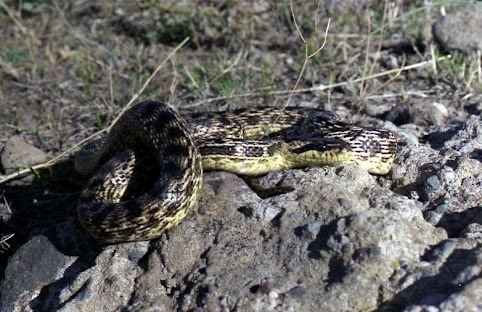 Urartian RatsnakeElaphe urarticaHarmless
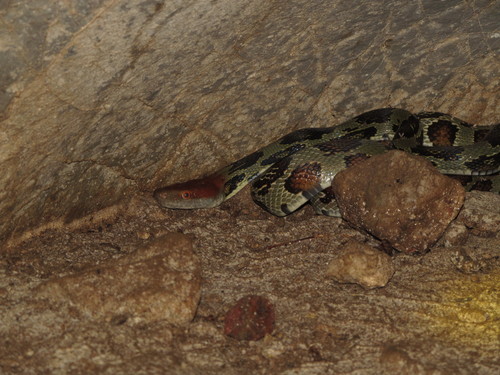 Flower SnakeElaphe moellendorffiHarmless
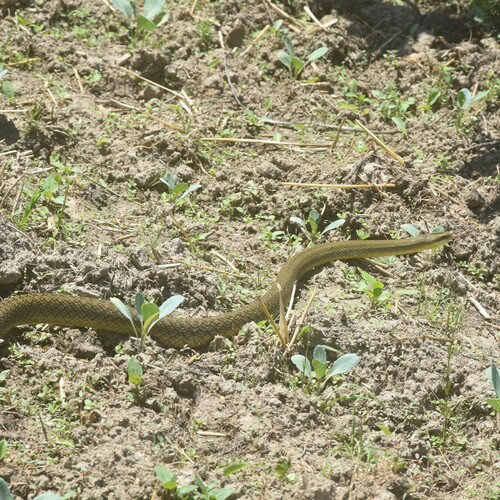 Himalayan TrinketElaphe hodgsoniHarmless
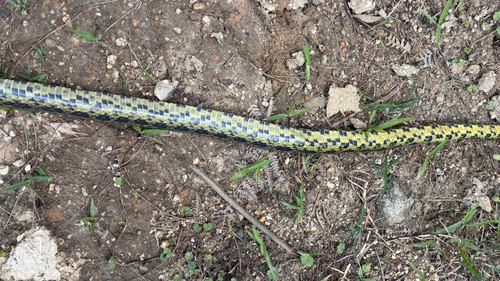 Eastern Trinket SnakeElaphe cantorisHarmless
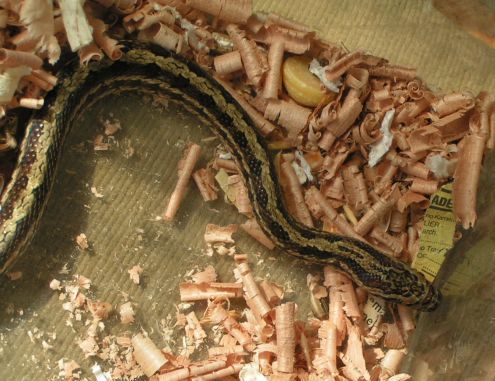 Twin-spotted RatsnakeElaphe bimaculataHarmless
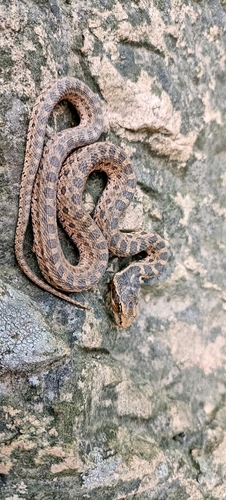 Père David's RatsnakeElaphe davidiHarmless
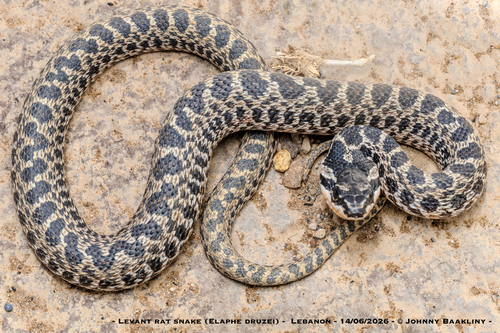 Levant Rat SnakeElaphe druzeiHarmless
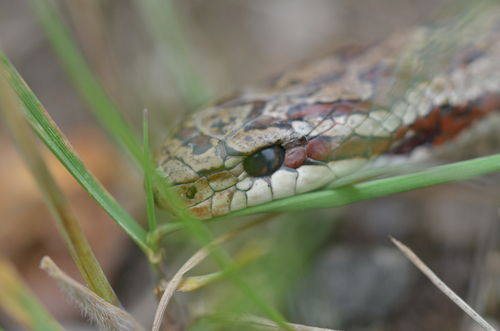 Zoige RatsnakeElaphe zoigeensisHarmless
Keep learning
- What Is a Snake? Anatomy and the BasicsA clear overview of what makes a snake a snake: limbless body plan, anatomy, evolution from lizards, species diversity, and why they are ectothermic.
- How Snakes Move, Hunt, and EatHow snakes move without legs, hunt as ambushers or active foragers, kill by constriction or venom, and swallow prey wider than their head.
- What Do Snakes Eat?All snakes are carnivores. Learn what snakes eat, how diet changes with size and age, how often they feed, and how they hunt and swallow prey.
- Venomous vs Nonvenomous: How to Tell the DifferenceThe folk rules for telling venomous snakes apart, where each one fails, and why location-based identification beats guessing by sight.