
Colubridae
East-Four-lined Ratsnake
HarmlessElaphe sauromates
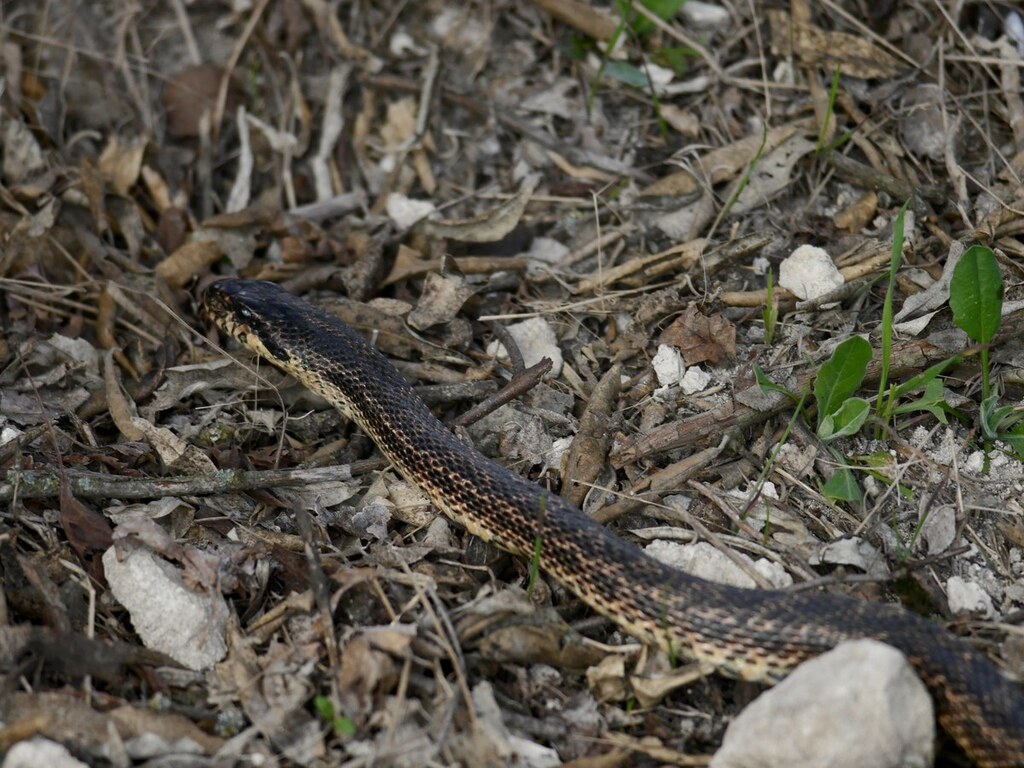
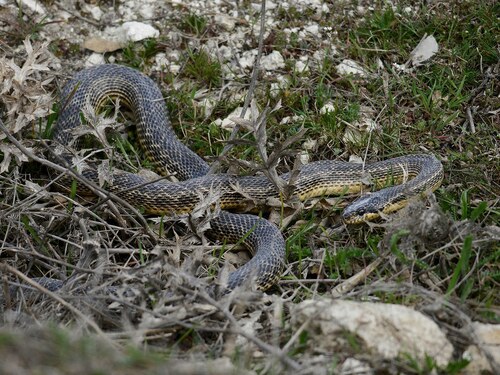
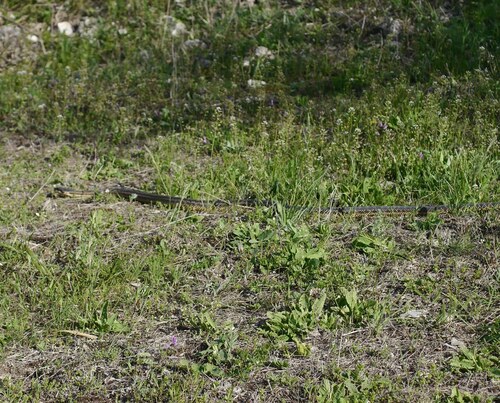
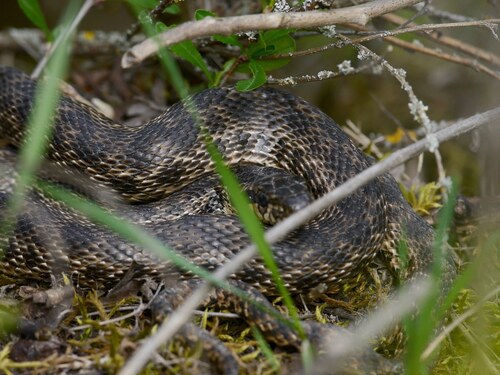
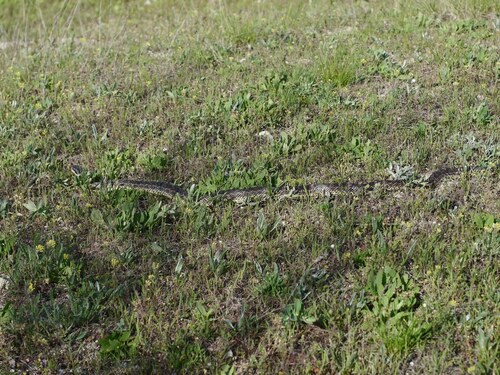
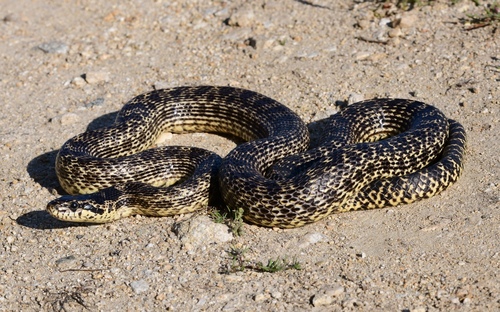
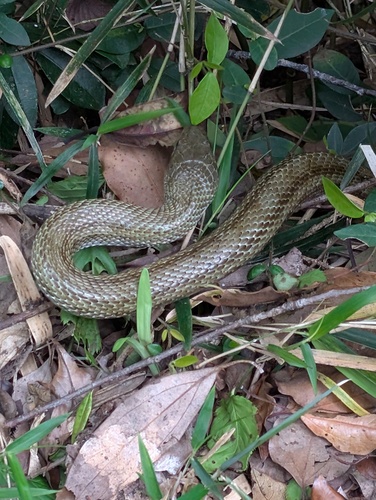
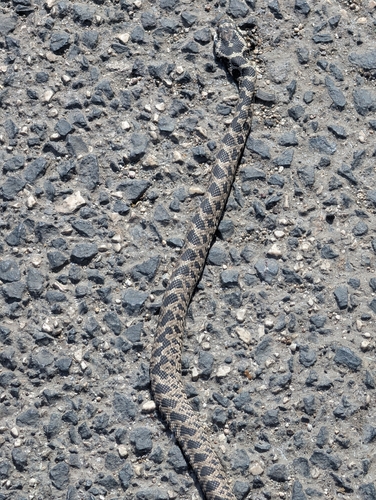
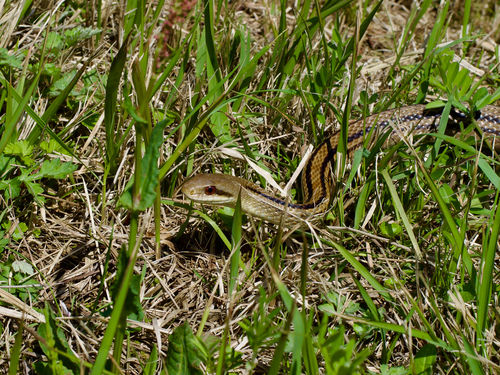
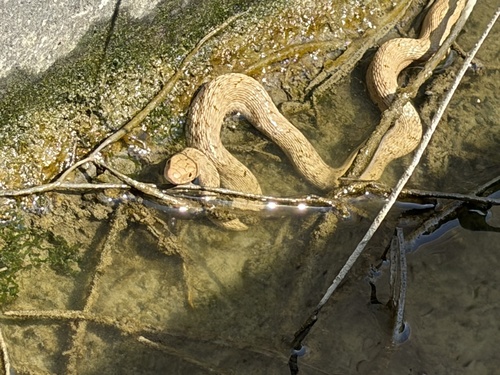
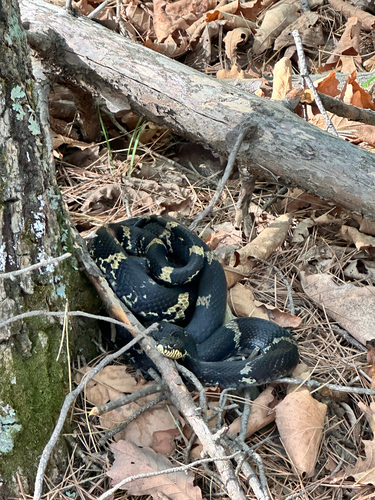
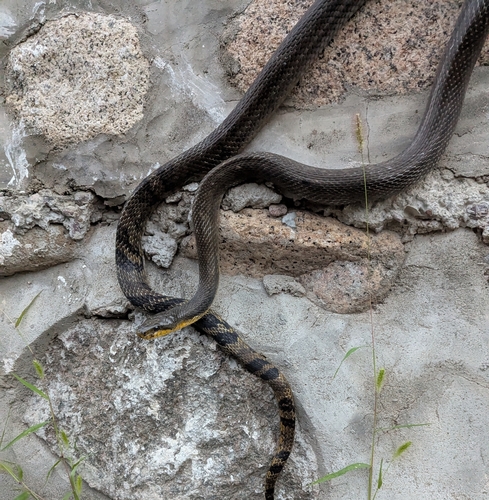
6 photographs of the East-Four-lined Ratsnake. © Roman.
The East-Four-lined Ratsnake (Elaphe sauromates) is a non-venomous snake in the Colubridae family, recorded in 15 countries.
- Family
- Colubridae
About the East-Four-lined Ratsnake
The blotched snake (Elaphe sauromates), a member of the Colubrinae subfamily of the family Colubridae, is a nonvenomous snake found in Eastern Europe. It grows up to 260 cm (8 ft 6 in) in length but the medium is 120 to 160 cm. It is one of the largest European snakes. The species has been of cultural and historical significance for its role in ancient Greek and Roman mythology and derived symbolism.
For symbolism of the blotched snake, see Serpent (symbolism).
Description
The blotched snake is a large snake reaching a total body length of up to 2 m, however, in 1930, Constantin Kirițescu mentioned a 2.60 m specimen captured by Dombrovsky in 1901 at Cernavodă, which he personally studied. Some consider that this account takes inspiration from the local legends about giant snakes.
The ratio of the head and trunk length to tail length is 3.9 in males and 5.1 in females. The width of the body is 5–6 cm. The head is weakly separated from the neck. The eye is medium in size with a round pupil. The maxillary teeth are of equal length.
The blotched snake has 25 dorsal scales (rarely 23 or 27). The lateral scales are smooth. The ventral scales number 187–224 in males and 205–234 in females. They have 56-90 subcaudals. In most cases the anal plate is divided.
Each scale has a dark brown spot on a yellowish-white or pinkish-white background. The dark brown pigment predominates. The color of the back varies – adults usually have a tan or reddish-brown dorsal coloration, and juveniles gray or yellowish-brown. On the back there are large, irregular (rhombic or oval), slightly elongated transversally, dark spots. These spots are disposed in 4 rows (4-5 rows in juveniles) longitudinally. On the ventral side is a row of smaller dark spots of the same color as the back which tend to form a continuous dark stripe.
Some scales on the sides of the body have a reddish or orange color. This type of pattern is noticeable in young specimens. The upper part of the head and nape in adults is uniformly dark brown or grey-brown.
Geographic range
It is found in southeastern Europe (Albania, southeastern Romania, Republic of Moldova, southeastern Bulgaria, northeastern Greece, southern Ukraine, European Turkey), western Levant (Syria, Lebanon, Israel), southwestern Russia (Dagestan), Caucasus (Georgia, Armenia, Azerbaijan), southwestern Kazakhstan, northwestern Turkmenistan, and western Iran.
Habitat
The blotched snake is found in steppes, semi-deserts, premontane and montane meadows, on rocky slopes covered with shrubs and in riparian forests. It can live up to 2500 m above sea level (in the Caucasus). It is often spotted near houses, in vineyards and orchards.
Adapted from Wikipedia, available under CC BY-SA.
Frequently asked: East-Four-lined Ratsnake
- Is the East-Four-lined Ratsnake venomous?
- No. The East-Four-lined Ratsnake (Elaphe sauromates) is non-venomous and is not considered dangerous to humans. Like most snakes, it will retreat rather than bite when given the chance.
- Is the East-Four-lined Ratsnake poisonous?
- Snakes are venomous, not poisonous. "Poisonous" means harmful to eat or touch; "venomous" means injecting toxins through a bite. The East-Four-lined Ratsnake is neither poisonous nor venomous.
- Is the East-Four-lined Ratsnake dangerous?
- The East-Four-lined Ratsnake is not dangerous to humans. It has no medically significant venom and bites only defensively if cornered or handled.
- Where does the East-Four-lined Ratsnake live?
- The East-Four-lined Ratsnake has verified records in 15 countries, including Ukraine, Bulgaria, Russian Federation. See the distribution section below for its full range.
Where it is found
More Colubridae snakes
Classification
How scientists group this snake, from the broadest category down to the exact species. Each step narrows to its closest relatives.
- OrderThe broad group of scaled reptiles: all snakes and lizards
- Squamata
- FamilyA group of related snakes that share key traits
- Colubridae
- GenusA close-knit group of very similar species
- Elaphe
- SpeciesThis exact snake, named in the two-part scientific name
- Elaphe sauromates
Keep learning
- What to Do If You Find a SnakeFound a snake at home or on a trail? Here is how to stay calm, give it space, identify it safely, and know when to call a professional.
- Venomous vs Nonvenomous: How to Tell the DifferenceThe folk rules for telling venomous snakes apart, where each one fails, and why location-based identification beats guessing by sight.
- What Is a Snake? Anatomy and the BasicsA clear overview of what makes a snake a snake: limbless body plan, anatomy, evolution from lizards, species diversity, and why they are ectothermic.
- How to Keep Snakes Out of Your Yard and HomeA practical guide to keeping snakes out of your yard and home using habitat changes that work, plus what to skip and what to do if one shows up.
Distribution from GBIF & iNaturalist. Venom status per CDC. Background: Wikipedia. Informational only. Never handle a snake to identify it.