
Kyrgyzstan
Snakes in Kyrgyzstan
10+ snake species have been recorded in Kyrgyzstan, 6 venomous.
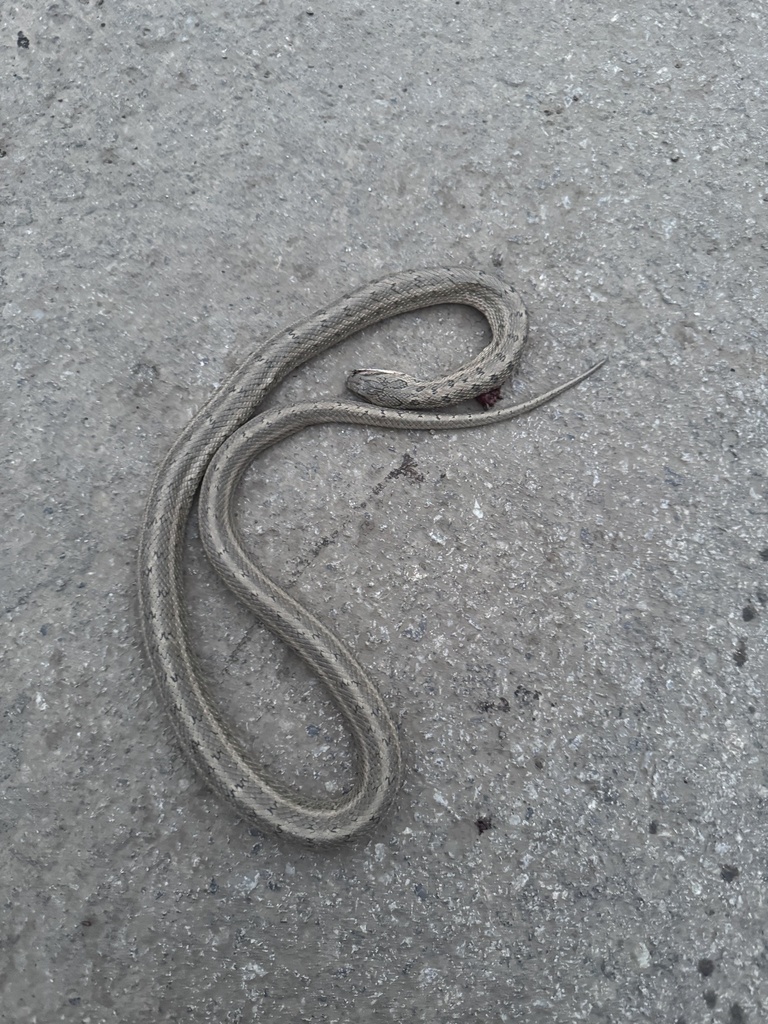
Snakes of Kyrgyzstan
Kyrgyzstan records 10+ snake species in our database, and 6 of them are venomous. The great majority of the country's snakes, however, are harmless. This is a mountainous, landlocked nation defined by the Tian Shan and Pamir-Alai ranges, with high alpine zones, semi-desert lowlands, river valleys, and the shores of large lakes such as Issyk-Kul. That range of elevation and climate, from hot dry steppe to cold high country, sets clear limits on where snakes live and concentrates them in warmer valleys, foothills, and rocky slopes.
Habitat shapes the fauna more than anything else here. Snakes are most active in spring and summer, retreating to burrows and rock crevices through the long, cold winters. Sun-warmed rocky hillsides, irrigated farmland, riverbanks, and the margins of grassland are the places where encounters are most likely, while the highest peaks hold few or no reptiles at all.
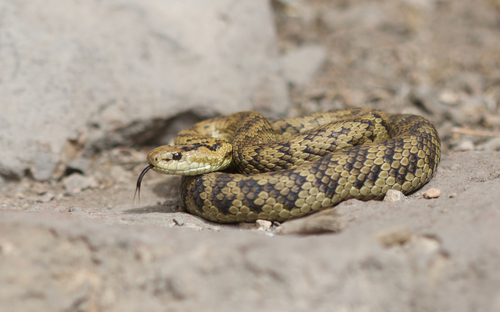
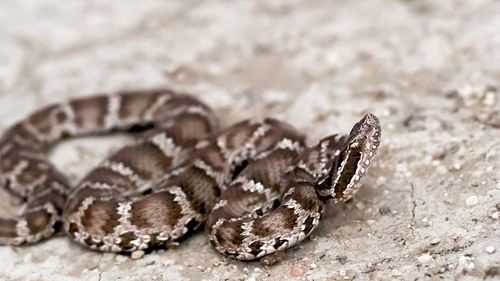
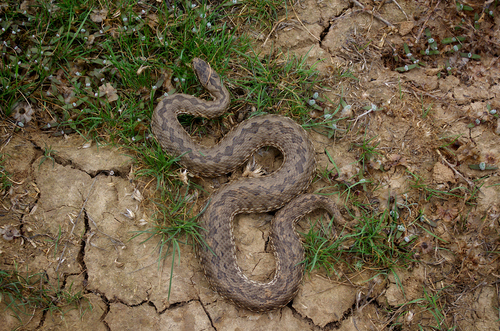
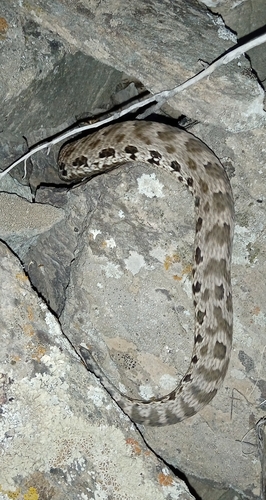
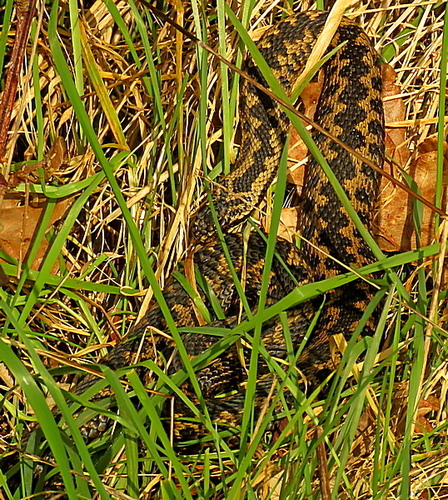
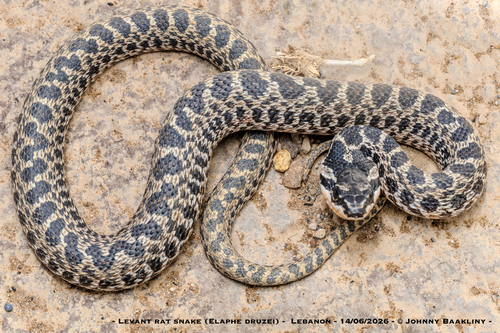
The venomous snakes present belong to two main groups. The vipers (family Viperidae) are the principal medical concern, including true vipers found in steppe and foothill habitat and the pit viper of Central Asia known as the Halys or Pallas's pit viper, which favors rocky slopes and dry open ground. The country also has rear-fanged colubrids such as the cat snakes, which carry mild venom delivered by grooved back teeth and pose little danger to people. The vipers are the species that matter for human safety because they have front fangs and can deliver a medically significant bite.
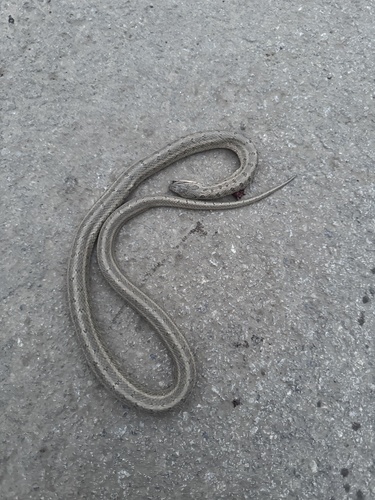
The harmless majority covers most of what you will actually see. These include various colubrid snakes such as racers and whip snakes, the dice snake and other water-associated species near rivers and lakes, and sand-dwelling snakes of the drier lowlands. They are non-venomous to humans and play an important ecological role, controlling rodent and insect populations and serving as prey for birds of prey and other predators. A healthy snake population is a sign of a functioning landscape.
On safety, the honest summary is that most snakes in Kyrgyzstan are harmless and bites are uncommon, but the vipers can cause serious envenomation and should be treated as a real risk. Never handle a wild snake, and never assume a snake is safe to pick up. If a bite occurs, the correct response is to keep the person calm and still and get to a hospital immediately, because professional medical care and antivenom are the only proven treatment. In the United States contact Poison Control at 1-800-222-1222, and elsewhere call your local emergency number.
Snakes in Kyrgyzstan: FAQ
- Are there venomous snakes in Kyrgyzstan?
- Yes. 6 venomous snake species have verified records in Kyrgyzstan, including Gloydius variegatus, Halys Pit Viper, Steppe Viper, Karaganda pitviper. Most snakes in Kyrgyzstan, however, are harmless.
- How many snake species live in Kyrgyzstan?
- 10+ snake species have verified records in Kyrgyzstan, of which 6 are venomous.
- What is the most commonly seen snake in Kyrgyzstan?
- The Steppe Ratsnake is the most frequently reported snake in Kyrgyzstan, based on verified wildlife observations.
- What should I do if I see a venomous snake in Kyrgyzstan?
- Keep your distance and do not try to catch or kill it. Most bites happen when people handle or corner a snake. If someone is bitten, contact local emergency services or poison control immediately.
Venomous snakes in Kyrgyzstan

Every snake recorded in Kyrgyzstan
10+ species across 4 families, grouped by family. Venomous flagged.
Viperidae (6)
Colubridae (5)
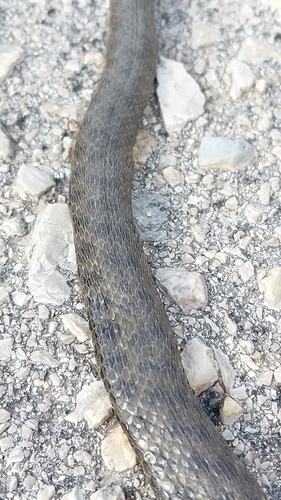
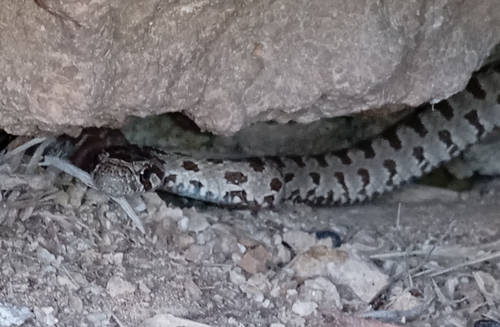
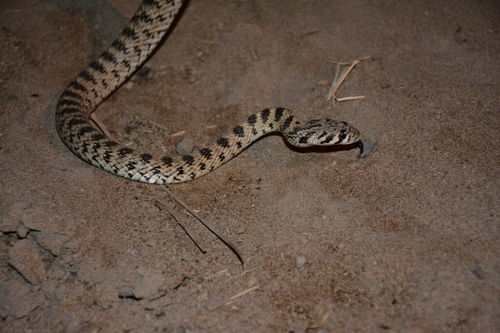
Boidae (1)
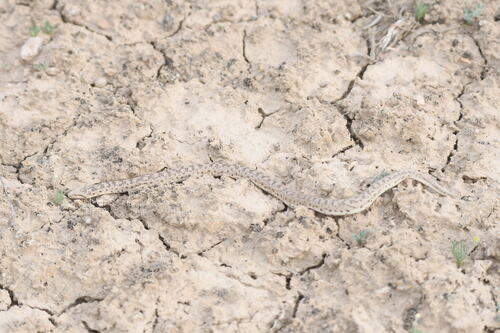
Psammophiidae (1)
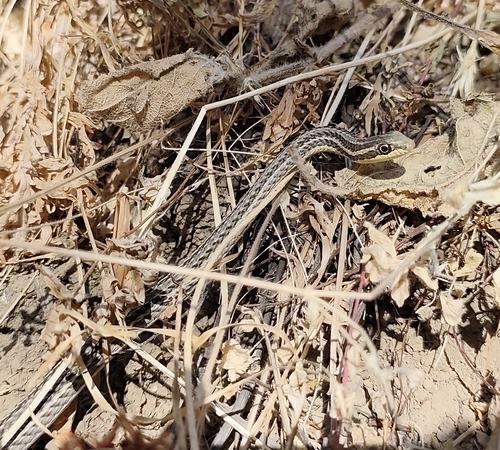
Compiled from verified GBIF & iNaturalist observations. "How often seen" reflects how frequently a snake is reported here, not how dangerous it is. Informational only.
Keep learning
- Are Snakes Dangerous? The Real Risk, in PerspectiveMost snakes are harmless and avoid people. Here is the honest picture of snakebite risk worldwide and how to lower your own.
- Snakebite First Aid: What to Do (and What Never to Do)A clear, CDC-based guide to snakebite first aid: the steps that help, the popular myths that hurt, and how to tell a serious bite from a minor one.
- Venomous vs Nonvenomous: How to Tell the DifferenceThe folk rules for telling venomous snakes apart, where each one fails, and why location-based identification beats guessing by sight.
- What to Do If You Find a SnakeFound a snake at home or on a trail? Here is how to stay calm, give it space, identify it safely, and know when to call a professional.