
Elapidae
Yellow-bellied Sea Snake
VenomousHydrophis platurus
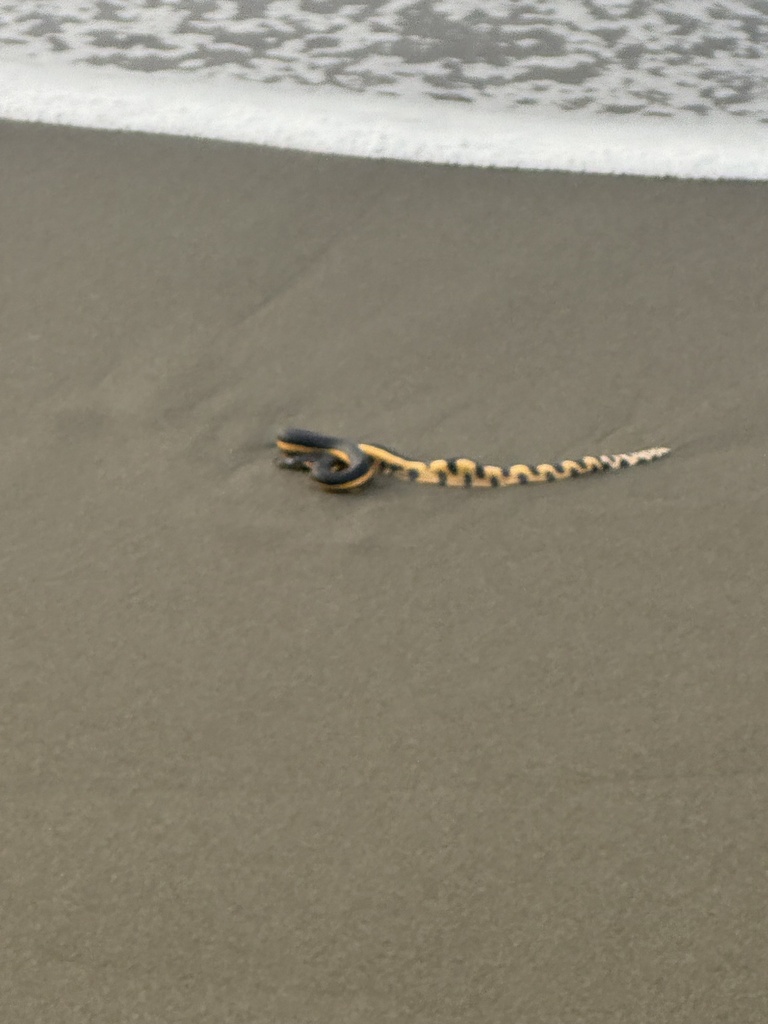
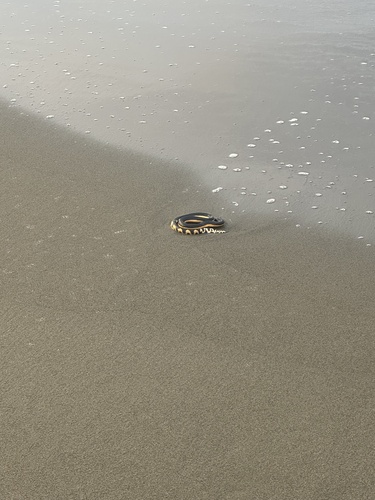
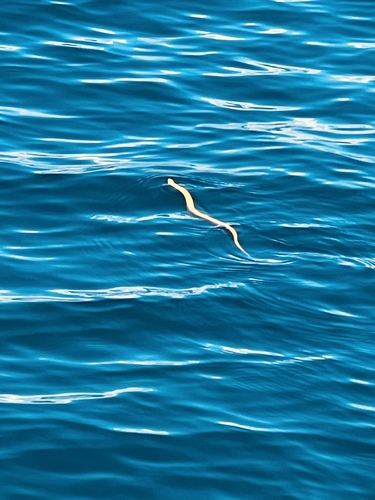
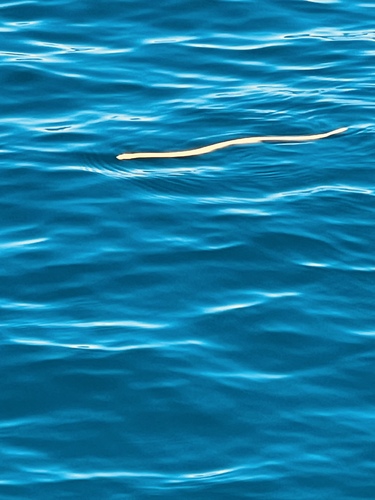
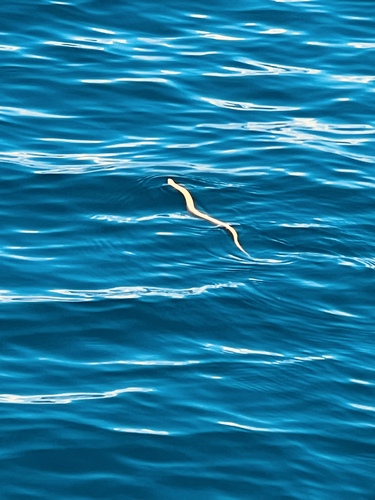
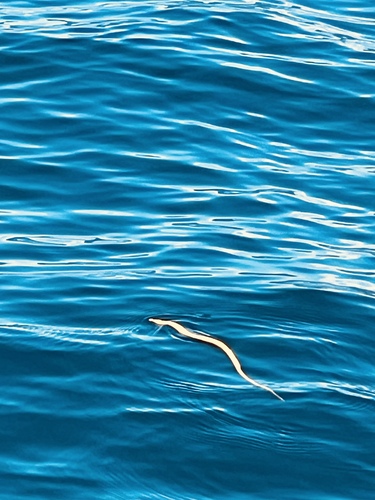
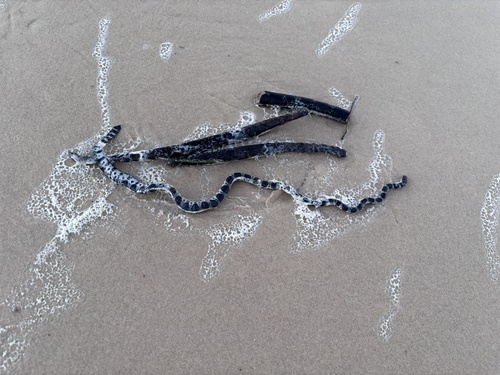
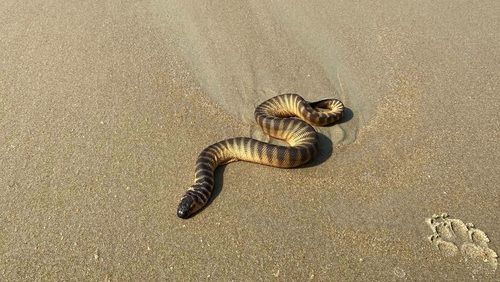
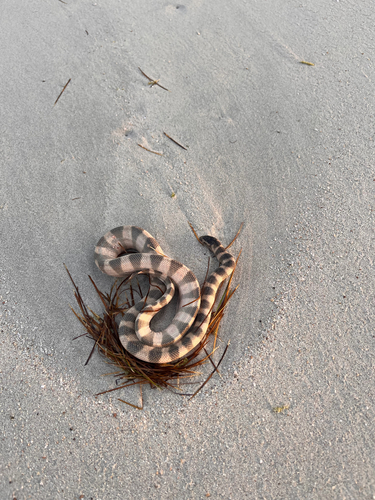
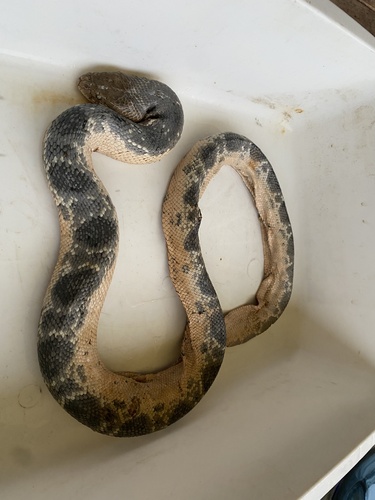
6 photographs of the Yellow-bellied Sea Snake. © Greg Gurley.
The Yellow-bellied Sea Snake (Hydrophis platurus) is a venomous snake in the Elapidae family, recorded in 67 countries.
If you are bitten
This is a venomous snake. Treat any bite as a medical emergency: stay calm, keep the bitten limb still and roughly level with the heart, remove rings and tight clothing, and get to emergency care immediately. Do not apply a tourniquet, cut the wound, apply ice, or try to suck out venom. Call your local emergency number or poison center.
- Family
- Elapidae
- Danger
- high
About the Yellow-bellied Sea Snake
The yellow-bellied sea snake (Hydrophis platurus) is an extremely venomous species of snake from the subfamily Hydrophiinae (the sea snakes) found in tropical oceanic waters around the world except for the Atlantic Ocean. For many years, it was placed in the monotypic genus Pelamis, but recent molecular evidence indicates it lies within the genus Hydrophis.
Taxonomy
In 1766, Linnaeus published the original description of the yellow-bellied sea snake, naming it Anguis platura (Anguis meaning snake). In 1803, François Marie Daudin created the new genus Pelamis and assigned this species to it, referring to it as Pelamis platuros. In 1842, Gray described what he thought was a new species and called it Pelamis ornata (subsequently P. ornata became a synonym of P. platura). The commonly used genus name Pelamis is derived from the Ancient Greek word for "tunny fish", which presumably refers to the habitat or what Daudin thought they ate. The specific name platurus is a combination of the Ancient Greek words platys "flat" and oura "tail", referring to the flattened tail. The word Pelamis is a feminine noun and means young or small tunny fish. In 1872, Stoliczka introduced the name Pelamis platurus (still the most used scientific name by scientists today), but used the incorrect ending -us instead of -a which a feminine noun requires. A few recent examples exist of scientists' beginning to use the grammatically correct name Pelamis platura, e.g., Bohme 2003 and the Reptile Database with its page headed Pelamis platura (Linnaeus, 1766), which includes an extensive synonymy of the different scientific names which have been used for the yellow-bellied sea snake. The same rules apply for the most recent taxonomic name of Hydrophis platurus.
To further complicate the nomenclature, the taxonomic status of sea snakes is still under review, with recent authors suggesting a dismantling of monotypic genera, such as Pelamis, in favour of a single genus, Hydrophis, in order to reduce paraphyly and better reflect phylogenetic relationships.
Other common names are yellowbelly sea snake or pelagic sea snake.
Evolution
Viviparous sea snakes are a monophyletic group (Hydrophiini) that diverged from the front-fanged Australasian venomous snakes (Elapidae) about 10 million years ago. The yellow-bellied sea snake is a part of the rapidly radiating Hydrophis group.
Description
The yellow-bellied sea snake, as the name implies, has a distinctive bicolor pattern with a yellow underbelly and brown back, making it easily distinguishable from other sea snake species. Yellow-bellied sea snakes, like many other species of sea snake, are fully adapted to living their whole lives at sea: mating, eating and giving birth to live young (ovoviviparous). Adaptations to aquatic life include the reduced ventral scale size, laterally compressed body and paddle-tail for swimming, valved nostrils and palatine seal for excluding seawater, and cutaneous gas exchange for prolonging dive times. Yellow-bellied sea snakes have semi-permeable skin which extracts oxygen from the seawater through a process of cutaneous respiration while diving and swimming at the surface of the water. Sea snakes also have a special salt gland located in the lower jaw that was formerly believed to filter out salt from the surrounding seawater but has been found not to be used for that purpose, as sea snakes drink fresh water only.
Adapted from Wikipedia, available under CC BY-SA.
Local and regional names
The Yellow-bellied Sea Snake is known by these names across the regions where it lives:
- Arabic
- افعى المحيطات, ثعبان البحر أصفر البطن, ثعبان البحر المفتوح
- Chinese
- 長吻海蛇, 长吻海蛇, 黑背海蛇
- Czech
- vodnář dvoubarvý
- Danish
- Gulbuget Havslange
- English
- Golfo Dulce yellow sea snake, Pelagic Sea Snake, Yellow-Bellied Sea Snake, Pelagic Sea Snake, Yellow-bellied Seasnake, Yellowbelly Sea Snake
- French
- Hydrophide bicolore, Hydrophide bicolore , Pélamide bicolore, Serpent-Grenouille, Pélamide bicolore, Pélamide ou Serpent marin noir et jaune, Serpent marin jaune, Serpent marin noir et jaune
- German
- Plättchen Seeschlange, Plättchen-Seeschlange
- Hungarian
- sárgahasú tengerikígyó
- Italian
- Idrofide dal ventre giallo, Idrofide giallonero, Idrofide pelagico, Serpente di mare dal ventre giallo, Serpente di mare giallonero, Serpente di mare pelagico
- Japanese
- セグロウミヘビ
- Korean
- 바다뱀
- Marathi
- पिवळ्या-पोटाचा समुद्रसर्प
- Polish
- pęz dwubarwny
- Portuguese
- Serpente-marinha-pelágica
- Russian
- Двухцветная пеламида, Двухцветный гидрофис
- Spanish
- Culebra del Mar, Serpiente Marina Amarilla, Serpiente marina pelágica, Serpiente-marina pelágica, culebra de mar, serpiente pelágica
- Thai
- งูชายธงหลังดำ
Frequently asked: Yellow-bellied Sea Snake
- Is the Yellow-bellied Sea Snake venomous?
- Yes. The Yellow-bellied Sea Snake (Hydrophis platurus) is venomous and belongs to the Elapidae family (cobra, mamba, coral or sea snake). Its bite is considered high risk to people. Treat any bite as a medical emergency.
- Is the Yellow-bellied Sea Snake poisonous?
- Snakes are venomous, not poisonous. "Poisonous" means harmful to eat or touch; "venomous" means injecting toxins through a bite. The Yellow-bellied Sea Snake is venomous, delivering venom through a bite.
- Is the Yellow-bellied Sea Snake dangerous?
- This is a venomous snake. Treat any bite as a medical emergency: stay calm, keep the bitten limb still and roughly level with the heart, remove rings and tight clothing, and get to emergency care immediately. Do not apply a tourniquet, cut the wound, apply ice, or try to suck out venom. Call your local emergency number or poison center.
- Where does the Yellow-bellied Sea Snake live?
- The Yellow-bellied Sea Snake has verified records in 67 countries, including Australia, Mexico, Panama. See the distribution section below for its full range.
If you are bitten by the Yellow-bellied Sea Snake
Do
- Get away from the snake and stay calm. Most bites worsen when people panic or try again to handle the snake.
- Call 911 or Poison Control (1-800-222-1222) right away. Antivenom works best when given early.
- Note the time of the bite and, from a safe distance, the snake's color and pattern, a phone photo is enough. Do not chase it.
- Keep the bitten limb still and at roughly heart level. Sit or lie down and limit movement.
- Remove rings, watches, and tight clothing near the bite before swelling starts.
- Gently wash the bite with soap and water and cover it with a clean, dry dressing.
Do not
- Do not cut the wound or try to suck out the venom.
- Do not apply a tourniquet or ice.
- Do not drink alcohol or caffeine.
- Do not take aspirin or ibuprofen, they can worsen bleeding. Acetaminophen is safer for pain.
- Do not try to catch or kill the snake. A dead snake can still bite by reflex.
First-aid guidance adapted from the U.S. Centers for Disease Control and Prevention (CDC NIOSH), Venomous Snakes. Educational only; always follow the instructions of emergency responders.
Where it is found
By U.S. state
More Elapidae snakes


Classification
How scientists group this snake, from the broadest category down to the exact species. Each step narrows to its closest relatives.
Keep learning
- Are Snakes Dangerous? The Real Risk, in PerspectiveMost snakes are harmless and avoid people. Here is the honest picture of snakebite risk worldwide and how to lower your own.
- Snakebite First Aid: What to Do (and What Never to Do)A clear, CDC-based guide to snakebite first aid: the steps that help, the popular myths that hurt, and how to tell a serious bite from a minor one.
- Venomous vs Nonvenomous: How to Tell the DifferenceThe folk rules for telling venomous snakes apart, where each one fails, and why location-based identification beats guessing by sight.
- What to Do If You Find a SnakeFound a snake at home or on a trail? Here is how to stay calm, give it space, identify it safely, and know when to call a professional.
Distribution from GBIF & iNaturalist. Venom status per CDC. Background: Wikipedia. Informational only. Never handle a snake to identify it.