
Genus · Elapidae
Types of sea snakes
30+ species make up the genus Hydrophis, the snakes commonly called sea snakes. All of them are venomous.
About sea snakes
Hydrophis is the largest genus of sea snakes, a group of fully marine elapids built for a life spent in the open ocean. They are relatives of cobras, carry potent neurotoxic venom, and almost never trouble people who leave them alone.
Hydrophis belongs to the family Elapidae, the same lineage as cobras, kraits, and mambas. What sets the genus apart is total commitment to the sea. These snakes are superbly adapted to ocean life: the tail is flattened sideways into a paddle that drives them through the water, the nostrils sit high and close with valves to keep the sea out, and the animal can absorb some oxygen directly through its skin. Excess salt is dealt with by a special gland under the tongue, so a Hydrophis can stay at sea without ever needing fresh water.
The genus ranges through the warm coastal waters of the Indian and Pacific Oceans, from the Persian Gulf eastward across South and Southeast Asia to the coasts of Australia. With 30+ species recorded in our database, Hydrophis is a large and varied group, including the Yellow-bellied Sea Snake, the Olive-headed Sea Snake, the Elegant Sea Snake, the Slender-necked Sea Snake, and the Beaked Sea Snake. In the field, the typical look is a banded marine snake with that giveaway paddle-shaped tail. Most species must surface to breathe, so they are often seen at the top of the water.
Ecologically these are ocean predators. They hunt fish and eels through reefs and shallow waters, and many species give live birth at sea, completing their entire life cycle in the water without ever crawling onto land. That marine existence is exactly why encounters with people are uncommon. Sea snakes are generally not aggressive toward swimmers or divers, and most serious bites happen to fishermen who handle the snakes while emptying their nets, when a trapped animal is grabbed by hand.
All 30+ species in this genus are venomous, and the venom is potently neurotoxic. The Beaked Sea Snake in particular is responsible for a large share of the serious sea-snake bites recorded across the region. A worrying feature of these bites is that they can be nearly painless at the start, with little swelling at the wound, so the danger is easy to underestimate before neurotoxic symptoms begin to set in.
Treat every sea snake as something to look at, never to touch. Do not handle a sea snake found tangled in a net or washed up on a beach, even one that appears dead or sluggish. If a bite occurs, regard it as a medical emergency: get the person to a hospital straight away, because the serious effects of the venom can be delayed and proper treatment relies on hospital care and antivenom.
Hydrophis belongs to the Elapidae family (Cobras, mambas, coral & sea snakes). Front-fanged venomous snakes, many with potent neurotoxic venom. Usually slender with a head barely wider than the neck and fixed front fangs (not the folding fangs of vipers). Coral snakes are boldly ringed; sea snakes have a flattened, paddle-like tail.
Danger: All elapids are venomous and the family is responsible for a large share of fatal snakebites worldwide. Many are shy, but bites can be life-threatening. Treat any bite as a medical emergency.
All species (33)
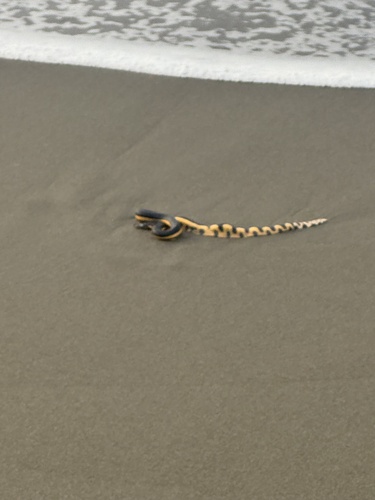 Yellow-bellied Sea SnakeHydrophis platurusVenomous
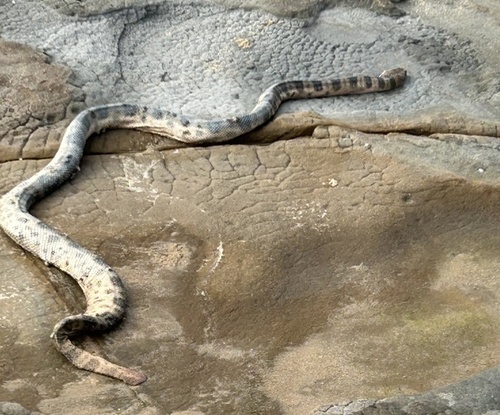 Olive-headed Sea SnakeHydrophis majorVenomous
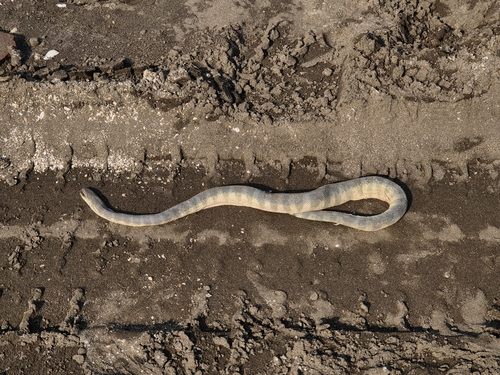 Beaked Sea SnakeHydrophis schistosusVenomous
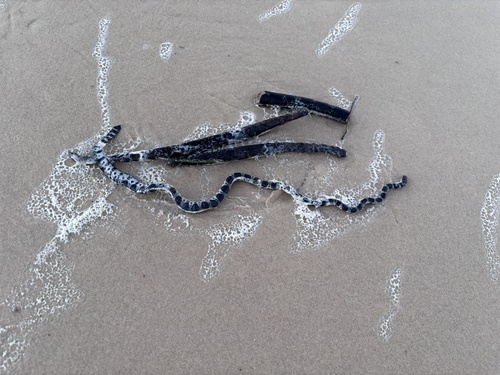 Elegant Sea SnakeHydrophis elegansVenomous
 Slender-necked Sea SnakeHydrophis coggeriVenomous
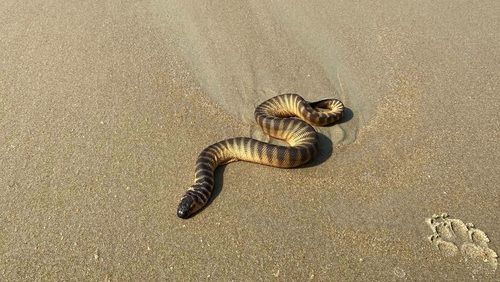 Spine-bellied Sea SnakeHydrophis curtusVenomous
 Horned Sea SnakeHydrophis peroniiVenomous
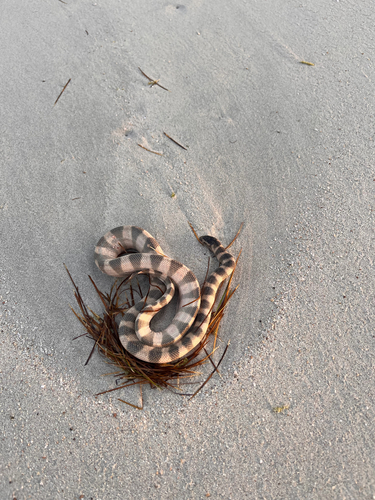 Persian Gulf Sea SnakeHydrophis lapemoidesVenomous
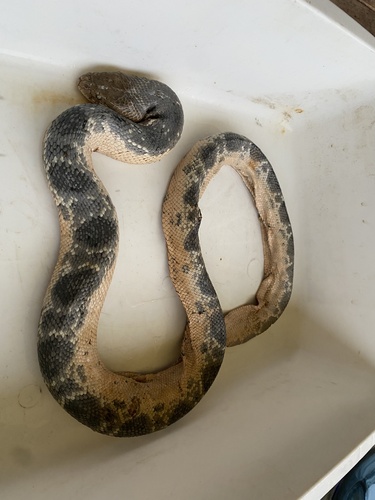 Stokes' Sea SnakeHydrophis stokesiiVenomous
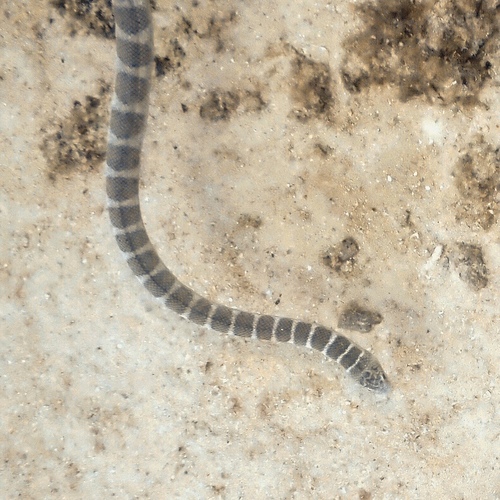 Ornate Sea SnakeHydrophis ornatusVenomous
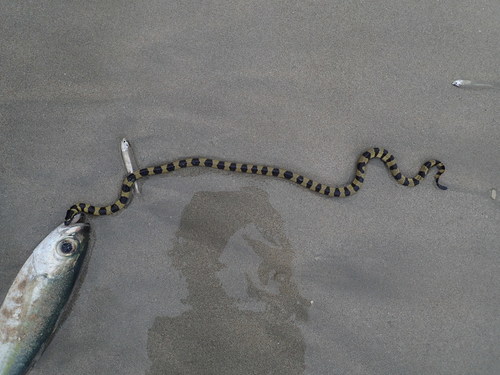 Annulated Sea SnakeHydrophis cyanocinctusVenomous
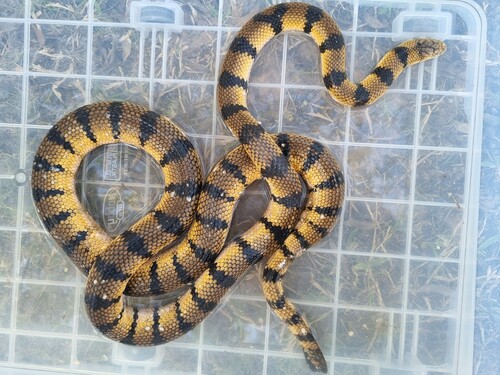 Yellow Sea SnakeHydrophis spiralisVenomous
 Small-headed Sea SnakeHydrophis macdowelliVenomous
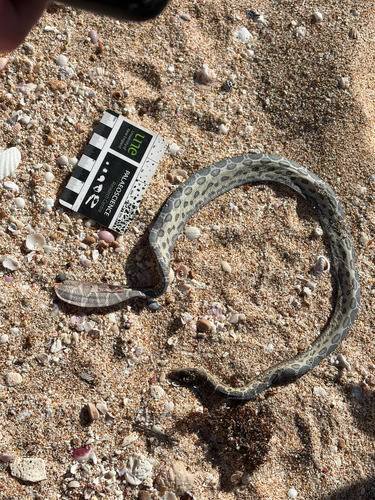 Spotted Sea SnakeHydrophis ocellatusVenomous
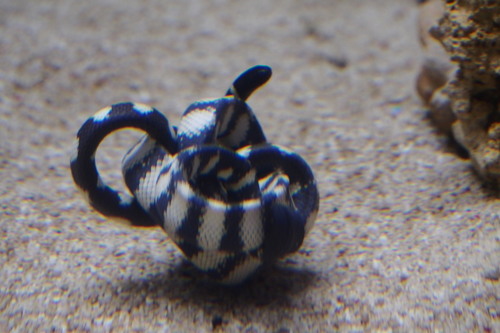 Slender-necked Sea SnakeHydrophis melanocephalusVenomous
 Spectacled Sea SnakeHydrophis kingiiVenomous
 Dwarf Sea SnakeHydrophis caerulescensVenomous
 Striped Sea SnakeHydrophis fasciatusVenomous
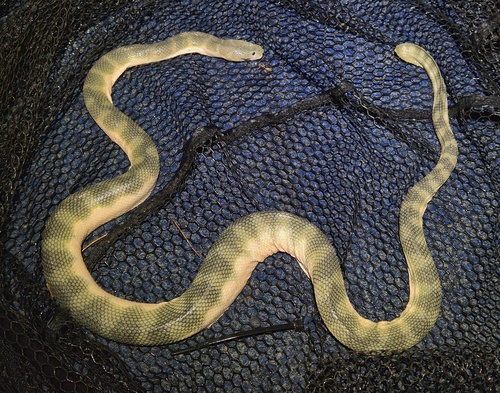 Australian Beaked Sea SnakeHydrophis zweifeliVenomous
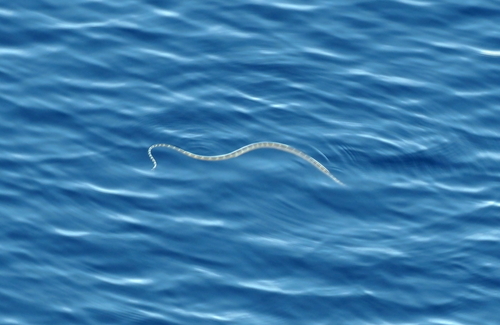 Black-headed Sea SnakeHydrophis atricepsVenomous
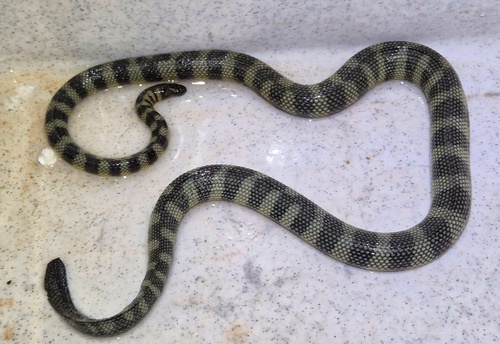 Rough-scaled Sea SnakeHydrophis donaldiVenomous
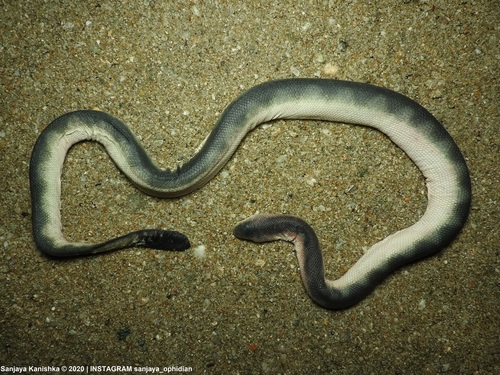 Viperine Sea SnakeHydrophis viperinusVenomous
 Fine-spined Sea SnakeHydrophis czeblukoviVenomous
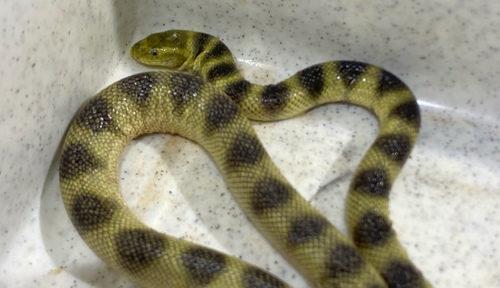 Large-headed Sea SnakeHydrophis pacificusVenomous
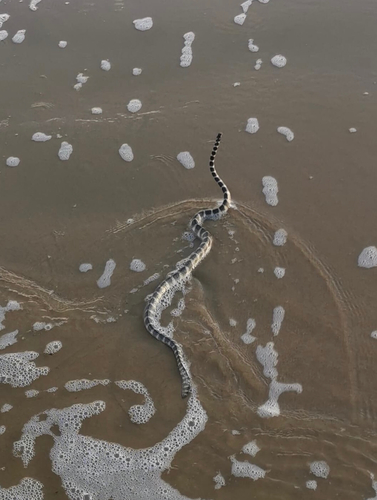 Brooke's Small-headed Sea SnakeHydrophis brookiiVenomous
 Kloss's Sea SnakeHydrophis klossiVenomous
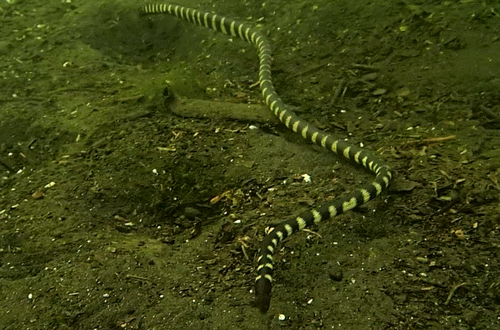 Lake Taal SnakeHydrophis semperiVenomous
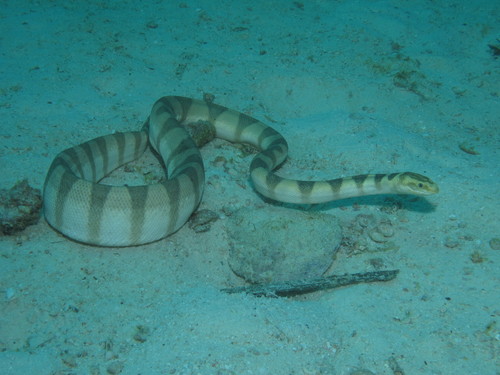 Lambert's Sea SnakeHydrophis lambertiVenomous
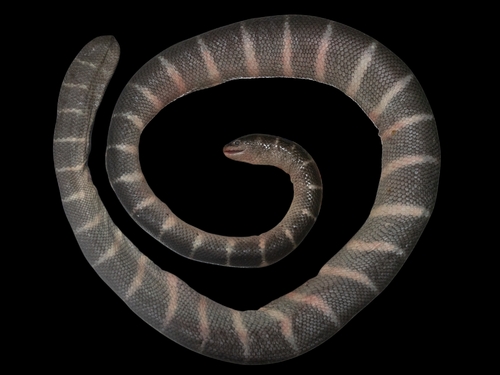 Peters' Sea SnakeHydrophis bituberculatusVenomous
 Faint-banded Sea SnakeHydrophis belcheriVenomous
- No photoSlender Sea SnakeMicrocephalophis gracilisVenomous
- No photoKalimantan Sea SnakeHydrophis sibauensisVenomous
- No photoRussell's Sea SnakeHydrophis obscurusVenomous
Keep learning
- Venomous vs Nonvenomous: How to Tell the DifferenceThe folk rules for telling venomous snakes apart, where each one fails, and why location-based identification beats guessing by sight.
- Are Snakes Dangerous? The Real Risk, in PerspectiveMost snakes are harmless and avoid people. Here is the honest picture of snakebite risk worldwide and how to lower your own.
- Snake Venom Explained: How It Works and WhyWhat snake venom actually is, why it evolved, the main venom types, fang delivery, how antivenom works, and why ranking the most venomous snake is hard.
- How Snakes Move, Hunt, and EatHow snakes move without legs, hunt as ambushers or active foragers, kill by constriction or venom, and swallow prey wider than their head.