
Pythonidae
Ball Python
HarmlessPython regius
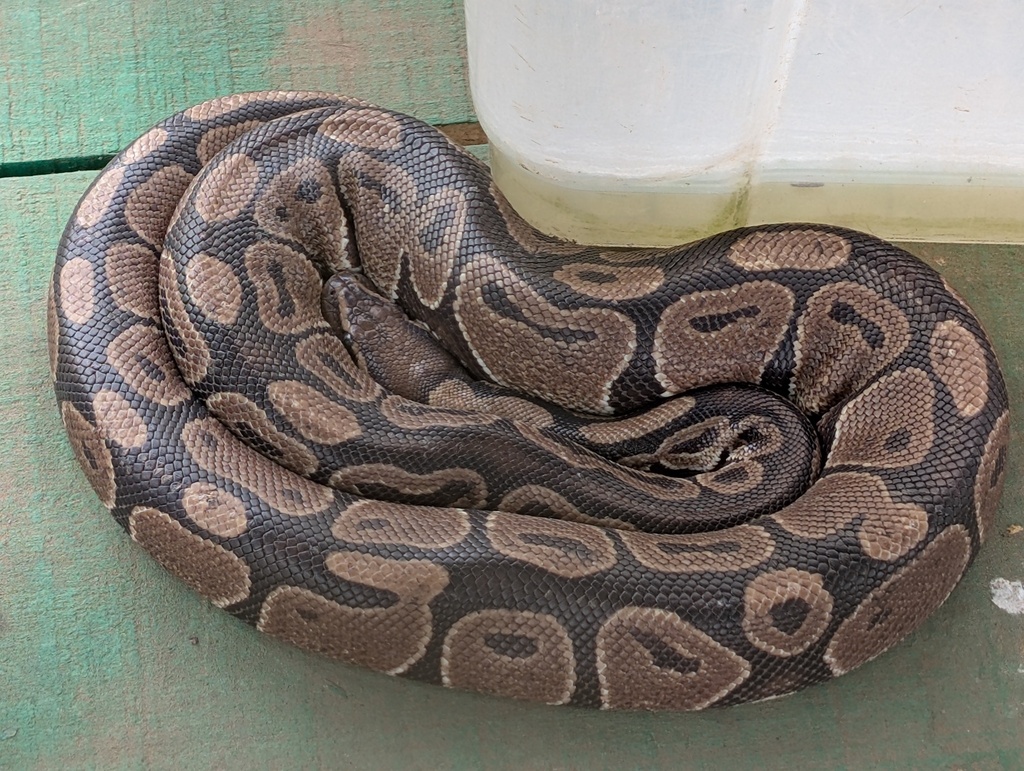
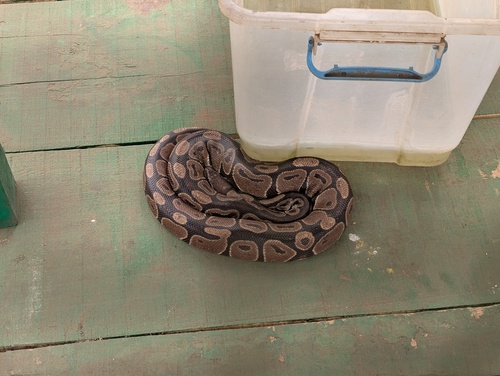
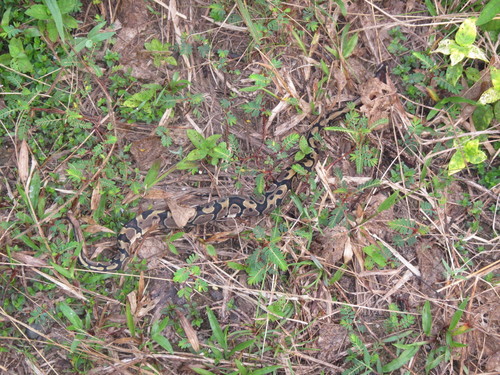
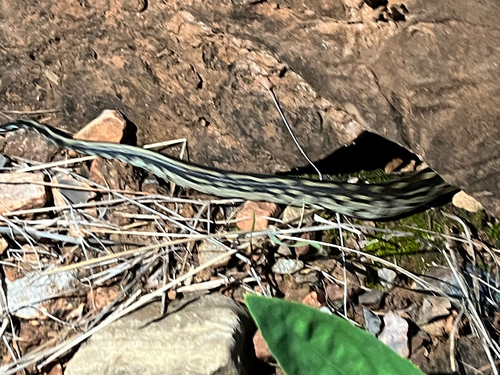
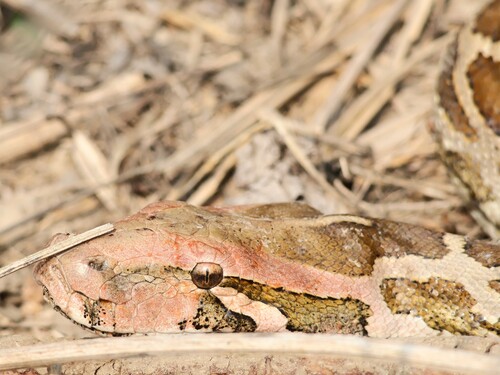
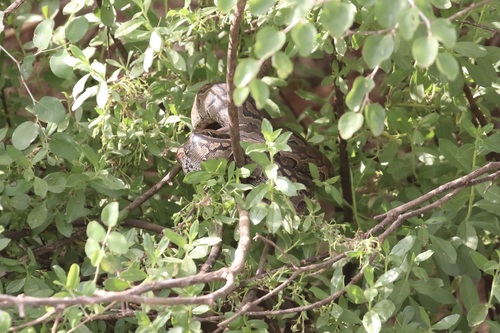
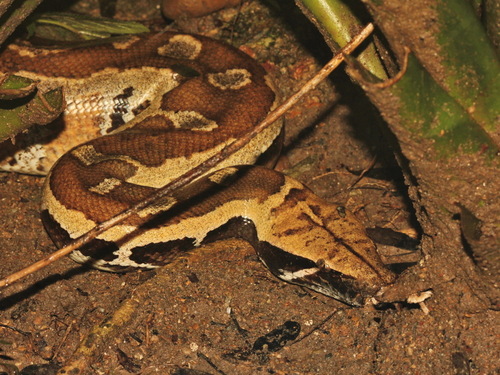
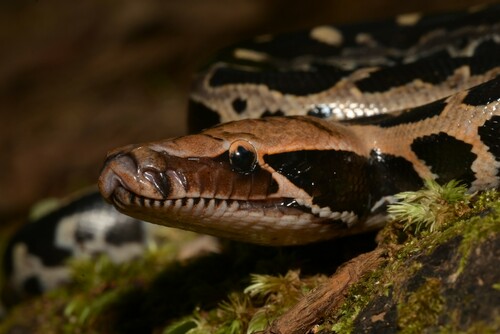
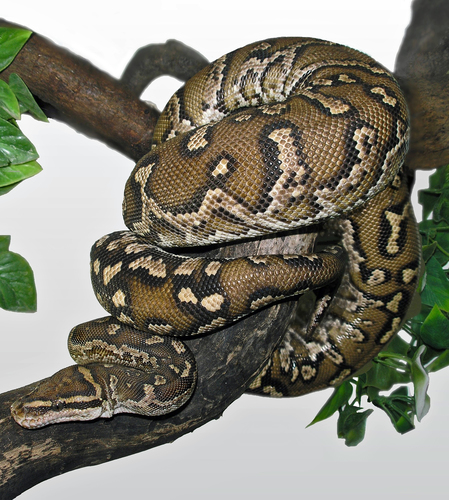
3 photographs of the Ball Python. © Zac Peterson.
The Ball Python (Python regius) is a non-venomous snake in the Pythonidae family, recorded in 42 countries.
- Family
- Pythonidae
About the Ball Python
The ball python (Python regius), also called the royal python, is a python species native to West and Central Africa, where it lives in grasslands, shrublands and open forests. This nonvenomous constrictor is the smallest of the African pythons, growing to a maximum length of 182 cm (72 in). The name "ball python" refers to its tendency to curl into a ball when stressed or frightened.
Taxonomy
The specific name regius is a Latin adjective meaning "royal". In 1735 Albertus Seba described a specimen of Python regius, brought from the coast of Mozambique, as Serpens Phyticus; Africanus, prodigiofus, ab indigenis divino honore cullus. Based on Seba's work, George Shaw proposed the scientific name Boa regia in 1802. The generic name Python was proposed by François Marie Daudin in 1803 for non-venomous flecked snakes. In 1844 André Marie Constant Duméril and Gabriel Bibron proposed the species' current scientific name, Python regius.
Description
The ball python is black, or albino and dark brown with light brown blotches on the back and sides. Its white or cream belly is scattered with black markings. It is a stocky snake with a relatively small head and smooth scales. It reaches a maximum adult length of 182 cm (72 in). Males typically measure eight to ten subcaudal scales, and females typically measure two to four subcaudal scales. Females reach an average snout-to-vent length of 116.2 cm (45.7 in), a 44.3 mm (1.74 in) long jaw, an 8.7 cm (3.4 in) long tail and a maximum weight of 1.635 kg (3.60 lb). Males are smaller with an average snout-to-vent length of 111.3 cm (43.8 in), a 43.6 mm (1.72 in) long jaw, a 8.6 cm (3.4 in) long tail and a maximum weight of 1.561 kg (3.44 lb).
Both sexes have pelvic spurs on both sides of the vent. During copulation, males use these spurs for gripping females. Males tend to have larger spurs, and sex is best determined by manual eversion of the male hemipenes or inserting a probe into the cloaca to check the presence of an inverted hemipenis.
Distribution and habitat
The ball python is native to west Sub Saharan Africa, from Senegal through Cameroon to Sudan and Uganda. It prefers grasslands, savannas, and sparsely wooded areas.
Behavior and ecology
Ball pythons are typically nocturnal or crepuscular, meaning that they are active during dusk, dawn, and/or nighttime. This species is known for its defense strategy that involves coiling into a tight ball when threatened, with its head and neck tucked away in the middle. This defense behavior is typically employed in lieu of biting, which makes this species easy for humans to handle and has contributed to their popularity as a pet.
In the wild, ball pythons favor mammal burrows and other underground hiding places, where they also aestivate. Males tend to display more semi-arboreal behaviors, whilst females tend towards terrestrial behaviors.
Diet
Adapted from Wikipedia, available under CC BY-SA.
Frequently asked: Ball Python
- Is the Ball Python venomous?
- No. The Ball Python (Python regius) is non-venomous and is not considered dangerous to humans. Like most snakes, it will retreat rather than bite when given the chance.
- Is the Ball Python poisonous?
- Snakes are venomous, not poisonous. "Poisonous" means harmful to eat or touch; "venomous" means injecting toxins through a bite. The Ball Python is neither poisonous nor venomous.
- Is the Ball Python dangerous?
- The Ball Python is not dangerous to humans. It has no medically significant venom and bites only defensively if cornered or handled.
- Where does the Ball Python live?
- The Ball Python has verified records in 42 countries, including Benin, United States of America, Ghana. See the distribution section below for its full range.
- What does the Ball Python eat?
- The diet of the ball python in the wild consists mostly of small mammals and birds. Young ball pythons of less than 70 cm (28 in) prey foremost on small birds. Ball pythons longer than 100 cm (39 in) prey foremost on small mammals. Males prey more frequently on birds, and females more frequently on mammals.
Where it is found
By U.S. state
More Pythonidae snakes

Classification
How scientists group this snake, from the broadest category down to the exact species. Each step narrows to its closest relatives.
- OrderThe broad group of scaled reptiles: all snakes and lizards
- Squamata
- FamilyA group of related snakes that share key traits
- Pythonidae
- GenusA close-knit group of very similar species
- Python
- SpeciesThis exact snake, named in the two-part scientific name
- Python regius
Keep learning
- What to Do If You Find a SnakeFound a snake at home or on a trail? Here is how to stay calm, give it space, identify it safely, and know when to call a professional.
- Venomous vs Nonvenomous: How to Tell the DifferenceThe folk rules for telling venomous snakes apart, where each one fails, and why location-based identification beats guessing by sight.
- What Is a Snake? Anatomy and the BasicsA clear overview of what makes a snake a snake: limbless body plan, anatomy, evolution from lizards, species diversity, and why they are ectothermic.
- How to Keep Snakes Out of Your Yard and HomeA practical guide to keeping snakes out of your yard and home using habitat changes that work, plus what to skip and what to do if one shows up.
Distribution from GBIF & iNaturalist. Venom status per CDC. Background: Wikipedia. Informational only. Never handle a snake to identify it.