
Pythonidae
Southern African Python
HarmlessPython natalensis
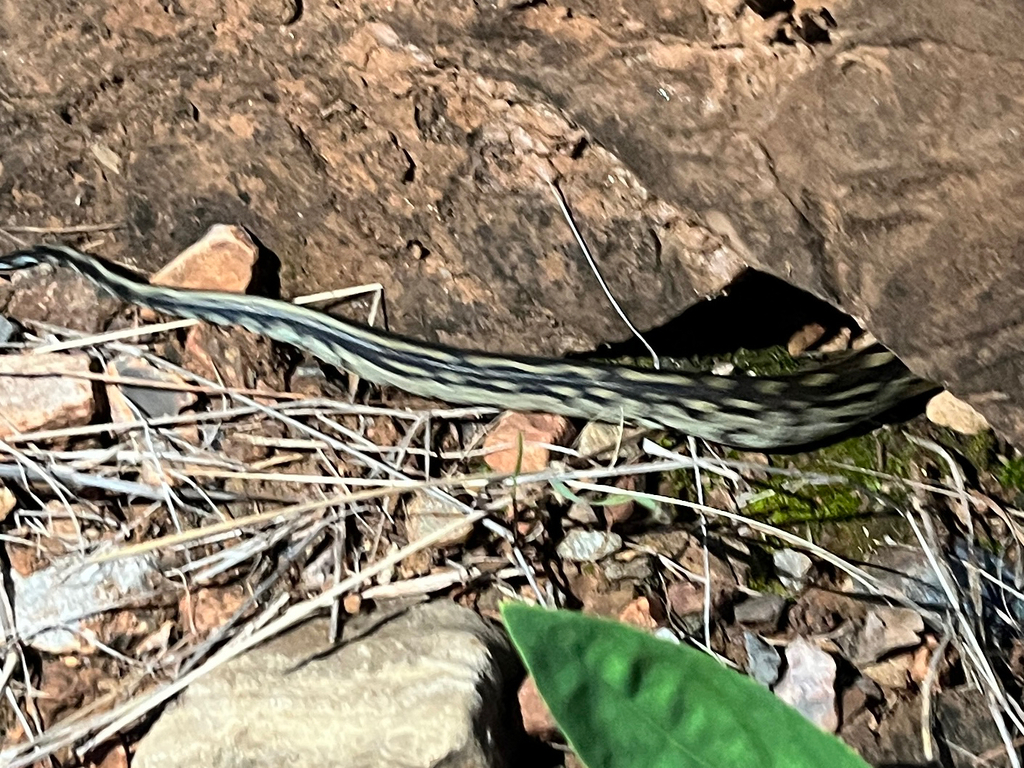
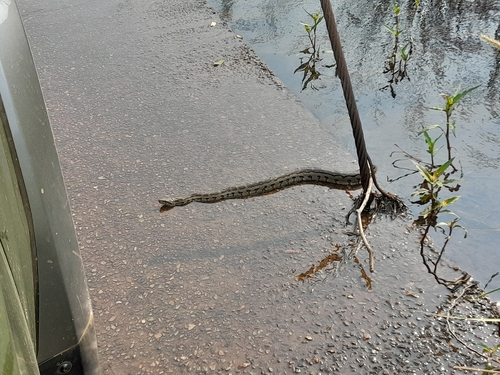
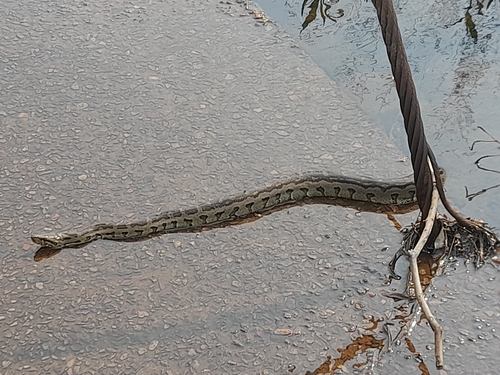
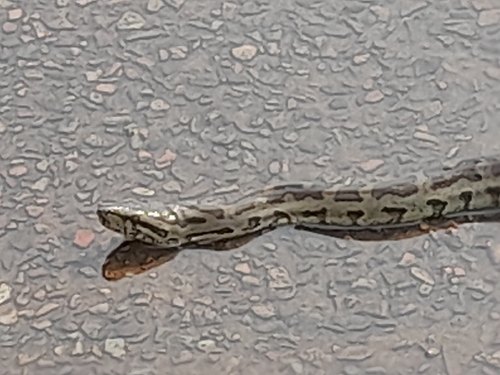
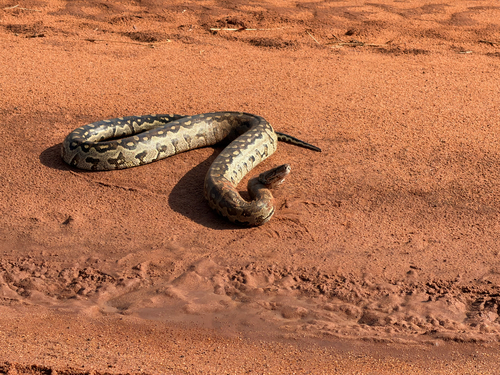
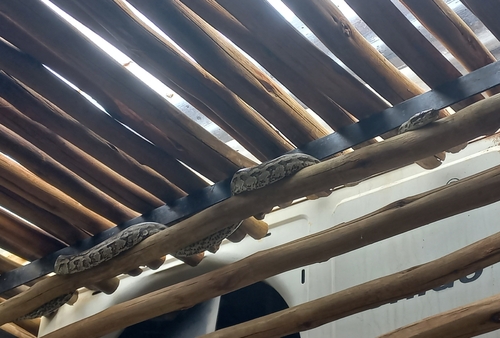
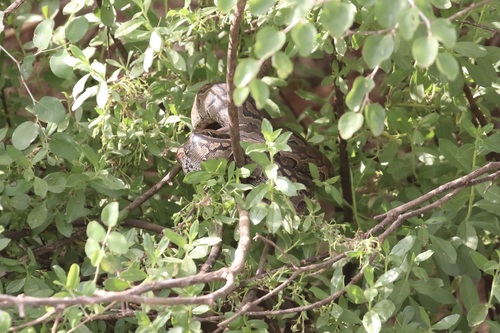
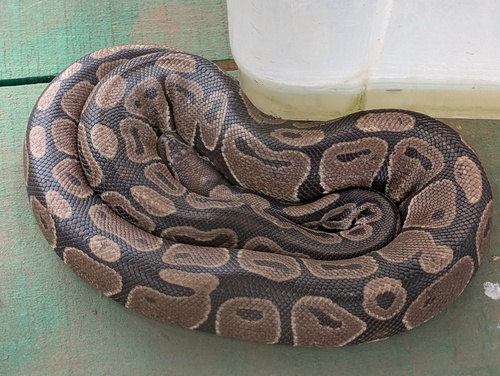
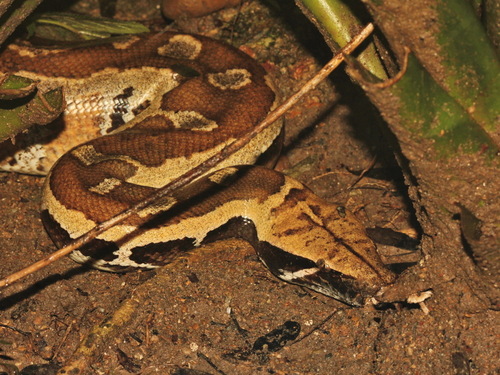
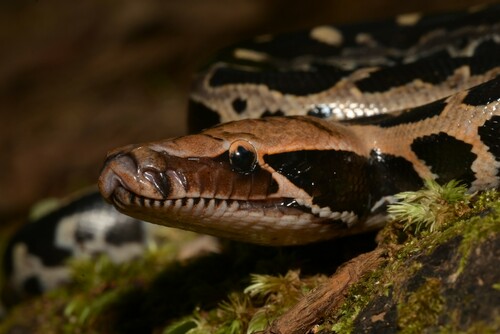
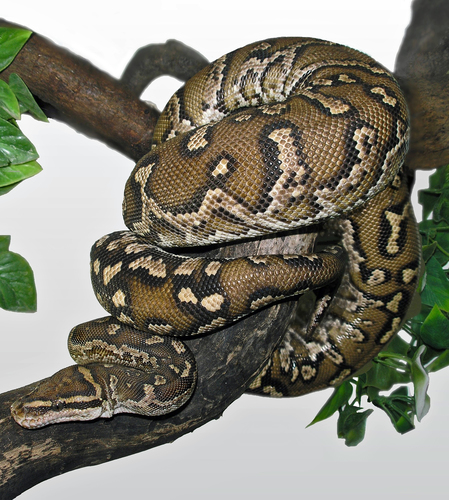
6 photographs of the Southern African Python. © katuchka.
The Southern African Python (Python natalensis) is a non-venomous snake in the Pythonidae family, recorded in 15 countries.
- Family
- Pythonidae
About the Southern African Python
The Central African rock python (Python sebae) is a species of large constrictor snake in the family Pythonidae. The species is native to sub-Saharan Africa. It is one of ten living species in the genus Python.
It is Africa's largest snake, and one of the eight largest snake species in the world, along with the green anaconda, reticulated python, Burmese python, Southern African rock python, Indian python, yellow anaconda and Australian scrub python. Specimens may approach or exceed 6 m (20 ft). The Southern African rock python is generally smaller than its northern relative and in general, the Central African rock python is regarded as one of the longest species of snake in the world. The snake is found in a variety of habitats, from forests to near deserts, although usually near sources of water. The snake becomes dormant during the dry season. The Central African rock python kills its prey by constriction and often eats animals up to the size of antelope, occasionally even crocodiles. The snake reproduces by egg-laying. Unlike most snakes, the female protects her nest and sometimes even her hatchlings.
The snake is widely feared, though it is nonvenomous and very rarely kills humans. Although the snake is not endangered, it does face threats from habitat reduction and hunting. Some cultures in sub-Saharan Africa consider it a delicacy, which may pose a threat to its population.
Taxonomy and etymology
The Central African rock python was first described by Johann Friedrich Gmelin, a German naturalist, in 1789. It is one of ten species in the genus Python, large constricting snakes found in the moist tropics of Asia and Africa.
The generic name Python is a Greek word referring to the enormous serpent at Delphi slain by Apollo in Greek mythology. The specific name sebae is a latinization of the surname of Dutch zoologist, Albertus Seba. Common name usage varies with the species referred to as the African rock python or simply the rock python.
Description
The Central African rock python is Africa's largest snake species and one of the world's largest. Adults measure 3 to 3.53 m (9 ft 10 in to 11 ft 7 in) in total length, with only unusually large specimens likely to exceed 4.8 m (15 ft 9 in). Reports of specimens over 6 m (19 ft 8 in) are considered reliable, although larger specimens have never been confirmed. Weights are reportedly in the range of 55 to 65 kg (121 to 143 lb) or more. Exceptionally large specimens weigh 91 kg (201 lb) or more. On average, large adults of Central African rock pythons are quite heavily built, perhaps more so than most specimens of the somewhat longer reticulated as well as Indian and Burmese pythons and far more so than the amethystine python, although the species is on average less heavily built than the green anaconda. The species may be the second heaviest living snake with some authors agreeing that it can exceptionally exceed 90 kg (200 lb). A large specimen considered authentic was shot in the Gambia and measured 7.5 m (24 ft 7 in).
Adapted from Wikipedia, available under CC BY-SA.
Frequently asked: Southern African Python
- Is the Southern African Python venomous?
- No. The Southern African Python (Python natalensis) is non-venomous and is not considered dangerous to humans. Like most snakes, it will retreat rather than bite when given the chance.
- Is the Southern African Python poisonous?
- Snakes are venomous, not poisonous. "Poisonous" means harmful to eat or touch; "venomous" means injecting toxins through a bite. The Southern African Python is neither poisonous nor venomous.
- Is the Southern African Python dangerous?
- The Southern African Python is not dangerous to humans. It has no medically significant venom and bites only defensively if cornered or handled.
- Where does the Southern African Python live?
- The Southern African Python has verified records in 15 countries, including South Africa, Zambia, Zimbabwe. See the distribution section below for its full range.
- What does the Southern African Python eat?
- Like all pythons, the Central African rock python is non-venomous and kills by constriction. After gripping the prey, it coils around it, tightening its coils every time the victim breathes out. Death is thought to be caused by cardiac arrest rather than by asphyxiation or crushing. The Central African rock python feeds on small antelope, jackals, hares, hyraxes, monkeys, waterbirds, monitor lizards, fish, and crocodiles. In March 2017, a 3.9-m (12-ft 10-in) African rock python was filmed eating a large adult male spotted hyena weighing 70 kg (150 lb).
- Why is it called the Southern African Python?
- The Central African rock python was first described by Johann Friedrich Gmelin, a German naturalist, in 1789. It is one of ten species in the genus Python, large constricting snakes found in the moist tropics of Asia and Africa. The generic name Python is a Greek word referring to the enormous serpent at Delphi slain by Apollo in Greek mythology. The specific name sebae is a latinization of the surname of Dutch zoologist, Albertus Seba. Common name usage varies with the species referred to as the African rock python or simply the rock python.
Where it is found
More Pythonidae snakes
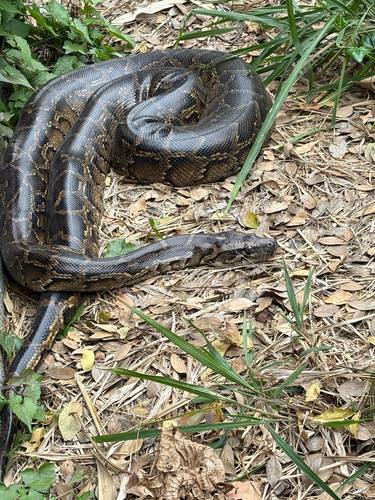
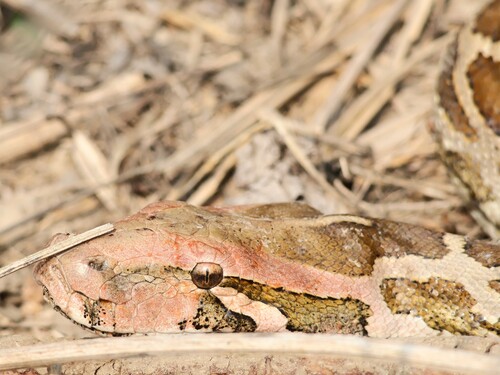

Classification
How scientists group this snake, from the broadest category down to the exact species. Each step narrows to its closest relatives.
- OrderThe broad group of scaled reptiles: all snakes and lizards
- Squamata
- FamilyA group of related snakes that share key traits
- Pythonidae
- GenusA close-knit group of very similar species
- Python
- SpeciesThis exact snake, named in the two-part scientific name
- Python natalensis
Keep learning
- What to Do If You Find a SnakeFound a snake at home or on a trail? Here is how to stay calm, give it space, identify it safely, and know when to call a professional.
- Venomous vs Nonvenomous: How to Tell the DifferenceThe folk rules for telling venomous snakes apart, where each one fails, and why location-based identification beats guessing by sight.
- What Is a Snake? Anatomy and the BasicsA clear overview of what makes a snake a snake: limbless body plan, anatomy, evolution from lizards, species diversity, and why they are ectothermic.
- How to Keep Snakes Out of Your Yard and HomeA practical guide to keeping snakes out of your yard and home using habitat changes that work, plus what to skip and what to do if one shows up.
Distribution from GBIF & iNaturalist. Venom status per CDC. Background: Wikipedia. Informational only. Never handle a snake to identify it.