
Python (non-native)
Burmese Python
HarmlessPython bivittatus
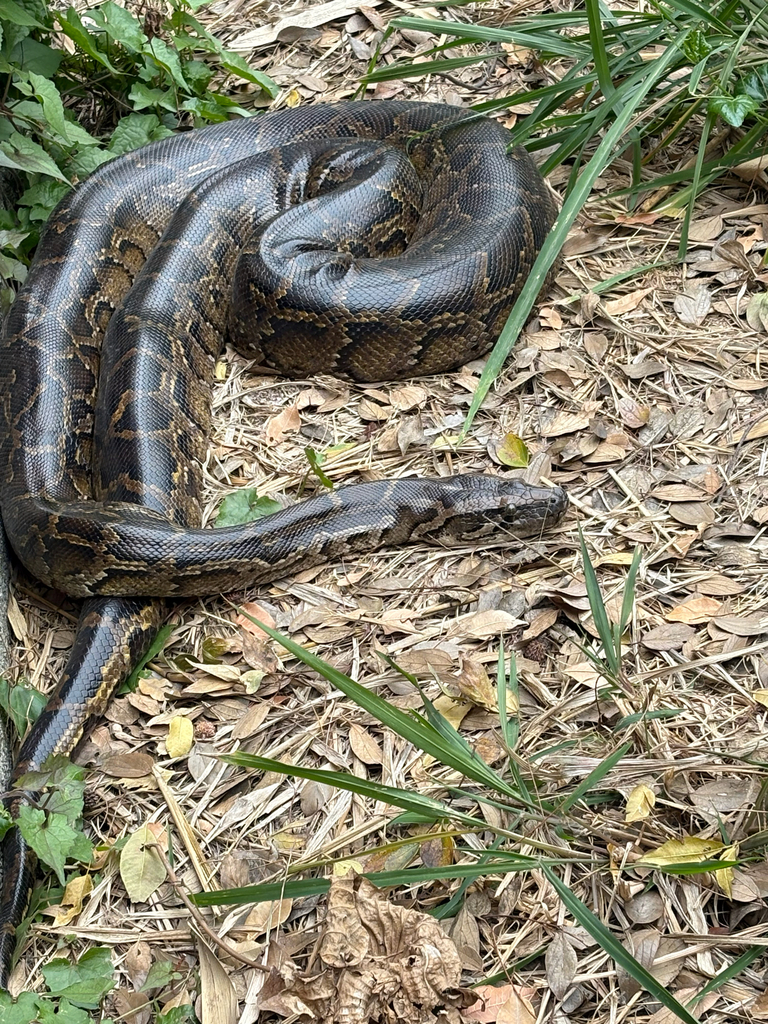
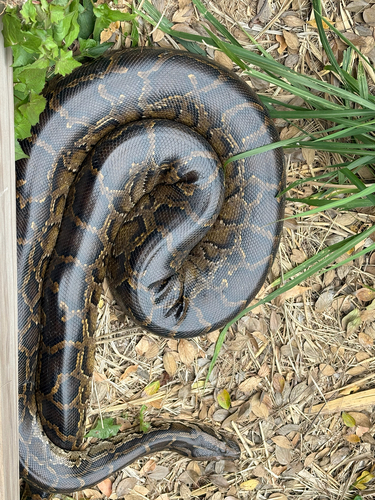
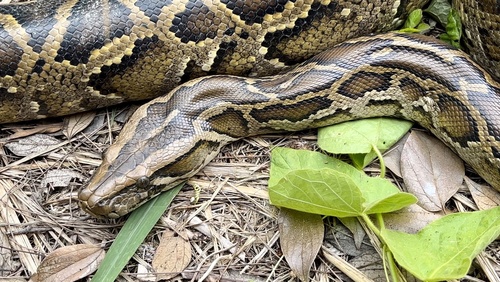
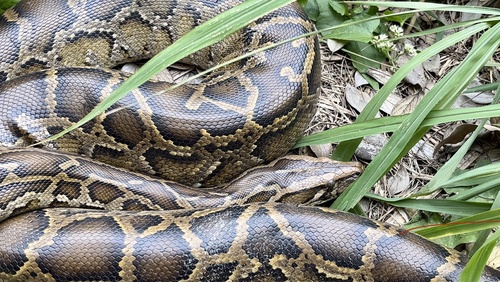
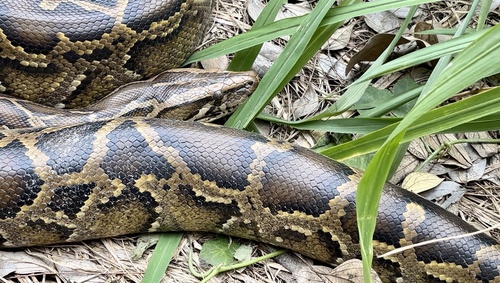
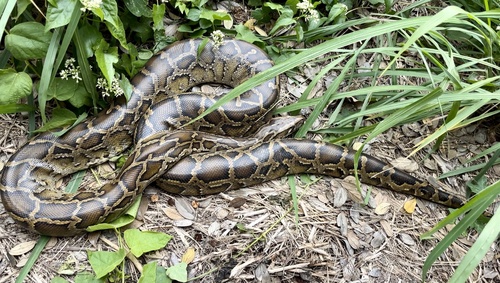
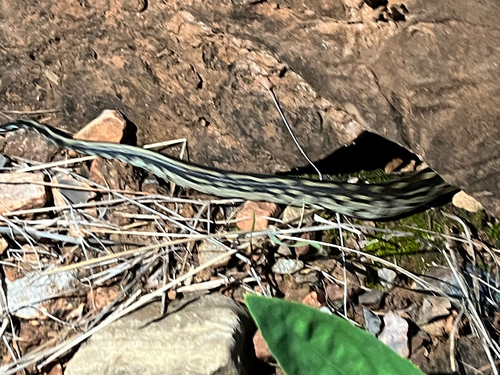
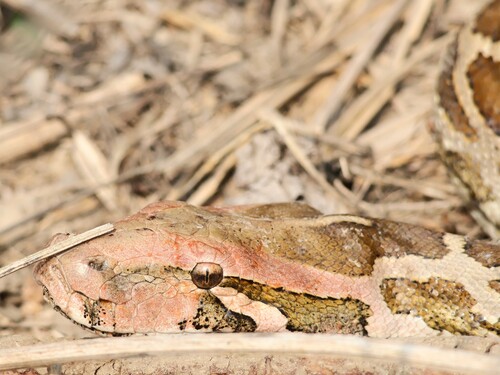
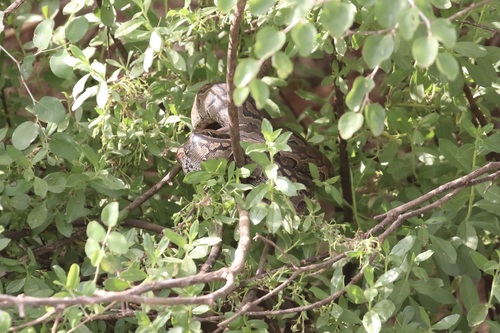
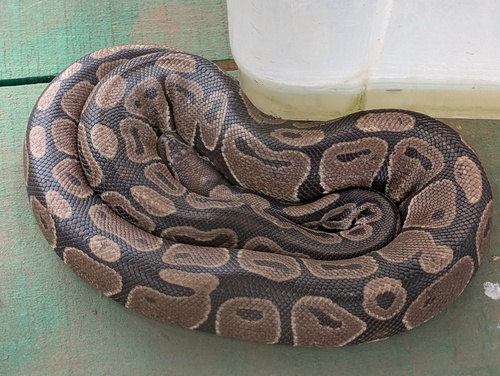
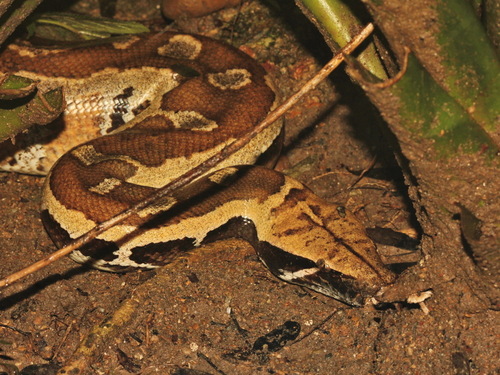
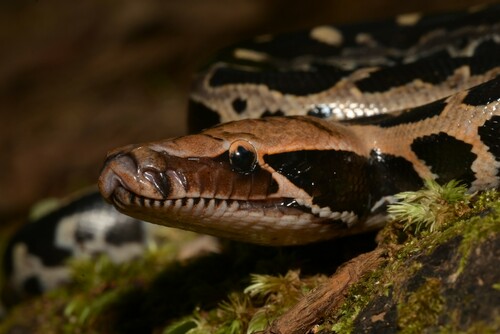
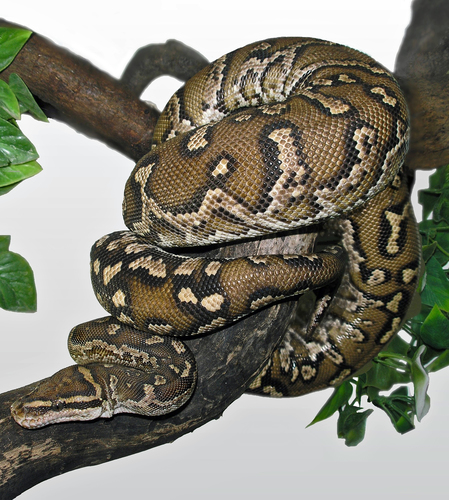
6 photographs of the Burmese Python. © 黃美滿.
The Burmese Python (Python bivittatus) is a non-venomous snake in the Pythonidae family, recorded in 22 countries.
- Also called
- Python (non-native)
- Family
- Pythonidae
- Size
- Very large constrictor.
- Habitat
- Introduced populations in south Florida.
- Behavior
- Non-native; the Burmese python is a major invasive species in the Everglades. Not venomous.
- Identify
- Very large, heavy-bodied, with dark blotches on a tan background.
About the Burmese Python
The Burmese python (Python bivittatus) is one of the largest species of snakes. It is native to a large area of Southeast Asia and is listed as Vulnerable on the IUCN Red List. Until 2009, it was considered a subspecies of the Indian python, but is now recognized as a distinct species. It is an invasive species in the US state of Florida as a result of the pet trade.
Description
The Burmese python is a dark-colored non-venomous snake with many brown blotches bordered by black down the back.
In the wild, Burmese pythons typically grow to 5 m (16 ft), while specimens of more than 7 m (23 ft) are unconfirmed. This species is sexually dimorphic in size; females average only slightly longer, but are considerably heavier and bulkier than the males. For example, length-weight comparisons in captive Burmese pythons for individual females have shown: at 3.47 m (11 ft 5 in) length, a specimen weighed 29 kg (64 lb), a specimen of just over 4 m (13 ft) weighed 36 kg (79 lb), a specimen of 4.5 m (15 ft) weighed 40 kg (88 lb), and a specimen of 5 m (16 ft) weighed 75 kg (165 lb). In comparison, length-weight comparisons for males found: a specimen of 2.8 m (9 ft 2 in) weighed 12 kg (26 lb), 2.97 m (9 ft 9 in) weighed 14.5 kg (32 lb), a specimen of 3 m (9.8 ft) weighed 7 kg (15 lb), and a specimen of 3.05 m (10.0 ft) weighed 18.5 kg (41 lb). In general, individuals over 5 m (16 ft) are rare. The record for maximum length of a Burmese python is 5.79 m (19 ft 0 in) and was caught 10 July 2023 in South Florida's Big Cypress National Preserve. Widely published data of specimens reported to have been several feet longer are not verified. At her death, a Burmese named "Baby" was the heaviest snake recorded in the world at the time at 182.8 kg (403 lb), much heavier than any wild snake ever measured. Her length was measured at 5.74 m (18 ft 10 in) circa 1999. The minimum size for adults is 2.35 m (7 ft 9 in). Dwarf forms occur in Java, Bali, and Sulawesi, with an average length of 2 m (6 ft 7 in) in Bali, and a maximum of 2.5 m (8 ft 2 in) on Sulawesi. Wild individuals average 3.7 m (12 ft) long, but have been known to reach 5.79 m (19 ft 0 in).
Diseases
In both their native and invasive range they suffer from Raillietiella orientalis (a pentastome parasitic disease).
Distribution and habitat
The Burmese python occurs throughout Southern and Southeast Asia, including eastern India, southeastern Nepal, western Bhutan, southeastern Bangladesh, Myanmar, Thailand, Laos, Cambodia, Vietnam, northern continental Malaysia, and southern China in Fujian, Jiangxi, Guangdong, Hainan, Guangxi, and Yunnan. It also occurs in Hong Kong, and in Indonesia on Java, southern Sulawesi, Bali, and Sumbawa. It has also been reported in Kinmen.
Adapted from Wikipedia, available under CC BY-SA.
Frequently asked: Burmese Python
- Is the Burmese Python venomous?
- No. The Burmese Python (Python bivittatus) is non-venomous and is not considered dangerous to humans. Like most snakes, it will retreat rather than bite when given the chance.
- Is the Burmese Python poisonous?
- Snakes are venomous, not poisonous. "Poisonous" means harmful to eat or touch; "venomous" means injecting toxins through a bite. The Burmese Python is neither poisonous nor venomous.
- Is the Burmese Python dangerous?
- The Burmese Python is not dangerous to humans. It has no medically significant venom and bites only defensively if cornered or handled.
- Where does the Burmese Python live?
- The Burmese Python has verified records in 22 countries, including United States of America, Hong Kong, Thailand. See the distribution section below for its full range.
- How do I identify the Burmese Python?
- Very large, heavy-bodied, with dark blotches on a tan background.
- How big does the Burmese Python get?
- Very large constrictor.
Where it is found
More Pythonidae snakes

Classification
How scientists group this snake, from the broadest category down to the exact species. Each step narrows to its closest relatives.
- OrderThe broad group of scaled reptiles: all snakes and lizards
- Squamata
- FamilyA group of related snakes that share key traits
- Pythonidae
- GenusA close-knit group of very similar species
- Python
- SpeciesThis exact snake, named in the two-part scientific name
- Python bivittatus
Keep learning
- What to Do If You Find a SnakeFound a snake at home or on a trail? Here is how to stay calm, give it space, identify it safely, and know when to call a professional.
- Venomous vs Nonvenomous: How to Tell the DifferenceThe folk rules for telling venomous snakes apart, where each one fails, and why location-based identification beats guessing by sight.
- What Is a Snake? Anatomy and the BasicsA clear overview of what makes a snake a snake: limbless body plan, anatomy, evolution from lizards, species diversity, and why they are ectothermic.
- How to Keep Snakes Out of Your Yard and HomeA practical guide to keeping snakes out of your yard and home using habitat changes that work, plus what to skip and what to do if one shows up.
Distribution from GBIF & iNaturalist. Venom status per CDC. Background: Wikipedia. Informational only. Never handle a snake to identify it.