
Pythonidae
Malaysian Blood Python
HarmlessPython brongersmai
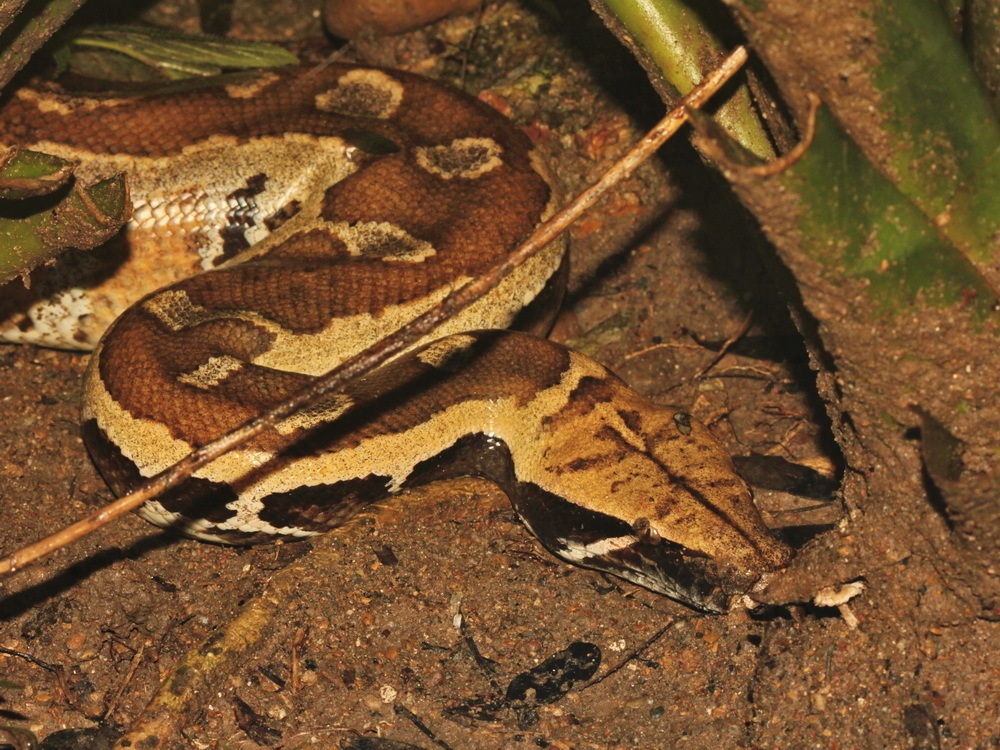
The Malaysian Blood Python (Python brongersmai) is a non-venomous snake in the Pythonidae family, recorded in 5 countries.
- Family
- Pythonidae
About the Malaysian Blood Python
Python brongersmai is a species of non-venomous snake in the family Pythonidae. The species is native to Southeast Asia. Previously considered a subspecies of Python curtus, it was recognized as a distinct species around 2000.
Common names
Common names for P. brongersmai include blood python, Brongersma's short-tailed python, Malaysian blood python, red blood python, red short-tailed python, and Sumatran blood python.
Etymology
The specific name, brongersmai, is in honor of Dutch herpetologist Leo Brongersma.
Geographic range
P. brongersmai is found in peninsular (Western) Malaysia, Sumatra east of the central dividing range of mountains, Bangka Island and other islands in the Strait of Malacca, including the Lingga Islands, Riau islands, and Pinang, Thailand, and Vietnam.
Habitat
The preferred natural habitat of P. brongersmai is marshes and tropical swamps in forest, at altitudes from sea level to 650 m (2,130 ft).
Behaviour
Python brongersmai is a primarily crepuscular species (usually active around dawn and dusk).
Size
Hatchlings of P. brongersmai range from 25–43 cm (10–17 in) in total length (including tail). Adult males typically range from 91–152 cm (36–60 in) in total length, and females between 120–180 cm (48–72 in) although a few have been recorded at 240 cm (96 in). These snakes generally look overweight due to their robust structure.
Lifespan
P. brongersmai can live up to about 20 years in captivity.
Coloration
The color pattern of P. brongersmai consists of rich, bright red to orange to a duller rusty red ground color, although populations with yellow and brown are known. This is overlaid with yellow and tan blotches and stripes that run the length of the body, as well as tan and black spots that extend up the flanks. The belly is white, often with small black markings. The head is usually a shade of grey; individual snakes can change how light and dark the head is. A white postocular stripe runs down and back from the posterior edge of the eye.
Reproduction
Python brongersmai is oviparous, with up to 30 eggs being laid at a time. The female coils around her eggs and shivers her body, producing heat to incubate the eggs properly.
Commercial trade
Once widely considered to be generally unpredictable and aggressive, P. brongersmai is gradually becoming more common among herpetoculturists. Formerly, many of the specimens in captivity were wild-caught adults from Malaysia. These are known to be more aggressive than those from Indonesia (Sumatra), from which most of the wild-caught, wild-bred, and captive-bred stock are now descended. Captive-raised juveniles generally become mild-tempered, somewhat-predictable adults. This, combined with several new brightly colored captive bloodlines, is helping to boost the popularity of these much-maligned snakes among reptile hobbyists.
Adapted from Wikipedia, available under CC BY-SA.
Frequently asked: Malaysian Blood Python
- Is the Malaysian Blood Python venomous?
- No. The Malaysian Blood Python (Python brongersmai) is non-venomous and is not considered dangerous to humans. Like most snakes, it will retreat rather than bite when given the chance.
- Is the Malaysian Blood Python poisonous?
- Snakes are venomous, not poisonous. "Poisonous" means harmful to eat or touch; "venomous" means injecting toxins through a bite. The Malaysian Blood Python is neither poisonous nor venomous.
- Is the Malaysian Blood Python dangerous?
- The Malaysian Blood Python is not dangerous to humans. It has no medically significant venom and bites only defensively if cornered or handled.
- Where does the Malaysian Blood Python live?
- The Malaysian Blood Python has verified records in 5 countries, including Indonesia, Thailand, Malaysia. See the distribution section below for its full range.
- Why is it called the Malaysian Blood Python?
- Common names for P. brongersmai include blood python, Brongersma's short-tailed python, Malaysian blood python, red blood python, red short-tailed python, and Sumatran blood python.
Where it is found
More Pythonidae snakes

Classification
How scientists group this snake, from the broadest category down to the exact species. Each step narrows to its closest relatives.
- OrderThe broad group of scaled reptiles: all snakes and lizards
- Squamata
- FamilyA group of related snakes that share key traits
- Pythonidae
- GenusA close-knit group of very similar species
- Python
- SpeciesThis exact snake, named in the two-part scientific name
- Python brongersmai
Keep learning
- What to Do If You Find a SnakeFound a snake at home or on a trail? Here is how to stay calm, give it space, identify it safely, and know when to call a professional.
- Venomous vs Nonvenomous: How to Tell the DifferenceThe folk rules for telling venomous snakes apart, where each one fails, and why location-based identification beats guessing by sight.
- What Is a Snake? Anatomy and the BasicsA clear overview of what makes a snake a snake: limbless body plan, anatomy, evolution from lizards, species diversity, and why they are ectothermic.
- How to Keep Snakes Out of Your Yard and HomeA practical guide to keeping snakes out of your yard and home using habitat changes that work, plus what to skip and what to do if one shows up.
Distribution from GBIF & iNaturalist. Venom status per CDC. Background: Wikipedia. Informational only. Never handle a snake to identify it.