
Boidae
Mexican West Coast Boa Constrictor
HarmlessBoa sigma
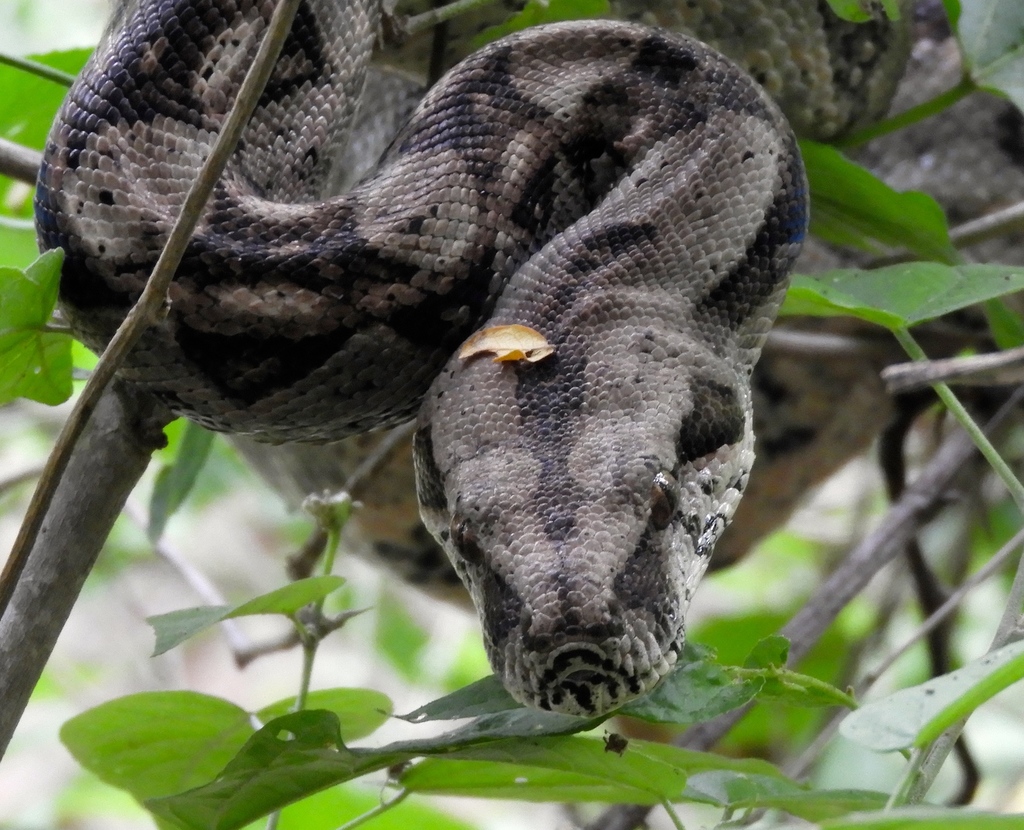
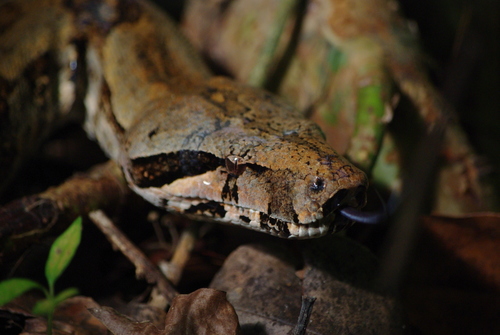
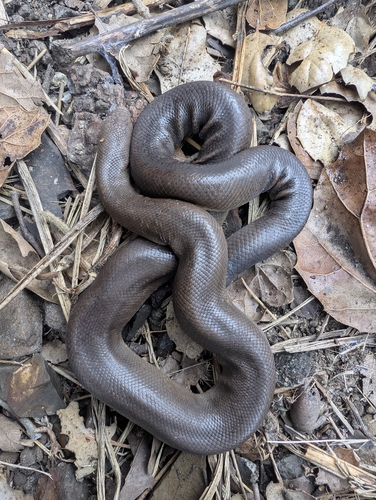
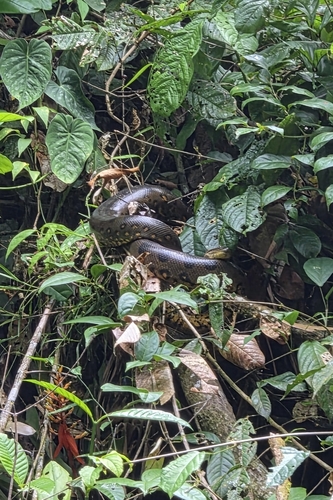
The Mexican West Coast Boa Constrictor (Boa sigma) is a non-venomous snake in the Boidae family, recorded in 32 countries.
- Family
- Boidae
About the Mexican West Coast Boa Constrictor
Boa sigma, known commonly as the Mexican west coast boa constrictor, is a species of snake in the family Boidae. The species is endemic to western Mexico. Boa sigma has previously been regarded as conspecific with Boa constrictor, and later with Boa imperator; however, in 2016, it was suggested on genetic grounds that Boa sigma should be regarded as a separate species.
Taxonomy
Boa sigma was originally described as Constrictor constrictor sigma by Hobart Muir Smith in 1943. The subspecies only included snakes from the Islas Marías, and it did not receive wide recognition; instead, it was synonymized with the mainland subspecies Boa constrictor imperator by many authors.
In the 21st century, genetic studies revealed that Boa constrictor is a species complex. First, Boa constrictor imperator was elevated to species level, but it was soon recognized that there was another species nested within the new species Boa imperator. According to Card et al. (2016), the name Boa sigma is available for this third species. However, further research is needed because the genetic study of Card et al. didn't include samples from the Islas Marías, from where the holotype and the paratypes were collected. Despite this uncertainty, Boa sigma has been widely accepted as a valid species.
Phylogeny
Suárez-Atilano et al. (2014) identified two lineages of Boa imperator with a divergence date of about 5.2 Ma. However, Card et al. (2016) found the divergence date of these lineages, which they recognized as Boa imperator and Boa sigma, to be around 14 Ma. Both divergence dates could be explained with the rise of biogeographical barriers.
Distribution and habitat
Boa sigma is distributed along the Pacific Coast of Mexico west of the Isthmus of Tehuantepec. The northernmost records are from Sonora, where the species can reach altitudes of 1,420 metres (4,659 ft). Within the distribution range of Boa sigma, the three islands of the Islas Marías are included: María Madre, María Magdalena and María Cleofas.
Based on species distribution modelling, Boa sigma lives mainly within the tropical dry forest ecoregion, whereas Boa imperator seems to prefer areas with more precipitation. In Oaxaca, there is a contact zone between these two species, but it is unclear whether or not hybridization occurs there.
Folklore
In eastern and southern Sonora, it is widely believed that Boa sigma, locally known as corúa, corúga, corúva, culebrón or limacoa, is the guardian of water (guardiana del agua). Unlike other snakes, Boa sigma is protected by rural Sonorans, because it is thought that killing the boa would cause the spring (aguaje) to dry up.
Adapted from Wikipedia, available under CC BY-SA.
Frequently asked: Mexican West Coast Boa Constrictor
- Is the Mexican West Coast Boa Constrictor venomous?
- No. The Mexican West Coast Boa Constrictor (Boa sigma) is non-venomous and is not considered dangerous to humans. Like most snakes, it will retreat rather than bite when given the chance.
- Is the Mexican West Coast Boa Constrictor poisonous?
- Snakes are venomous, not poisonous. "Poisonous" means harmful to eat or touch; "venomous" means injecting toxins through a bite. The Mexican West Coast Boa Constrictor is neither poisonous nor venomous.
- Is the Mexican West Coast Boa Constrictor dangerous?
- The Mexican West Coast Boa Constrictor is not dangerous to humans. It has no medically significant venom and bites only defensively if cornered or handled.
- Where does the Mexican West Coast Boa Constrictor live?
- The Mexican West Coast Boa Constrictor has verified records in 32 countries, including Mexico, Brazil, Colombia. See the distribution section below for its full range.
Where it is found
More Boidae snakes
Classification
How scientists group this snake, from the broadest category down to the exact species. Each step narrows to its closest relatives.
Keep learning
- What to Do If You Find a SnakeFound a snake at home or on a trail? Here is how to stay calm, give it space, identify it safely, and know when to call a professional.
- Venomous vs Nonvenomous: How to Tell the DifferenceThe folk rules for telling venomous snakes apart, where each one fails, and why location-based identification beats guessing by sight.
- What Is a Snake? Anatomy and the BasicsA clear overview of what makes a snake a snake: limbless body plan, anatomy, evolution from lizards, species diversity, and why they are ectothermic.
- How to Keep Snakes Out of Your Yard and HomeA practical guide to keeping snakes out of your yard and home using habitat changes that work, plus what to skip and what to do if one shows up.
Distribution from GBIF & iNaturalist. Venom status per CDC. Background: Wikipedia. Informational only. Never handle a snake to identify it.