
Rubber boa
Northern Rubber Boa
HarmlessCharina bottae
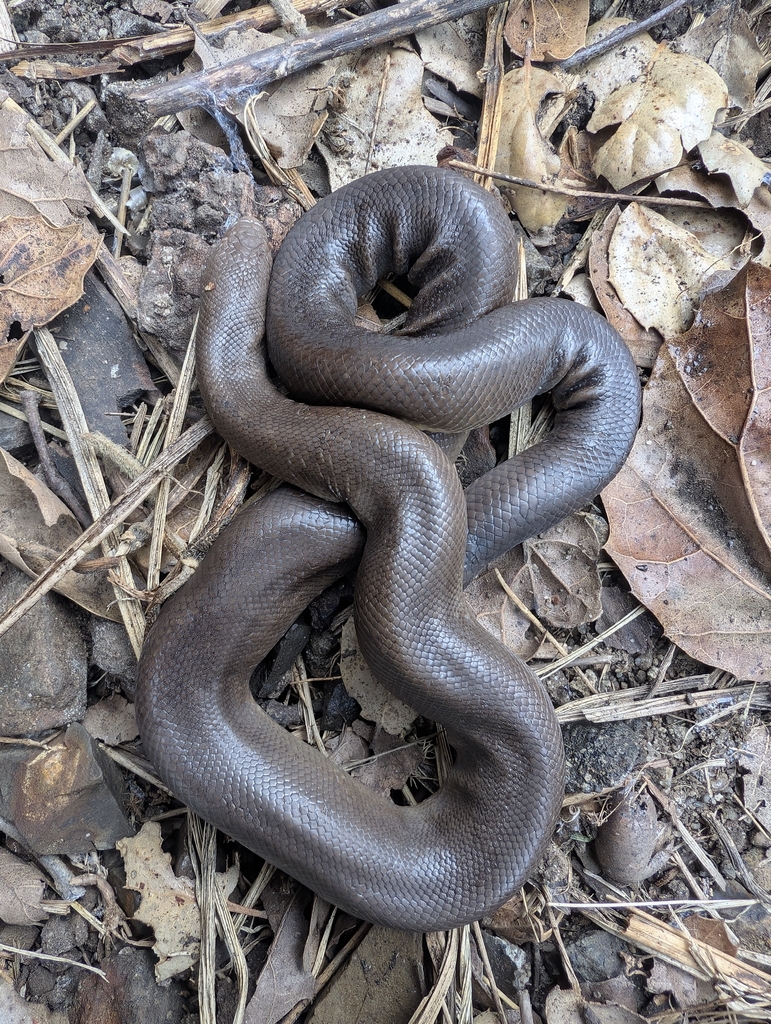
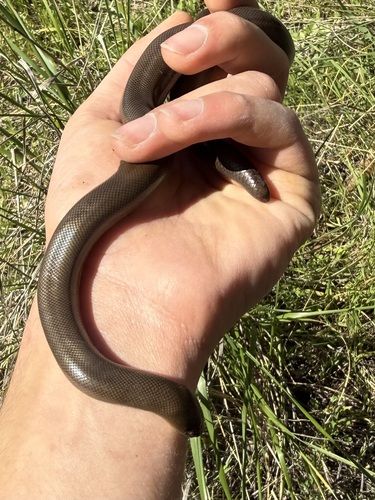
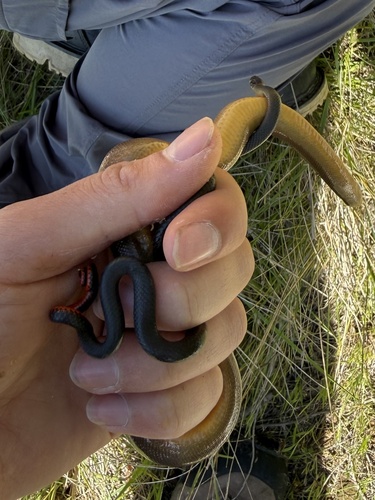
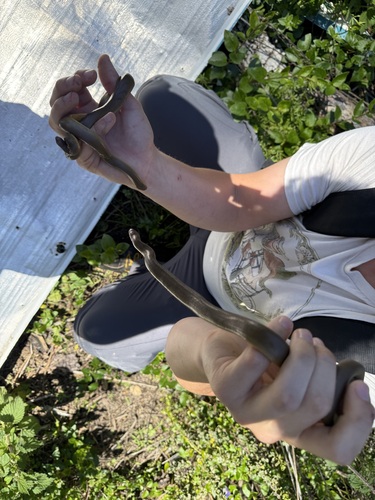
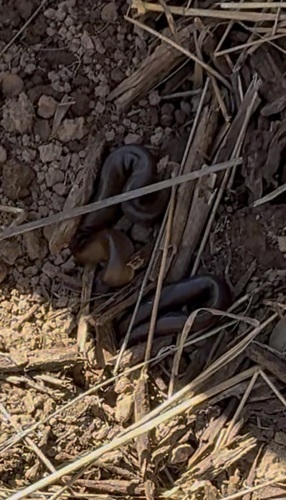
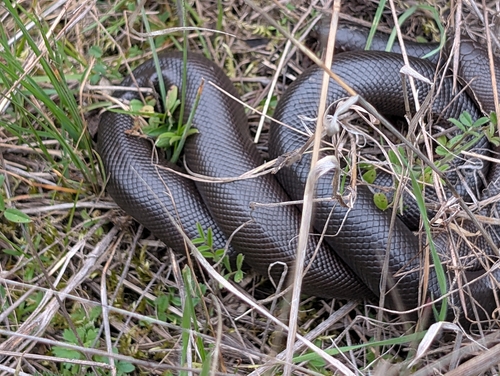
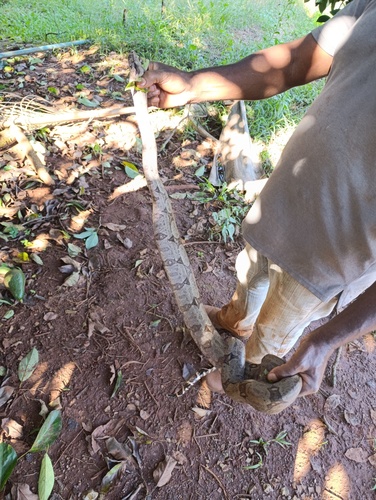
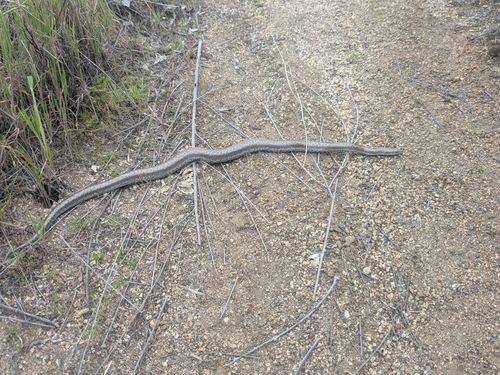
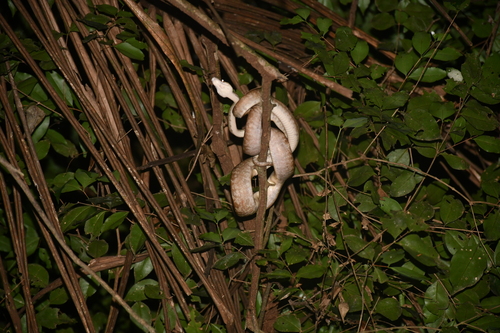
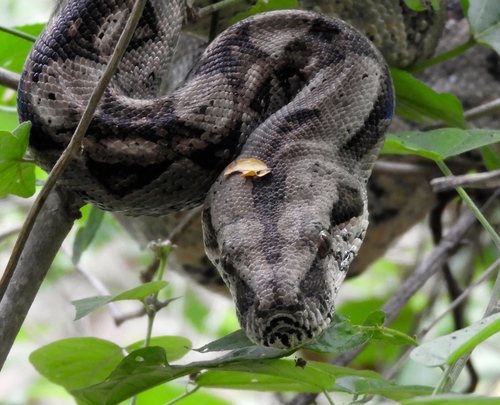
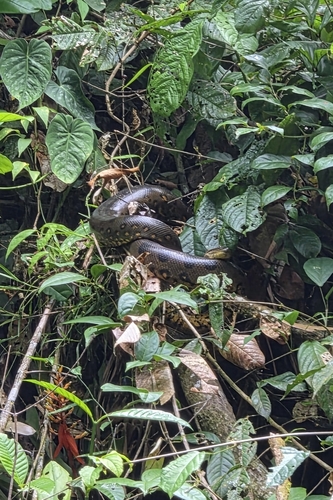
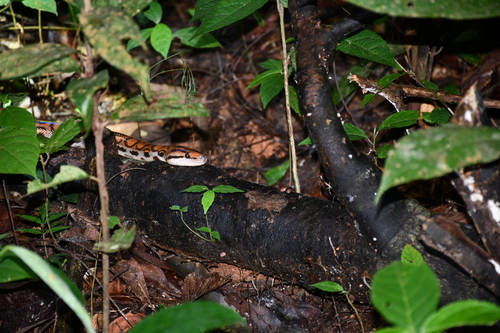
6 photographs of the Northern Rubber Boa. © Monica Ventrice.
The Northern Rubber Boa (Charina bottae) is a non-venomous snake in the Boidae family, recorded in 2 countries.
- Also called
- Rubber boa
- Family
- Boidae
- Size
- Stout, 1.5–2.5 ft.
- Habitat
- Cool, moist forests and meadows.
- Behavior
- Slow, gentle constrictors that are active in surprisingly cool weather.
- Identify
- Thick, blunt, rubbery-looking body with a blunt tail that mimics the head.
About the Northern Rubber Boa
The rubber boa (Charina bottae) is a species of snake in the family Boidae and is native to western North America. It is sometimes known as the coastal rubber boa or the northern rubber boa and is not to be confused with the southern rubber boa (Charina umbratica).
Taxonomy
Henri Marie Ducrotay de Blainville described the rubber boa in 1835. The generic name Charina is from the Ancient Greek "graceful" or "delightful", and the specific name bottae honors Dr. Paolo E. Botta, an Italian ship's surgeon, explorer, and naturalist.
The family Boidae consists of the nonvenomous snakes commonly called boas and consists of 43 species. The genus Charina consists of two species, both of which are found in North America. There is debate on whether the southern rubber boa, a population found in the San Bernardino and San Jacinto Mountains east of Los Angeles in California, should be a separate species or a subspecies (as Charina bottae umbratica). A study published in 2001 concluded there is enough evidence to indicate that the proposed independent species, Charina umbratica, is a separate species based on its geologically separate genetic nature and morphological differences.
Description
Rubber boas are one of the smaller boa species, adults can be anywhere from 38 to 84 cm (1.25 to 2.76 ft) long; newborns are typically 19 to 23 cm (7.5 to 9.1 in) long. The common name is derived from their skin which is often loose and wrinkled and consists of small scales that are smooth and shiny. These characteristics give the snakes a rubber-like look and texture. Colors are typically tan to dark brown with a lighter ventral surface but sometimes olive-green, yellow, or orange. Newborns often appear pink and slightly transparent but darken with age. Rubber boas have small eyes with vertically elliptical pupils and short blunt heads that are no wider than the body. One of the most identifiable characteristics of rubber boas is their short blunt tails that closely resemble the shape of their head. Rubber boas appear quite different visually than any other species that share the same range (except maybe for the southern rubber boa) and thus are usually easy to identify.
Distribution
Rubber boas are the most northerly of all boa species. The distribution of rubber boas covers a large portion of the western United States, stretching from the Pacific Coast east to western Utah and Montana, as far south as central California, and as far north as southern British Columbia in Canada. There have also been rare sightings in Colorado and Alberta in addition to the states/provinces that they are known to thrive in: California, Oregon, Washington, Nevada, Utah, Wyoming, Montana, Idaho, and extending to its northernmost range in British Columbia, around Pemberton, Williams Lake, and Radium Hot Springs.
Habitat
Adapted from Wikipedia, available under CC BY-SA.
Frequently asked: Northern Rubber Boa
- Is the Northern Rubber Boa venomous?
- No. The Northern Rubber Boa (Charina bottae) is non-venomous and is not considered dangerous to humans. Like most snakes, it will retreat rather than bite when given the chance.
- Is the Northern Rubber Boa poisonous?
- Snakes are venomous, not poisonous. "Poisonous" means harmful to eat or touch; "venomous" means injecting toxins through a bite. The Northern Rubber Boa is neither poisonous nor venomous.
- Is the Northern Rubber Boa dangerous?
- The Northern Rubber Boa is not dangerous to humans. It has no medically significant venom and bites only defensively if cornered or handled.
- Where does the Northern Rubber Boa live?
- The Northern Rubber Boa has verified records in 2 countries, including United States of America, Canada. See the distribution section below for its full range.
- How do I identify the Northern Rubber Boa?
- Thick, blunt, rubbery-looking body with a blunt tail that mimics the head.
- How big does the Northern Rubber Boa get?
- Stout, 1.5–2.5 ft.
Where it is found
More Boidae snakes
Classification
How scientists group this snake, from the broadest category down to the exact species. Each step narrows to its closest relatives.
Keep learning
- What to Do If You Find a SnakeFound a snake at home or on a trail? Here is how to stay calm, give it space, identify it safely, and know when to call a professional.
- Venomous vs Nonvenomous: How to Tell the DifferenceThe folk rules for telling venomous snakes apart, where each one fails, and why location-based identification beats guessing by sight.
- What Is a Snake? Anatomy and the BasicsA clear overview of what makes a snake a snake: limbless body plan, anatomy, evolution from lizards, species diversity, and why they are ectothermic.
- How to Keep Snakes Out of Your Yard and HomeA practical guide to keeping snakes out of your yard and home using habitat changes that work, plus what to skip and what to do if one shows up.
Distribution from GBIF & iNaturalist. Venom status per CDC. Background: Wikipedia. Informational only. Never handle a snake to identify it.