
Boidae
Central American Boa
HarmlessBoa imperator
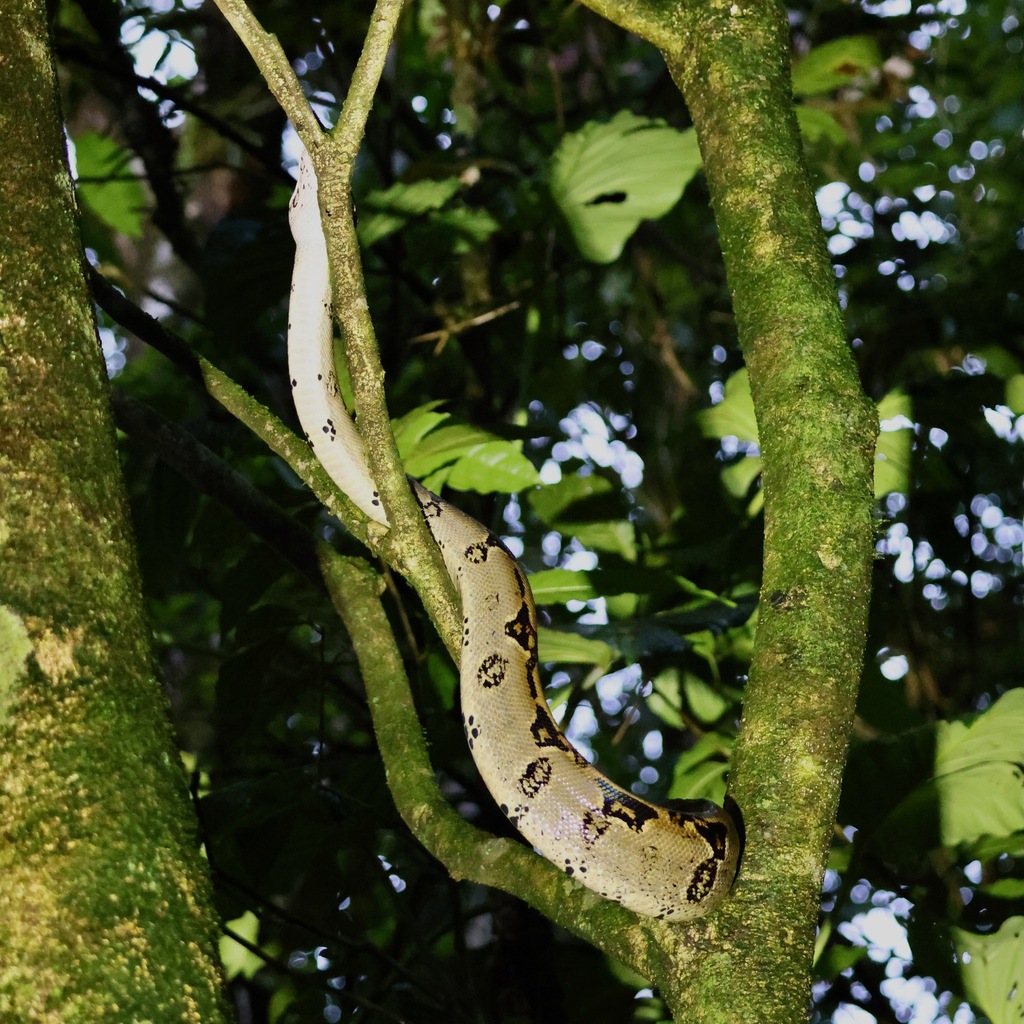
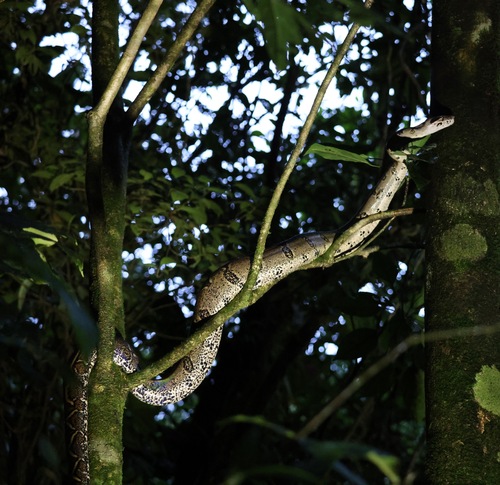
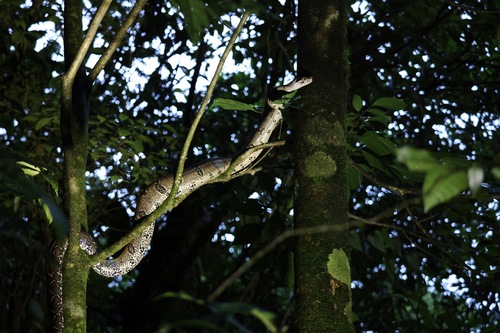
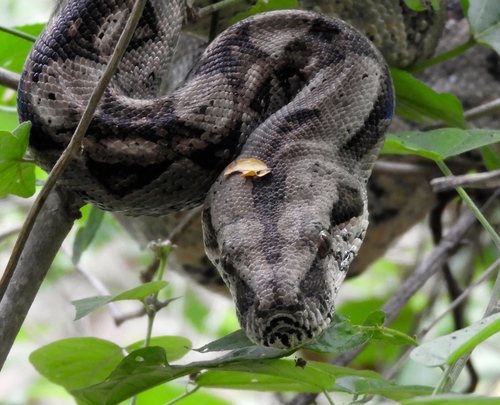
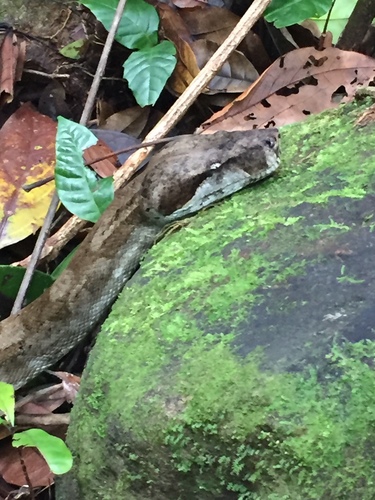
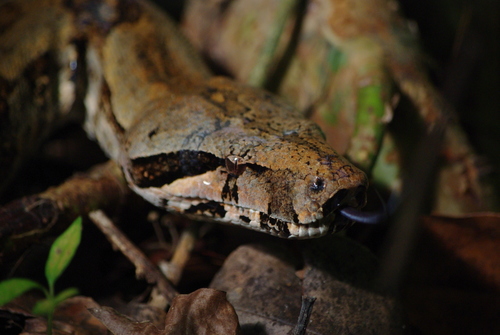
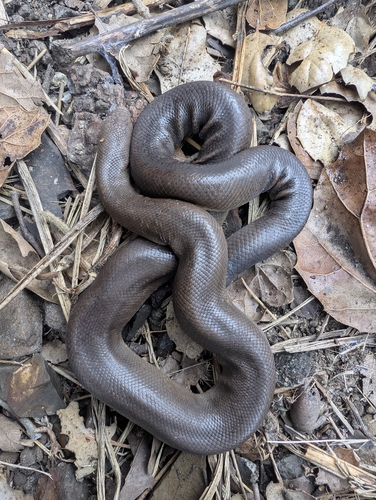
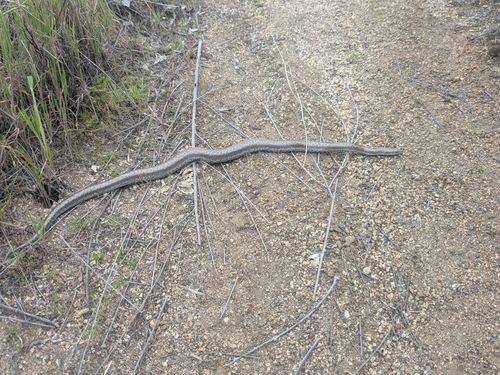
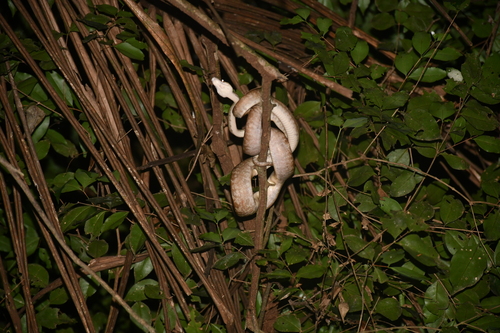
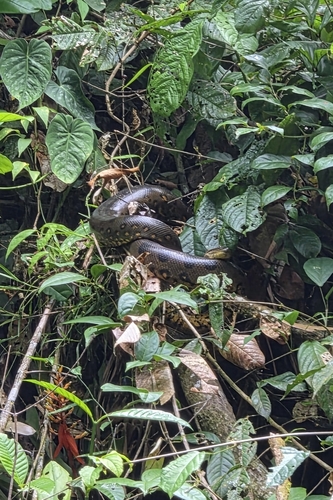
3 photographs of the Central American Boa. © Rachel Lee Harper.
The Central American Boa (Boa imperator) is a non-venomous snake in the Boidae family, recorded in 18 countries.
- Family
- Boidae
About the Central American Boa
Boa imperator (or Boa constrictor imperator in common usage) is a large and heavy-bodied arboreal species of nonvenomous, constrictor-type snake in the family Boidae. One of the most popular pet snakes (often bred in captivity) in the world, B. imperator's native range is from Mexico through Central and South America (west of the Andes Mountains, mainly in Colombia), with local populations on several small Caribbean islands. It is commonly called the Central American boa, northern boa, Colombian boa (or Colombian red-tailed boa), common boa and common northern boa.
Description
Boa imperator is a wide-ranging species, living in both Central America and the northern parts of South America. As a result, the appearance of this snake varies greatly depending on the specific locality. As one of the smaller Boa species, they average between 1.3 m (4.2 ft.) and 2.5 m (8.2 ft.) in length when fully grown, but have been known to reach 3.7 m (12 ft.). They usually weigh around 6 kg (13 lb), although females are significantly larger than males. Lifespan in the wild is around 20–30 years, but 40 can be exceeded in captivity.
Although Boa imperator exhibits almost identical patterns to Boa constrictor, this species often has a darker tail, usually dark brown or very dark red. They are, however, usually just as colorful as their counterparts and, like the larger boas, can be bred into a variety of different colors, given the right conditions to breed.
Notably, the species is one of only two in snakes to have a confirmed XY sex chromosome system.
One population, found on the Cayos Cochinos (Hog Islands) off the northern coast of Honduras, have evolved naturally hypomelanistic skin (containing reduced melanin), resulting in lighter-colored snakes; nonetheless, they retain the "signature" darkened tail-tip seen in the species, though the color of the tail may vary from salmon-pink to orange.
Another well-known locality of Boa imperator is the population from Nicaragua, which typically have a compact saddle-pattern on their backs, often showing circular and spherical shapes.
Boas from Colombia can be among the largest boas as well as some of the smallest; this species includes a number of dwarf insular populations on several Caribbean islands. Off the Pacific coast of Colombia, smaller to medium-sized boas can be found living on Gorgona Island, a former Colombian prison colony that nature has reclaimed, with a high rate of biodiversity present on the island.
Scalation
Boa imperator has 55–79 dorsal scales, 225–253 ventral scales, 47–69 subcaudal scales, 18–22 supralabial scales and 1–2 anal scales.
Identification
Boa imperator is commonly confused with other Boa species, such as Boa constrictor. Both have very similar patterns, to include a reddening of the lighter colors towards a deeper or darker red on the tail. This has resulted in a non-scientific term - "red-tailed boa" - used to refer to both species (mostly in the pet trade).
Taxonomy
Adapted from Wikipedia, available under CC BY-SA.
Frequently asked: Central American Boa
- Is the Central American Boa venomous?
- No. The Central American Boa (Boa imperator) is non-venomous and is not considered dangerous to humans. Like most snakes, it will retreat rather than bite when given the chance.
- Is the Central American Boa poisonous?
- Snakes are venomous, not poisonous. "Poisonous" means harmful to eat or touch; "venomous" means injecting toxins through a bite. The Central American Boa is neither poisonous nor venomous.
- Is the Central American Boa dangerous?
- The Central American Boa is not dangerous to humans. It has no medically significant venom and bites only defensively if cornered or handled.
- Where does the Central American Boa live?
- The Central American Boa has verified records in 18 countries, including Mexico, Costa Rica, Ecuador. See the distribution section below for its full range.
- What does the Central American Boa eat?
- Boa imperator, like most Boa species, has a varied diet that consists mainly of mammals (such as Yucatan squirrels, Deppe's squirrels, black rats, big-eared climbing rats, Virginia opossums, agoutis, white-nosed coatis, gray foxes, Andean porcupines, Colombian white-faced capuchins, and pygmy fruit-eating bats), birds (such as blue-gray tanagers, Altamira oriole, domestic fowl, New World vultures, and hummingbirds) and lizards (such as Iguana iguana and Medopheos edracanthus). Bats are ambushed on trees, at the entrance of caves, or in abandoned houses.
Where it is found
By U.S. state
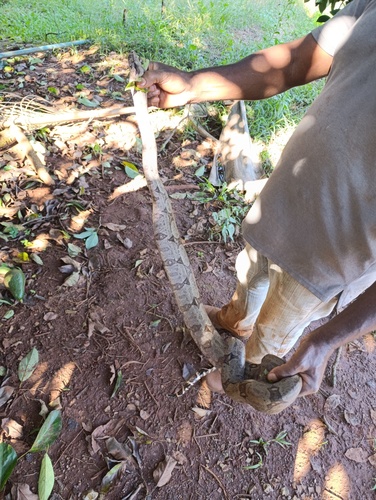
More Boidae snakes
Classification
How scientists group this snake, from the broadest category down to the exact species. Each step narrows to its closest relatives.
Keep learning
- What to Do If You Find a SnakeFound a snake at home or on a trail? Here is how to stay calm, give it space, identify it safely, and know when to call a professional.
- Venomous vs Nonvenomous: How to Tell the DifferenceThe folk rules for telling venomous snakes apart, where each one fails, and why location-based identification beats guessing by sight.
- What Is a Snake? Anatomy and the BasicsA clear overview of what makes a snake a snake: limbless body plan, anatomy, evolution from lizards, species diversity, and why they are ectothermic.
- How to Keep Snakes Out of Your Yard and HomeA practical guide to keeping snakes out of your yard and home using habitat changes that work, plus what to skip and what to do if one shows up.
Distribution from GBIF & iNaturalist. Venom status per CDC. Background: Wikipedia. Informational only. Never handle a snake to identify it.