
Boidae
Santa Lucía Boa Constrictor
HarmlessBoa orophias
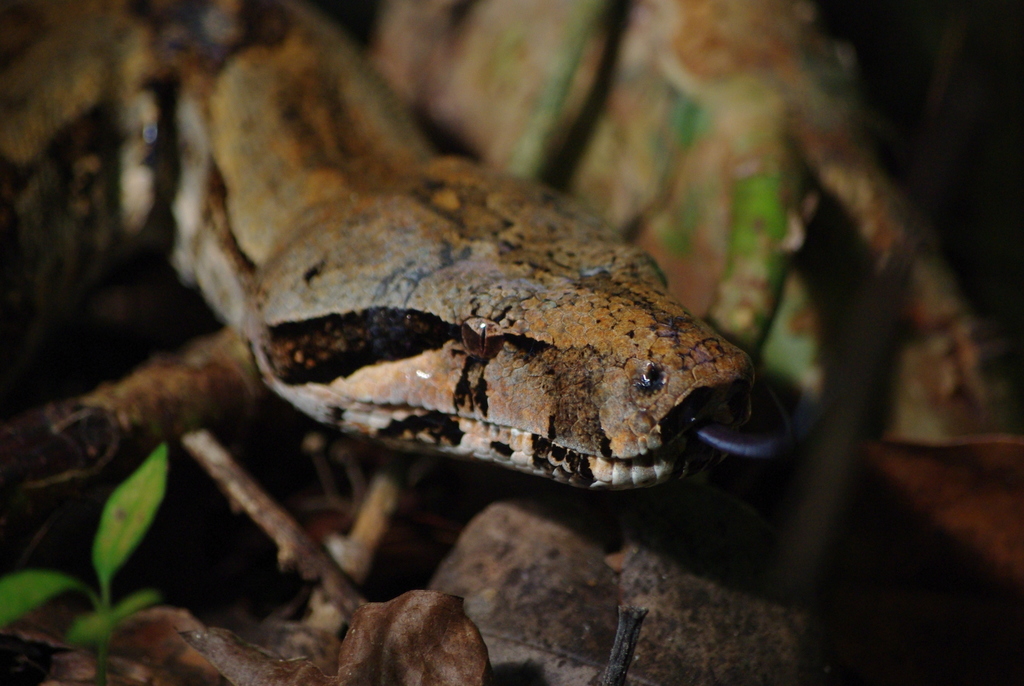
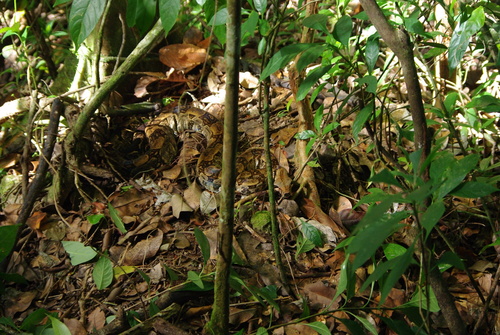
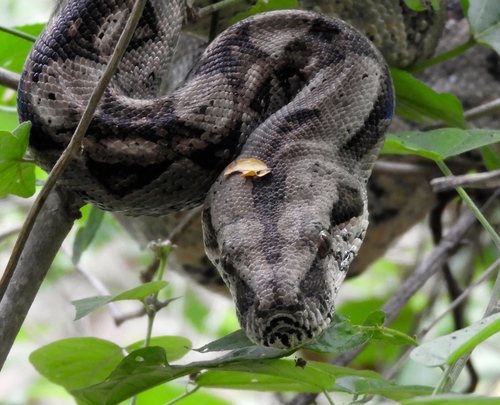
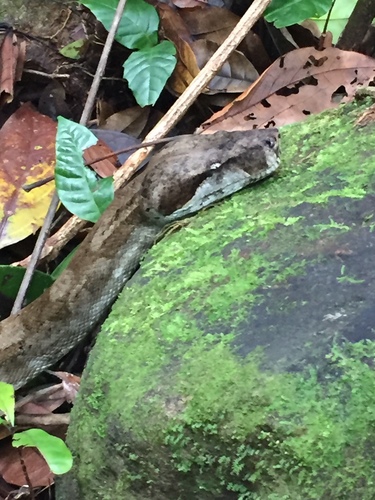
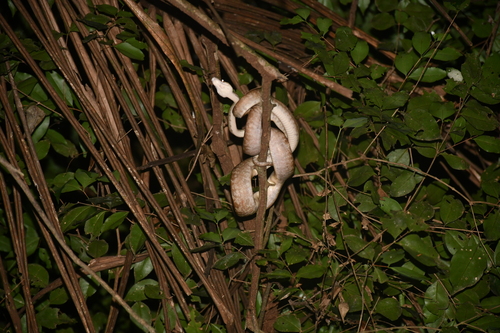
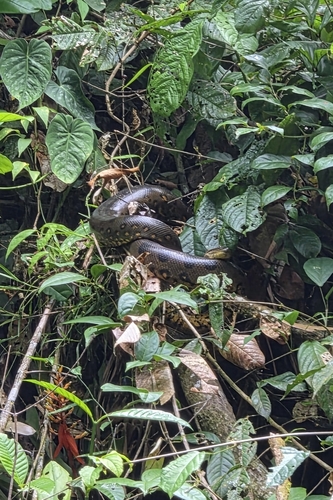
2 photographs of the Santa Lucía Boa Constrictor. © Edward Bell.
The Santa Lucía Boa Constrictor (Boa orophias) is a non-venomous snake in the Boidae family.
- Family
- Boidae
About the Santa Lucía Boa Constrictor
The boa constrictor (scientific name also Boa constrictor), also known as the common boa, is a species of large, non-venomous, heavy-bodied snake that is frequently kept and bred in captivity. The boa constrictor is a member of the family Boidae. The species is native to tropical South America. A staple of private collections and public displays, its color pattern is highly variable yet distinctive. Four subspecies are recognized.
Common names
Though all boids are indeed constrictors, only Boa constrictor (and its subspecies) is commonly referred to, in English, as a boa constrictor—an example of a species being referred to colloquially using its scientific binomial name.
The species and subspecies of B. constrictor are part of a variable, diverse group of New World boids referred to as "red-tailed" boas, comprising the species Boa constrictor and Boa imperator. Within the exotic pet trade, it is known as a "BCC"—an abbreviation of its scientific name—to distinguish it from other boa species, such as Boa imperator (known as "BCI" or "boa constrictor imperator").
Other regional names include the chij-chan (Mayan), jiboia (Portuguese), dagwe (Sranan Tongo), and macajuel (Trinidadian).
Subspecies
Several subspecies of Boa constrictor have been described in the past, but many of these are poorly differentiated, and further research may redefine many of them. Some appear to be based more on location rather than on biological differences. Boa imperator, Boa nebulosa, Boa orophias and Boa sigma have all been elevated to full species status.
Several other subspecies have been described at different times, but currently, these are no longer considered to be valid subspecies by many herpetologists and taxonomists. They include:
B. c. amarali Stull, 1932
B. c. melanogaster Langhammer, 1983: a nomen dubium
Description
Size and weight
The boa constrictor is a large snake, although it is only modestly sized in comparison to other large snakes, such as the reticulated python, Burmese python, or the occasionally sympatric green anaconda, and can reach lengths from 3 to 13 ft (0.91 to 3.96 m) depending on the locality and the availability of suitable prey. Clear sexual dimorphism is seen in the species, with females generally being larger in both length and girth than males. The usual size of mature female boas is between 7 and 10 ft (2.1 and 3.0 m) whereas males are between 6 and 8 ft (1.8 and 2.4 m). Females commonly exceed 10 ft (3.0 m), particularly in captivity, where lengths up to 12 ft (3.7 m) or even 14 ft (4.3 m) can be seen. The largest documented non-stretched dry skin is deposited at Zoologische Staatssammlung München (ZSM 4961/2012) and measures 14.6 ft (4.5 m) without head. A report of a boa constrictor growing up to 18.5 ft (5.6 m) was later found to be a misidentified green anaconda.
Adapted from Wikipedia, available under CC BY-SA.
Frequently asked: Santa Lucía Boa Constrictor
- Is the Santa Lucía Boa Constrictor venomous?
- No. The Santa Lucía Boa Constrictor (Boa orophias) is non-venomous and is not considered dangerous to humans. Like most snakes, it will retreat rather than bite when given the chance.
- Is the Santa Lucía Boa Constrictor poisonous?
- Snakes are venomous, not poisonous. "Poisonous" means harmful to eat or touch; "venomous" means injecting toxins through a bite. The Santa Lucía Boa Constrictor is neither poisonous nor venomous.
- Is the Santa Lucía Boa Constrictor dangerous?
- The Santa Lucía Boa Constrictor is not dangerous to humans. It has no medically significant venom and bites only defensively if cornered or handled.
- What does the Santa Lucía Boa Constrictor eat?
- Their prey includes a wide variety of small to medium-sized mammals and birds. The bulk of their diet consists of rodents (such as squirrels, mice, rats and agoutis), but frogs, larger lizards (such as ameivas, iguanas and tegus) and mammals as big as monkeys, marsupials (opossums), armadillos, wild pigs, young brocket deer and ocelots are also reported to have been consumed. Domestic animals such as dogs, cats, rabbits, ducks and chickens are frequently consumed. Young boa constrictors eat small mice, birds, bats, lizards, and amphibians.
- Why is it called the Santa Lucía Boa Constrictor?
- Though all boids are indeed constrictors, only Boa constrictor (and its subspecies) is commonly referred to, in English, as a boa constrictor—an example of a species being referred to colloquially using its scientific binomial name. The species and subspecies of B. constrictor are part of a variable, diverse group of New World boids referred to as "red-tailed" boas, comprising the species Boa constrictor and Boa imperator.
More Boidae snakes
Classification
How scientists group this snake, from the broadest category down to the exact species. Each step narrows to its closest relatives.
Keep learning
- What to Do If You Find a SnakeFound a snake at home or on a trail? Here is how to stay calm, give it space, identify it safely, and know when to call a professional.
- Venomous vs Nonvenomous: How to Tell the DifferenceThe folk rules for telling venomous snakes apart, where each one fails, and why location-based identification beats guessing by sight.
- What Is a Snake? Anatomy and the BasicsA clear overview of what makes a snake a snake: limbless body plan, anatomy, evolution from lizards, species diversity, and why they are ectothermic.
- How to Keep Snakes Out of Your Yard and HomeA practical guide to keeping snakes out of your yard and home using habitat changes that work, plus what to skip and what to do if one shows up.
Distribution from GBIF & iNaturalist. Venom status per CDC. Background: Wikipedia. Informational only. Never handle a snake to identify it.