
Rosy boa
Coastal Rosy Boa
HarmlessLichanura orcutti
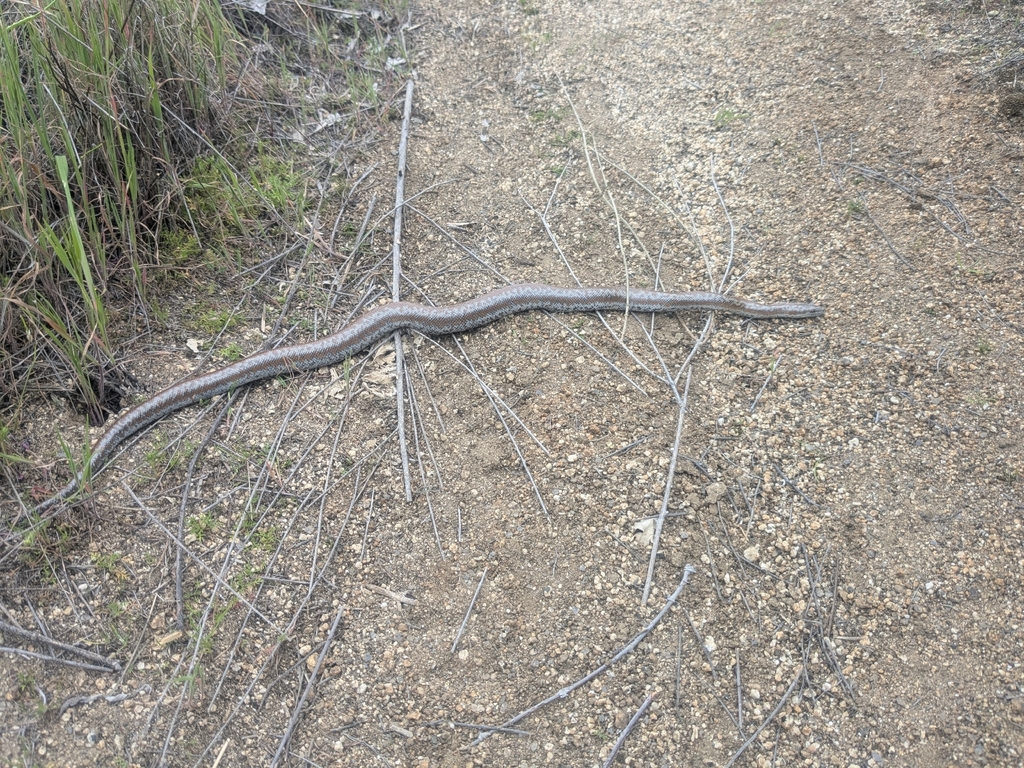
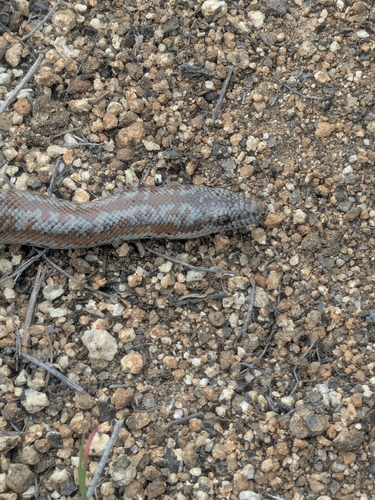
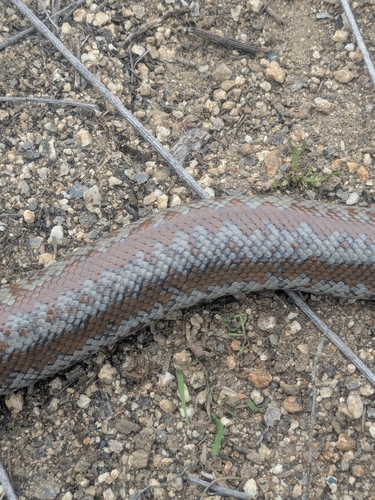
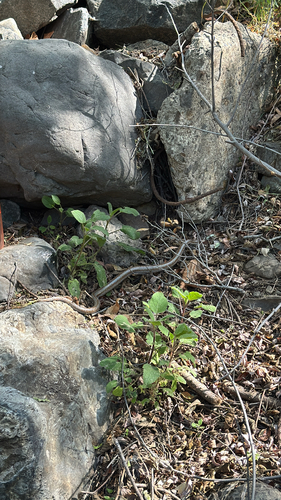
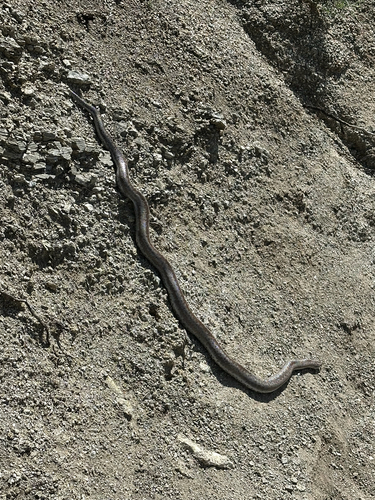
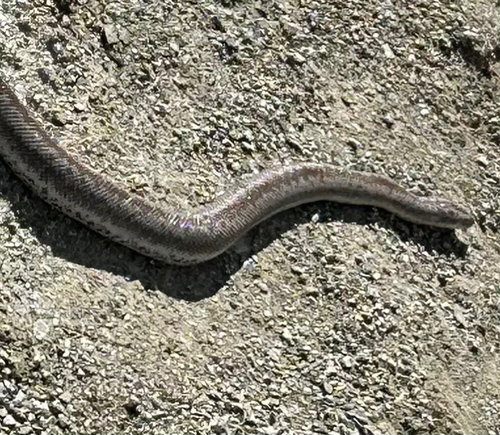
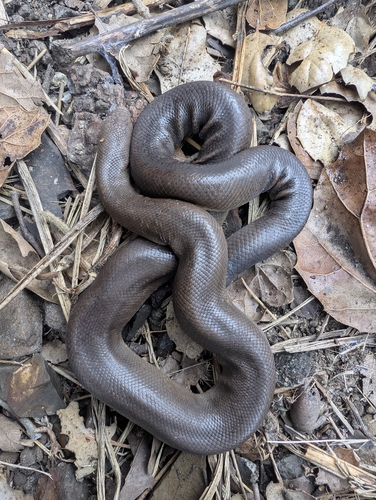
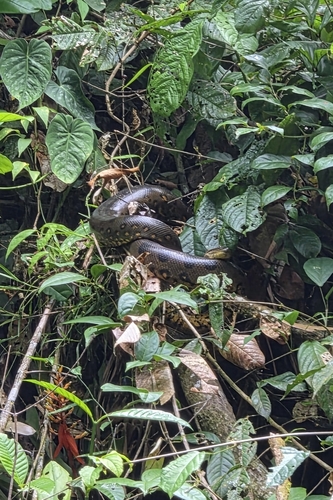
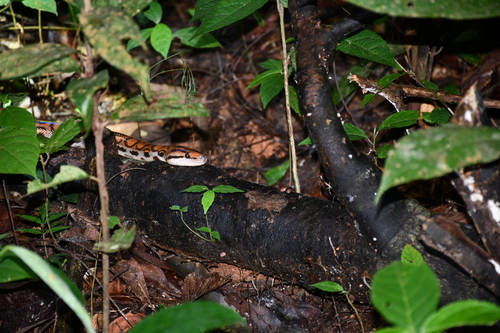
6 photographs of the Coastal Rosy Boa. © David Scriven.
The Coastal Rosy Boa (Lichanura orcutti) is a non-venomous snake in the Boidae family, recorded in 2 countries.
- Also called
- Rosy boa
- Family
- Boidae
- Size
- Stout, 2–3.5 ft.
- Habitat
- Rocky deserts and scrub.
- Behavior
- Slow, docile constrictors.
- Identify
- Thick-bodied with three lengthwise rosy or brown stripes.
About the Coastal Rosy Boa
Lichanura orcutti, also known as the rosy boa, the coastal rosy boa, or the northern three-lined boa, is a species of snake in the family Boidae. This species is found North of the US–Mexico border within San Diego County in California and along the coastal Peninsular Ranges, northward into the Mojave Desert and eastward in the Sonoran Desert of California and Arizona. Lichanura orcutti is one of four boa species native to the continental United States, the other three being the desert rosy boa (Lichanura trivirgata), and the two species of rubber boas (Charina).
Taxonomy
Zoologist Leonhard Stejneger described the species in 1889. Lichanura taxonomy is not well understood; some taxonomists have challenged the Lichanura genus and suggest that these species be grouped with Charina, the rubber boas. L. orcutti was previously considered to be a subspecies of L. trivirgata; DNA analysis later identified L. orcutti as a distinct species. Confusion over scientific names is compounded by the fact that Lichanura species are popular as pets and reptile keepers frequently use outdated taxonomy.
Description
Lichanura orcutti is a heavy-bodied snake with smooth scales and a tapered blunt tail. The head is marginally wider than the neck. It has vertical pupils. Adults can range from 17 to 44 inches (43 to 112 cm) in length, though they rarely exceed 36 inches (91 cm). Hatchlings are 10 to 14 inches long. Males typically have well-developed anal spurs.
This species has three stripes that run lengthwise down the dorsal and lateral aspects of the animal. These stripes may be tan, orange, brick red, or reddish-brown depending on locality; interspaces vary from blue grey to tan, yellow, or nearly white. Stripes vary from defined to ill-defined depending on the individual animal. The coloration of younger animals is typically lighter with more defined striping. Despite the name "rosy boa," most individuals do not have the rosy ventral coloration from which the species derives its popular common name.
Distribution and habitat
This species is found North of the US–Mexico border within San Diego County in California and along the coastal Peninsular Ranges, northward into the Mojave Desert and eastward in the Sonoran Desert of California and Arizona. This species also occurs in southern Nevada.
Habitat consists of arid scrublands, semi-arid shrublands, rocky shrublands, rocky deserts, canyons, and other rocky areas. This species may be more common in riparian areas such as oases and permanent or intermittent streams, but it does not require permanent water. The IUCN Redlist suggests that L. orcutti's affinity for rocky habitats unsuitable for development or agriculture may protect it from habitat loss.
Behavior and ecology
Adapted from Wikipedia, available under CC BY-SA.
Frequently asked: Coastal Rosy Boa
- Is the Coastal Rosy Boa venomous?
- No. The Coastal Rosy Boa (Lichanura orcutti) is non-venomous and is not considered dangerous to humans. Like most snakes, it will retreat rather than bite when given the chance.
- Is the Coastal Rosy Boa poisonous?
- Snakes are venomous, not poisonous. "Poisonous" means harmful to eat or touch; "venomous" means injecting toxins through a bite. The Coastal Rosy Boa is neither poisonous nor venomous.
- Is the Coastal Rosy Boa dangerous?
- The Coastal Rosy Boa is not dangerous to humans. It has no medically significant venom and bites only defensively if cornered or handled.
- Where does the Coastal Rosy Boa live?
- The Coastal Rosy Boa has verified records in 2 countries, including United States of America, Mexico. See the distribution section below for its full range.
- How do I identify the Coastal Rosy Boa?
- Thick-bodied with three lengthwise rosy or brown stripes.
- How big does the Coastal Rosy Boa get?
- Stout, 2–3.5 ft.
- What does the Coastal Rosy Boa eat?
- Lichanura orcutti is an opportunistic predator and will feed on any suitably sized vertebrates including rodents, birds, smaller reptiles, or amphibians. This species kills prey by constriction.
Where it is found
By U.S. state
More Boidae snakes
Classification
How scientists group this snake, from the broadest category down to the exact species. Each step narrows to its closest relatives.
Keep learning
- What to Do If You Find a SnakeFound a snake at home or on a trail? Here is how to stay calm, give it space, identify it safely, and know when to call a professional.
- Venomous vs Nonvenomous: How to Tell the DifferenceThe folk rules for telling venomous snakes apart, where each one fails, and why location-based identification beats guessing by sight.
- What Is a Snake? Anatomy and the BasicsA clear overview of what makes a snake a snake: limbless body plan, anatomy, evolution from lizards, species diversity, and why they are ectothermic.
- How to Keep Snakes Out of Your Yard and HomeA practical guide to keeping snakes out of your yard and home using habitat changes that work, plus what to skip and what to do if one shows up.
Distribution from GBIF & iNaturalist. Venom status per CDC. Background: Wikipedia. Informational only. Never handle a snake to identify it.