
Boidae
Green Anaconda
HarmlessEunectes murinus
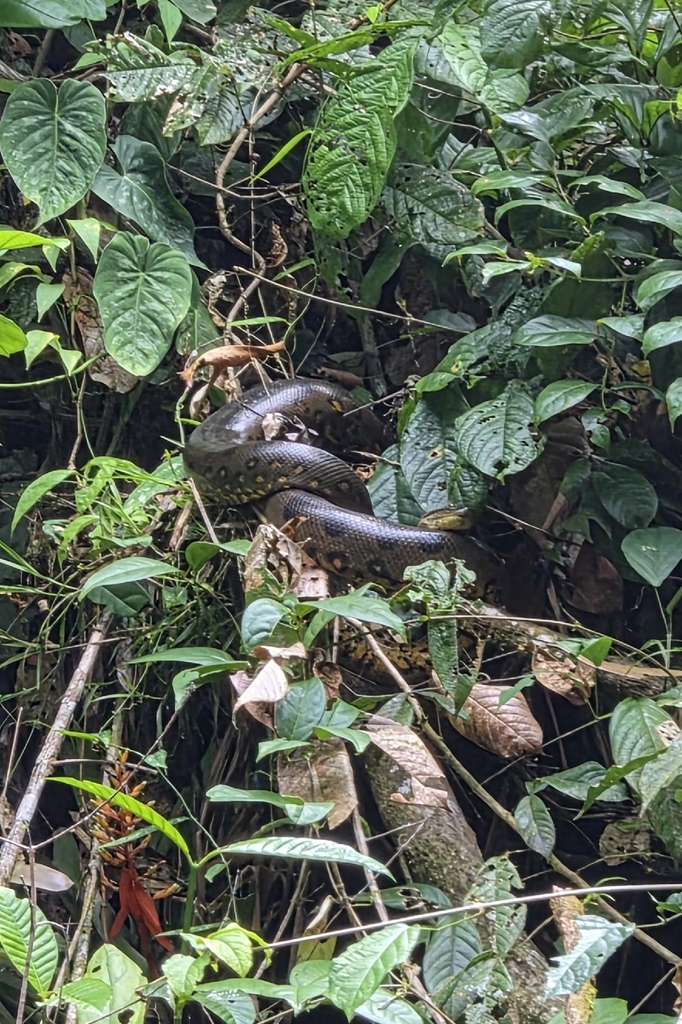
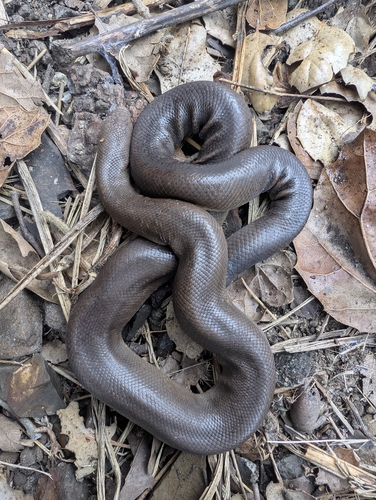
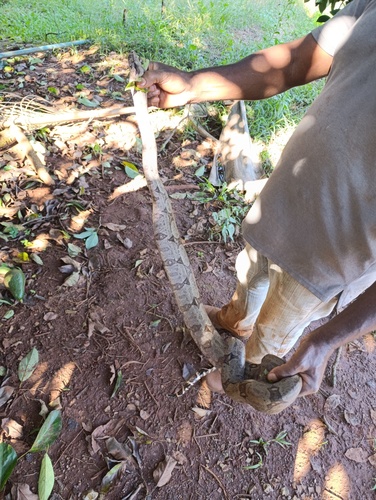
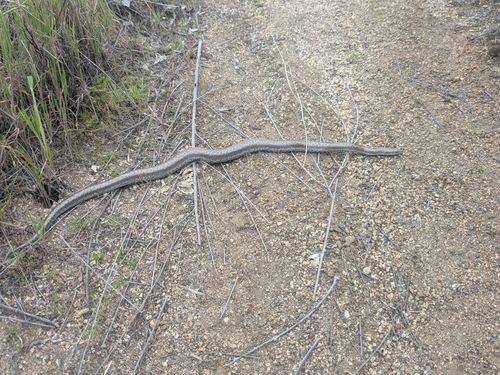
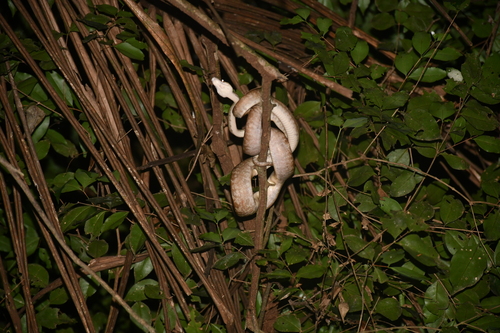
The Green Anaconda (Eunectes murinus) is a non-venomous snake in the Boidae family, recorded in 18 countries.
- Family
- Boidae
About the Green Anaconda
The green anaconda (Eunectes murinus), common anaconda, common water boa, akayima, or sucuri, is a boa species found in South America. It is one of the longest and heaviest known extant snake species. Like all boas, it is a non-venomous constrictor. Green anacondas only have a lifespan of 10 years in the wild, although some specimens live longer when they are taken care of in captivity. Green anacondas live in tropical rainforests and tend to prefer shallow, slow-moving waters, such as streams, rivers and flooded grasslands. They spend most of their time in the water but are also found on land in thick vegetation.
Taxonomy
In the famous 10th edition of Systema Naturae of 1758, Carl Linnaeus cited descriptions by Albertus Seba and by Laurens Theodorus Gronovius to erect the distinct species murina of his new genus Boa, which contained eight other species, including Boa constrictor. The generic name Boa came from an ancient Latin word for a type of large snake. The first specimens of Boa murina were of immature individuals from 75 to 90 cm (2.5 to 3.0 ft) in length. In 1830, Johann Georg Wagler erected the separate genus Eunectes for Linnaeus's Boa murina after more and larger specimens were known and described. Because of the masculine gender of Eunectes, the feminine Latin specific name murina was changed to murinus.
Linnaeus almost certainly chose the scientific name Boa murina based on the original Latin description given by Albertus Seba in 1735: "Serpens testudinea americana, murium insidiator" [tortoise-patterned (spotted) American snake, a predator that lies in wait for mice (and rats)]. The Latin adjective murinus (murina) in this case would mean "of mice" or "connected with mice", understood in context as "preying on mice", and not as "mouse-gray-colored", another possible meaning of Latin murinus, as now often wrongly indicated for E. murinus.
Early English-language sources, such as George Shaw, referred to the Boa murina as the "rat boa". The Penny Cyclopaedia (Vol. 5) entry for boa explained: "The trivial name murina was given to it from being said to lie in wait for mice." Linnaeus described the appearance of the Boa murina in Latin as rufus maculis supra rotundatis [reddish-brown with rounded spots on upper parts] and made no reference to a gray coloration. Early descriptions of the green anaconda by different authors variously referred to the general color like brown, glaucous, green, or gray.
Common names for E. murinus include green anaconda, anaconda, common anaconda, and water boa. The word akayima and variants (okoyimo, okoimo) have been used by the local Carib people to refer to the green anaconda for centuries before its formal scientific description. The name akayima comes from the local Cariban languages, with akayi meaning "snake" and the suffix -ima describing largeness in a way that elevates the term to a separate category, giving a literal meaning of "The Great Snake".
Adapted from Wikipedia, available under CC BY-SA.
Frequently asked: Green Anaconda
- Is the Green Anaconda venomous?
- No. The Green Anaconda (Eunectes murinus) is non-venomous and is not considered dangerous to humans. Like most snakes, it will retreat rather than bite when given the chance.
- Is the Green Anaconda poisonous?
- Snakes are venomous, not poisonous. "Poisonous" means harmful to eat or touch; "venomous" means injecting toxins through a bite. The Green Anaconda is neither poisonous nor venomous.
- Is the Green Anaconda dangerous?
- The Green Anaconda is not dangerous to humans. It has no medically significant venom and bites only defensively if cornered or handled.
- Where does the Green Anaconda live?
- The Green Anaconda has verified records in 18 countries, including Brazil, Colombia, Ecuador. See the distribution section below for its full range.
Where it is found
More Boidae snakes

Classification
How scientists group this snake, from the broadest category down to the exact species. Each step narrows to its closest relatives.
Keep learning
- What to Do If You Find a SnakeFound a snake at home or on a trail? Here is how to stay calm, give it space, identify it safely, and know when to call a professional.
- Venomous vs Nonvenomous: How to Tell the DifferenceThe folk rules for telling venomous snakes apart, where each one fails, and why location-based identification beats guessing by sight.
- What Is a Snake? Anatomy and the BasicsA clear overview of what makes a snake a snake: limbless body plan, anatomy, evolution from lizards, species diversity, and why they are ectothermic.
- How to Keep Snakes Out of Your Yard and HomeA practical guide to keeping snakes out of your yard and home using habitat changes that work, plus what to skip and what to do if one shows up.
Distribution from GBIF & iNaturalist. Venom status per CDC. Background: Wikipedia. Informational only. Never handle a snake to identify it.