
Boidae
Garden Tree Boa
HarmlessCorallus hortulana
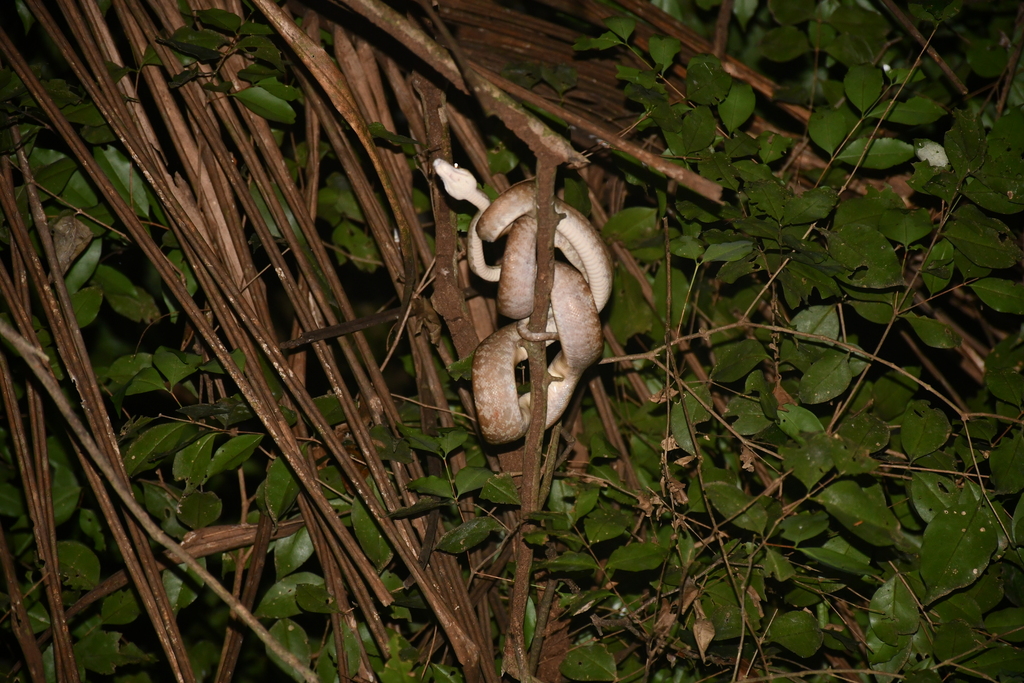
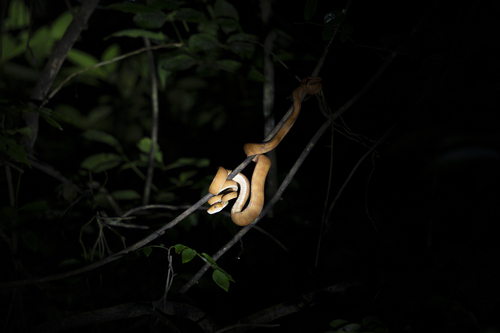
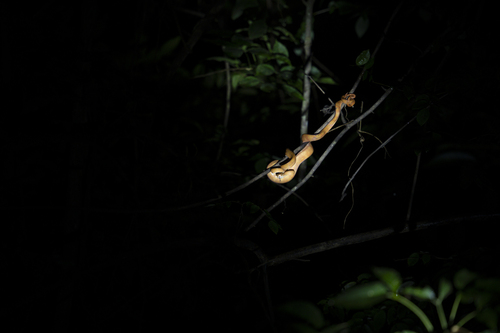
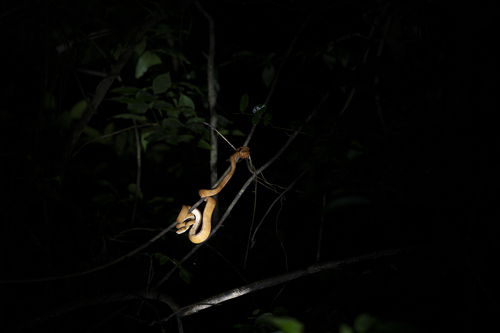
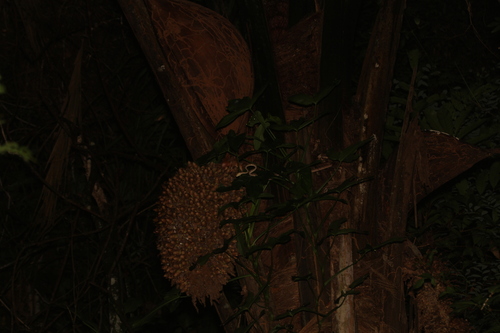
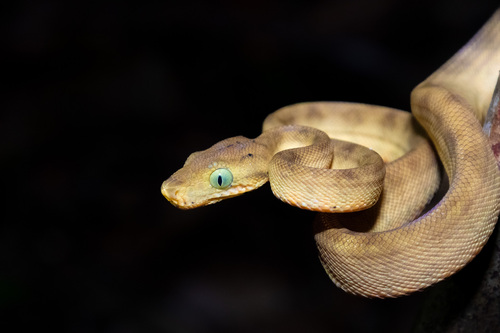
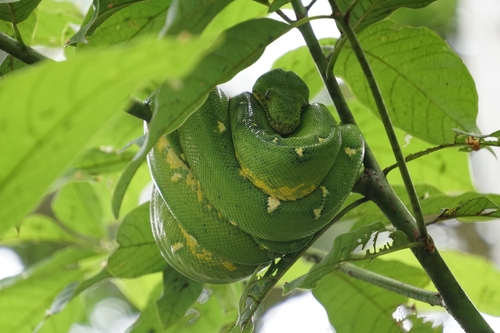
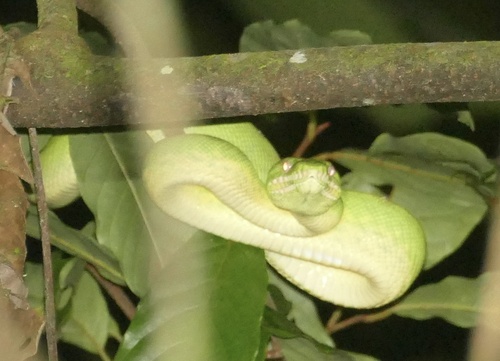
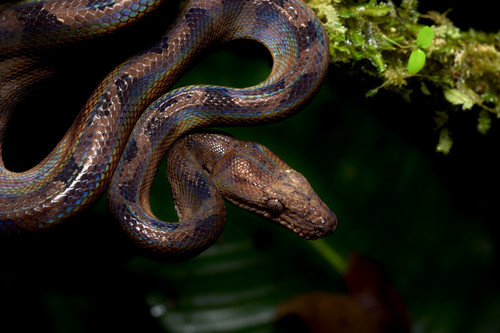
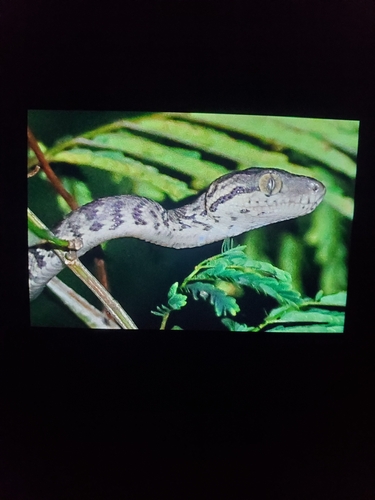
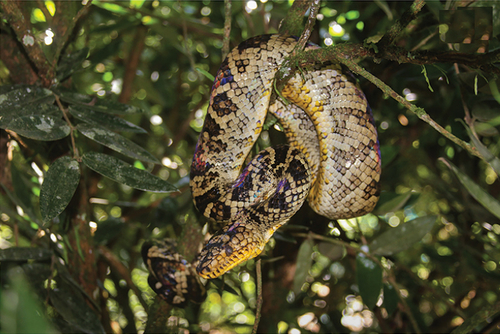
6 photographs of the Garden Tree Boa. © Vincent A. Vos.
The Garden Tree Boa (Corallus hortulana) is a non-venomous snake in the Boidae family, recorded in 17 countries.
- Family
- Boidae
About the Garden Tree Boa
Corallus hortulana, previously known as Corallus hortulanus, and commonly known as the Amazon tree boa, common tree boa, garden tree boa, and macabrel, is a boa species found in South America. Previously, there were two recognized subspecies, Corallus hortulanus hortulanus, and Corallus hortulanus cooki, though the species has undergone taxonomic revision and has been broken up into several species. It is primarily nocturnal and arboreal, though it has been observed feeding and reproducing on the ground. Like all boas, it is non-venomous.
Description
Adults grow to an average of 5 and 6.5 feet (1.5–2 m). This species exhibits an array of colors and patterns. The basic color can be anywhere from black, brown, or gray, to any shade of red, orange, yellow, or many colors in between. The head generally has five dark stripes that extend from the eyes. The eyes can be yellowish, grayish, or reddish, and they have a reflective membrane that results in eyeshine at night. Some are patternless, while others may be speckled, banded, or saddled with rhomboid or chevron shapes. Some reds will have yellow patterns, some yellows red or orange patterns. "The tongue is black. Males and females are similar in size and markings. They range from 525 to 1880 mm in length, usually from 1200 to 1500 mm." Like all other boas they have a pair of anal spurs that extend from the cloaca, which are small, claw-like remnants of vestigial hindlimbs.
In the herpetoculture hobby, they are often distinguished by two color 'phases' that appear genetically inherited, the 'garden phase' and the 'colored phase'. The 'garden phase' refers to boas with drab coloration, mostly brown or olive, with varied patterning, while the 'colored phase' refers to animals with combinations of red, orange, and yellow coloring.
Geographic range
The range of Corallus hortulana stretches from southern Central America, across northern South America, southeast to the Tropic of Cancer in Brazil. Amazon tree boas are found in a wide variety of habitats. They are common in arboreal regions with high humidity, especially Amazon rainforest. They can also be found in dry areas such as savannas or dry forests.
Most studied Corallus hortulana specimens are found 2 m (6.6 ft) or more above the ground in trees or other vegetation. They have also been observed feeding and reproducing on the ground. Amazon tree boas are also relatively common along rivers. They occupy forest, rainforest and scrub forest terrestrial biomes and are especially associated with riparian habitats.
They range from 0 to 900 m (3,000 ft) in elevation, though typically found below 300 m (980 ft) elevation.
Diet
Adapted from Wikipedia, available under CC BY-SA.
Frequently asked: Garden Tree Boa
- Is the Garden Tree Boa venomous?
- No. The Garden Tree Boa (Corallus hortulana) is non-venomous and is not considered dangerous to humans. Like most snakes, it will retreat rather than bite when given the chance.
- Is the Garden Tree Boa poisonous?
- Snakes are venomous, not poisonous. "Poisonous" means harmful to eat or touch; "venomous" means injecting toxins through a bite. The Garden Tree Boa is neither poisonous nor venomous.
- Is the Garden Tree Boa dangerous?
- The Garden Tree Boa is not dangerous to humans. It has no medically significant venom and bites only defensively if cornered or handled.
- Where does the Garden Tree Boa live?
- The Garden Tree Boa has verified records in 17 countries, including Brazil, Peru, French Guiana. See the distribution section below for its full range.
- What does the Garden Tree Boa eat?
- Like all other Boidae, Amazon Tree Boas feed by constricting whole, live prey. They have long teeth which help it to catch potentially flying prey while in trees. The diet is described as being "very euryphagic", which means it consumes a wide variety of prey. Its diet is composed of frogs (mostly treefrogs), lizards (anoles, basilisks, green iguanas, tropic lizards and whiptails such as giant ameivas), birds, mammals (marsupials, bats, primates, porcupines and rodents) and possibly even fish.
Where it is found
By U.S. state
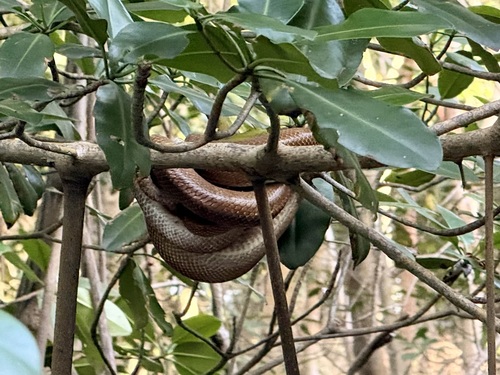
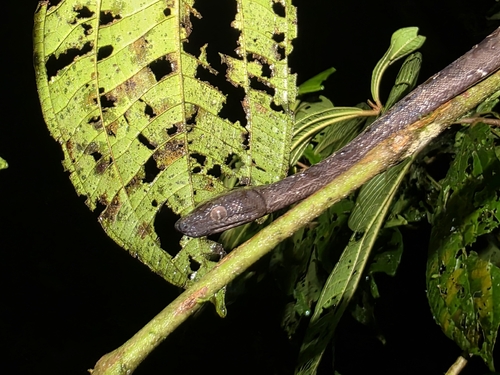
More Boidae snakes

Classification
How scientists group this snake, from the broadest category down to the exact species. Each step narrows to its closest relatives.
Keep learning
- What to Do If You Find a SnakeFound a snake at home or on a trail? Here is how to stay calm, give it space, identify it safely, and know when to call a professional.
- Venomous vs Nonvenomous: How to Tell the DifferenceThe folk rules for telling venomous snakes apart, where each one fails, and why location-based identification beats guessing by sight.
- What Is a Snake? Anatomy and the BasicsA clear overview of what makes a snake a snake: limbless body plan, anatomy, evolution from lizards, species diversity, and why they are ectothermic.
- How to Keep Snakes Out of Your Yard and HomeA practical guide to keeping snakes out of your yard and home using habitat changes that work, plus what to skip and what to do if one shows up.
Distribution from GBIF & iNaturalist. Venom status per CDC. Background: Wikipedia. Informational only. Never handle a snake to identify it.