
Elapidae
Forest Cobra
VenomousNaja melanoleuca
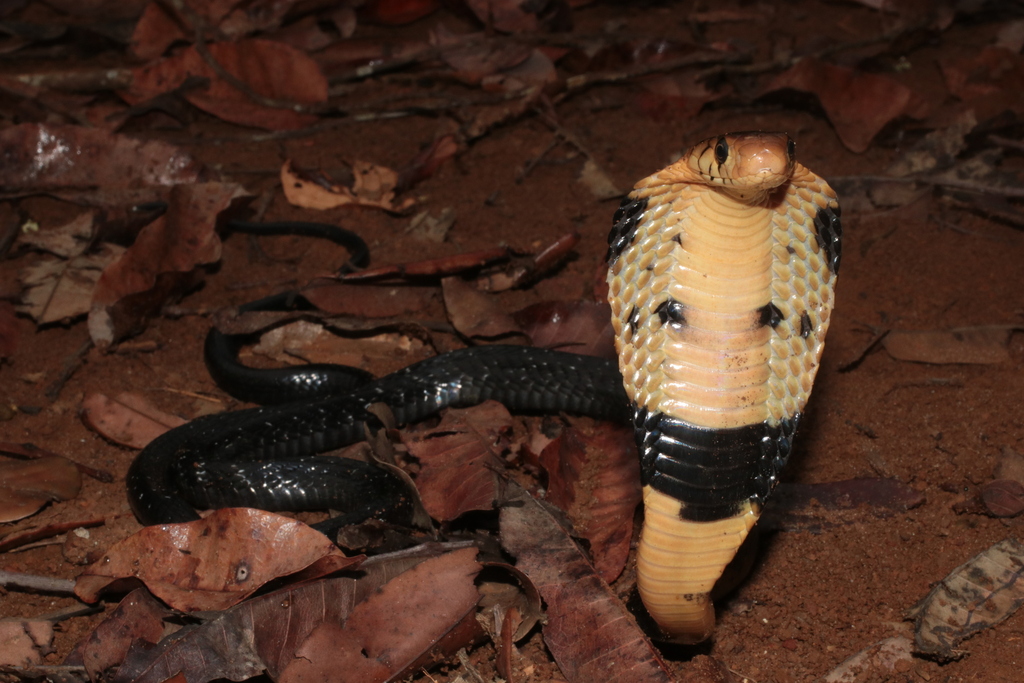
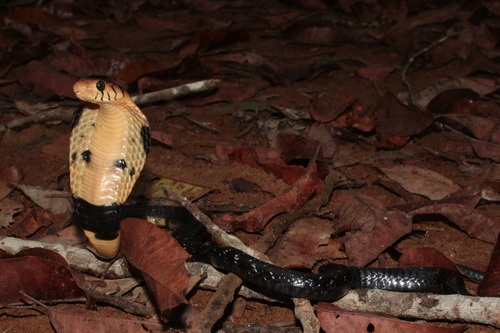
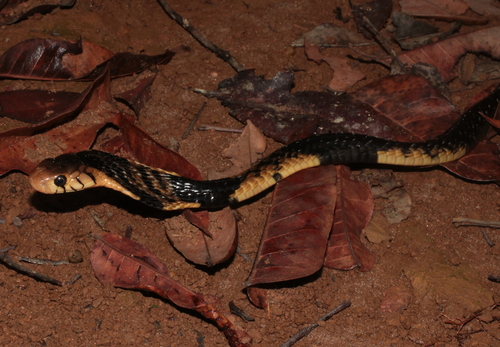
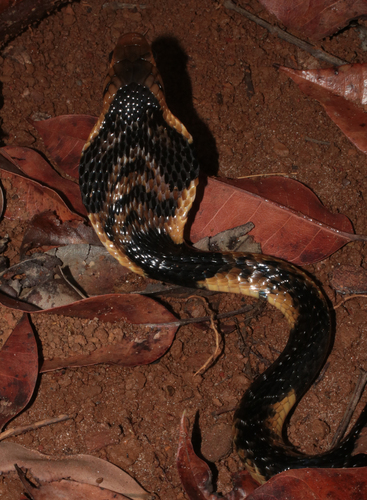
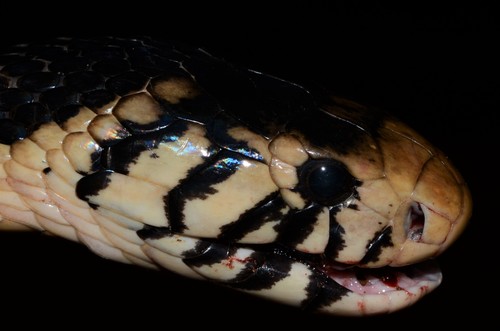
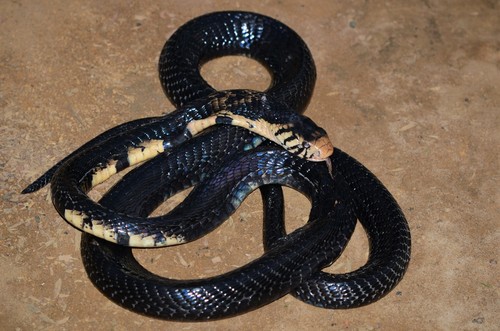
6 photographs of the Forest Cobra. © Ryan van Huyssteen.
The Forest Cobra (Naja melanoleuca) is a venomous snake in the Elapidae family, recorded in 36 countries.
If you are bitten
This is a venomous snake. Treat any bite as a medical emergency: stay calm, keep the bitten limb still and roughly level with the heart, remove rings and tight clothing, and get to emergency care immediately. Do not apply a tourniquet, cut the wound, apply ice, or try to suck out venom. Call your local emergency number or poison center.
- Family
- Elapidae
- Danger
- high
About the Forest Cobra
The forest cobra (Naja melanoleuca), also commonly called the black cobra and the black and white-lipped cobra, is a species of
highly venomous snake in the family Elapidae. The species is native to Africa, mostly the central and western parts of the continent. It is the largest true cobra species with a record length of 3.2 metres (10 feet 6 inches).
Although it prefers lowland forest and moist savanna habitats, this cobra is highly adaptable and can be found in drier climates within its geographical range. It is a very capable swimmer and is often considered to be semi-aquatic. The forest cobra is a generalist in its feeding habits, having a highly varied diet: anything from large insects to small mammals and other reptiles. This species is alert, nervous and is considered to be a medically significant snake. When cornered or molested, it will assume the typical cobra warning posture by raising its fore body off the ground, spreading a narrow hood, and hissing loudly. Bites to humans are less common than from other African cobras due to various factors, though a bite from this species is a life-threatening emergency.
Taxonomy and evolution
The forest cobra is classified in the genus Naja of the family Elapidae. Naja melanoleuca was first described by American herpetologist Edward Hallowell in 1857. The generic name Naja is a Latinisation of the Sanskrit word nāgá (नाग) meaning "cobra". The specific epithet melanoleuca is Ancient Greek and means "of black and white". The word melano is Greek for "black", while leuca comes from the Ancient Greek word for "white". This species is also known as the black cobra and black and white-lipped cobra.
The genus Naja was first described by Josephus Nicolaus Laurenti in 1768. The species of Naja melanoleuca was first described by Edward Hallowell in 1857. The genus Naja was split into several subgenera based on various factors, including morphology, diet, and habitat. Naja melanoleuca is part of the subgenus Boulengerina, along with three other species: Naja annulata, Naja christyi, and Naja multifasciata. The subgenus is united by their restriction to central and west African forest and/or forest-edge type habitat. They are also more aquatic, preying more on aquatic animals, as well. The species within the subgenus Boulengerina show great diversity in size; from the forest cobra (Naja melanoleuca), which can attain lengths of nearly 2.7 metres (8.9 feet), to the burrowing cobra (Naja multifasciata), which usually doesn't grow larger than 0.8 metres (2.6 feet) in length.
The cladogram below illustrates the taxonomy and relationships among species of Naja:
Adapted from Wikipedia, available under CC BY-SA.
Local and regional names
The Forest Cobra is known by these names across the regions where it lives:
- Bengali
- কালো কোবরা
- Chinese
- 森林眼鏡蛇
- Czech
- kobra černá
- Danish
- Centralafrikank Skovkobra
- English
- Black and White Cobra, Central Africa Forest Cobra, Central African Forest Cobra
- Finnish
- Mustahuulikobra
- French
- Cobra des forêts
- German
- Schwarzweiße Hutschlange, Schwarzweiße Kobra
- Hungarian
- erdei kobra
- Italian
- Cobra della foresta
- Polish
- kobra czarnobiała
- Portuguese
- Cobra-da-floresta
- Russian
- Чёрно-белая кобра
Frequently asked: Forest Cobra
- Is the Forest Cobra venomous?
- Yes. The Forest Cobra (Naja melanoleuca) is venomous and belongs to the Elapidae family (cobra, mamba, coral or sea snake). Its bite is considered high risk to people. Treat any bite as a medical emergency.
- Is the Forest Cobra poisonous?
- Snakes are venomous, not poisonous. "Poisonous" means harmful to eat or touch; "venomous" means injecting toxins through a bite. The Forest Cobra is venomous, delivering venom through a bite.
- Is the Forest Cobra dangerous?
- This is a venomous snake. Treat any bite as a medical emergency: stay calm, keep the bitten limb still and roughly level with the heart, remove rings and tight clothing, and get to emergency care immediately. Do not apply a tourniquet, cut the wound, apply ice, or try to suck out venom. Call your local emergency number or poison center.
- Where does the Forest Cobra live?
- The Forest Cobra has verified records in 36 countries, including Congo, Democratic Republic of the, Cameroon, Benin. See the distribution section below for its full range.
If you are bitten by the Forest Cobra
Do
- Get away from the snake and stay calm. Most bites worsen when people panic or try again to handle the snake.
- Call 911 or Poison Control (1-800-222-1222) right away. Antivenom works best when given early.
- Note the time of the bite and, from a safe distance, the snake's color and pattern, a phone photo is enough. Do not chase it.
- Keep the bitten limb still and at roughly heart level. Sit or lie down and limit movement.
- Remove rings, watches, and tight clothing near the bite before swelling starts.
- Gently wash the bite with soap and water and cover it with a clean, dry dressing.
Do not
- Do not cut the wound or try to suck out the venom.
- Do not apply a tourniquet or ice.
- Do not drink alcohol or caffeine.
- Do not take aspirin or ibuprofen, they can worsen bleeding. Acetaminophen is safer for pain.
- Do not try to catch or kill the snake. A dead snake can still bite by reflex.
First-aid guidance adapted from the U.S. Centers for Disease Control and Prevention (CDC NIOSH), Venomous Snakes. Educational only; always follow the instructions of emergency responders.
Where it is found
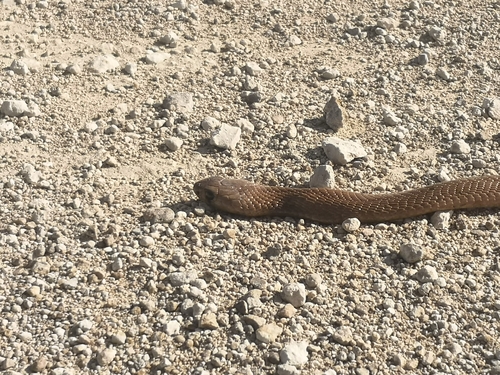
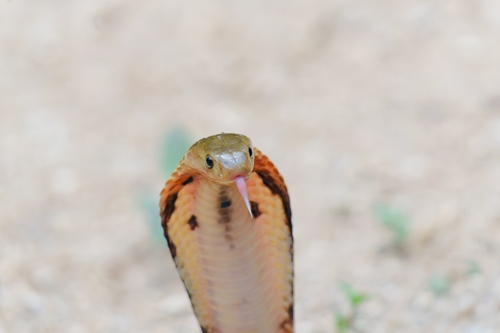
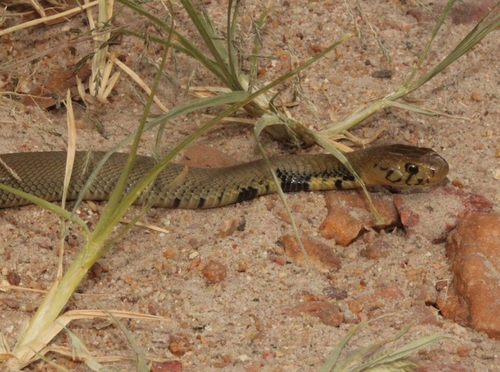
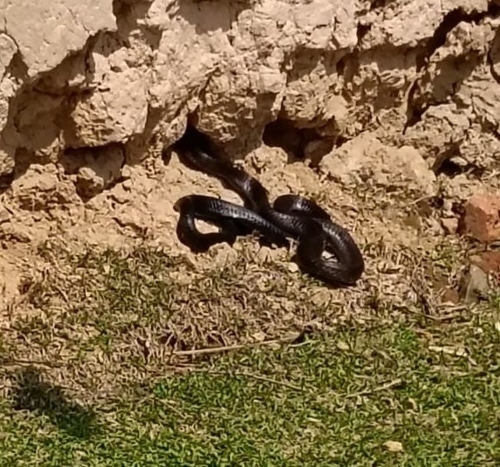
More Elapidae snakes
Classification
How scientists group this snake, from the broadest category down to the exact species. Each step narrows to its closest relatives.
Keep learning
- Are Snakes Dangerous? The Real Risk, in PerspectiveMost snakes are harmless and avoid people. Here is the honest picture of snakebite risk worldwide and how to lower your own.
- Snakebite First Aid: What to Do (and What Never to Do)A clear, CDC-based guide to snakebite first aid: the steps that help, the popular myths that hurt, and how to tell a serious bite from a minor one.
- Venomous vs Nonvenomous: How to Tell the DifferenceThe folk rules for telling venomous snakes apart, where each one fails, and why location-based identification beats guessing by sight.
- What to Do If You Find a SnakeFound a snake at home or on a trail? Here is how to stay calm, give it space, identify it safely, and know when to call a professional.
Distribution from GBIF & iNaturalist. Venom status per CDC. Background: Wikipedia. Informational only. Never handle a snake to identify it.