
Viperidae
Rhombic Night Adder
VenomousCausus rhombeatus
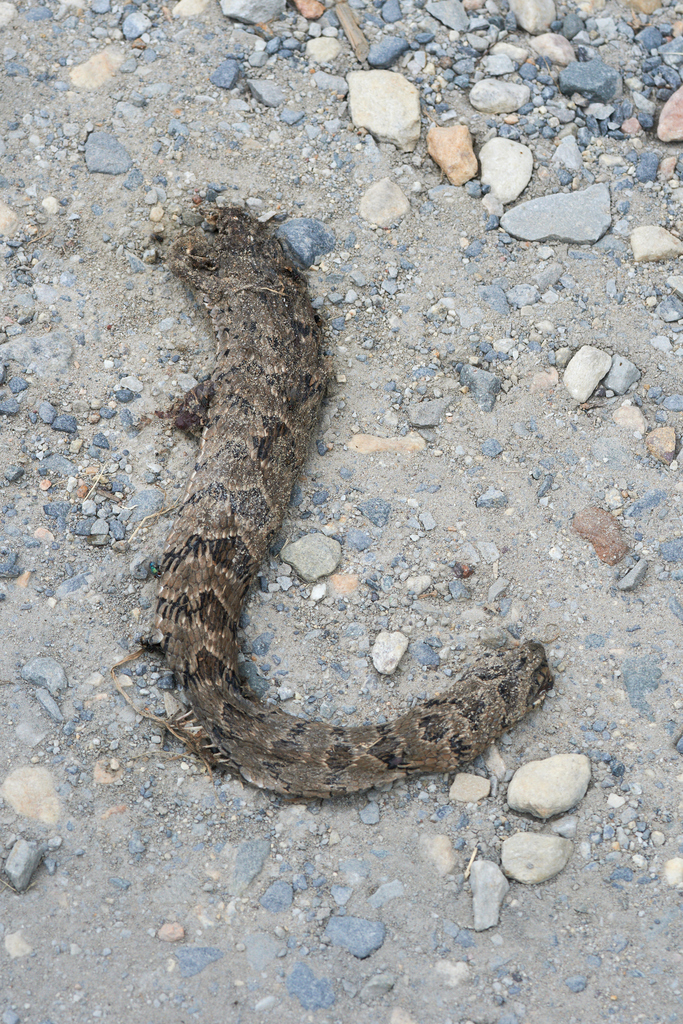
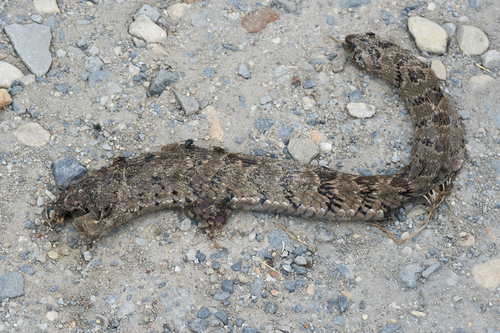
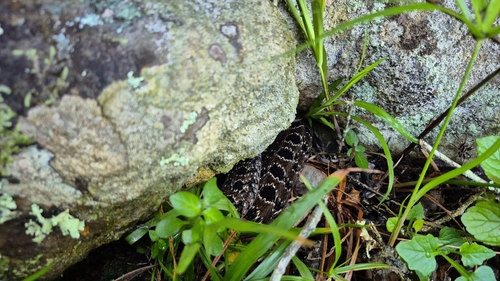
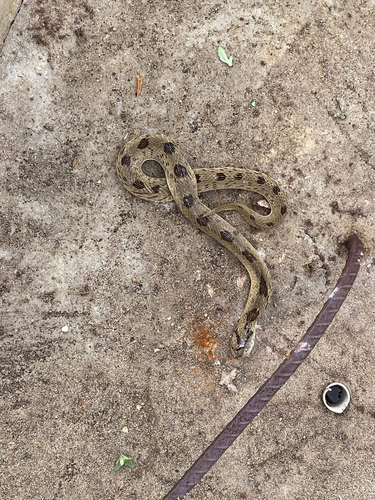
3 photographs of the Rhombic Night Adder. © Glynn Morris.
The Rhombic Night Adder (Causus rhombeatus) is a venomous snake in the Viperidae family, recorded in 37 countries.
If you are bitten
This is a venomous snake. Treat any bite as a medical emergency: stay calm, keep the bitten limb still and roughly level with the heart, remove rings and tight clothing, and get to emergency care immediately. Do not apply a tourniquet, cut the wound, apply ice, or try to suck out venom. Call your local emergency number or poison center.
- Family
- Viperidae
- Danger
- high
About the Rhombic Night Adder
Causus rhombeatus, commonly known as the rhombic night adder, is a species of venomous snake in the subfamily Viperinae of the family Viperidae. The species is native to Sub-Saharan Africa. No subspecies are recognized as being valid.
Description
With an average total length (tail included) of 60 cm (24 in), C. rhombeatus is the largest member of the genus Causus. The longest individual ever recorded was a male, 93 cm (37 in) in total length, collected in eastern Zimbabwe.
The head has a snout that is relatively blunt (i.e., more rounded than in other members of this genus), on the sides of which the nostrils are positioned. The circumorbital ring consists of 2–3 preoculars, 1–2 postoculars, and 1–2 suboculars that separate the eye from the supralabials. The temporal scales usually number 2+3, sometimes 2+4, but very rarely 2+2 or 3+3. There are 6 supralabial scales, very rarely 7. The sublabial scales usually number 7 or 10, rarely 8, and very rarely 11, 12 or 13. The first 3–4 sublabials are in contact with the anterior chin shields. The posterior chin shields are small and often indistinguishable from the gulars.
At midbody there are 15–21 rows of dorsal scales that are moderately keeled and have a satiny texture. The ventral scales number 120–166, the subcaudals, most of which are divided, 15–36.
The color pattern consists of a ground color that is usually some shade of brown (possibly pinkish or grayish-brown), but occasionally olive green. This is overlaid with a pattern of 20–30 rhombic blotches that have pale edges, as well as a sprinkling of black scales and oblique black bars on the sides. Each oblique black bar is topped by one or two black spots, each with a pale centre, and strongly resembling an eye. Northern populations may be patternless, making them difficult to identify, while in others the pale edges may be missing, the rhombic blotches may be a darker color, or there may even be a dark brown vertebral stripe. The head has a characteristic V-shaped mark that may be solid black, or brown with a black outline. Compare this with the description of the common egg-eater Dasypeltis scabra, a species that has a colour pattern and behaviour that may be an evolutionary strategy for defensive mimicry.
Common names
Common names for C. rhombeatus include rhombic night adder, demon night adder, Cape night adder, African night adder, and Cape viper.
Geographic range
C. rhombeatus is found in Sub-Saharan Africa from Nigeria east to Sudan, Ethiopia, Somalia and Kenya, south through Tanzania, Uganda, Rwanda, Burundi, DR Congo, Angola, Zambia, Malawi, Zimbabwe, northern Botswana, Mozambique, Eswatini, and eastern South Africa to Riverdale in the Western Cape Province. No type locality is listed.
Habitat
Adapted from Wikipedia, available under CC BY-SA.
Local and regional names
The Rhombic Night Adder is known by these names across the regions where it lives:
- Afrikaans
- Gewone Nagadder, Nagadder
- Chinese
- 夜蝰
- Czech
- pazmije vejcorodá
- Danish
- Almindelig Tudsehugorm
- English
- Common Night Adder, Common or Rhombic Night Adder
- German
- Krötenotter
- Hebrew
- צפע לילי מצוי
- Hungarian
- Közönséges éjjeli vipera, nyílvipera
- Italian
- Vipera della notte
- Polish
- nocnica zwyczajna
- Russian
- Ромбическая жабья гадюка
- Ukrainian
- Жаб'яча гадюка ромбічна
- Zulu
- inhlangwane, umantshingelana
Frequently asked: Rhombic Night Adder
- Is the Rhombic Night Adder venomous?
- Yes. The Rhombic Night Adder (Causus rhombeatus) is venomous and belongs to the Viperidae family (viper). Its bite is considered high risk to people. Treat any bite as a medical emergency.
- Is the Rhombic Night Adder poisonous?
- Snakes are venomous, not poisonous. "Poisonous" means harmful to eat or touch; "venomous" means injecting toxins through a bite. The Rhombic Night Adder is venomous, delivering venom through a bite.
- Is the Rhombic Night Adder dangerous?
- This is a venomous snake. Treat any bite as a medical emergency: stay calm, keep the bitten limb still and roughly level with the heart, remove rings and tight clothing, and get to emergency care immediately. Do not apply a tourniquet, cut the wound, apply ice, or try to suck out venom. Call your local emergency number or poison center.
- Where does the Rhombic Night Adder live?
- The Rhombic Night Adder has verified records in 37 countries, including South Africa, Congo, Democratic Republic of the, Zambia. See the distribution section below for its full range.
- What does the Rhombic Night Adder eat?
- The diet of C. rhombeatus consists mainly of toads, but it also includes frogs and small mammals.
- Why is it called the Rhombic Night Adder?
- Common names for C. rhombeatus include rhombic night adder, demon night adder, Cape night adder, African night adder, and Cape viper.
If you are bitten by the Rhombic Night Adder
Do
- Get away from the snake and stay calm. Most bites worsen when people panic or try again to handle the snake.
- Call 911 or Poison Control (1-800-222-1222) right away. Antivenom works best when given early.
- Note the time of the bite and, from a safe distance, the snake's color and pattern, a phone photo is enough. Do not chase it.
- Keep the bitten limb still and at roughly heart level. Sit or lie down and limit movement.
- Remove rings, watches, and tight clothing near the bite before swelling starts.
- Gently wash the bite with soap and water and cover it with a clean, dry dressing.
Do not
- Do not cut the wound or try to suck out the venom.
- Do not apply a tourniquet or ice.
- Do not drink alcohol or caffeine.
- Do not take aspirin or ibuprofen, they can worsen bleeding. Acetaminophen is safer for pain.
- Do not try to catch or kill the snake. A dead snake can still bite by reflex.
First-aid guidance adapted from the U.S. Centers for Disease Control and Prevention (CDC NIOSH), Venomous Snakes. Educational only; always follow the instructions of emergency responders.
Where it is found
More Viperidae snakes
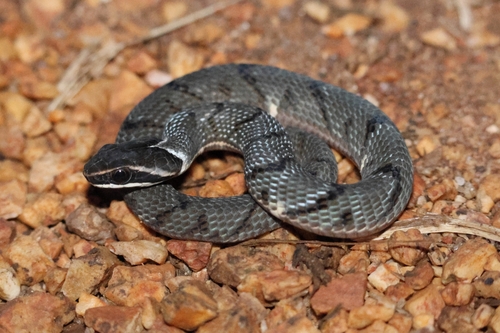
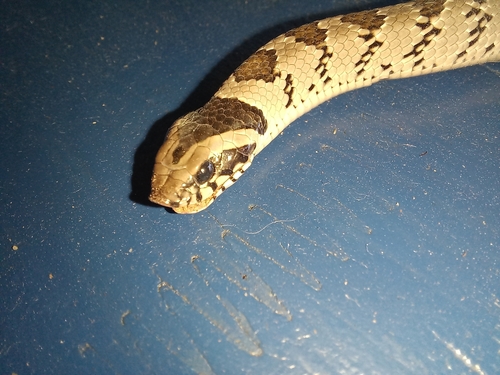 Snouted Night AdderCausus defilippii
 Spotted Night AdderCausus maculatus
 Forest Night AdderCausus lichtensteinii
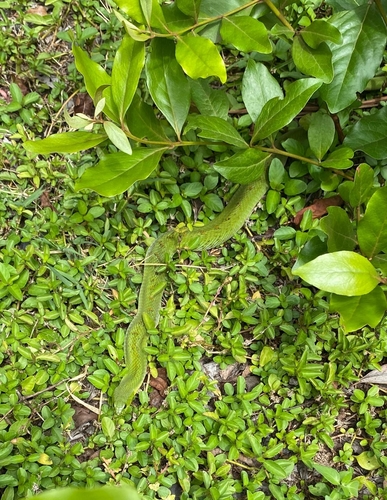 Green Night AdderCausus resimus
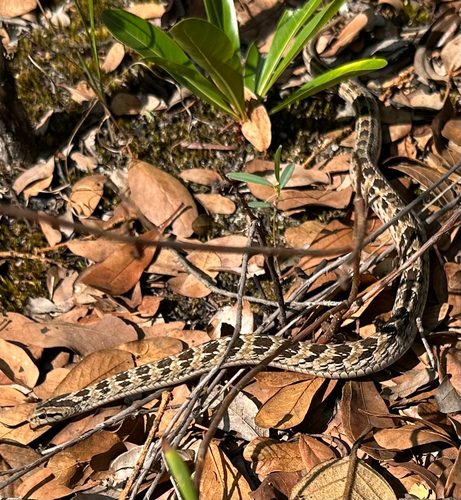 Two-lined Night AdderCausus bilineatus
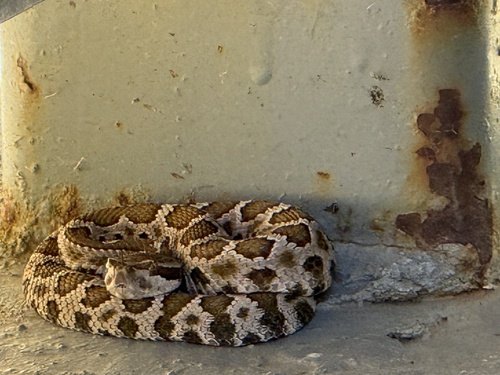 Western RattlesnakeCrotalus oreganus
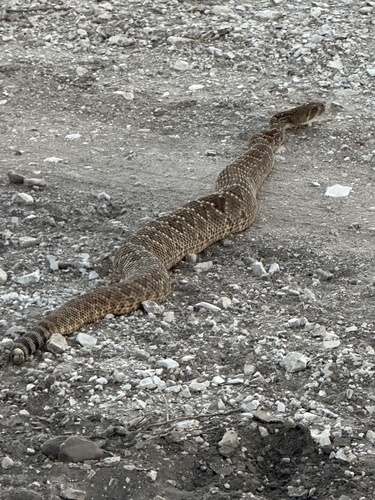 Western Diamond-backed RattlesnakeCrotalus atrox
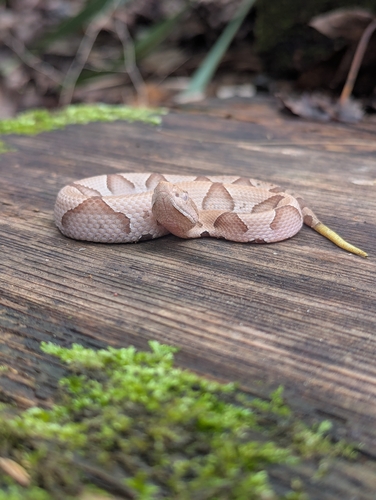 Eastern CopperheadAgkistrodon contortrix
Classification
How scientists group this snake, from the broadest category down to the exact species. Each step narrows to its closest relatives.
Keep learning
- Are Snakes Dangerous? The Real Risk, in PerspectiveMost snakes are harmless and avoid people. Here is the honest picture of snakebite risk worldwide and how to lower your own.
- Snakebite First Aid: What to Do (and What Never to Do)A clear, CDC-based guide to snakebite first aid: the steps that help, the popular myths that hurt, and how to tell a serious bite from a minor one.
- Venomous vs Nonvenomous: How to Tell the DifferenceThe folk rules for telling venomous snakes apart, where each one fails, and why location-based identification beats guessing by sight.
- What to Do If You Find a SnakeFound a snake at home or on a trail? Here is how to stay calm, give it space, identify it safely, and know when to call a professional.
Distribution from GBIF & iNaturalist. Venom status per CDC. Background: Wikipedia. Informational only. Never handle a snake to identify it.