
Viperidae
Snouted Night Adder
VenomousCausus defilippii
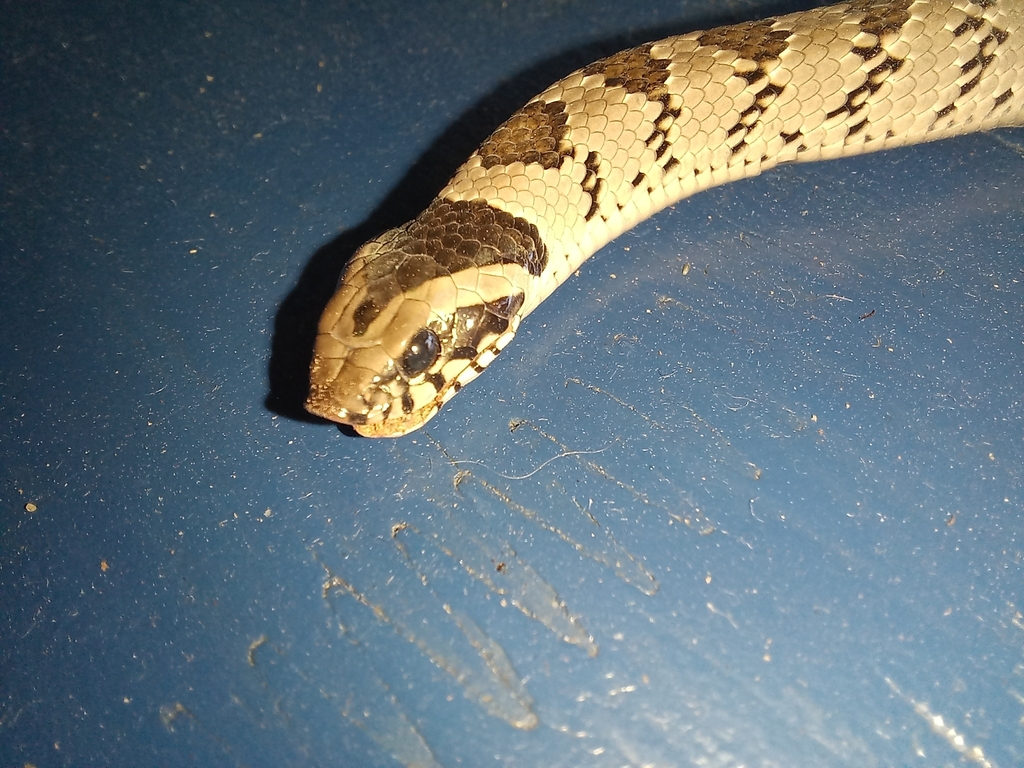
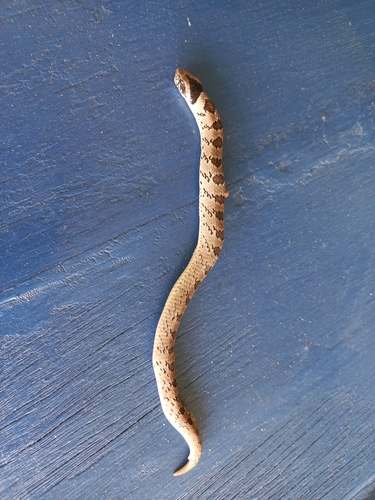
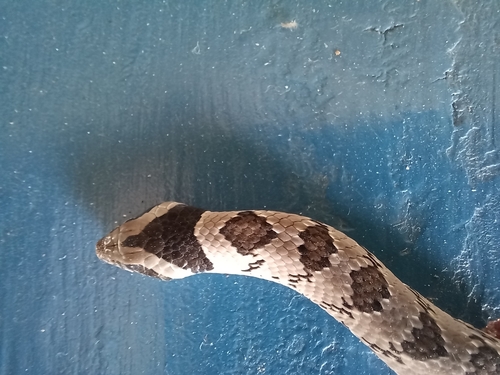
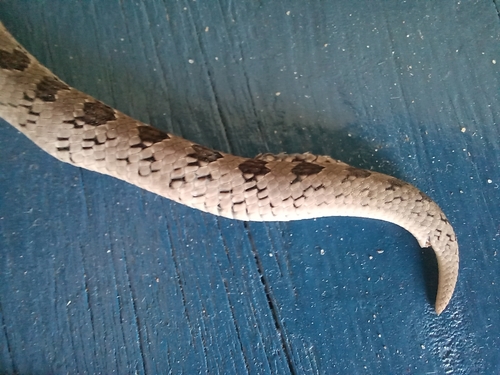
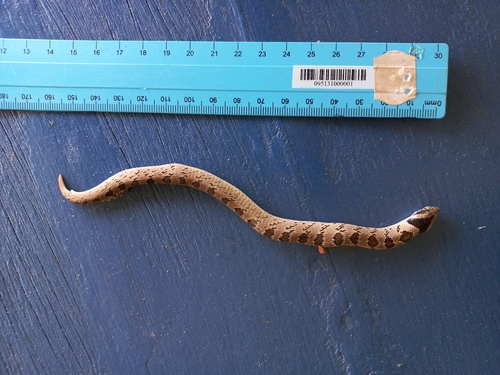
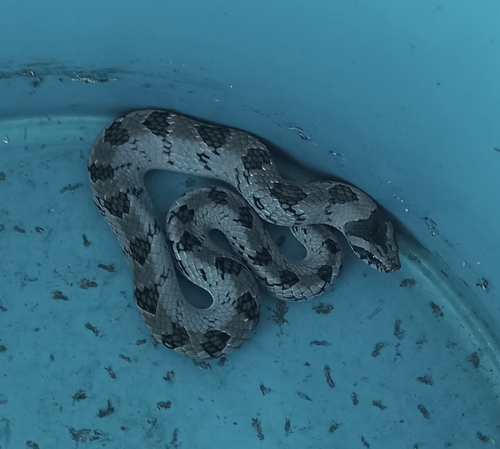
6 photographs of the Snouted Night Adder. © Kelly Abram.
The Snouted Night Adder (Causus defilippii) is a venomous snake in the Viperidae family, recorded in 9 countries.
If you are bitten
This is a venomous snake. Treat any bite as a medical emergency: stay calm, keep the bitten limb still and roughly level with the heart, remove rings and tight clothing, and get to emergency care immediately. Do not apply a tourniquet, cut the wound, apply ice, or try to suck out venom. Call your local emergency number or poison center.
- Family
- Viperidae
- Danger
- high
About the Snouted Night Adder
Causus defilippii, also known commonly as the snouted night adder, is a species of venomous snake in the subfamily Viperinae of the family Viperidae. The species is native to East Africa and Southern Africa. Although its venom is nonlethal to humans, it is still considered medically significant. There are no subspecies that are recognized as being valid.
Etymology
The specific name, defilippii, is in honor of Italian zoologist Filippo De Filippi.
Description
The average total length (including tail) of C. defilippii is 20–35 cm (8–14 in), rarely exceeding 50 cm (20 in).
The head is short and wide, and the snout is prominent, pointed and upturned. The rostral is large. The eyes are medium-sized. The circumorbital ring consists of 1–2 preocular scales, 1–2 postoculars and 1–2 suboculars that separate the eye from the supralabials. There are a total of 6–7 supralabials and 7–10 sublabials. The first 3–4 sublabials are in contact with the anterior chin shields. The posterior chin shields are very small and indistinguishable from other posterior scales. The temporal scales number 2+3, sometimes 2+4, and rarely 1+2.
Midbody there are 16–18 rows of weakly keeled dorsal scales that have a velvety appearance. There are 108–128 ventral scales: rarely more than 117 in males, or less than 118 in females. The anal scale is single. The divided subcaudals number 10–19: seldom less than 14 in males, or more than 15 in females.
The color pattern consists of a light brown, pinkish brown to gray or grayish green ground color, overlaid with a series of 20–30 crescent-shaped dark markings that run down the back. However, these marking may be indistinct. The head has a characteristic V-shaped marking with the apex on the frontal plate. There is also an oblique dark streak present behind the eye. The belly is yellowish while, uniformly colored or with scattered small grayish brown spots. Juvenile specimens are commonly a glossy black or gray.
Geographic range
The snouted night adder is found in Tanzania and the Democratic Republic of the Congo southward through Malawi, Zambia, Mozambique, and Zimbabwe to South Africa and Eswatini.
The type locality was originally listed as "Buenos Ayres", obviously a mistake. It was restricted by Broadley (1971) to Africa, Puku.
Habitat
C. defilippii occurs in moist and dry savanna, coastal thickets, and forests from sea level to around 1,800 m (5,900 ft) altitude. It favors moist surroundings, but has also been found in dry areas on rocky hillsides and escarpments.
Behavior
The snouted night adder is generally nocturnal, but not entirely. It is mostly terrestrial, but sometimes climbs into low vegetation in pursuit of frogs, and is also a good swimmer. When not basking, it remains hidden in ground cover, brush piles, and in holes. If disturbed, it inflates itself and hisses. It is slow-moving for the most part, but can strike quickly. In captivity, however, it soon becomes tame and unwilling to strike.
Venom
Adapted from Wikipedia, available under CC BY-SA.
Local and regional names
The Snouted Night Adder is known by these names across the regions where it lives:
- Chinese
- 德氏夜蝰
- Danish
- Snude-tudsehugorm
- German
- Defilippis Krötenotter, Defilippis Nachtotter, Schnauzen-Krötenviper, Schnauzennachtotter
Frequently asked: Snouted Night Adder
- Is the Snouted Night Adder venomous?
- Yes. The Snouted Night Adder (Causus defilippii) is venomous and belongs to the Viperidae family (viper). Its bite is considered high risk to people. Treat any bite as a medical emergency.
- Is the Snouted Night Adder poisonous?
- Snakes are venomous, not poisonous. "Poisonous" means harmful to eat or touch; "venomous" means injecting toxins through a bite. The Snouted Night Adder is venomous, delivering venom through a bite.
- Is the Snouted Night Adder dangerous?
- This is a venomous snake. Treat any bite as a medical emergency: stay calm, keep the bitten limb still and roughly level with the heart, remove rings and tight clothing, and get to emergency care immediately. Do not apply a tourniquet, cut the wound, apply ice, or try to suck out venom. Call your local emergency number or poison center.
- Where does the Snouted Night Adder live?
- The Snouted Night Adder has verified records in 9 countries, including South Africa, Tanzania, United Republic of, Zimbabwe. See the distribution section below for its full range.
- What does the Snouted Night Adder eat?
- C. defilippii preys predominately upon small amphibians.
- Why is it called the Snouted Night Adder?
- The specific name, defilippii, is in honor of Italian zoologist Filippo De Filippi.
If you are bitten by the Snouted Night Adder
Do
- Get away from the snake and stay calm. Most bites worsen when people panic or try again to handle the snake.
- Call 911 or Poison Control (1-800-222-1222) right away. Antivenom works best when given early.
- Note the time of the bite and, from a safe distance, the snake's color and pattern, a phone photo is enough. Do not chase it.
- Keep the bitten limb still and at roughly heart level. Sit or lie down and limit movement.
- Remove rings, watches, and tight clothing near the bite before swelling starts.
- Gently wash the bite with soap and water and cover it with a clean, dry dressing.
Do not
- Do not cut the wound or try to suck out the venom.
- Do not apply a tourniquet or ice.
- Do not drink alcohol or caffeine.
- Do not take aspirin or ibuprofen, they can worsen bleeding. Acetaminophen is safer for pain.
- Do not try to catch or kill the snake. A dead snake can still bite by reflex.
First-aid guidance adapted from the U.S. Centers for Disease Control and Prevention (CDC NIOSH), Venomous Snakes. Educational only; always follow the instructions of emergency responders.
Where it is found
More Viperidae snakes
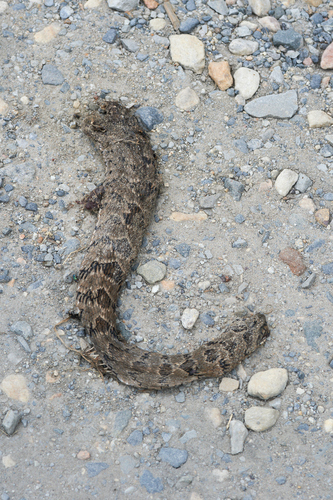 Rhombic Night AdderCausus rhombeatus
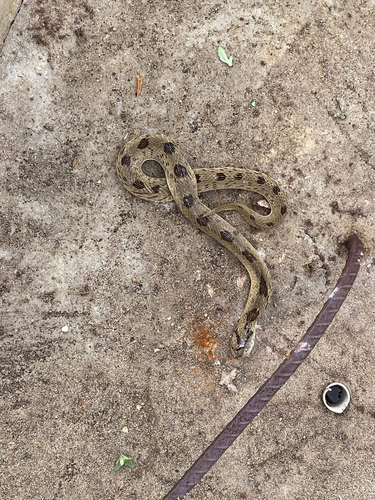 Spotted Night AdderCausus maculatus
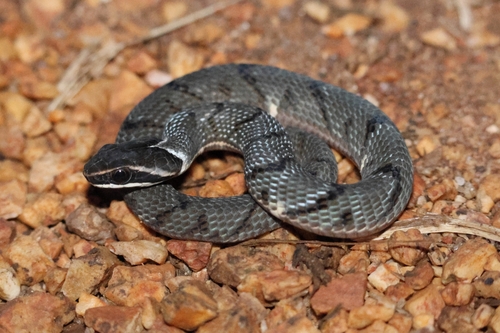 Forest Night AdderCausus lichtensteinii
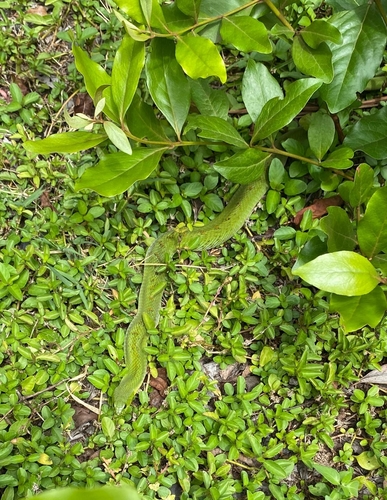 Green Night AdderCausus resimus
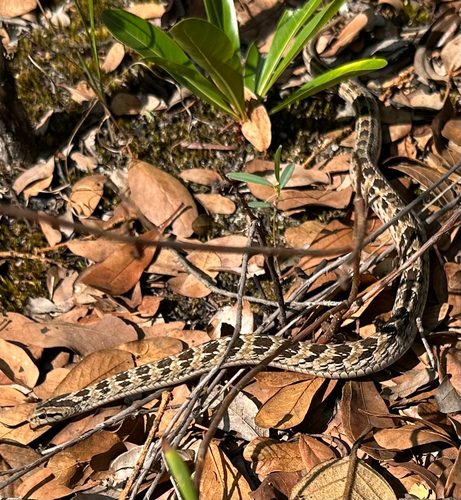 Two-lined Night AdderCausus bilineatus
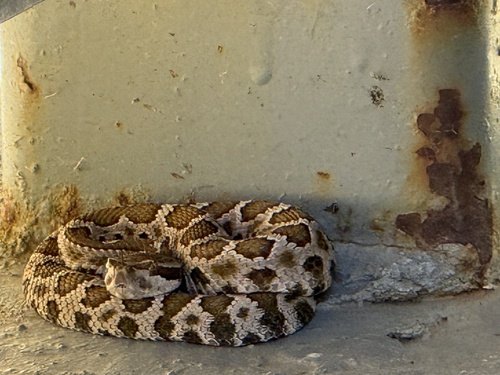 Western RattlesnakeCrotalus oreganus
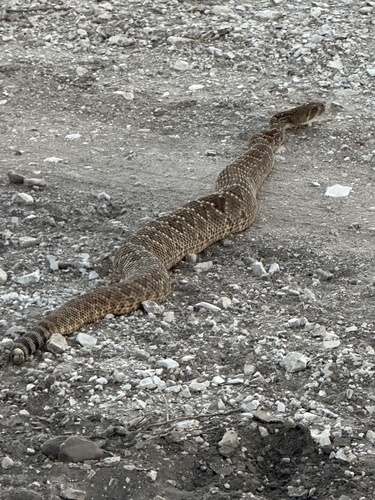 Western Diamond-backed RattlesnakeCrotalus atrox
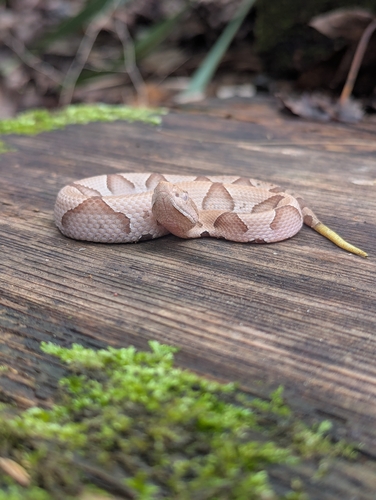 Eastern CopperheadAgkistrodon contortrix
Classification
How scientists group this snake, from the broadest category down to the exact species. Each step narrows to its closest relatives.
Keep learning
- Are Snakes Dangerous? The Real Risk, in PerspectiveMost snakes are harmless and avoid people. Here is the honest picture of snakebite risk worldwide and how to lower your own.
- Snakebite First Aid: What to Do (and What Never to Do)A clear, CDC-based guide to snakebite first aid: the steps that help, the popular myths that hurt, and how to tell a serious bite from a minor one.
- Venomous vs Nonvenomous: How to Tell the DifferenceThe folk rules for telling venomous snakes apart, where each one fails, and why location-based identification beats guessing by sight.
- What to Do If You Find a SnakeFound a snake at home or on a trail? Here is how to stay calm, give it space, identify it safely, and know when to call a professional.
Distribution from GBIF & iNaturalist. Venom status per CDC. Background: Wikipedia. Informational only. Never handle a snake to identify it.