
Pythonidae
Reticulated Python
HarmlessMalayopython reticulatus
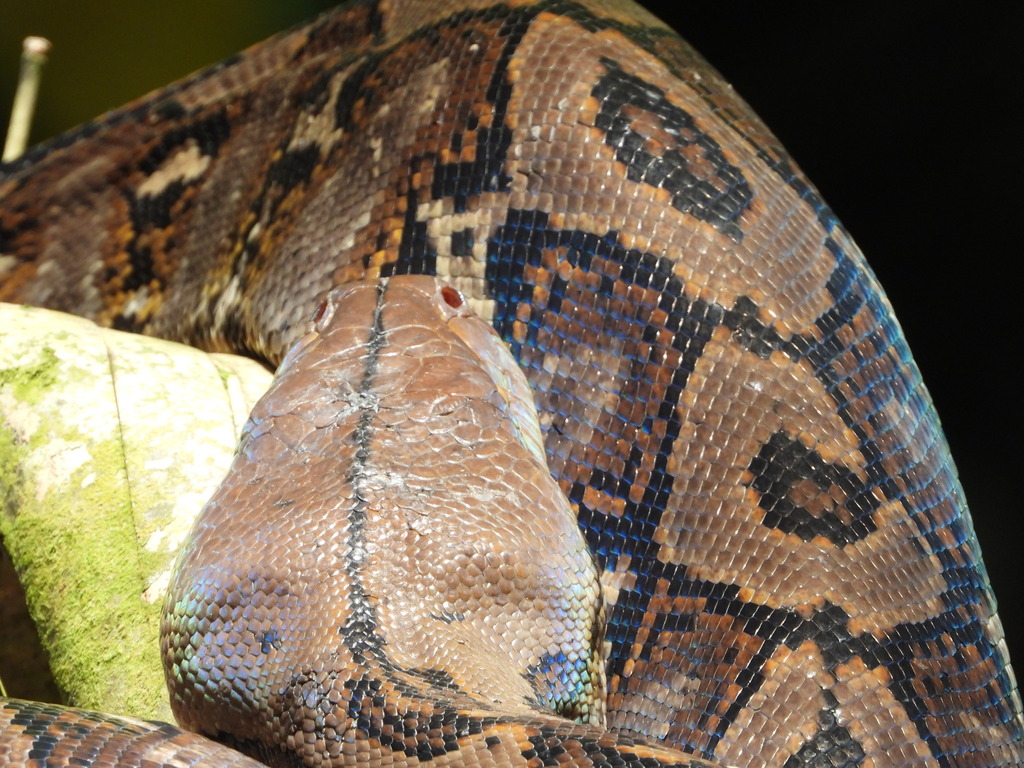
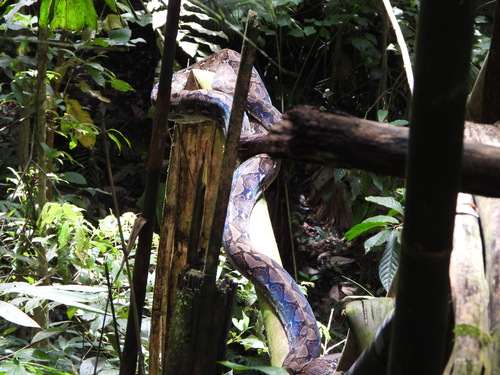
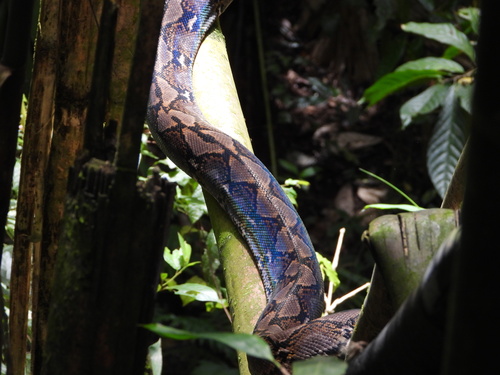
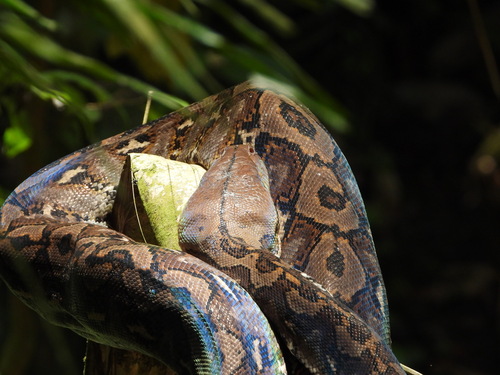
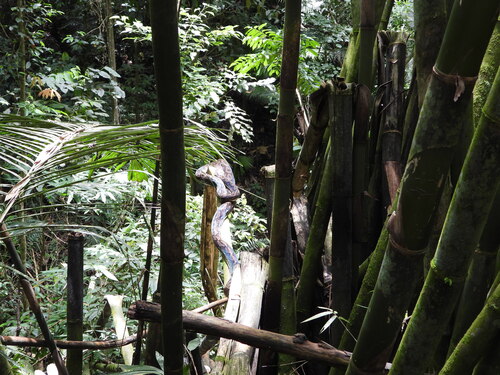
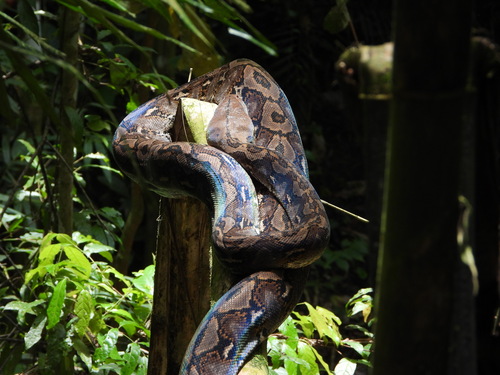
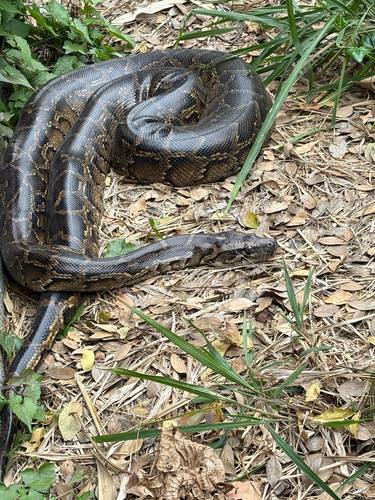
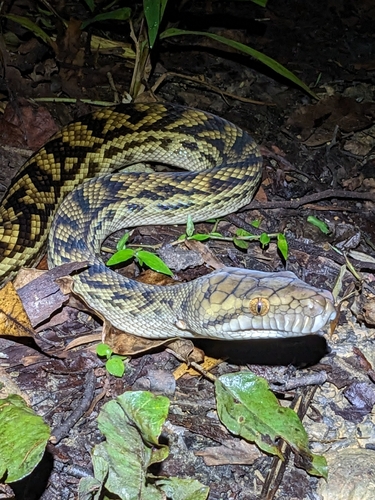
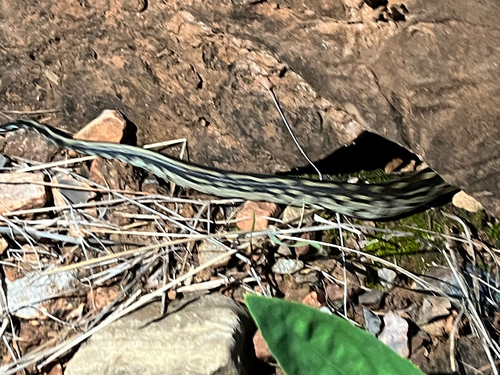
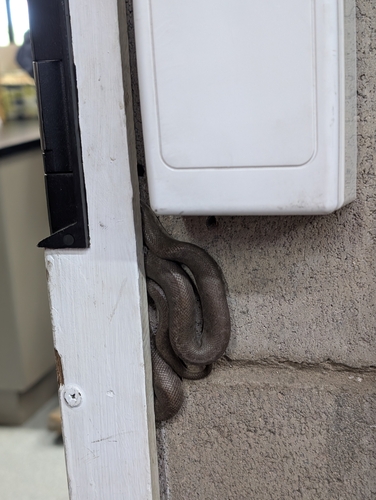
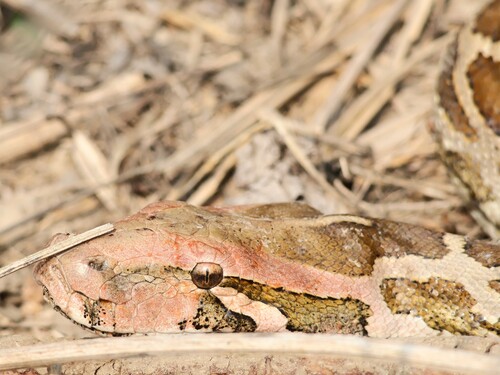
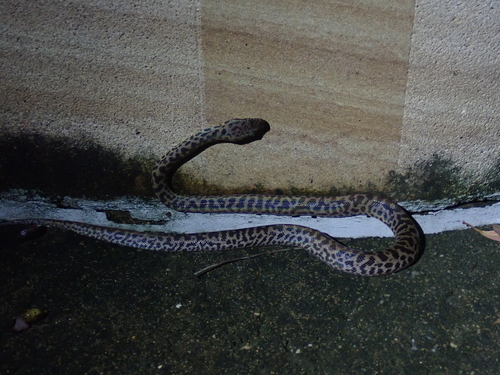
6 photographs of the Reticulated Python. © Светлана Царахова.
The Reticulated Python (Malayopython reticulatus) is a non-venomous snake in the Pythonidae family, recorded in 32 countries.
- Family
- Pythonidae
About the Reticulated Python
The reticulated python (Malayopython reticulatus) is a python species native to South and Southeast Asia. It is the world's longest snake, and the third heaviest after the green anaconda and Burmese python. It is a non-venomous constrictor and an excellent swimmer that has been reported far out at sea. It has colonized many small islands within its range. Because of its wide distribution, it is listed as least concern on the IUCN Red List. In several countries in its range, it is hunted for its skin, for use in traditional medicine, and for sale as pets. Due to this, it is one of the most economically important reptiles worldwide. Humans, including adults, have occasionally been killed by reticulated pythons, and several well-documented cases involve victims being swallowed wholly or partly. Most recent reported fatal predation cases have occurred in Indonesia, especially on Sulawesi and nearby islands.
Taxonomy
The reticulated python was first described in 1801 by Johann Gottlob Theaenus Schneider, who described two zoological specimens held by the Göttingen Museum in 1801 that differed slightly in colour and pattern as separate species, Boa reticulata and Boa rhombeata. The specific name, reticulatus, is Latin and means 'net-like', or reticulated, and is a reference to the complex color pattern. The generic name Python was proposed by François Marie Daudin in 1803. Arnold G. Kluge performed a cladistics analysis on morphological characters and recovered the reticulated python lineage as sister to the genus Python, hence not requiring a new generic name in 1993.
In a 2004 genetics study using cytochrome b DNA, Robin Lawson and colleagues discovered the reticulated python as sister to Australo-Papuan pythons, rather than Python molurus and relatives. Raymond Hoser erected the genus Broghammerus for the reticulated python in 2004, naming it after the German snake breeder Stefan Broghammer, on the basis of dorsal patterns distinct from those of the genus Python, and a dark mid-dorsal line from the rear to the front of the head, and red or orange (rather than brown) iris colour. In 2008, Lesley H. Rawlings and colleagues reanalysed Kluge's morphological data and combined it with genetic material, finding the reticulated clade to be an offshoot of the Australo-Papuan lineage as well. They adopted and redefined the genus name Broghammerus.
Most taxonomists choose to ignore Broghammerus and other names by Hoser, as its description lacked scientific rigour and was not published in a reputable journal. R. Graham Reynolds and colleagues accordingly proposed the name Malayopython for this species and its sister species, the Timor python, in 2014. Malayopython has been recognized by subsequent authors and the Reptile Database. Hoser has argued that Broghammerus was validly published and Malayopython name is invalid as it is a junior synonym. Nevertheless, the name Malayopython remains in use by reliable sources, and Broghammerus is referred to as an invalid nomen nudum.
Subspecies
Adapted from Wikipedia, available under CC BY-SA.
Frequently asked: Reticulated Python
- Is the Reticulated Python venomous?
- No. The Reticulated Python (Malayopython reticulatus) is non-venomous and is not considered dangerous to humans. Like most snakes, it will retreat rather than bite when given the chance.
- Is the Reticulated Python poisonous?
- Snakes are venomous, not poisonous. "Poisonous" means harmful to eat or touch; "venomous" means injecting toxins through a bite. The Reticulated Python is neither poisonous nor venomous.
- Is the Reticulated Python dangerous?
- The Reticulated Python is not dangerous to humans. It has no medically significant venom and bites only defensively if cornered or handled.
- Where does the Reticulated Python live?
- The Reticulated Python has verified records in 32 countries, including Indonesia, Thailand, Malaysia. See the distribution section below for its full range.
Where it is found
More Pythonidae snakes
Classification
How scientists group this snake, from the broadest category down to the exact species. Each step narrows to its closest relatives.
- OrderThe broad group of scaled reptiles: all snakes and lizards
- Squamata
- FamilyA group of related snakes that share key traits
- Pythonidae
- GenusA close-knit group of very similar species
- Malayopython
- SpeciesThis exact snake, named in the two-part scientific name
- Malayopython reticulatus
Keep learning
- What to Do If You Find a SnakeFound a snake at home or on a trail? Here is how to stay calm, give it space, identify it safely, and know when to call a professional.
- Venomous vs Nonvenomous: How to Tell the DifferenceThe folk rules for telling venomous snakes apart, where each one fails, and why location-based identification beats guessing by sight.
- What Is a Snake? Anatomy and the BasicsA clear overview of what makes a snake a snake: limbless body plan, anatomy, evolution from lizards, species diversity, and why they are ectothermic.
- How to Keep Snakes Out of Your Yard and HomeA practical guide to keeping snakes out of your yard and home using habitat changes that work, plus what to skip and what to do if one shows up.
Distribution from GBIF & iNaturalist. Venom status per CDC. Background: Wikipedia. Informational only. Never handle a snake to identify it.