
Pythonidae
Children's Python
HarmlessAntaresia childreni
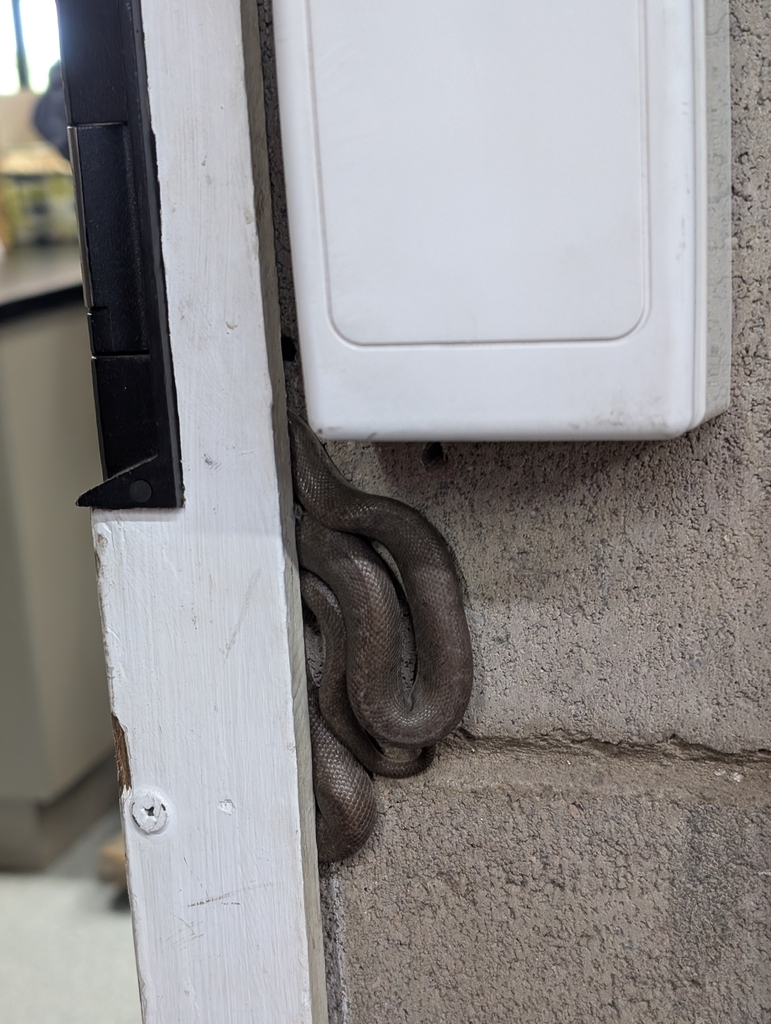
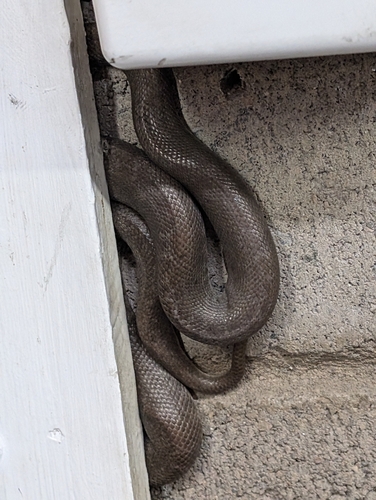
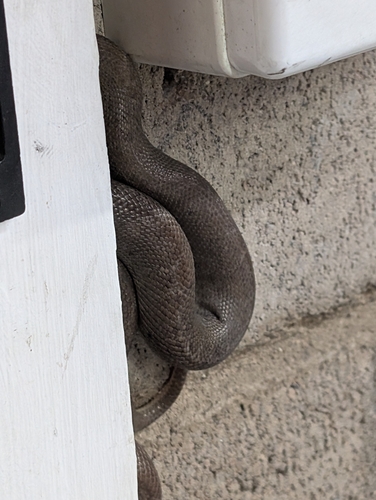
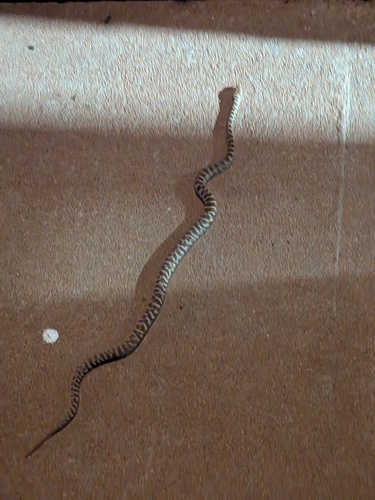
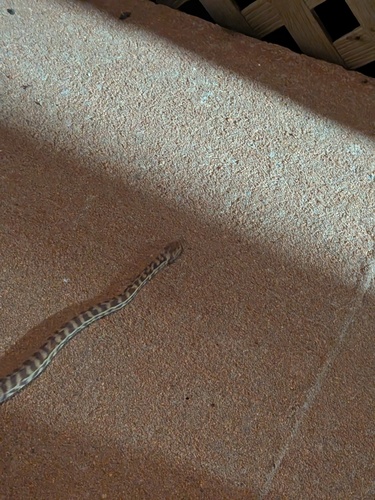
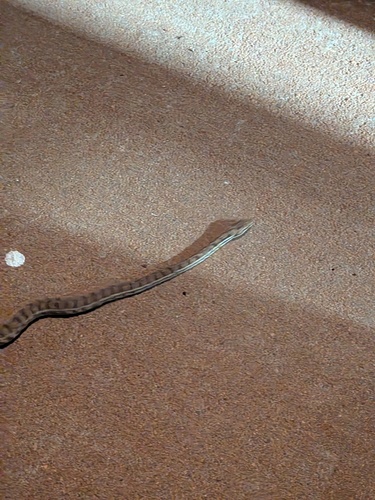
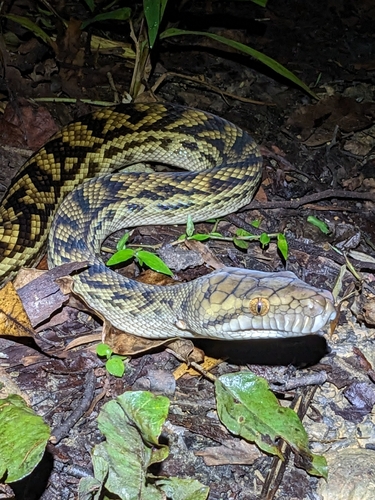
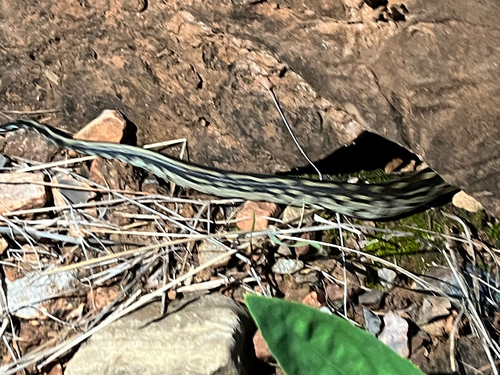
6 photographs of the Children's Python. © Gina and Bella The Explorers.
The Children's Python (Antaresia childreni) is a non-venomous snake in the Pythonidae family, recorded in 3 countries.
- Family
- Pythonidae
About the Children's Python
Children's python (Antaresia childreni) is a species of nonvenomous snake in the family Pythonidae. The species is named after John George Children. It is a nocturnal species occurring in the northern half of Australia and generally found on the ground, although it often climbs trees. Usually growing to about 1.0 m (3 ft) in length or more depending on the polymorphic variant, it is typically a reddish-brown colour, darker on the upper surface, and with many darker blotches, especially on younger specimens. The Stimson's python variant has much stronger and more variable colours; often being adorned with reddish-brown to chocolate blotches against lighter tan. It feeds mostly on small mammals and birds, and as with other pythons, it constricts its prey before swallowing it whole. It is a popular pet among reptile enthusiasts.
Taxonomy and naming
Antaresia childreni is one of four species in the genus Antaresia, a genus in the family Pythonidae. The genus is named after the star Antares. John Edward Gray published the original description of the species in 1842, naming it Liasis childreni. Both the common name and the specific epithet, childreni, are in honour of Gray's mentor, John George Children, a curator of the zoological collection at the British Museum around that time. As of 2020 no subspecies are recognised as being valid. Some species of the genus Antaresia were formerly assigned to the genus Morelia. Studies published in 2020 on the members of the genus Antaresia concluded that Stimson's and Children's pythons are synonymous species with different polymorphism. As a result, Stimson's python is now considered a polymorphic variant of Children's python.
Children's python is known by other common names such as banded rock python, small-blotched python, and eastern small-blotched python.
Description
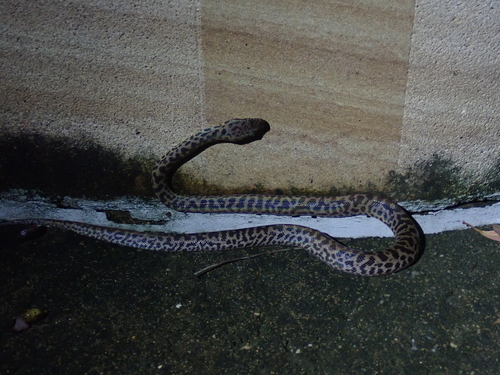
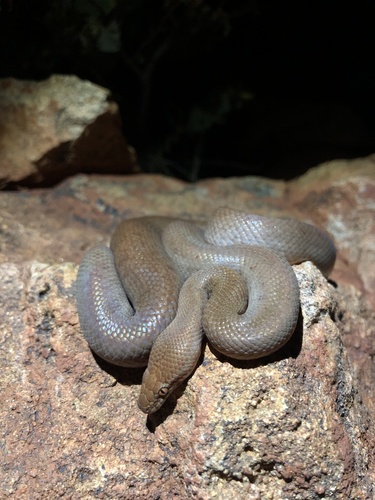
Adults of A. childreni grow to a total length (including tail) around 1–1.5 m (3–5 ft) depending on locality and polymorphic variant. The scales on the top of the head are enlarged, while those on the upper surface of the body are small and smooth, with a rainbow sheen that can be seen when exposed to direct sunlight. The upper surface of the snake is brown with darker spots in five or six longitudinal series in the type variant. A dark streak on each side of the head passes across the eye. The lips are yellowish, spotted with brown. The lower surface of the snake is uniformly yellowish. The head of the snake is distinct from the neck. The nostril is superolateral, pierced in a large semidivided nasal scale. The eye is moderate in size, with a vertical pupil. The body is slightly laterally compressed. The tail is short. About 41 to 45 rows of dorsal scales cross the snake's back, and 257 to 287 ventral scales are seen along the lower surface. A single undivided anal scale is found immediately in front of the anus, and 38 to 53 subcaudal scales are on the lower surface between the anus and the tip of the tail, all or mostly in two rows. The polymorphic variant known as the Stimson's python has much stronger and more variable colours; often being adorned with reddish-brown to chocolate blotches against lighter tan.
Adapted from Wikipedia, available under CC BY-SA.
Frequently asked: Children's Python
- Is the Children's Python venomous?
- No. The Children's Python (Antaresia childreni) is non-venomous and is not considered dangerous to humans. Like most snakes, it will retreat rather than bite when given the chance.
- Is the Children's Python poisonous?
- Snakes are venomous, not poisonous. "Poisonous" means harmful to eat or touch; "venomous" means injecting toxins through a bite. The Children's Python is neither poisonous nor venomous.
- Is the Children's Python dangerous?
- The Children's Python is not dangerous to humans. It has no medically significant venom and bites only defensively if cornered or handled.
- Where does the Children's Python live?
- The Children's Python has verified records in 3 countries, including Australia, Cocos (Keeling) Islands, Japan. See the distribution section below for its full range.
- What does the Children's Python eat?
- The diet of Children's python consists of reptiles, birds, and small mammals, particularly microbats, which it catches by dangling from stalactites in caves, which they commonly inhabit, and snatching them out of the air as they fly past.
- Why is it called the Children's Python?
- Antaresia childreni is one of four species in the genus Antaresia, a genus in the family Pythonidae. The genus is named after the star Antares. John Edward Gray published the original description of the species in 1842, naming it Liasis childreni. Both the common name and the specific epithet, childreni, are in honour of Gray's mentor, John George Children, a curator of the zoological collection at the British Museum around that time. As of 2020 no subspecies are recognised as being valid. Some species of the genus Antaresia were formerly assigned to the genus Morelia.
Where it is found
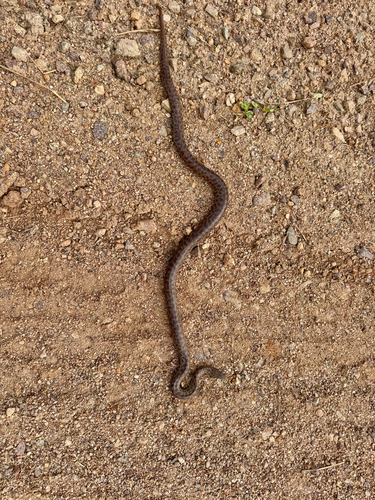
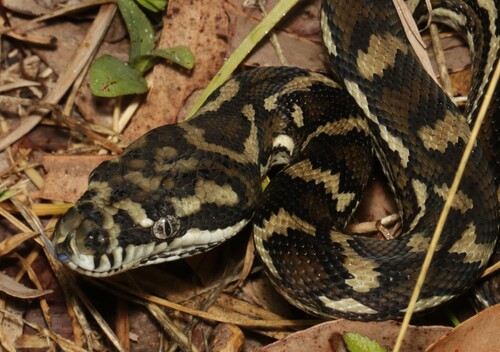
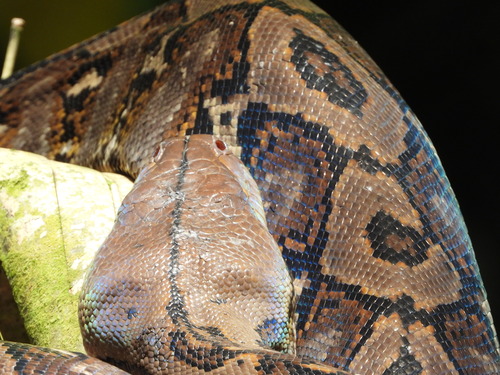
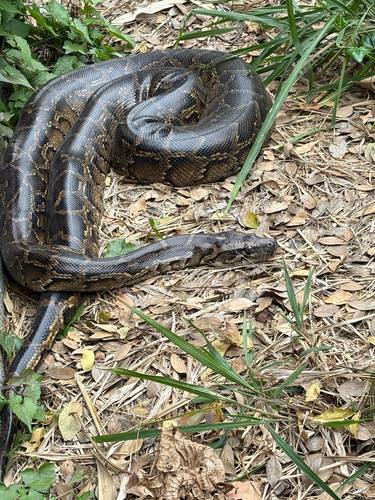
More Pythonidae snakes
Classification
How scientists group this snake, from the broadest category down to the exact species. Each step narrows to its closest relatives.
- OrderThe broad group of scaled reptiles: all snakes and lizards
- Squamata
- FamilyA group of related snakes that share key traits
- Pythonidae
- GenusA close-knit group of very similar species
- Antaresia
- SpeciesThis exact snake, named in the two-part scientific name
- Antaresia childreni
Keep learning
- What to Do If You Find a SnakeFound a snake at home or on a trail? Here is how to stay calm, give it space, identify it safely, and know when to call a professional.
- Venomous vs Nonvenomous: How to Tell the DifferenceThe folk rules for telling venomous snakes apart, where each one fails, and why location-based identification beats guessing by sight.
- What Is a Snake? Anatomy and the BasicsA clear overview of what makes a snake a snake: limbless body plan, anatomy, evolution from lizards, species diversity, and why they are ectothermic.
- How to Keep Snakes Out of Your Yard and HomeA practical guide to keeping snakes out of your yard and home using habitat changes that work, plus what to skip and what to do if one shows up.
Distribution from GBIF & iNaturalist. Venom status per CDC. Background: Wikipedia. Informational only. Never handle a snake to identify it.