
Pythonidae
Spotted Python
HarmlessAntaresia maculosa
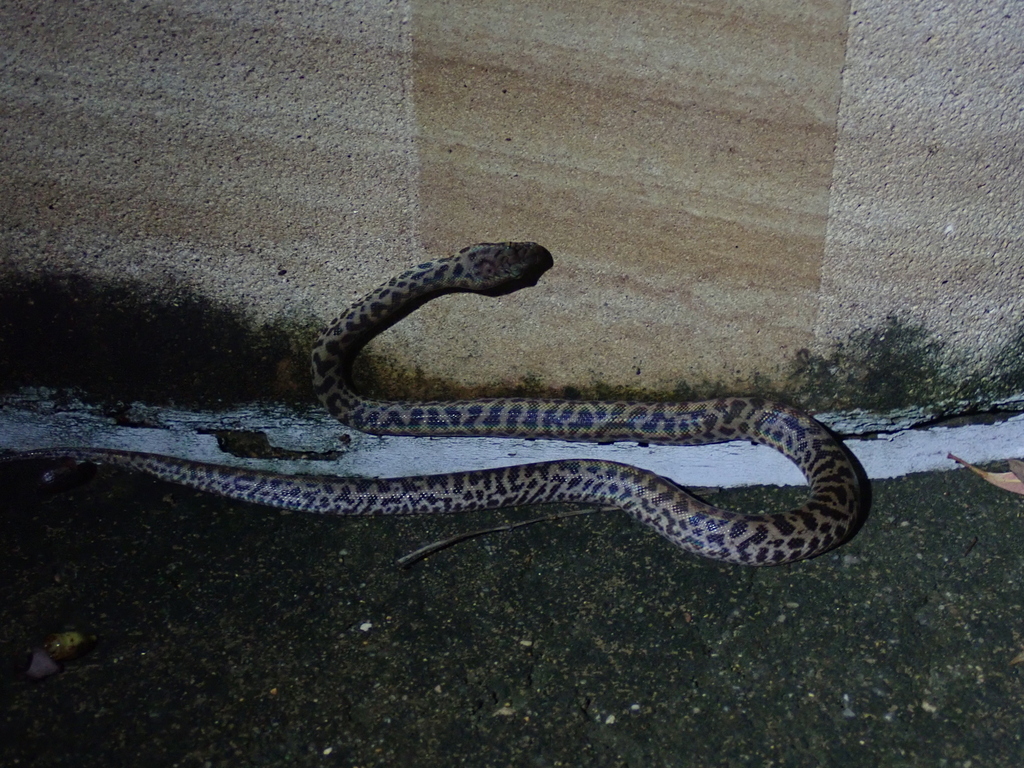
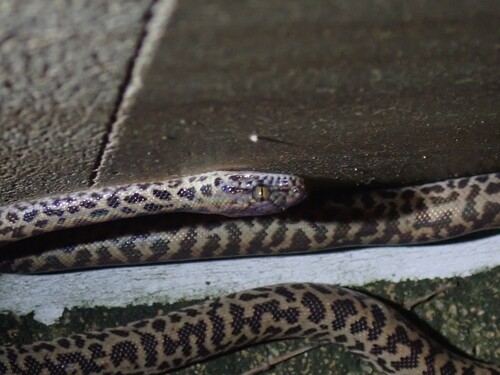
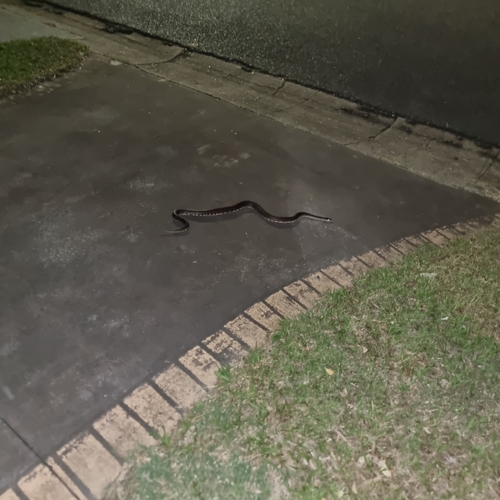
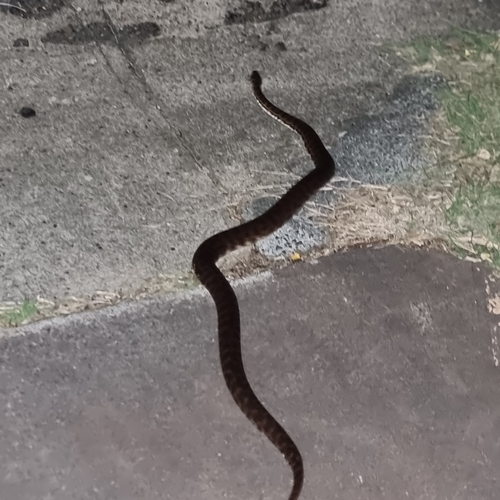
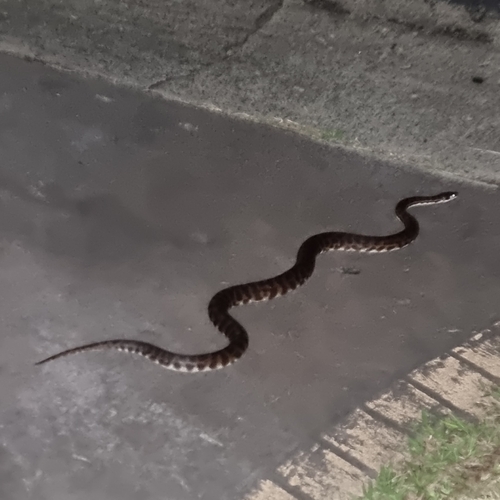
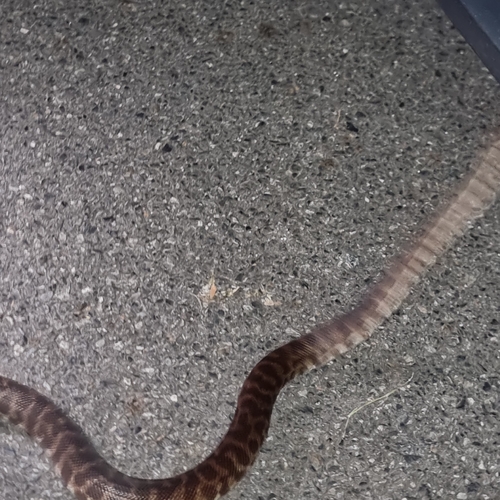
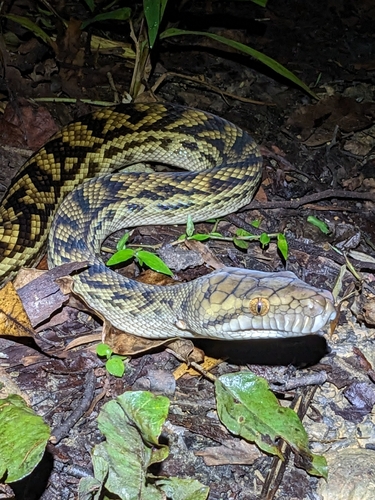
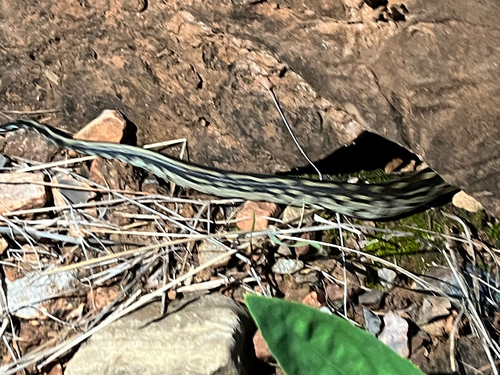
6 photographs of the Spotted Python. © Stuart.
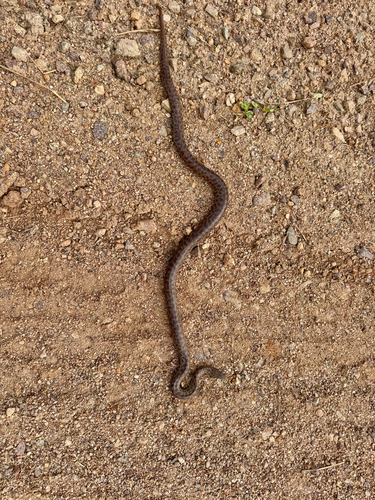
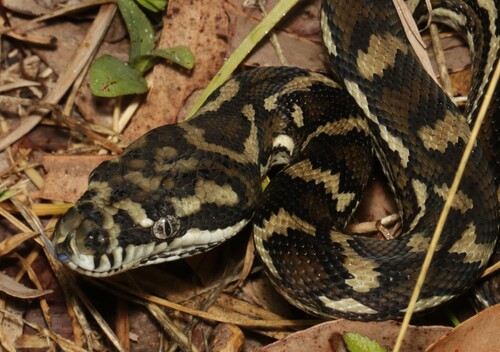
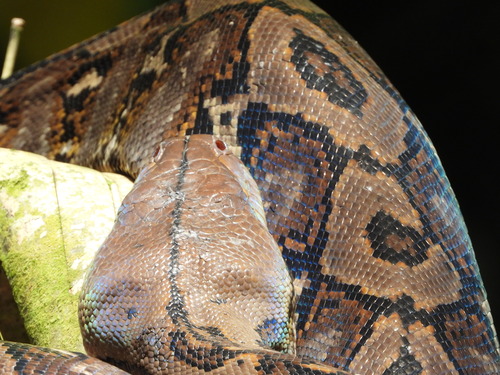
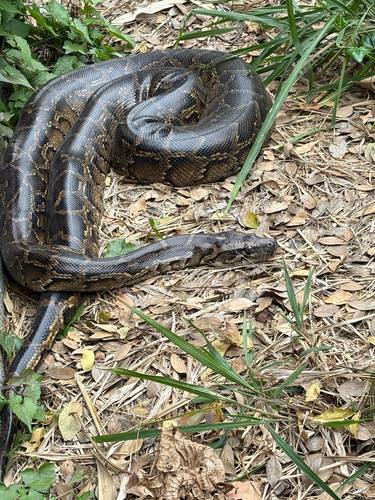
The Spotted Python (Antaresia maculosa) is a non-venomous snake in the Pythonidae family, recorded in 4 countries.
- Family
- Pythonidae
About the Spotted Python
The spotted python, eastern small-blotched python, or eastern Children's python (Antaresia maculosa) is a python species found in northern Australia and New Guinea. It is a popular pet among Australian reptile enthusiasts and other reptile enthusiasts abroad due to its small size and even temperament. No subspecies were originally recognized. However, two subspecies were recognized as of 2020; A. m. maculosa and A. m. peninsularis.
The spotted pythons of New Guinea were proposed to be reclassified in 2021 as their own unique species, A. papuensis or the Papuan spotted python, in the same study that discovered the two mainland subspecies. However, both ITIS and The Reptile Database currently consider the two variants as synonyms.
Taxonomy
Wilhelm Peters described the spotted python in 1873. A new subspecies, A. m. brentonoloughlini was described by Hoser (2003), but this taxon is not considered valid by other herpetologists. Two subspecies of A. maculosa were recognized in 2020; A. m. maculosa and A. m. peninsularis.
Description
Adults average about 100–140 centimetres (39–55 in) in length, though a record exists of a 69 in (180 cm) specimen. It is the largest species of the genus Antaresia. It has an irregular, blotched color pattern throughout its life. The blotches have ragged edges because the dark pigmentation occurs only on complete scales. Interestingly, the largest recorded example of this species was a male, suggesting males of this species as well as others in the genus Antaresia may compete for females. This behavior has never been witnessed in the wild, and has only been witnessed in captive specimens. Combat between males in such scenarios usually consists of constriction, striking, and biting. These snakes are primarily nocturnal, and are semi-arboreal with younger animals preferring to utilize elevated hiding spots more than adults. These snakes are the oldest species within the genus Antaresia, having diverged from other species in the genus 27 million years ago.
Distribution and habitat
Found in Australia from the extreme north of the Cape York Peninsula, south through eastern Queensland to northern New South Wales. Also on many islands off the coast of Queensland. The type locality given is "Rockhampton, Port Mackay, Port Bowen [= Port Clinton]" [Queensland, Australia]. L.A. Smith (1985) restricted the type locality to "Port Mackay" (Mackay, Queensland, in 21° 09'S, 149° 11'E) by lectotype designation. Antaresia maculosa has also been recorded from the southern Trans-Fly region of Papua New Guinea, at Weam in Western Province and there are concerns it may be being exploited for the pet trade across the border in Indonesian West New Guinea. Found in most types of habitats, but prefers rocky hillsides and outcrops with crevices and caves. The Papua specimen was found behind discarded corrugated tin sheets beside a disused airstrip in Eucalypt savanna-woodland habitat dotted with numerous termite mounds.
Feeding
Adapted from Wikipedia, available under CC BY-SA.
Frequently asked: Spotted Python
- Is the Spotted Python venomous?
- No. The Spotted Python (Antaresia maculosa) is non-venomous and is not considered dangerous to humans. Like most snakes, it will retreat rather than bite when given the chance.
- Is the Spotted Python poisonous?
- Snakes are venomous, not poisonous. "Poisonous" means harmful to eat or touch; "venomous" means injecting toxins through a bite. The Spotted Python is neither poisonous nor venomous.
- Is the Spotted Python dangerous?
- The Spotted Python is not dangerous to humans. It has no medically significant venom and bites only defensively if cornered or handled.
- Where does the Spotted Python live?
- The Spotted Python has verified records in 4 countries, including Australia, Spain, Japan. See the distribution section below for its full range.
- What does the Spotted Python eat?
- One of its favorite foods are the insectivorous bats that it catches at the entrance of their caves. Being the largest members of this genus, captive specimens will usually accept mice and other small rodents. They also frequently feed on other reptile species such as the local gecko, Dubious dtella.
Where it is found
More Pythonidae snakes
Classification
How scientists group this snake, from the broadest category down to the exact species. Each step narrows to its closest relatives.
- OrderThe broad group of scaled reptiles: all snakes and lizards
- Squamata
- FamilyA group of related snakes that share key traits
- Pythonidae
- GenusA close-knit group of very similar species
- Antaresia
- SpeciesThis exact snake, named in the two-part scientific name
- Antaresia maculosa
Keep learning
- What to Do If You Find a SnakeFound a snake at home or on a trail? Here is how to stay calm, give it space, identify it safely, and know when to call a professional.
- Venomous vs Nonvenomous: How to Tell the DifferenceThe folk rules for telling venomous snakes apart, where each one fails, and why location-based identification beats guessing by sight.
- What Is a Snake? Anatomy and the BasicsA clear overview of what makes a snake a snake: limbless body plan, anatomy, evolution from lizards, species diversity, and why they are ectothermic.
- How to Keep Snakes Out of Your Yard and HomeA practical guide to keeping snakes out of your yard and home using habitat changes that work, plus what to skip and what to do if one shows up.
Distribution from GBIF & iNaturalist. Venom status per CDC. Background: Wikipedia. Informational only. Never handle a snake to identify it.