
Boidae
Javelin Sand Boa
HarmlessEryx jaculus
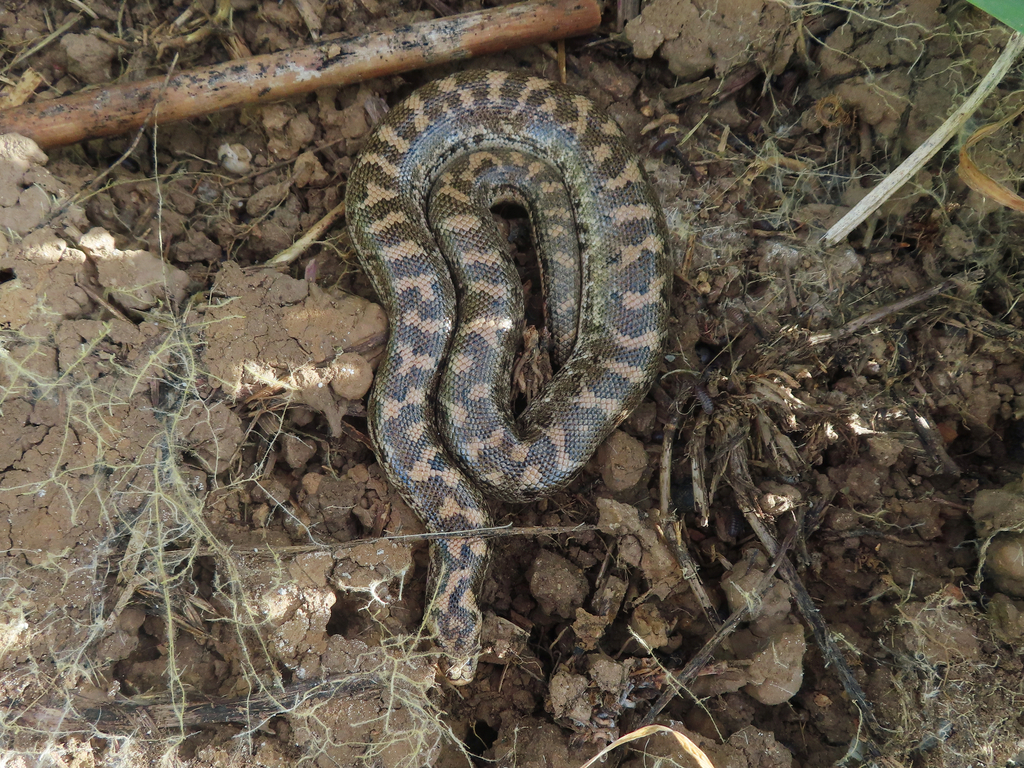
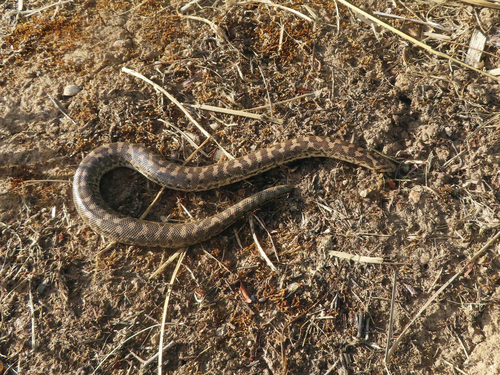
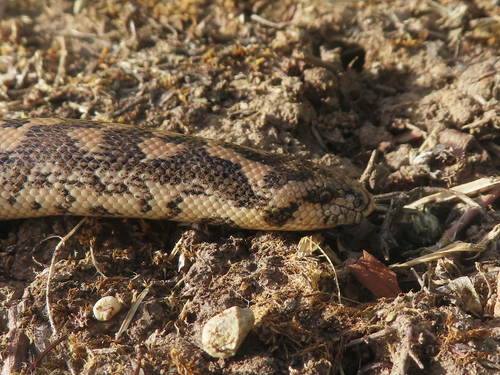
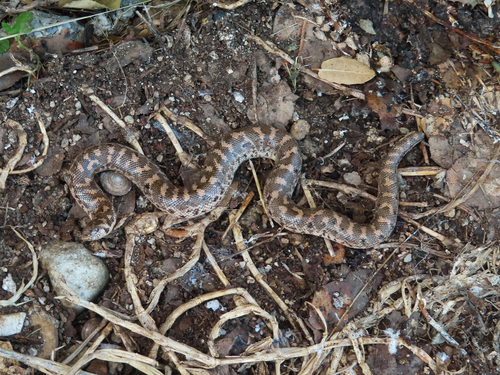
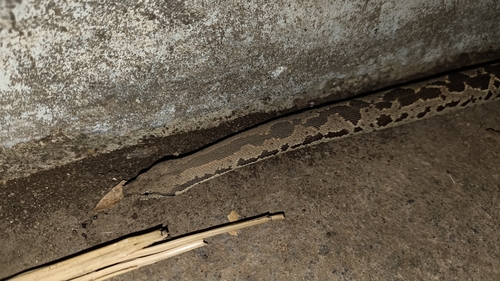
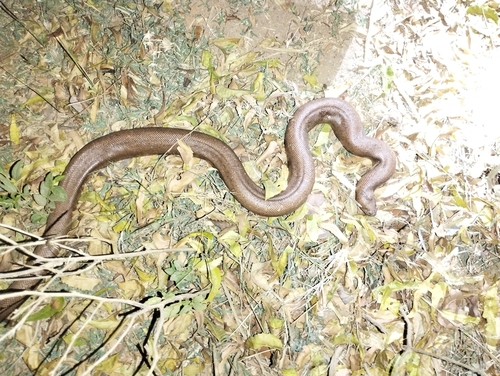
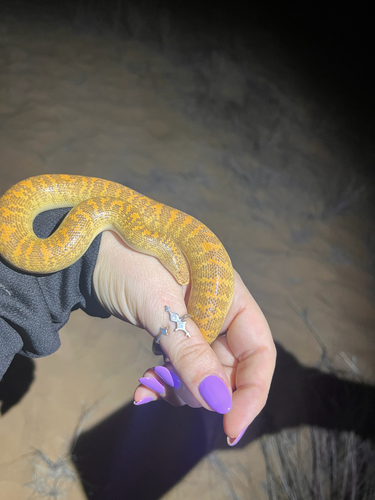
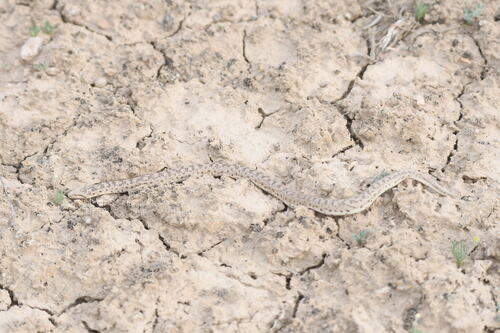
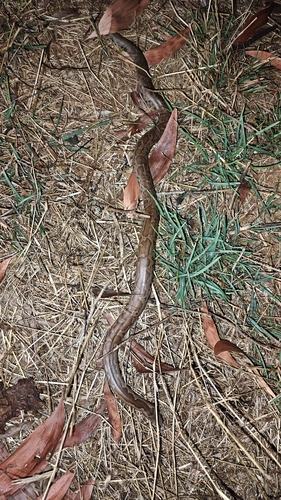
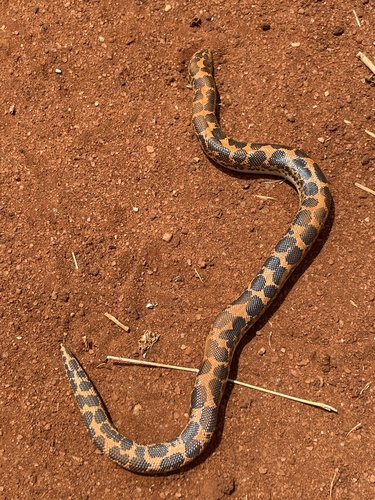
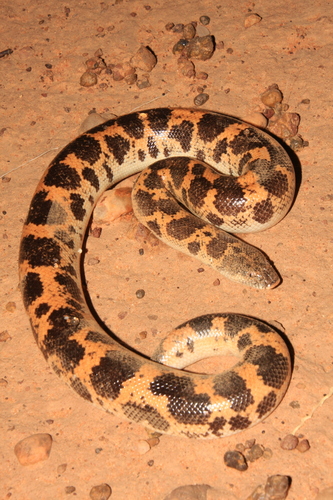
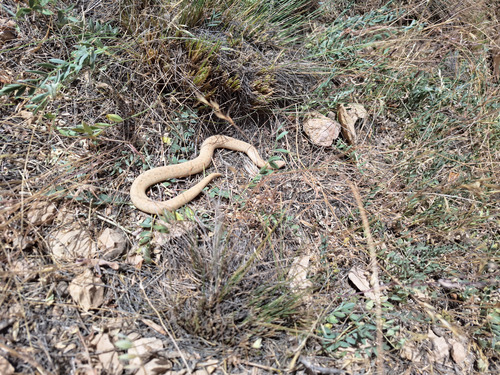
4 photographs of the Javelin Sand Boa. © Kseniia Marianna Prondzynska.
The Javelin Sand Boa (Eryx jaculus) is a non-venomous snake in the Boidae family, recorded in 28 countries.
- Family
- Boidae
About the Javelin Sand Boa
Eryx jaculus, known commonly as the javelin sand boa, is a species of snake in the Boidae family. It is the type species of the genus Eryx.
Description
Scientists from Razi university describe it as "brownish-green or gray, with darker blotches, belly white or yellowish, uniform or speckled darker" (Rhadi, Pouyani et al.)
The species is rather uniform in body thickness, a trait commonly seen in the Eryx genus.
Geographic range
Eryx jaculus is found in Eastern Europe and Balkans, the Caucasus, the Middle East, and North-Africa. In September 2014 the snake was rediscovered in Romania near the Danube after being extinct in the country since 1937, when the last specimen was seen near Cochirleni. In late 2015 the snake was rediscovered near Licata on the south coast of Sicily after not having been officially recorded in Italy for eighty years. The snake has also been found in India, Sri Lanka and Mongolia. The Mongolian name of the snake is "batra" which can be translated to "father". Their diet consists of lizards, small mammals and other snake species.
Description
The javelin sand boa may grow to 80 cm (31+1⁄2 in) in total length (including tail). Coloring varies greatly. Dorsally, it may be grayish, tan, brownish, or reddish, with darker blotches or bars in an irregular network. It usually has a dark streak from the eye to the corner of the mouth. Ventrally it is whitish or yellowish. It is heavy-bodied and has a short blunt tail. The ventrals are very narrow, less than a third of the width of the body. The rostral is large and broad with an angular horizontal edge. The eye is separated from the labials by one or two rows of small scales. There are 10-14 upper labials. The dorsal scales are in 40-50 rows, smooth anteriorly, but weakly keeled posteriorly. There are 165-200 ventrals, and 15-34 subcaudals. They are relatively built simple with small scales just like other snakes in their family. The snake has been very unstudied. In May and September 2014 scientists in Iraq with the help of locals were locating the snake. Schleich and Szyndlar write, "We want to know more about these snakes to find out about their past distribution of these snakes in the west" (Schleich, Szyndlar 234). All snakes under the Eryx genus have the same 3 scales pointed in different directions just like a star. You can identify it by its small eyes and neck. The whole head is covered with small scales. A very good description comes from the scientist at the university in Iran, "A green brown, or gray snake dorsally with darker blotches, and with a spotted yellowish or white belly; no neck, a stumpy tail, small plates on the head, a vertical pupil, posterior dorsals slightly keeled, ventrals narrow" (Rhadi, Pouyani et al.).
Behaviour
Adapted from Wikipedia, available under CC BY-SA.
Frequently asked: Javelin Sand Boa
- Is the Javelin Sand Boa venomous?
- No. The Javelin Sand Boa (Eryx jaculus) is non-venomous and is not considered dangerous to humans. Like most snakes, it will retreat rather than bite when given the chance.
- Is the Javelin Sand Boa poisonous?
- Snakes are venomous, not poisonous. "Poisonous" means harmful to eat or touch; "venomous" means injecting toxins through a bite. The Javelin Sand Boa is neither poisonous nor venomous.
- Is the Javelin Sand Boa dangerous?
- The Javelin Sand Boa is not dangerous to humans. It has no medically significant venom and bites only defensively if cornered or handled.
- Where does the Javelin Sand Boa live?
- The Javelin Sand Boa has verified records in 28 countries, including Greece, Israel, Egypt. See the distribution section below for its full range.
Where it is found
More Boidae snakes
Classification
How scientists group this snake, from the broadest category down to the exact species. Each step narrows to its closest relatives.
Keep learning
- What to Do If You Find a SnakeFound a snake at home or on a trail? Here is how to stay calm, give it space, identify it safely, and know when to call a professional.
- Venomous vs Nonvenomous: How to Tell the DifferenceThe folk rules for telling venomous snakes apart, where each one fails, and why location-based identification beats guessing by sight.
- What Is a Snake? Anatomy and the BasicsA clear overview of what makes a snake a snake: limbless body plan, anatomy, evolution from lizards, species diversity, and why they are ectothermic.
- How to Keep Snakes Out of Your Yard and HomeA practical guide to keeping snakes out of your yard and home using habitat changes that work, plus what to skip and what to do if one shows up.
Distribution from GBIF & iNaturalist. Venom status per CDC. Background: Wikipedia. Informational only. Never handle a snake to identify it.