
Boidae
Rough-scaled Sand Boa
HarmlessEryx conicus
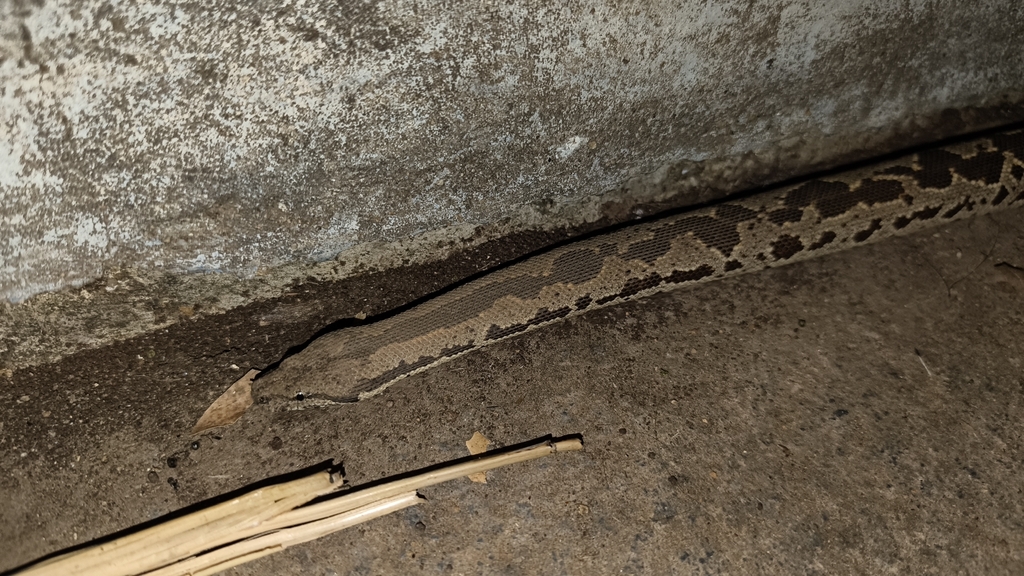
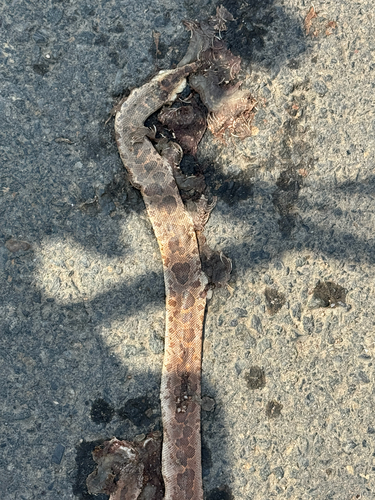
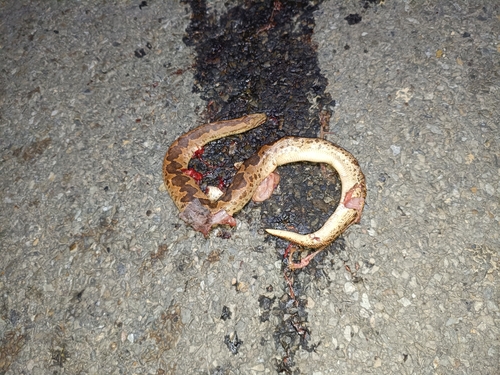
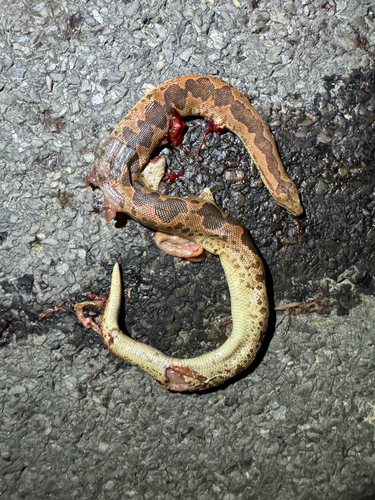
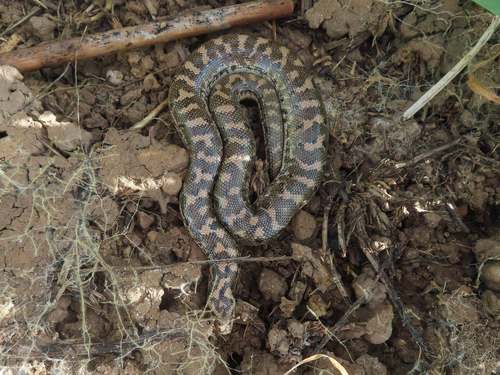
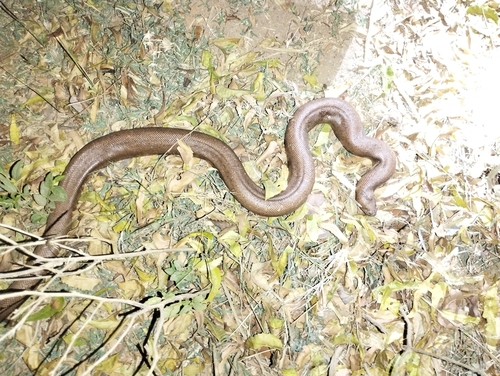
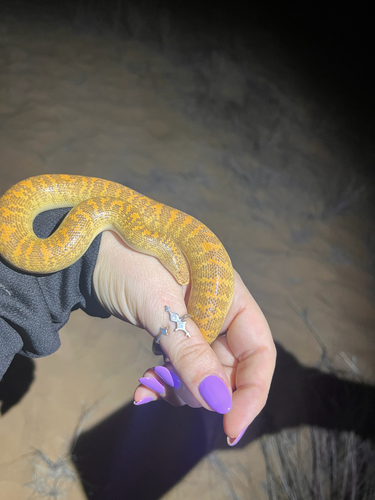
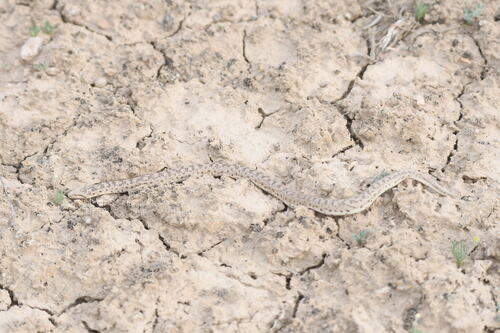
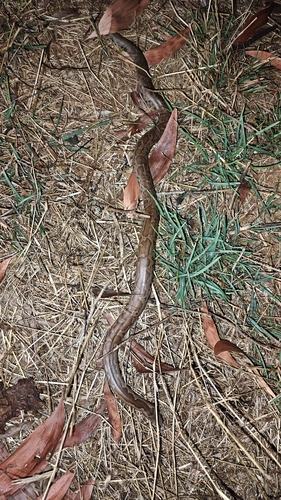
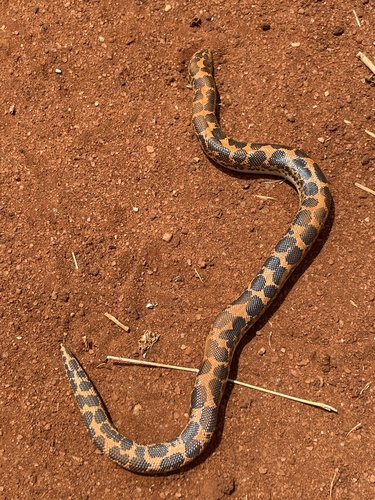
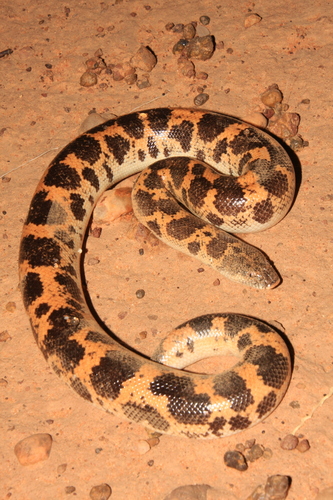
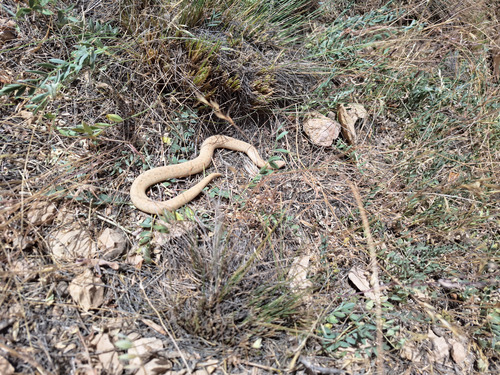
4 photographs of the Rough-scaled Sand Boa. no rights reserved.
The Rough-scaled Sand Boa (Eryx conicus) is a non-venomous snake in the Boidae family, recorded in 9 countries.
- Family
- Boidae
About the Rough-scaled Sand Boa
Common names: Russell's sand boa, rough-tailed sand boa, common sand boa.
Eryx conicus is a species of non-venomous snake in the subfamily Erycinae of the family Boidae. The species is native to southern Asia. No subspecies are recognised as being valid.
Description
Adults of E. conicus may attain a total length of 3 feet 3 inches (99 cm), which includes a tail 3 inches (76 mm) long.
The anterior maxillary and mandibular teeth are longer than the posterior. The head is covered with small scales. The eye is small with a vertical pupil. The dorsal scales are small and keeled. The tail is pointed, not or but very slightly prehensile.
The rostral scale is twice as broad as long, slightly prominent, without an angular horizontal edge. The top of the head is covered with small obtusely keeled scales, except for the nasals and internasals which are enlarged. Interorbitals: 8 to 10. Circumorbitals: 10 to 15. The eye is separated from the labials by one or two rows of scales. Supralabial scales: 12 to 14. Dorsal scales tubercularly keeled, in 40 to 49 rows. Ventral scales: 162-186. The anal scale is single. Subcaudals: 17-24.
The anterior dorsal scales are only feebly keeled, but these keels increase in size posteriorly to the point that they become so heavily keeled that it can make a squirming specimen really painful to handle. This also makes it look as if the front and rear ends belong to markedly different animals.
Dorsally, the color pattern consists of a broad zigzag band or a series of dark brown blotches on a yellowish or brownish grey ground color. The belly is uniform white.
In India it can be mistaken at first glance for either the Indian python (Python molurus) or the deadly Russell's viper (Daboia russelii).
Behavior
E. conicus is active at dusk and at night.
Diet
E. conicus preys upon birds and small mammals, which it kills by constricting.
Geographic range
E. conicus is found in India south of about 30°N latitude, Nepal, Bangladesh and in the northern arid region of Sri Lanka. The type locality given is "India orientali ".
Habitat
The preferred habitat of E. conicus is sandy tracts of central and southern India, the Punjab, Kachchh, and Sind.
Mimicry
The rough-scaled sand boa's color pattern frequently resembles that of the highly venomous Russell's viper, which some herpetologists believe is a case of Batesian mimicry.
Reproduction
E. conicus is viviparous.
Adapted from Wikipedia, available under CC BY-SA.
Frequently asked: Rough-scaled Sand Boa
- Is the Rough-scaled Sand Boa venomous?
- No. The Rough-scaled Sand Boa (Eryx conicus) is non-venomous and is not considered dangerous to humans. Like most snakes, it will retreat rather than bite when given the chance.
- Is the Rough-scaled Sand Boa poisonous?
- Snakes are venomous, not poisonous. "Poisonous" means harmful to eat or touch; "venomous" means injecting toxins through a bite. The Rough-scaled Sand Boa is neither poisonous nor venomous.
- Is the Rough-scaled Sand Boa dangerous?
- The Rough-scaled Sand Boa is not dangerous to humans. It has no medically significant venom and bites only defensively if cornered or handled.
- Where does the Rough-scaled Sand Boa live?
- The Rough-scaled Sand Boa has verified records in 9 countries, including India, Pakistan, Sri Lanka. See the distribution section below for its full range.
- What does the Rough-scaled Sand Boa eat?
- E. conicus preys upon birds and small mammals, which it kills by constricting.
Where it is found
More Boidae snakes
Classification
How scientists group this snake, from the broadest category down to the exact species. Each step narrows to its closest relatives.
Keep learning
- What to Do If You Find a SnakeFound a snake at home or on a trail? Here is how to stay calm, give it space, identify it safely, and know when to call a professional.
- Venomous vs Nonvenomous: How to Tell the DifferenceThe folk rules for telling venomous snakes apart, where each one fails, and why location-based identification beats guessing by sight.
- What Is a Snake? Anatomy and the BasicsA clear overview of what makes a snake a snake: limbless body plan, anatomy, evolution from lizards, species diversity, and why they are ectothermic.
- How to Keep Snakes Out of Your Yard and HomeA practical guide to keeping snakes out of your yard and home using habitat changes that work, plus what to skip and what to do if one shows up.
Distribution from GBIF & iNaturalist. Venom status per CDC. Background: Wikipedia. Informational only. Never handle a snake to identify it.