
Boidae
Arabian Sand Boa
HarmlessEryx jayakari
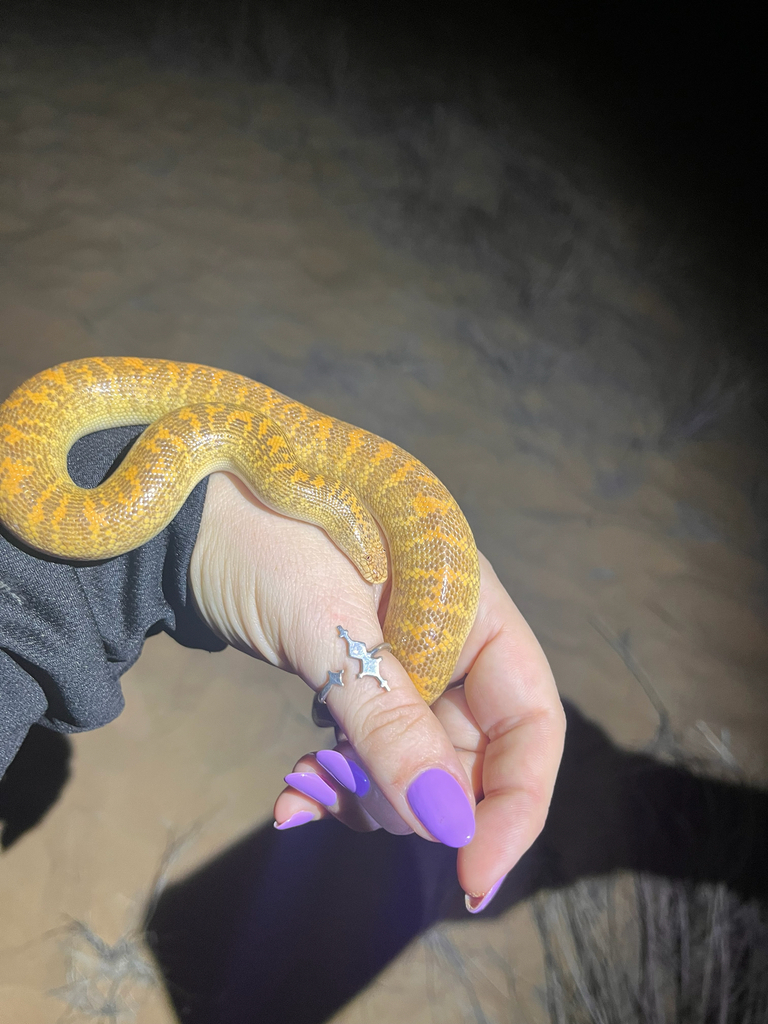
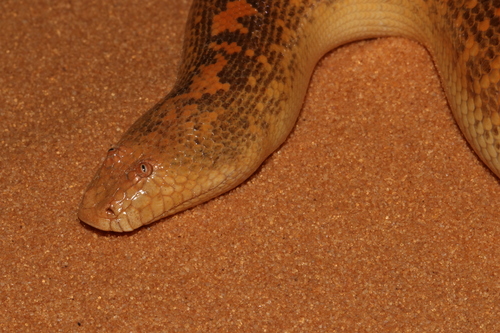
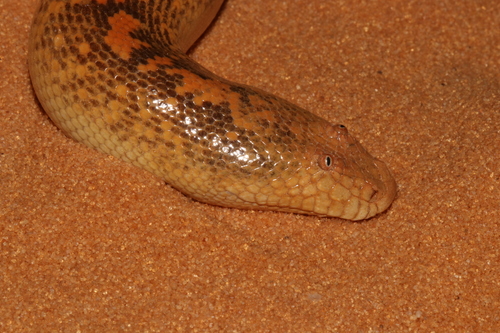
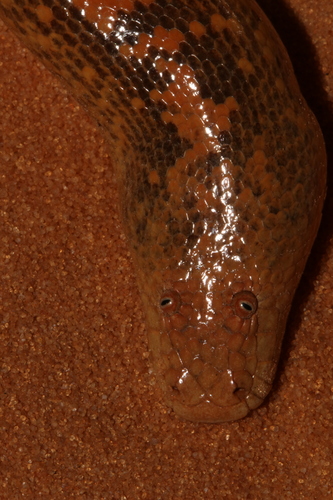
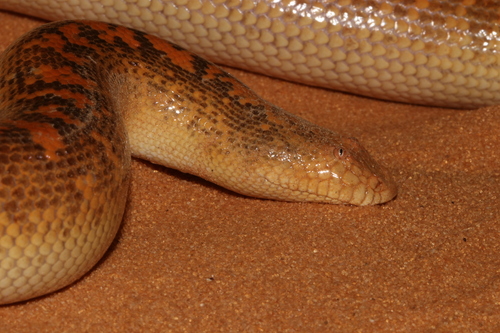
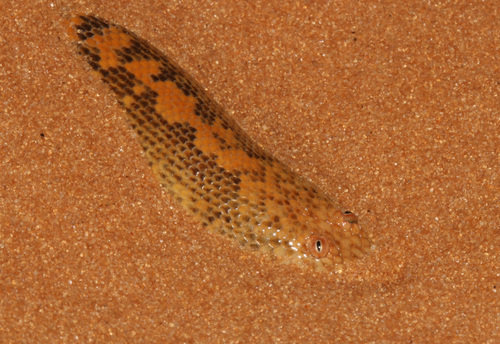
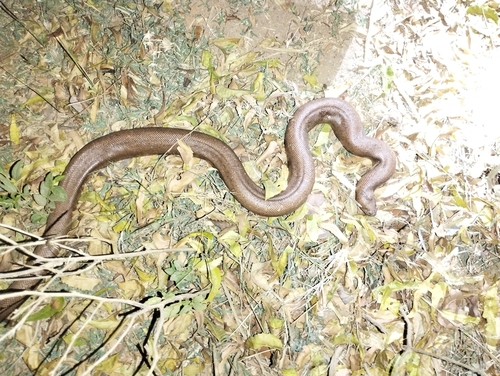
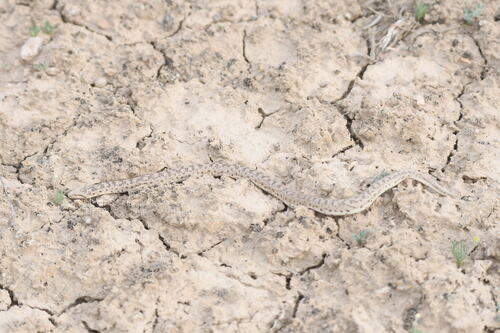
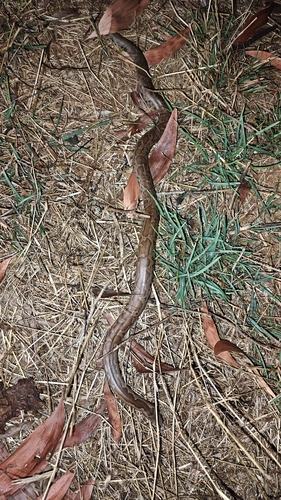
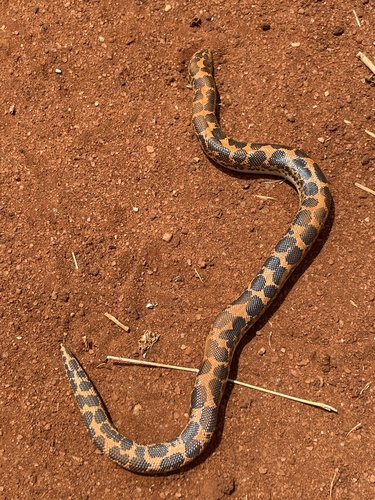
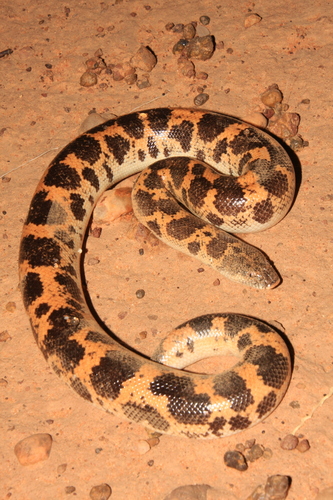
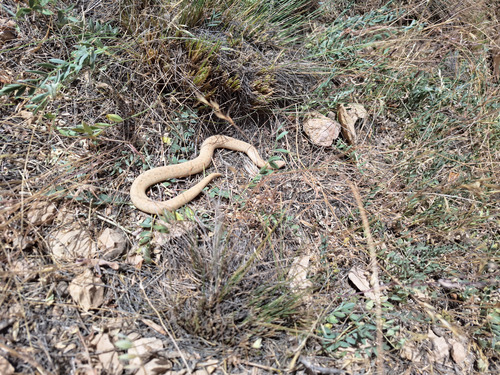
6 photographs of the Arabian Sand Boa. © Arabella Willing.
The Arabian Sand Boa (Eryx jayakari) is a non-venomous snake in the Boidae family, recorded in 8 countries.
- Family
- Boidae
About the Arabian Sand Boa
Eryx jayakari, known commonly as the Arabian sand boa or Jayakar's sand boa, is a species of snake in the family Boidae. The species is endemic to the Arabian Peninsula and Iran where it spends the day buried in the sand.
Etymology
Both the specific name, jayakari, and one of the common names, Jayakar's sand boa, are in honor of Atmaram Sadashiv Jayakar (1844–1911), an Indian surgeon and naturalist.
Description
The Arabian sand boa is a small snake growing to a total length (including tail) of about 38 cm (15 in). The eyes are very small and are located on the top of the head, which has a blunt snout and is wedge-shaped. This snake's colour is yellowish-grey or sandy-brown speckled with white flecks and transversely banded with dark marks.
Geographic range
The Arabian sand boa is native to the Arabian peninsula. Its geographic range includes Saudi Arabia, Oman, Yemen, Kuwait, and southern Iran, where a small number of specimens have been found in Khuzestan Province, Bushehr Province and Kerman Province.
Habitat
Eryx jayakari is a desert species of snake, living semi-underground in sand or soft soil.
Behaviour
The Arabian sand boa is largely nocturnal and is tolerant of a wide range of temperatures. During the day it buries itself deep in the sand but moves towards the surface at dusk. Here it remains slightly below the surface with just its eyes projecting, ready to pounce with a sideways flick of its head on any small creature that happens to pass. Its prey includes short-fingered geckos (Stenodactylus spp.), the Baluch rock gecko (Bunopus tuberculatus), and worm lizards.
Reproduction
Unlike other members of the Boidae family, the Arabian sand boa lays eggs instead of giving birth to live young. The only other Boidae species known to do this is the Mullers sand boa.
The female lays a small clutch of 5 to 13 eggs which hatch in about 66 days at a temperature of 33 °C (91 °F). The hatchlings typically weigh between 3 to 7 grams.
Hatchlings do not develop an egg tooth which would help them break out of their shells when they are ready to hatch; instead, the mother helps her babies open their shells.
Conservation status
The Arabian sand boa is listed by the IUCN as being of "Least Concern". This is because it has a very wide range, is common in at least parts of that range, and no particular threats have been identified.
Adapted from Wikipedia, available under CC BY-SA.
Frequently asked: Arabian Sand Boa
- Is the Arabian Sand Boa venomous?
- No. The Arabian Sand Boa (Eryx jayakari) is non-venomous and is not considered dangerous to humans. Like most snakes, it will retreat rather than bite when given the chance.
- Is the Arabian Sand Boa poisonous?
- Snakes are venomous, not poisonous. "Poisonous" means harmful to eat or touch; "venomous" means injecting toxins through a bite. The Arabian Sand Boa is neither poisonous nor venomous.
- Is the Arabian Sand Boa dangerous?
- The Arabian Sand Boa is not dangerous to humans. It has no medically significant venom and bites only defensively if cornered or handled.
- Where does the Arabian Sand Boa live?
- The Arabian Sand Boa has verified records in 8 countries, including United Arab Emirates, Saudi Arabia, Iran (Islamic Republic of). See the distribution section below for its full range.
- Why is it called the Arabian Sand Boa?
- Both the specific name, jayakari, and one of the common names, Jayakar's sand boa, are in honor of Atmaram Sadashiv Jayakar (1844–1911), an Indian surgeon and naturalist.
Where it is found
More Boidae snakes
Classification
How scientists group this snake, from the broadest category down to the exact species. Each step narrows to its closest relatives.
Keep learning
- What to Do If You Find a SnakeFound a snake at home or on a trail? Here is how to stay calm, give it space, identify it safely, and know when to call a professional.
- Venomous vs Nonvenomous: How to Tell the DifferenceThe folk rules for telling venomous snakes apart, where each one fails, and why location-based identification beats guessing by sight.
- What Is a Snake? Anatomy and the BasicsA clear overview of what makes a snake a snake: limbless body plan, anatomy, evolution from lizards, species diversity, and why they are ectothermic.
- How to Keep Snakes Out of Your Yard and HomeA practical guide to keeping snakes out of your yard and home using habitat changes that work, plus what to skip and what to do if one shows up.
Distribution from GBIF & iNaturalist. Venom status per CDC. Background: Wikipedia. Informational only. Never handle a snake to identify it.