
Boidae
East African Sand Boa
HarmlessEryx colubrinus
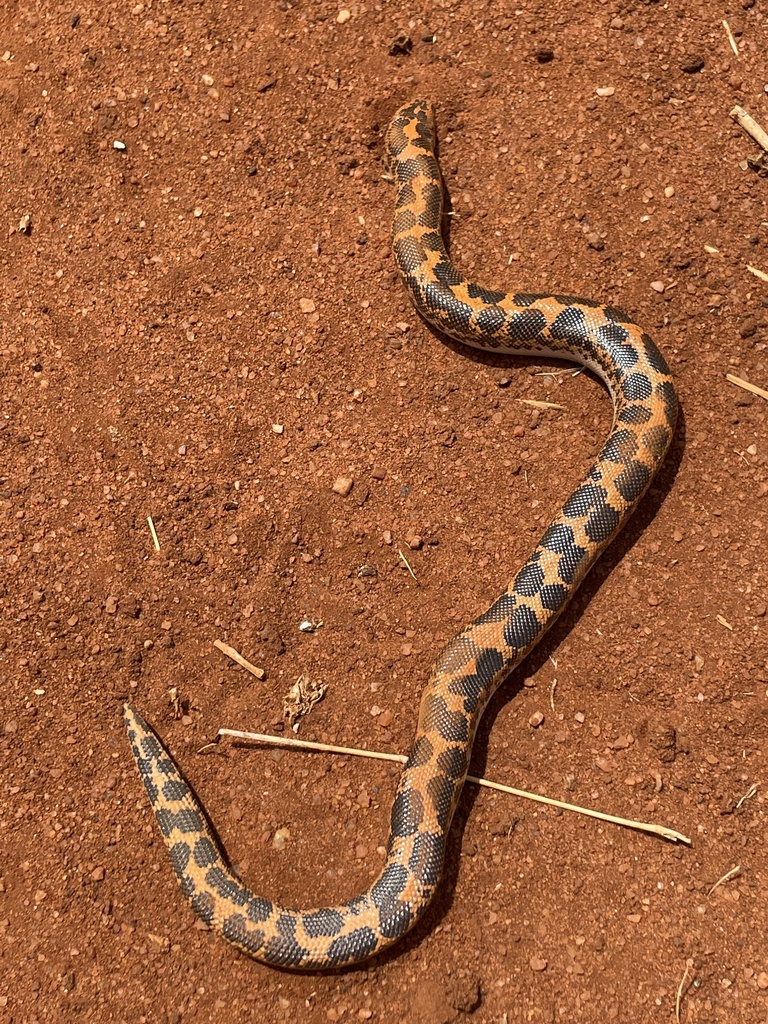
The East African Sand Boa (Eryx colubrinus) is a non-venomous snake in the Boidae family, recorded in 16 countries.
- Family
- Boidae
About the East African Sand Boa
Eryx colubrinus, also known as the Kenyan sand boa and several other common names, is a species of snake in the subfamily Erycinae of the family Boidae. The species is native to northern and eastern Africa. Three subspecies are recognized.
Description
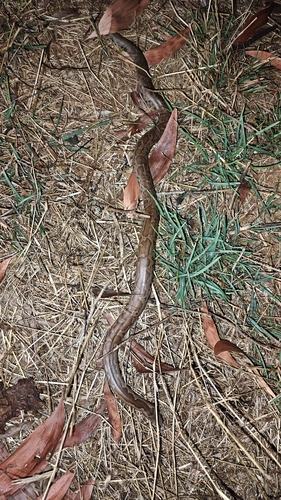
Eryx colubrinus is a heavily-built snake with a small head, small eyes, vertical pupils, and a short tail. Scale texture is extremely smooth, except on the tail, which tapers off into a keeled scale pattern. Adult female specimens of G. colubrinus are rarely more than 91 cm (3 feet) in total length (tail included). The average Egyptian sand boa grows no longer than 12-32" (30-80cm) long, with males being significantly smaller than females.
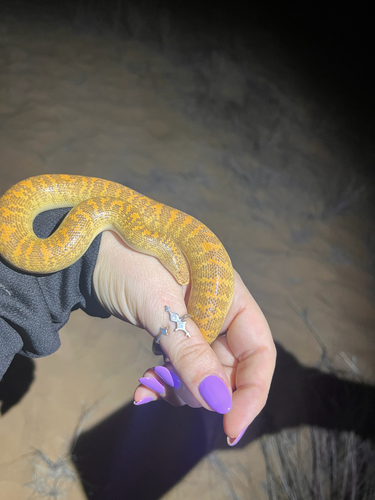
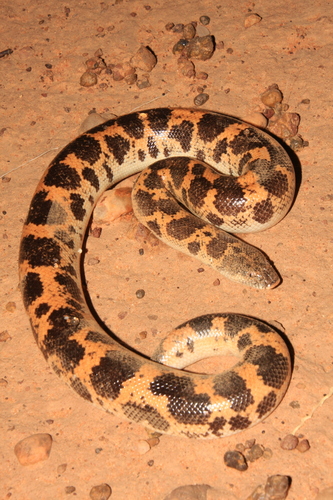
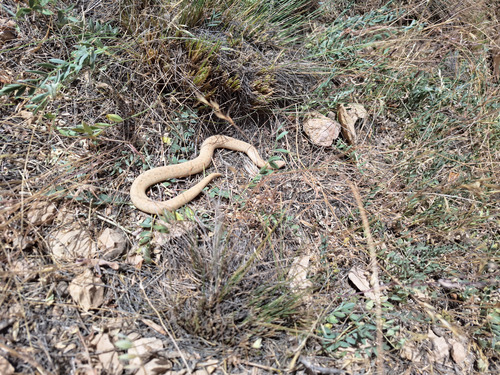
The color pattern usually consists of a yellow or orange coloration overlaid with dark brown splotches. The belly is white or cream-colored. E. colubrinus is readily available in the pet trade due to its small size, docility and ease of care. In recent years, there have been a number of new color morphs made available by both commercial and hobby breeders. Some of the more popular morphs available include anerythristic (black and white lacking orange/red simple recessive trait), albino (lacking black pigment simple recessive trait), snow (double recessive combination of an anerythristic and an albino), stripes (normal-colored, anerythristic, albino and snow), hypo/ghost, paradox albinos (simple recessive trait), paradox snows (double recessive trait), splash (recessive trait), paint (recessive trait) and stripe combinations with any of the listed recessive traits. In addition, many line bred traits have been accentuated on the above morphs, such as Nuclears (extreme red), High Whites and Reduced Patterns, for example.
Common names
Common names for Eryx colubrinus include East African sand boa, Egyptian sand boa, Kenya sand boa, Kenyan sand boa, and sand boa.
Geographic range
Eryx colubrinus is found in North Africa from Egypt as far west as Niger (Aïr), including Somalia, Ethiopia, Sudan, Kenya, and northern Tanzania. A single specimen has been reported from Yemen. The type locality given is "Ægypto".
Habitat
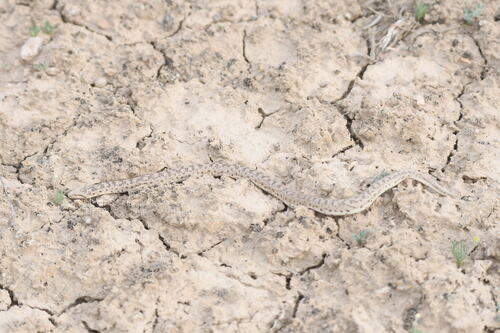
Eryx colubrinus occurs in semi-desert and scrub savannahs and rock outcroppings. It prefers sandy, friable soil.
Behavior
Eryx colubrinus is most active at night, but may be irregularly active during the day. This species is fossorial and spends roughly 80% of its time underground. During the hotter times of the year, E. colubrinus seeks refuge beneath stones and in the burrows of small mammals. However, they have also been known to occasionally climb trees.
Diet
Eryx colubrinus feeds on small mammals (such as rodents), lizards and birds. They are ambush predators, meaning they hide under the sand and wait for prey to be within striking range and are killed by constriction. Occasionally, they have been known to hunt out the nests of small mammals and birds.
Reproduction
Adapted from Wikipedia, available under CC BY-SA.
Frequently asked: East African Sand Boa
- Is the East African Sand Boa venomous?
- No. The East African Sand Boa (Eryx colubrinus) is non-venomous and is not considered dangerous to humans. Like most snakes, it will retreat rather than bite when given the chance.
- Is the East African Sand Boa poisonous?
- Snakes are venomous, not poisonous. "Poisonous" means harmful to eat or touch; "venomous" means injecting toxins through a bite. The East African Sand Boa is neither poisonous nor venomous.
- Is the East African Sand Boa dangerous?
- The East African Sand Boa is not dangerous to humans. It has no medically significant venom and bites only defensively if cornered or handled.
- Where does the East African Sand Boa live?
- The East African Sand Boa has verified records in 16 countries, including Kenya, Egypt, Tanzania, United Republic of. See the distribution section below for its full range.
- What does the East African Sand Boa eat?
- Eryx colubrinus feeds on small mammals (such as rodents), lizards and birds. They are ambush predators, meaning they hide under the sand and wait for prey to be within striking range and are killed by constriction. Occasionally, they have been known to hunt out the nests of small mammals and birds.
- Why is it called the East African Sand Boa?
- Common names for Eryx colubrinus include East African sand boa, Egyptian sand boa, Kenya sand boa, Kenyan sand boa, and sand boa.
Where it is found
More Boidae snakes
Classification
How scientists group this snake, from the broadest category down to the exact species. Each step narrows to its closest relatives.
Keep learning
- What to Do If You Find a SnakeFound a snake at home or on a trail? Here is how to stay calm, give it space, identify it safely, and know when to call a professional.
- Venomous vs Nonvenomous: How to Tell the DifferenceThe folk rules for telling venomous snakes apart, where each one fails, and why location-based identification beats guessing by sight.
- What Is a Snake? Anatomy and the BasicsA clear overview of what makes a snake a snake: limbless body plan, anatomy, evolution from lizards, species diversity, and why they are ectothermic.
- How to Keep Snakes Out of Your Yard and HomeA practical guide to keeping snakes out of your yard and home using habitat changes that work, plus what to skip and what to do if one shows up.
Distribution from GBIF & iNaturalist. Venom status per CDC. Background: Wikipedia. Informational only. Never handle a snake to identify it.