
Boidae
Red Sand Boa
HarmlessEryx johnii
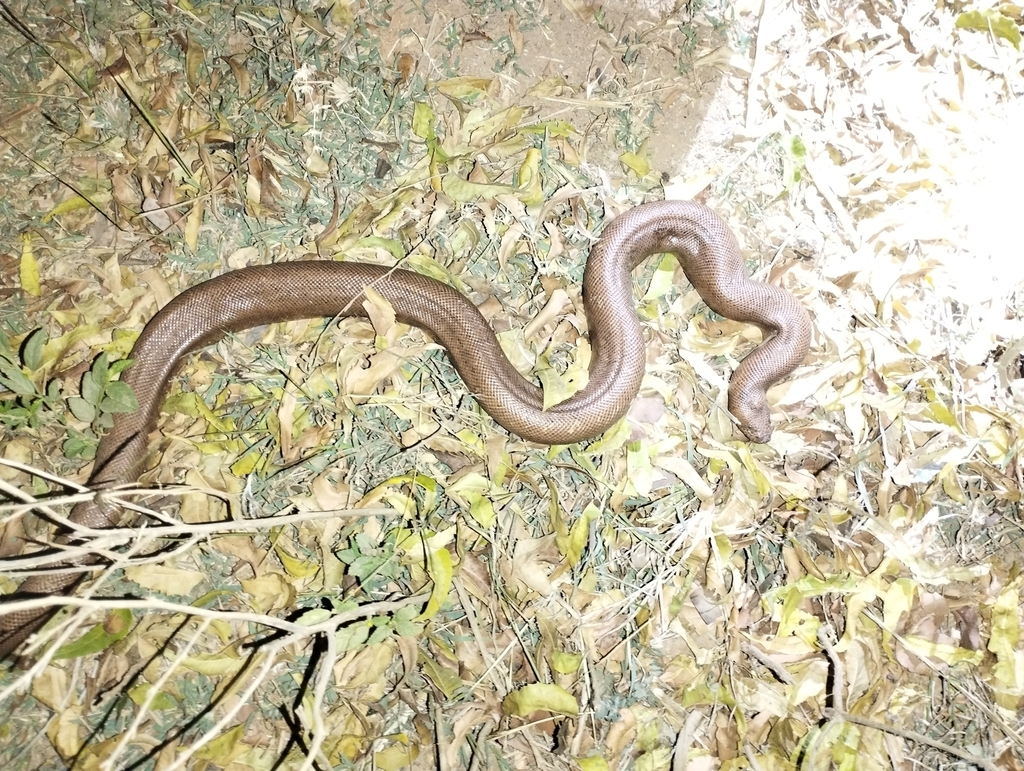
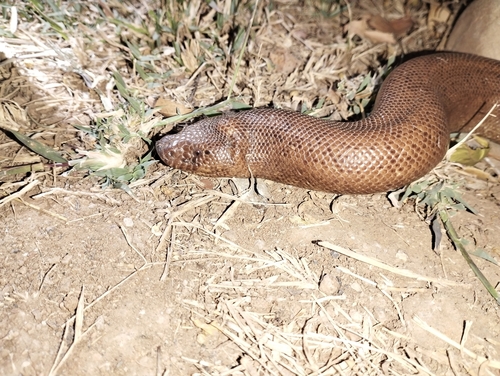
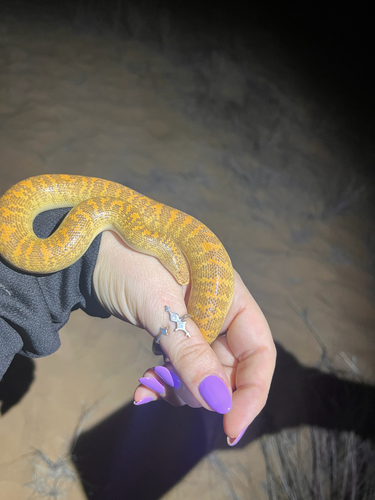
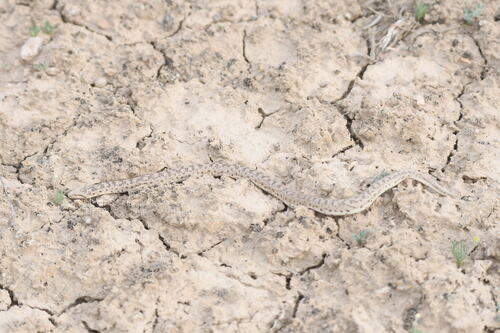
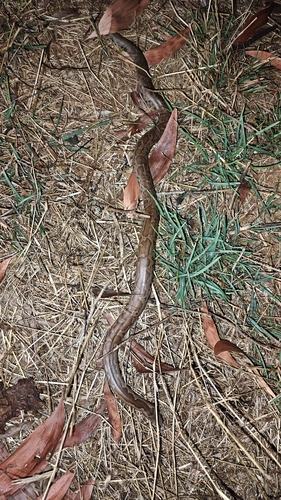
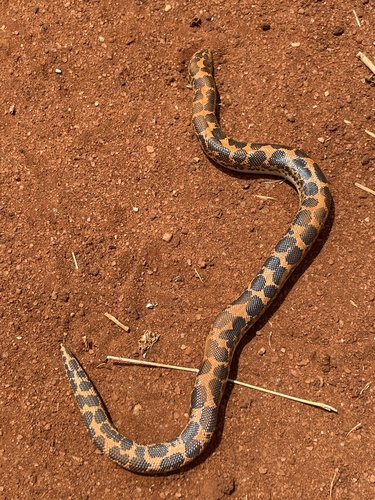
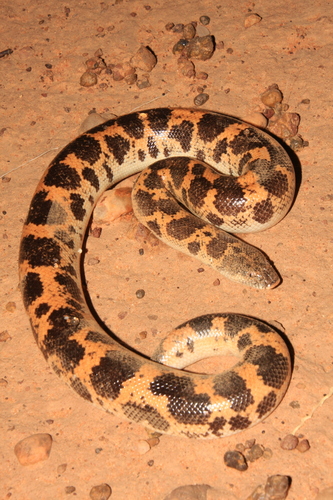
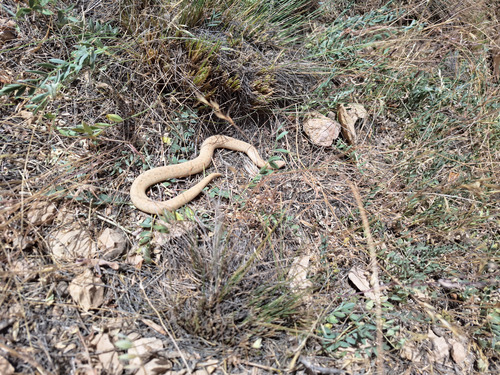
2 photographs of the Red Sand Boa. © Siva Naturewild.
The Red Sand Boa (Eryx johnii) is a non-venomous snake in the Boidae family, recorded in 9 countries.
- Family
- Boidae
About the Red Sand Boa
Eryx johnii is a species of nonvenomous snake in the subfamily Erycinae of the family Boidae. The species is native to Iran, Pakistan, and India. There are no subspecies which are recognized as being valid. Common names include: Indian sand boa, John's sand boa, iruthalai nagam, mannuli pambu, red sand boa, and brown sand boa.
Etymology
The specific name, johnii, is in honor of German naturalist Christoph Samuel John (1747–1813), who was a missionary in India from 1771 until his death.
Description
Adults of E. johnii rarely exceed 2 feet (61 cm) in total length (including tail), although they sometimes reach 3 feet (91 cm). Adapted to burrowing, the head is wedge-shaped with narrow nostrils and very small eyes. The body is cylindrical in shape with small polished dorsal scales. The tail, which is blunt, rounded, and not distinct from the body, appears truncated. Coloration varies from reddish brown to dull yellow-tan.
Geographic range
E. johnii is found from Iran through Pakistan into western, southern, and northwestern India. The type locality given is "Tranquebar" (Tanjore, Trichy, southeastern Tamil Nadu, India). It is found in Indian desert. In western India, specifically in the state of Maharashtra, it is known as a Mandul snake (Marathi: मांडूळ साप).
Habitat
E. johnii is found in dry, semi-desert scrub plains and rocky dry foothills up to 200 m (660 ft) elevation. It prefers loose sand, or sandy soil that crumbles easily, into which it burrows, living underground.
Diet
The diet of E. johnii consists mainly of mammals such as rats, mice, and other small rodents that are killed by constriction. Some specimens have apparently fed exclusively on other snakes.
Behavior
E. johnii is a very calm snake species.
Reproduction
E. johnii is ovoviviparous, with females giving birth to up to 14 young at a time in late summer to monsoon.
Illegal trade
E. johnii has many superstitious beliefs attributed to it because of its double-headed appearance, such as bringing good luck, curing AIDS, etc. Such blind faith has resulted in endangering the species, and in illegal trade in India, despite being a protected species under Schedule IV of Wildlife Protection Act, 1972, of India. It is also banned in India as pets.
Adapted from Wikipedia, available under CC BY-SA.
Frequently asked: Red Sand Boa
- Is the Red Sand Boa venomous?
- No. The Red Sand Boa (Eryx johnii) is non-venomous and is not considered dangerous to humans. Like most snakes, it will retreat rather than bite when given the chance.
- Is the Red Sand Boa poisonous?
- Snakes are venomous, not poisonous. "Poisonous" means harmful to eat or touch; "venomous" means injecting toxins through a bite. The Red Sand Boa is neither poisonous nor venomous.
- Is the Red Sand Boa dangerous?
- The Red Sand Boa is not dangerous to humans. It has no medically significant venom and bites only defensively if cornered or handled.
- Where does the Red Sand Boa live?
- The Red Sand Boa has verified records in 9 countries, including India, Pakistan, Iraq. See the distribution section below for its full range.
- What does the Red Sand Boa eat?
- The diet of E. johnii consists mainly of mammals such as rats, mice, and other small rodents that are killed by constriction. Some specimens have apparently fed exclusively on other snakes.
- Why is it called the Red Sand Boa?
- The specific name, johnii, is in honor of German naturalist Christoph Samuel John (1747–1813), who was a missionary in India from 1771 until his death.
Where it is found
More Boidae snakes
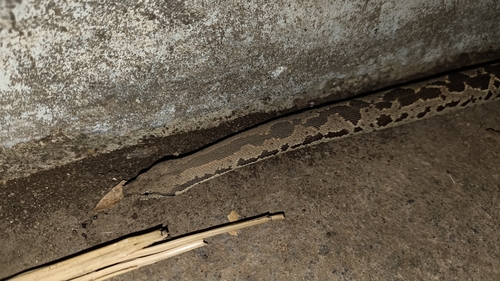
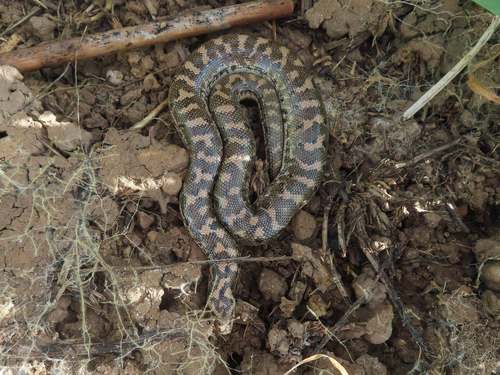
Classification
How scientists group this snake, from the broadest category down to the exact species. Each step narrows to its closest relatives.
Keep learning
- What to Do If You Find a SnakeFound a snake at home or on a trail? Here is how to stay calm, give it space, identify it safely, and know when to call a professional.
- Venomous vs Nonvenomous: How to Tell the DifferenceThe folk rules for telling venomous snakes apart, where each one fails, and why location-based identification beats guessing by sight.
- What Is a Snake? Anatomy and the BasicsA clear overview of what makes a snake a snake: limbless body plan, anatomy, evolution from lizards, species diversity, and why they are ectothermic.
- How to Keep Snakes Out of Your Yard and HomeA practical guide to keeping snakes out of your yard and home using habitat changes that work, plus what to skip and what to do if one shows up.
Distribution from GBIF & iNaturalist. Venom status per CDC. Background: Wikipedia. Informational only. Never handle a snake to identify it.