
Genus · Boidae
Types of boas
11 species make up the genus Eryx, the snakes commonly called boas. None are considered dangerous to humans.
About Old World sand boas
Eryx are stout, burrowing boas built to vanish into loose desert and grassland soil.
Eryx is a genus of small to medium boas in the family Boidae, the same family that includes the large constrictors like boa constrictors and anacondas. Unlike their famous tropical relatives, sand boas are fossorial, meaning they spend most of their lives underground. The genus holds roughly a dozen species, including the Rough-scaled Sand Boa, the Javelin Sand Boa, the Red Sand Boa, and the Arabian Sand Boa. They are sometimes called Old World sand boas to separate them from the unrelated North American sand boas in the genus Charina.
These snakes are spread across a wide band of arid and semi-arid country, from northern and eastern Africa through the Middle East and Central Asia into India. Typical habitat is loose, sandy or friable soil, scrub, dry grassland, and rocky semi-desert, anywhere the snake can dig in and stay buried. They are adapted to push through sand rather than climb or swim, so you will rarely find one in the open during the heat of day.
Recognizing an Eryx is about body shape more than color. They are short, thick, and cylindrical with a blunt head that is barely set off from the neck, small eyes positioned high on the head, and a short, stubby tail. The compact build, narrow underbelly scales, and countersunk lower jaw are all digging adaptations. Coloration is usually muted, browns, tans, reds, and grays with darker blotches, which keeps them camouflaged against soil and sand.
Eryx snakes are nonvenomous constrictors. They are not rear-fanged and pose no medical venom risk to people. They subdue prey, mostly small mammals, lizards, and occasionally birds, by ambush from just under the surface and then constriction. A wild snake may bite defensively if grabbed, and any bite can carry infection risk, so wild animals should be left alone rather than handled. If a bite ever causes concern, contact emergency care or US Poison Control at 1-800-222-1222 or local emergency services.
In terms of life history, most Eryx species are ambush predators that lie buried with only the eyes and snout exposed, striking upward at passing prey. They are largely nocturnal or active at dusk to avoid extreme heat. Unlike egg-laying snakes, sand boas are viviparous, giving birth to live young. Their secretive, low-key temperament and manageable size have also made several species, especially the Kenyan and Rough-scaled forms, popular and hardy animals in responsible captive collections.
Eryx belongs to the Boidae family (Boas). Powerful non-venomous constrictors that give birth to live young. Heavy body, smooth scales, and (in many species) heat-sensing pits along the lips. No rattle and no fangs.
Danger: Non-venomous and not dangerous to people. Large individuals are strong and can bite defensively, but they are not a venom threat.
All species (11)
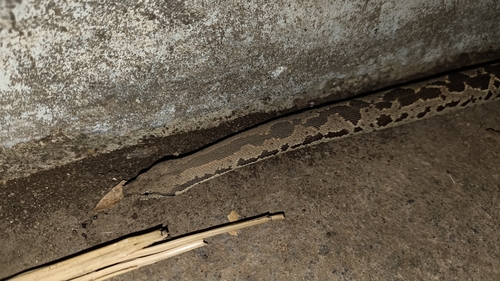 Rough-scaled Sand BoaEryx conicusHarmless
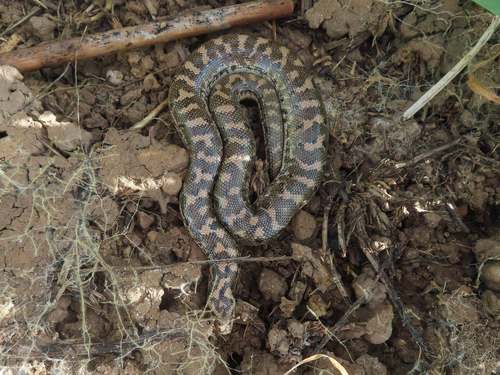 Javelin Sand BoaEryx jaculusHarmless
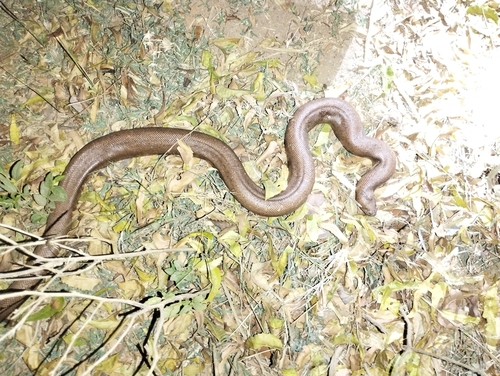 Red Sand BoaEryx johniiHarmless
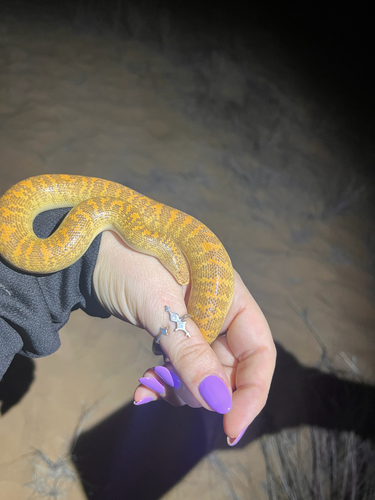 Arabian Sand BoaEryx jayakariHarmless
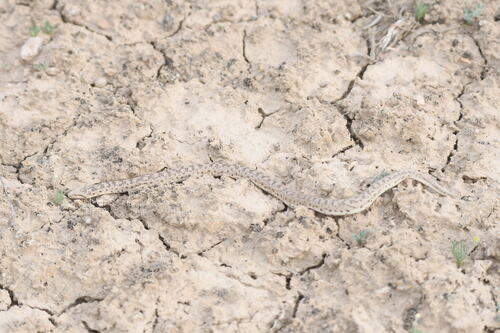 Desert Sand BoaEryx miliarisHarmless
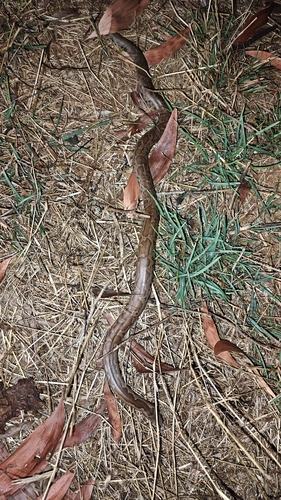 Whitaker’s sand boaEryx whitakeriHarmless
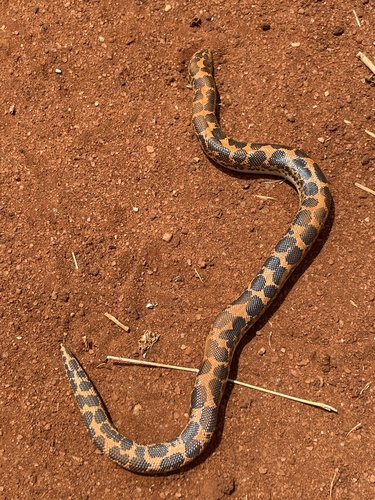 East African Sand BoaEryx colubrinusHarmless
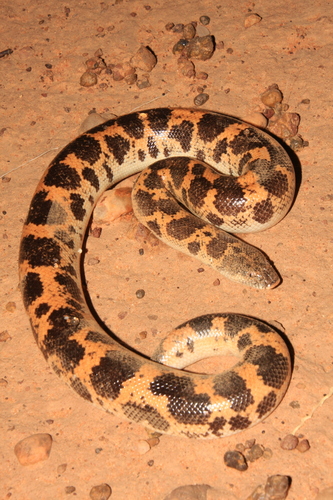 Sahara Sand BoaEryx muelleriHarmless
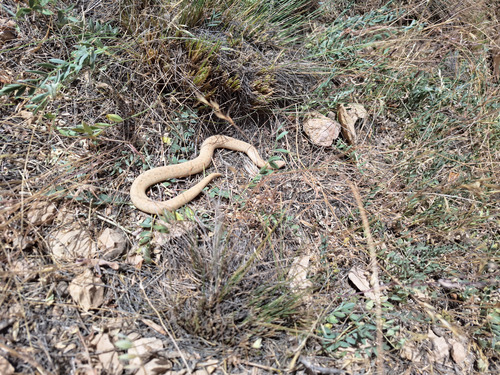 Elegant Sand BoaEryx elegansHarmless
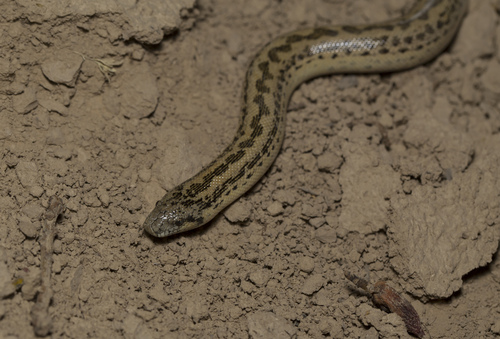 Eastern Sand BoaEryx vittatusHarmless
- No photoSistan Sand BoaEryx sistanensisHarmless
Keep learning
- What Is a Snake? Anatomy and the BasicsA clear overview of what makes a snake a snake: limbless body plan, anatomy, evolution from lizards, species diversity, and why they are ectothermic.
- How Snakes Move, Hunt, and EatHow snakes move without legs, hunt as ambushers or active foragers, kill by constriction or venom, and swallow prey wider than their head.
- What Do Snakes Eat?All snakes are carnivores. Learn what snakes eat, how diet changes with size and age, how often they feed, and how they hunt and swallow prey.
- Venomous vs Nonvenomous: How to Tell the DifferenceThe folk rules for telling venomous snakes apart, where each one fails, and why location-based identification beats guessing by sight.