
Colubridae
Aesculapian Snake
HarmlessZamenis longissimus
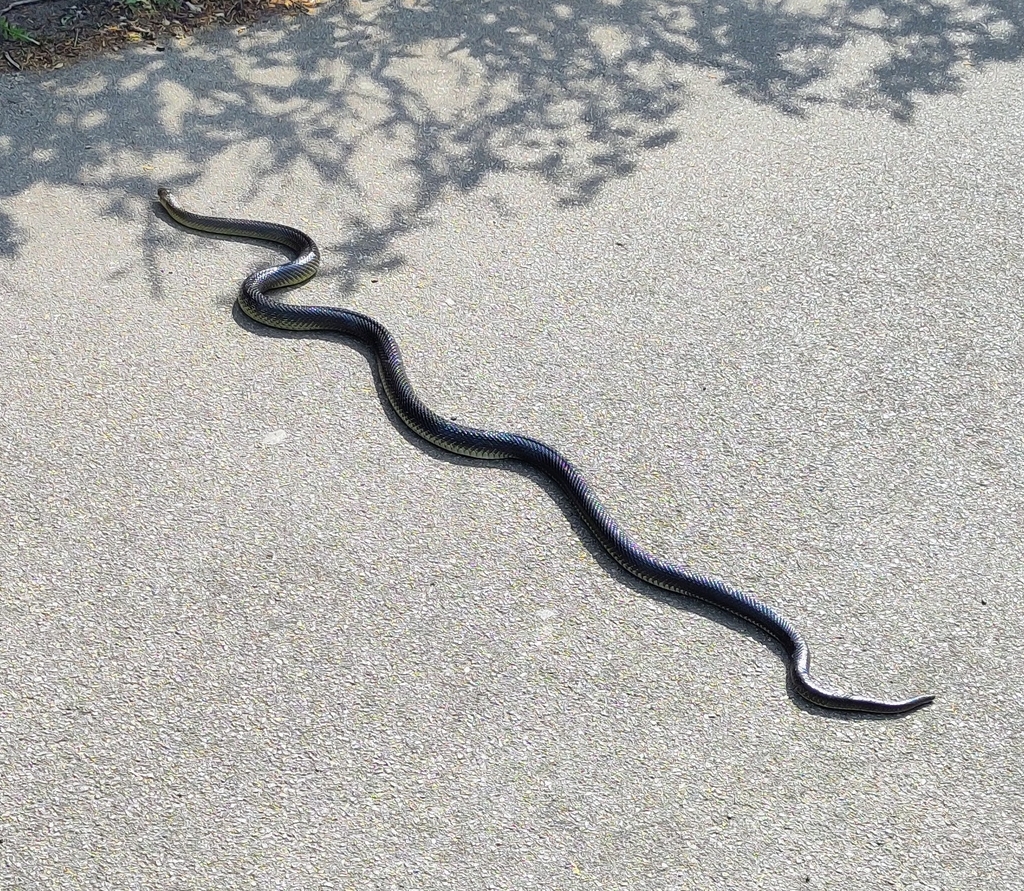
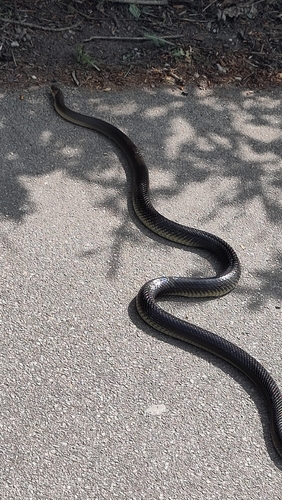
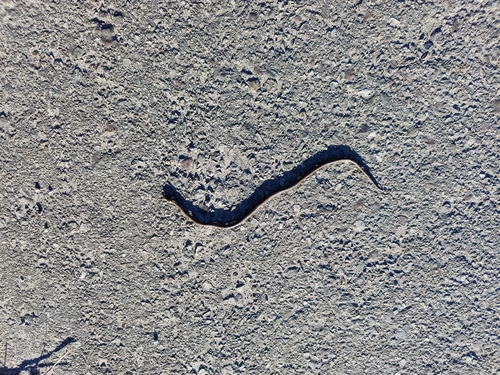
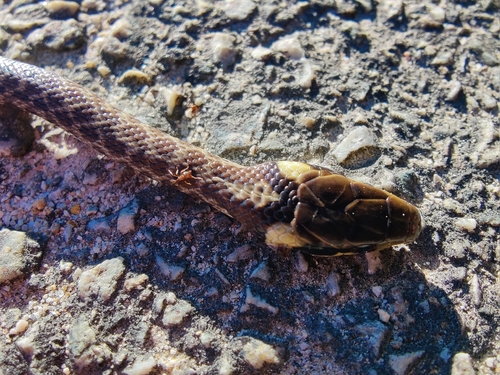
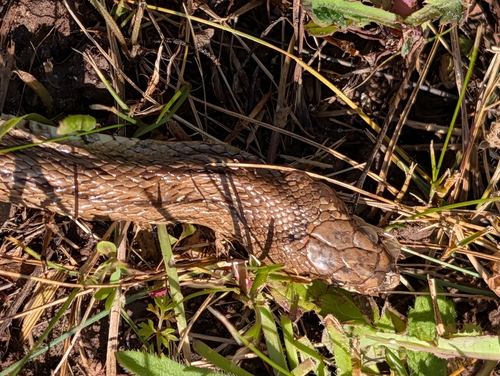
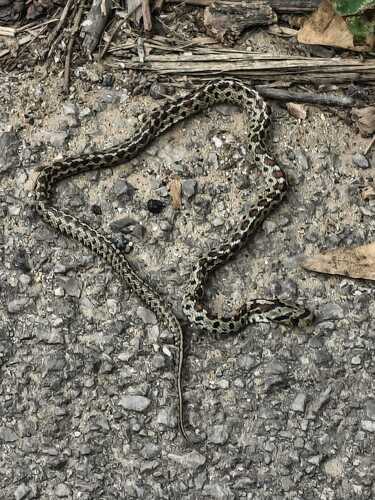
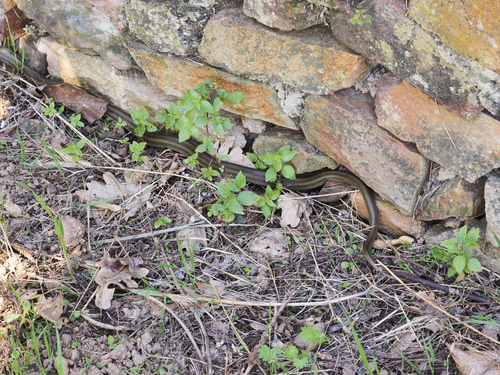
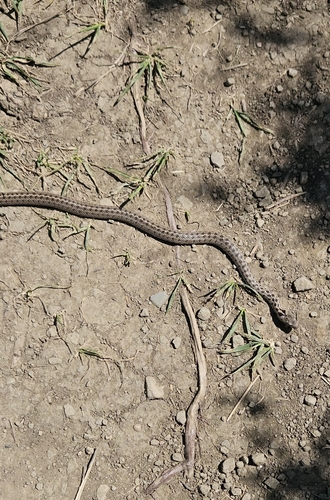
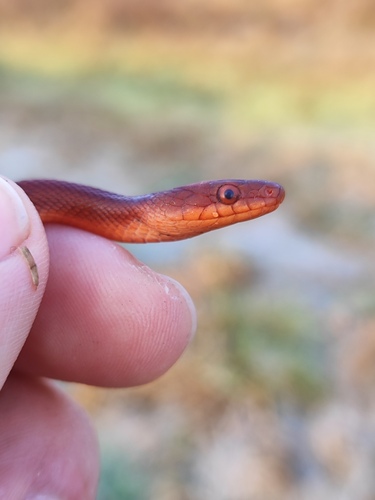
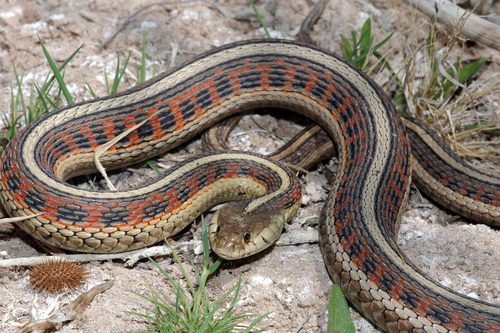
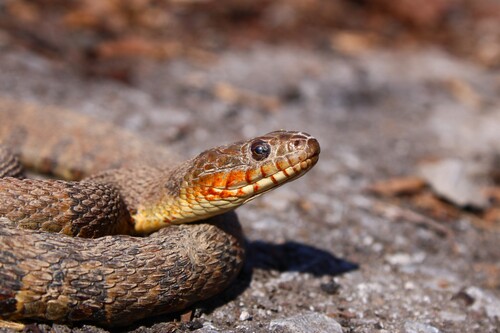
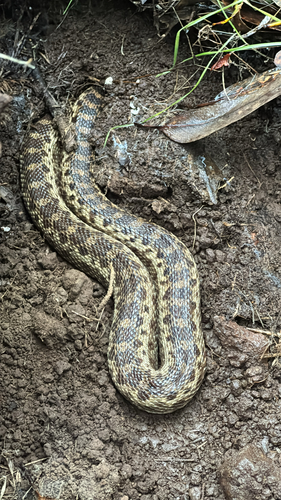
4 photographs of the Aesculapian Snake. © Fabian Graubereich.
The Aesculapian Snake (Zamenis longissimus) is a non-venomous snake in the Colubridae family, recorded in 33 countries.
- Family
- Colubridae
About the Aesculapian Snake
The Aesculapian snake (Zamenis longissimus, previously Elaphe longissima) is a species of non-venomous constrictor snake native to Europe, a member of the subfamily Colubrinae of the family Colubridae. Growing up to 2 metres (6.6 ft) in length, it is among the largest European snakes, similar in size to the four-lined snake (Elaphe quatuorlineata) and the Montpellier snake (Malpolon monspessulanus). The Aesculapian snake has been of cultural and historical significance for its role in ancient Greek, Roman, and Illyrian mythology and derived symbolism.
Description
Zamenis longissimus hatches at around 30 cm (11.8 in). Adults are usually from 110 cm (43.3 in) to 160 cm (63 in) in total length (tail included), but can grow to 200 cm (79 in), with the record size being 225 cm (7.38 ft). Expected body mass in adult Aesculapian snakes is from 350 to 890 g (0.77 to 1.96 lb). It is dark, long, slender, and typically bronzy in colour, with smooth scales that give it a metallic sheen.
Juveniles can easily be confused with juvenile grass snakes (Natrix natrix) and barred grass snakes (Natrix helvetica), because juvenile Aesculapians also have a yellow collar on the neck that may persist for some time in younger adults. Juvenile Z. longissimus are light green or brownish-green with various darker patterns along the flanks and on the back. Two darker patches appear in the form of lines running on the top of the flanks. The head in juveniles also features several distinctive dark spots, one hoof-like on the back of the head in-between the yellow neck stripes, and two paired ones, with one horizontal stripe running from the eye and connecting to the neck marks, and one short vertical stripe connecting the eye with the fourth to fifth upper labial scales.
Adults are much more uniform, sometimes being olive-yellow, brownish-green, sometimes almost black. Often in adults, there may be a more or less regular pattern of white-edged dorsal scales appearing as white freckles all over the body up to moiré-like structures in places, enhancing the shiny metallic appearance. Sometimes, especially when pale in colour, two darker longitudinal lines along the flanks can be visible. The belly is plain yellow to off-white, while the round iris has amber to ochre colouration. Melanistic, erythristic, and albinotic natural forms are known, as is a dark grey form.
Although there is no noticeable sexual dimorphism in colouration, males grow significantly longer than females, presumably because of the more significant energy input of the latter into the reproductive cycle. Maximum weight for German populations has been 890 grams (1.96 lb) for males and 550 grams (1.21 lb) for females (Böhme 1993; Gomille 2002). Other distinctions, as in many snakes, include in males a relatively longer tail to total body length and a wider tail base.
Adapted from Wikipedia, available under CC BY-SA.
Frequently asked: Aesculapian Snake
- Is the Aesculapian Snake venomous?
- No. The Aesculapian Snake (Zamenis longissimus) is non-venomous and is not considered dangerous to humans. Like most snakes, it will retreat rather than bite when given the chance.
- Is the Aesculapian Snake poisonous?
- Snakes are venomous, not poisonous. "Poisonous" means harmful to eat or touch; "venomous" means injecting toxins through a bite. The Aesculapian Snake is neither poisonous nor venomous.
- Is the Aesculapian Snake dangerous?
- The Aesculapian Snake is not dangerous to humans. It has no medically significant venom and bites only defensively if cornered or handled.
- Where does the Aesculapian Snake live?
- The Aesculapian Snake has verified records in 33 countries, including France, Austria, Switzerland. See the distribution section below for its full range.
- What does the Aesculapian Snake eat?
- The main food source of Zamenis longissimus is small mammals such as shrews, mo
Where it is found
More Colubridae snakes
Classification
How scientists group this snake, from the broadest category down to the exact species. Each step narrows to its closest relatives.
- OrderThe broad group of scaled reptiles: all snakes and lizards
- Squamata
- FamilyA group of related snakes that share key traits
- Colubridae
- GenusA close-knit group of very similar species
- Zamenis
- SpeciesThis exact snake, named in the two-part scientific name
- Zamenis longissimus
Keep learning
- What to Do If You Find a SnakeFound a snake at home or on a trail? Here is how to stay calm, give it space, identify it safely, and know when to call a professional.
- Venomous vs Nonvenomous: How to Tell the DifferenceThe folk rules for telling venomous snakes apart, where each one fails, and why location-based identification beats guessing by sight.
- What Is a Snake? Anatomy and the BasicsA clear overview of what makes a snake a snake: limbless body plan, anatomy, evolution from lizards, species diversity, and why they are ectothermic.
- How to Keep Snakes Out of Your Yard and HomeA practical guide to keeping snakes out of your yard and home using habitat changes that work, plus what to skip and what to do if one shows up.
Distribution from GBIF & iNaturalist. Venom status per CDC. Background: Wikipedia. Informational only. Never handle a snake to identify it.