
Colubridae
Ladder Snake
HarmlessZamenis scalaris
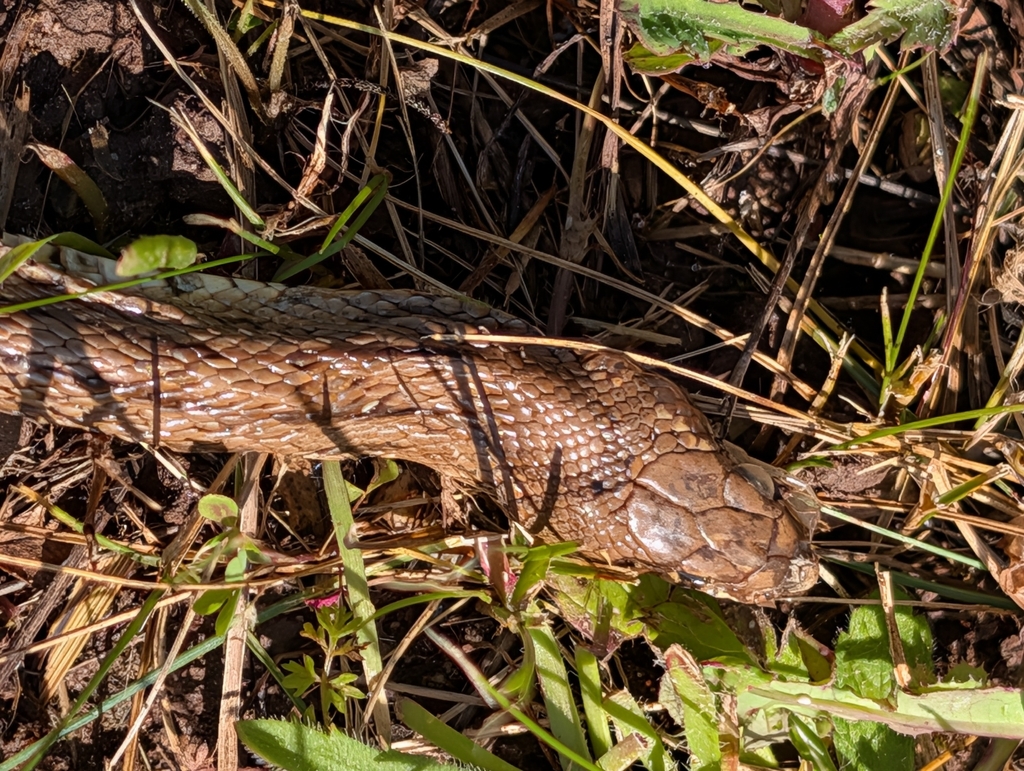
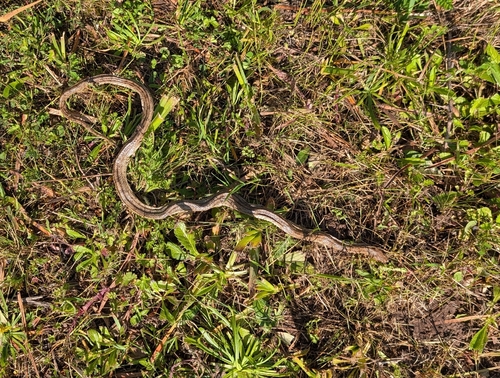
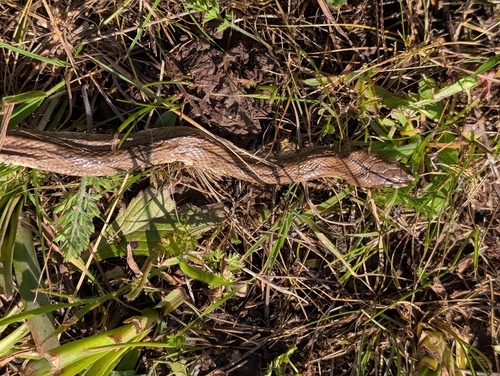
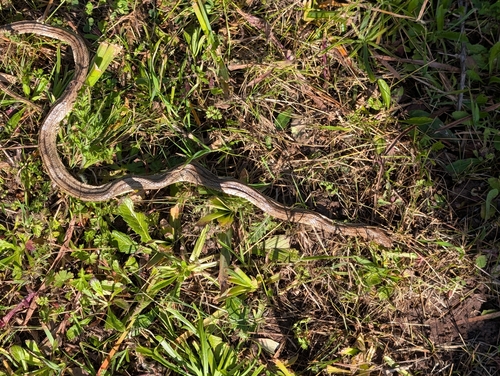
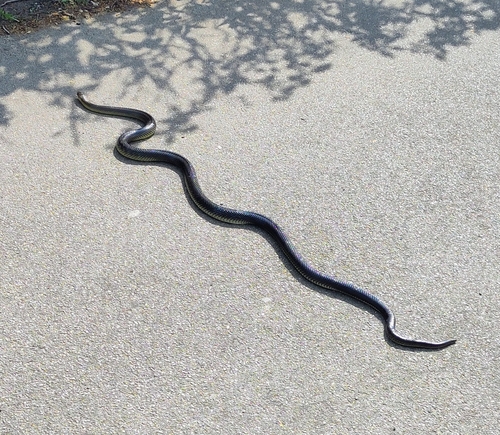
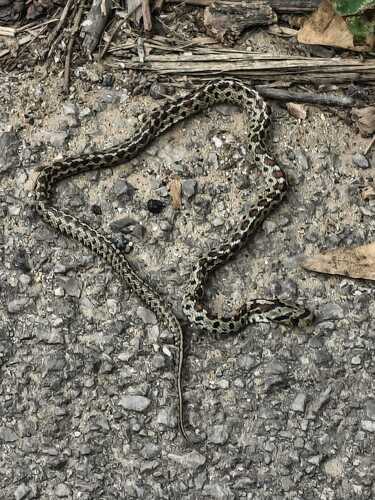
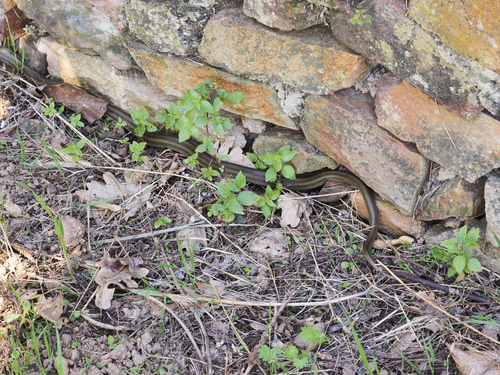
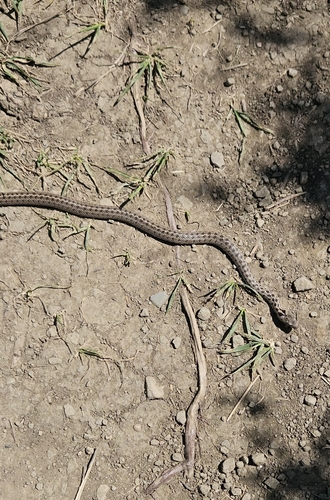
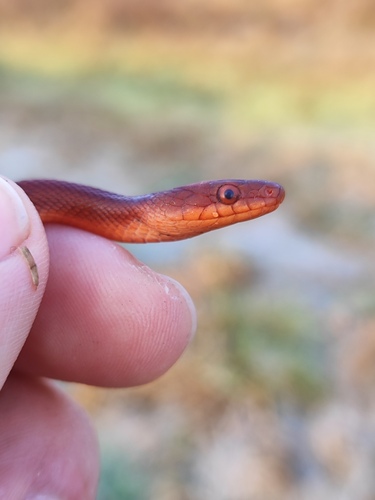
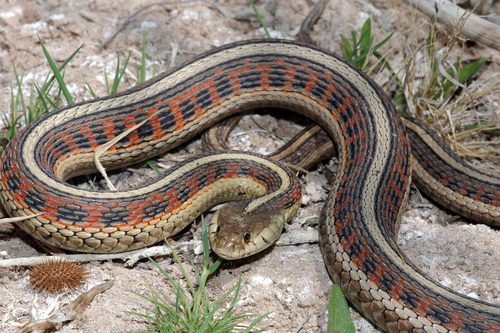
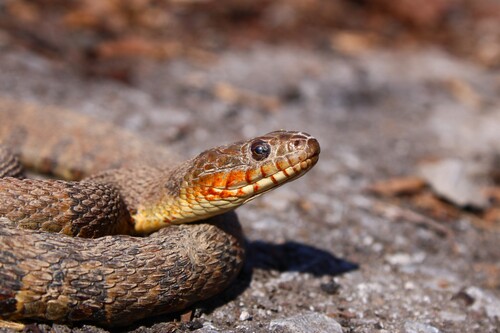
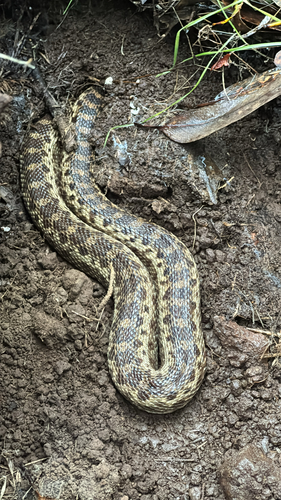
4 photographs of the Ladder Snake. © Piermario Maculan.
The Ladder Snake (Zamenis scalaris) is a non-venomous snake in the Colubridae family, recorded in 11 countries.
- Family
- Colubridae
About the Ladder Snake
The ladder snake (Zamenis scalaris) is a species of non-venomous snake in the subfamily Colubrinae of the family Colubridae. The species is native to southwestern Europe.
Distribution
The geographic range of the ladder snake includes Portugal, Spain, southern France and just into Italy, also Menorca and the Iles d'Hyères off Provence, but it is absent from northern Iberia including much of the Pyrenees, Galicia (although the species is found on Ons Island, in the Atlantic Islands of Galicia National Park), Cantabria and the Basque Country. The population on Menorca may stem from an introduction by humans.
Habitat
The ladder snake enjoys scrub bushy cover, including orchards, vineyards, hedges and overgrown dry-stone walls; it is common in the maquis. Habitats with stones and boulders and low shade are preferred. Although known at altitudes over 2,000 metres (6,600 ft), this is a species which prefers altitudes from sea level to 700 metres (2,300 ft).
Description
The ladder snake is a medium-sized snake which reaches a maximum total length (tail included) of around 160 cm (63 in) but which averages 120 cm (47 in) in total length. It has a pointed snout. As an adult the ladder snake is less variable than many related snake species. Dorsally, it is yellowish to dark brown, with two darker stripes running down the length of the body from neck to tail. It normally also has a dark stripe running from the rear of the eye to the angle of the jaw and sometime subtle, darker markings on the sides. The ventral side is pale, varying from a silvery-grey to whitish, with the occasional dark spot. The eye is dark. The juvenile snakes have lighter and brighter colouration, varying from yellow to light brown, with the characteristic "ladder" pattern in black along the upperside. The pale underside has black markings which sometimes coalesce to cover the whole of the underside. As the snake ages these colours and patterns fade until the simpler adult pattern is left.
Diet
Like other "rat snakes", the majority of the ladder snake's prey is mammals such as mice, rabbits and shrews, making up 75% of prey items with a further quarter being spiders, insects (especially grasshoppers) and a few birds. To prey on birds the ladder snake will climb to search for active nests in trees or on man-made structures. Lizards are also eaten. Juvenile ladder snakes prefer small lizards, baby rodents, spiders, and grasshoppers.
Behaviour
The ladder snake is normally active by day, but during the hottest summer months it may be nocturnal, while in the spring months it may be more crepuscular. Its behaviour is said to be more like that of whipsnakes rather than that of rat snakes. It is more aggressive and defensive than most of the species formerly classified alongside it in the genus Elaphe. Defensive signals include hissing and lunging forward with the mouth open. Any attempt to pick up a ladder snake may be greeted by sharp bites and also the emptying of the cloacal glands, releasing an offensive odour.
Adapted from Wikipedia, available under CC BY-SA.
Frequently asked: Ladder Snake
- Is the Ladder Snake venomous?
- No. The Ladder Snake (Zamenis scalaris) is non-venomous and is not considered dangerous to humans. Like most snakes, it will retreat rather than bite when given the chance.
- Is the Ladder Snake poisonous?
- Snakes are venomous, not poisonous. "Poisonous" means harmful to eat or touch; "venomous" means injecting toxins through a bite. The Ladder Snake is neither poisonous nor venomous.
- Is the Ladder Snake dangerous?
- The Ladder Snake is not dangerous to humans. It has no medically significant venom and bites only defensively if cornered or handled.
- Where does the Ladder Snake live?
- The Ladder Snake has verified records in 11 countries, including Spain, France, Portugal. See the distribution section below for its full range.
- What does the Ladder Snake eat?
- Like other "rat snakes", the majority of the ladder snake's prey is mammals such as mice, rabbits and shrews, making up 75% of prey items with a further quarter being spiders, insects (especially grasshoppers) and a few birds. To prey on birds the ladder snake will climb to search for active nests in trees or on man-made structures. Lizards are also eaten. Juvenile ladder snakes prefer small lizards, baby rodents, spiders, and grasshoppers.
Where it is found
By U.S. state
More Colubridae snakes
Classification
How scientists group this snake, from the broadest category down to the exact species. Each step narrows to its closest relatives.
- OrderThe broad group of scaled reptiles: all snakes and lizards
- Squamata
- FamilyA group of related snakes that share key traits
- Colubridae
- GenusA close-knit group of very similar species
- Zamenis
- SpeciesThis exact snake, named in the two-part scientific name
- Zamenis scalaris
Keep learning
- What to Do If You Find a SnakeFound a snake at home or on a trail? Here is how to stay calm, give it space, identify it safely, and know when to call a professional.
- Venomous vs Nonvenomous: How to Tell the DifferenceThe folk rules for telling venomous snakes apart, where each one fails, and why location-based identification beats guessing by sight.
- What Is a Snake? Anatomy and the BasicsA clear overview of what makes a snake a snake: limbless body plan, anatomy, evolution from lizards, species diversity, and why they are ectothermic.
- How to Keep Snakes Out of Your Yard and HomeA practical guide to keeping snakes out of your yard and home using habitat changes that work, plus what to skip and what to do if one shows up.
Distribution from GBIF & iNaturalist. Venom status per CDC. Background: Wikipedia. Informational only. Never handle a snake to identify it.